BOULOGNE BLUES – The story of how we became stranded for six months in the famous French Channel port

For reasons which will no doubt form the basis of a separate post, about six months after completing our house in southern Spain we found ourselves living in a shabby rented apartment in a rundown part of Boulogne sur Mer on the north eastern tip of France.

Boulogne Beach 1

Virtually penniless, we could not afford nor did we wish, to place our Maremma Sheepdog, Aura into the-then obligatory six-months of quarantine in Britain. We were in a pretty desperate situation, and if desperate situations require desperate measures, then the one we came up with was a genuine peach, although it did not seem so at the moment we conceived it.
Boulogne Beach 2

Firstly, Dido took a job managing a paediatric occupational therapy department in Folkestone on the Kent coast, just a 40 minute Seacat (hydrofoil ferry) hop across the English Channel from Boulogne. Traveling as a foot passenger was cheap, and with a health-authority car provided at the English end, the daily journey would be both inexpensive and quicker than most commutes from the London suburbs into the City. It appeared to be a totally reasonable solution to a tough problem; six months living frugally in a tatty loft then once we were more comfortably off, moving into a nicer flat in the charming old citadel above the port. Aura our dog was already 11 years old and towards the latter end of her life expectancy, and who was to know? Two or three years living in the charming quarter of an historic French town might actually be rather pleasant. The plan even seemed sufficiently foolproof that Dido need not disclose to her new bosses the fact she was living in France and risk their disapproval (the requirements for the post were that she lived within 30 miles of work… there were no stipulation as to whether the miles were measured across dry land or water).  But then, to paraphrase a famous remark of a late British prime minister, “events” intervened to devastate our plans.

Boulogne Beach 3

Having committed ourselves to the minimum six-month rental contract, we moved into our dingy lodgings the week before Dido was to start her new job. The flat was unfurnished, without even a kitchen, and so we spent the whole of the first few days madly rushing around in a rented van, using our credit cards to purchase the basic essentials to make the place habitable. Amongst other things, we got a type of sofa-bed (known as a clic-clac in France) and a tiny Baby Belling oven with a double hob. We couldn’t afford luxuries like refrigerators then, and still couldn’t afford one by the time we eventually left the flat at the end of the six months. Nevertheless, after we had scrubbed the flat half-a-dozen times and got our few pieces of furniture set up (including a table improvised from a lacquered MDF board) the place seemed habitable. That, in addition to the fact it was only a five minute walk from the Seacat dock gave us reason to think the next six months would be reasonably tolerable. However, it must have been the Thursday or the Friday when we made that walk down to the port for the first time since settling in that the bottom fell out of our world.

Boulogne Beach 4

Without notice of any kind the Seacat company had cancelled all runs to Folkestone with immediate effect. Dido had talked to the ferry people just a week earlier—days before we had signed the contract on the flat—and they had made no mention of their plans to cut back their service. It seemed like a sick joke. We were now tied into living in Boulogne for six months, and the only morning and evening transport across the Channel anywhere near practicable for Dido’s requirements was a 40 minute drive up the coast at Calais. Moreover, the only affordable foot passenger service was on the regular ferry boats, which took-one-and-a-half- hours to Dover. Suddenly, Dido’s easy two-hour daily return journey, now with the commute to Calais and the 20-minute drive from Dover to Folkestone added to the mix, had mutated horribly into a return journey taking five hours—on a good day.

Boulogne Beach 5

But, with no money, and Dido’s job  starting on Monday she had no alternative but to do the Calais crossing.

Boulogne beach 6

As it happened, the commute turned out to be just one of the many grim and farcical components of what was to prove the most miserable period of our marriage—the details of which will be the subject of another future blog. Enough to say for now, that the France most people experience as tourists has little in common with the dingy, rough, criminal-infested street we inhabited during our sojourn in Boulogne sur Mer.

Boulogne beach 7

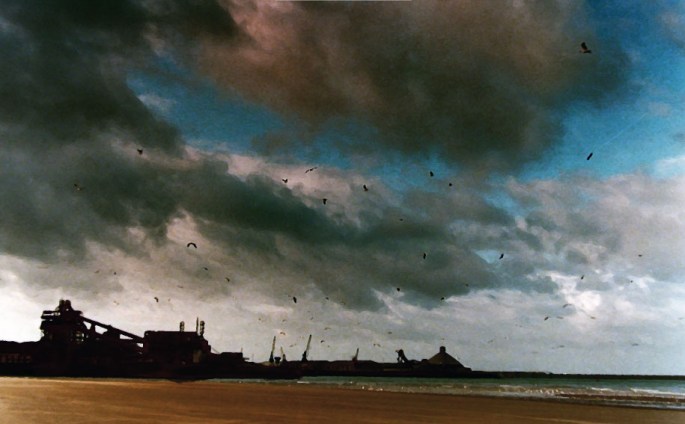
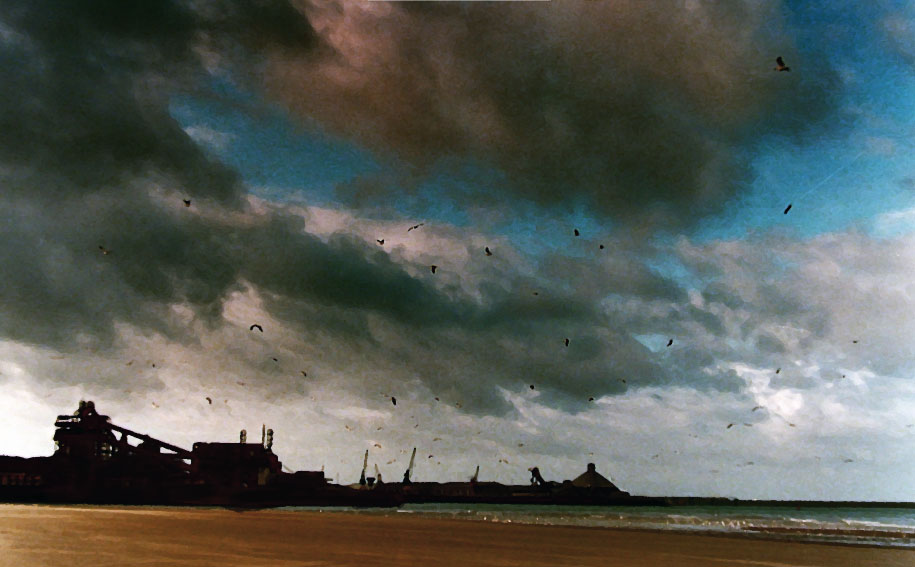
The origins of the pictures shown here, lie in my numerous walks on Boulogne beach with Aura and apart from being a modest nod to great Dutch painters like Jacob van Ruisdael, express both the blueness of my mood in Boulogne, and my ever-growing yearning to cross that 20-mile strip of water back to England…

Boulogne beach 8

No RAW mince – PLEASE! Sorting out your cottage from your shepherd’s pie and how to make the genuine article/s…

What many people beyond the shores of the British Isles may not know, is that the humble shepherd’s and cottage pies are directly linked to the British Sunday roast — roast lamb and roast beef respectively. For generations going back into the hazy past, Monday night evening meals (suppers, dinners, teas – depending upon what part of Britain one inhabited, geographically and / or socially) were typically made up of the scraps from the previous day’s lunch and more often than not the main constituent would be the leftover meat. And if this meat happened to be lamb or beef then normally it would be minced or finely chopped, mixed with cooked vegetables, roofed with a thick layer of mashed potato and ultimately emerge from the oven as either of the aforementioned pies.

Simple to make, thrifty on the wallet and tasty enough for even the fussiest eaters, shepherd’s pie has joined the English breakfast, fish and chips and bangers and mash as one of the few British dishes to gain global popularity. Over the past few decades it’s become a staple of the comfort food menu and an international culinary superstar.

But, at the risk of sounding like Sheldon Cooper pointing out what makes — and what doesn’t make — a true Texas Chilli , there’s a problem; a problem of misrepresentation:

I’ve eaten concoctions of meat and mashed potato, purporting to be shepherd’s pie everywhere from Perth in Australia, to Seattle in the USA, and at all stops in between, including places as diverse as Chennai, Stockholm and Tel Aviv. And, while several of these alleged shepherd’s pies have been very agreeable plates of food, they’ve no more been shepherd’s pie than a vegetarian sausage is an actual sausage or Greek chickpea puree is humus.

The first and most serious error that the cooks of all these dishes make is basing their recipes on raw beef mince and the second is to call the dish after the keeper of sheep. Shepherd’s pie (yes, the clue is in the name) is always made with lamb, hogget* or mutton – leftover roast lamb, hogget or mutton if possible, and raw lamb mince as a last resort. There’s nothing wrong with a minced beef and mashed potato pie, but compared to a true cottage pie (for it is in in fact cottage pie that these ingenuous cooks are making) — made with leftover roast beef — it’s a sad imitation at best. Perhaps if we renamed Cottage Pie, Cowherd Pie (or Cowboy Pie in the States and Gaucho Pie in Argentina) it would clear up some of the apparent confusion. In fact, here in Spain when I’m lucky enough to have roast kid scraps I call the resulting dish Goatherd Pie – and very delicious it is to.

Unfortunately, the error has been exacerbated by a plethora of British cookbooks, often penned by famous British chefs, who for reasons to do with things like “convenience” and the pace of “modern life” disseminate shepherd’s pie recipes based upon raw beef mince.

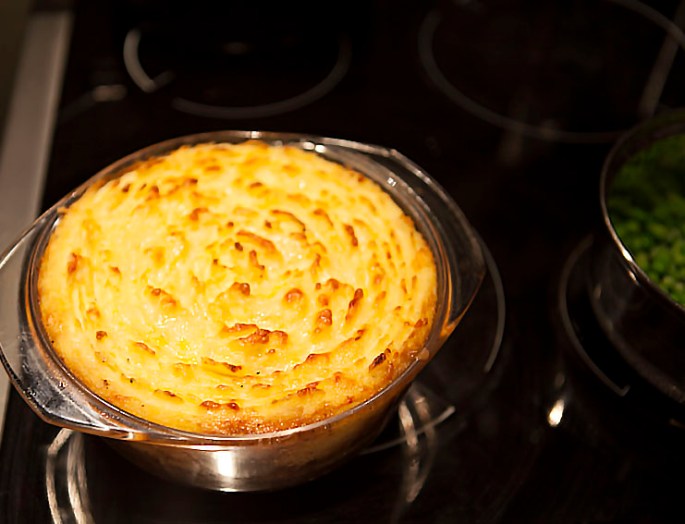
The point is, as I hope the recipe below for Cottage Pie will demonstrate, the superiority in flavour, texture and sheer pleasure of eating a meat and mashed potato pie made from roast meat scraps, over one made from raw mince is worth the extra 10 minutes it takes to prepare.

Cottage Pie 1

COTTAGE PIE

(Serves 2 as a single dish meal or 4 as part of a three course dinner  / Preparation time: 45 minutes / Cooking time 30 minutes)

Ingredients for mash

  1. 1½ lbs floury potatoes – peeled and cut up into medium dice for boiling
  2. 2 oz unsalted butter
  3. 5 fl oz single cream or full fat milk
  4. freshly ground black pepper
  5. 2 tbsp coarsely grated cheddar cheese

Ingredients for pie

  • 2 tbsp cooking oil (rapeseed, corn or nut but not olive or sunflower)
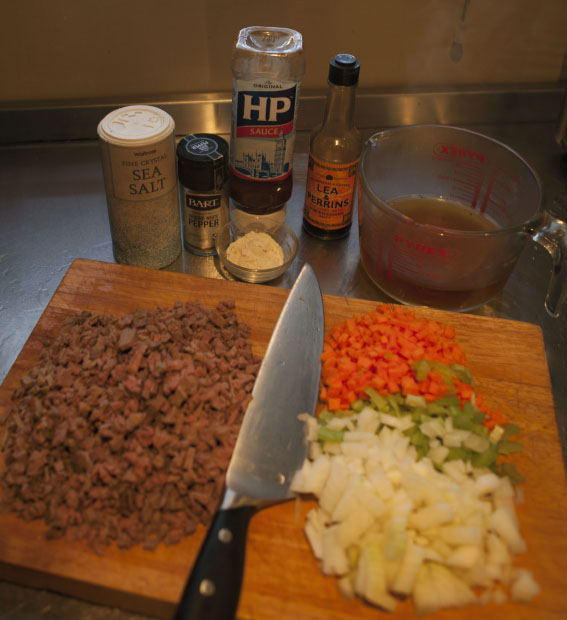
  • 12 – 14 oz of roast beef meat  –   finely chopped (not minced or blitzed!!)
  • 1 large carrot                            –   finely chopped
  • 1 stick of celery                        –   finely chopped
  • 1 brown onion                        –  finely chopped
  • 1 tbsp plain flour
  • 12 fl oz beef gravy or rich stock (a stock made from a cube will do)
  • 1 tbsp brown sauce (HP, OK, Daddies, etc, or A1 in the States if nothing better to hand)
  • ½ tbsp Worcester Sauce
  • salt and ground white pepper

Method

  1. Preheat oven to 190° c (170° c fan)
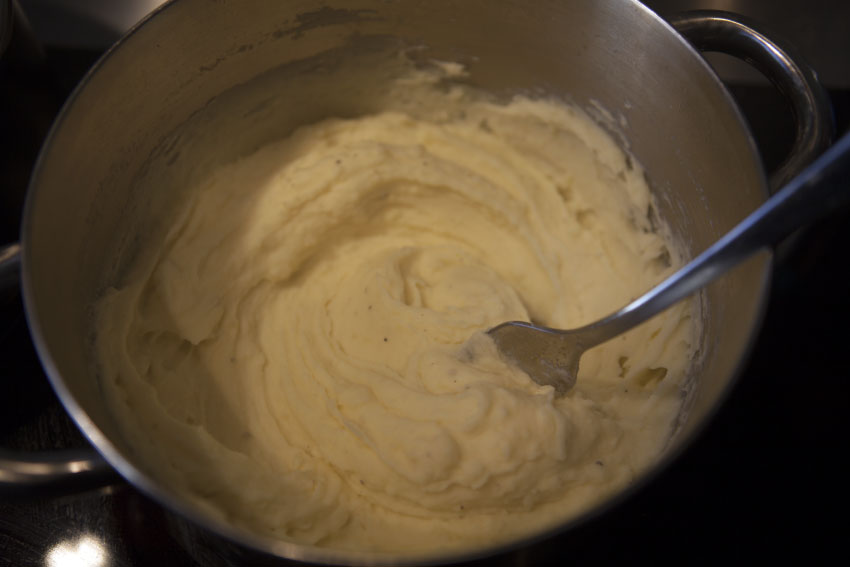
  2. Make the mash potato, being sure to end up with a light and creamy texture – season to taste. Leave to cool.
  3. Heat the oil in a large skillet or frying pan over a medium/high heat.
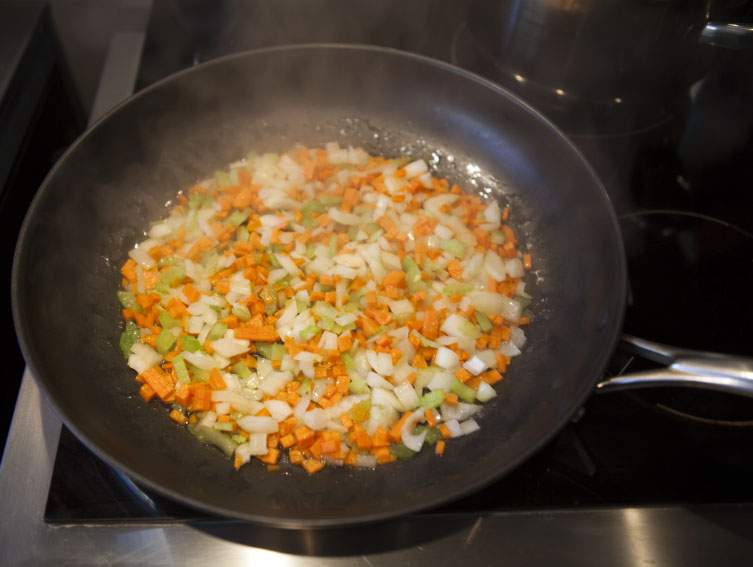
  4. Sauté the vegetables until beginning to brown – about 10 minutes.
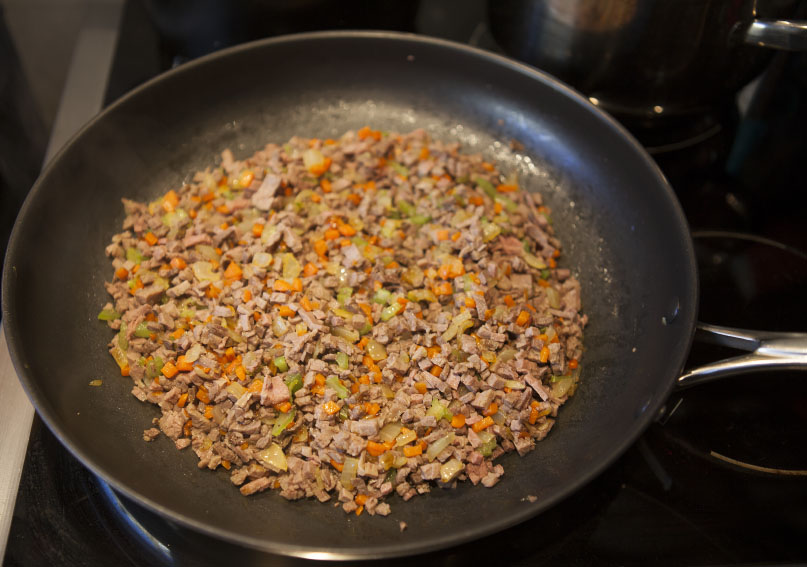
  5. Add the meat to the pan, mix thoroughly with the veg and cook for about 2 minutes.
  6. Add the flour and mix well, cooking for a further 2 minutes.
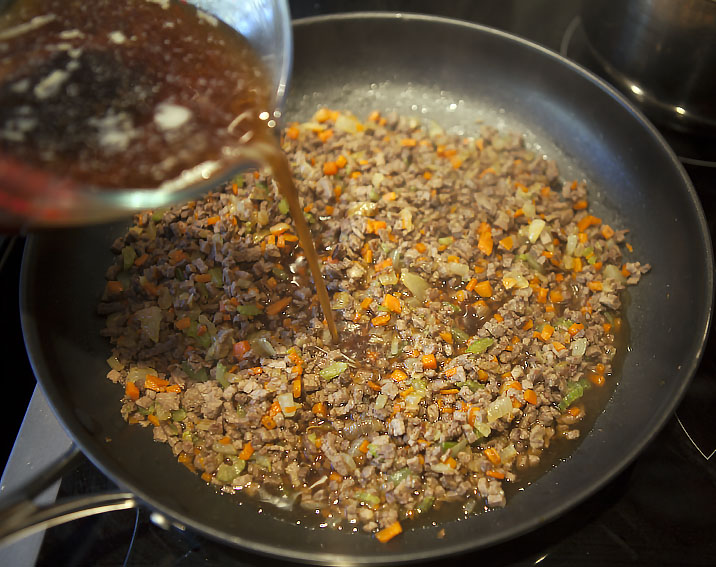
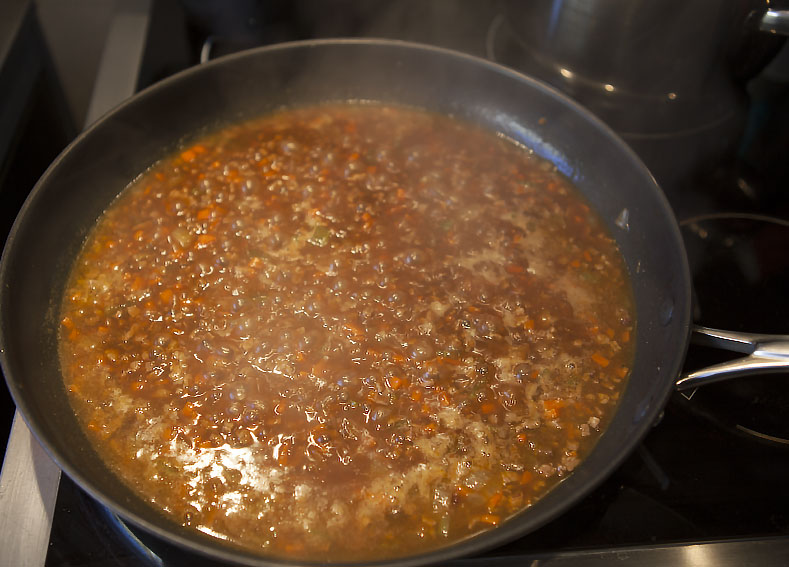
  7. Add the stock, brown sauce, Worcester Sauce and season well.
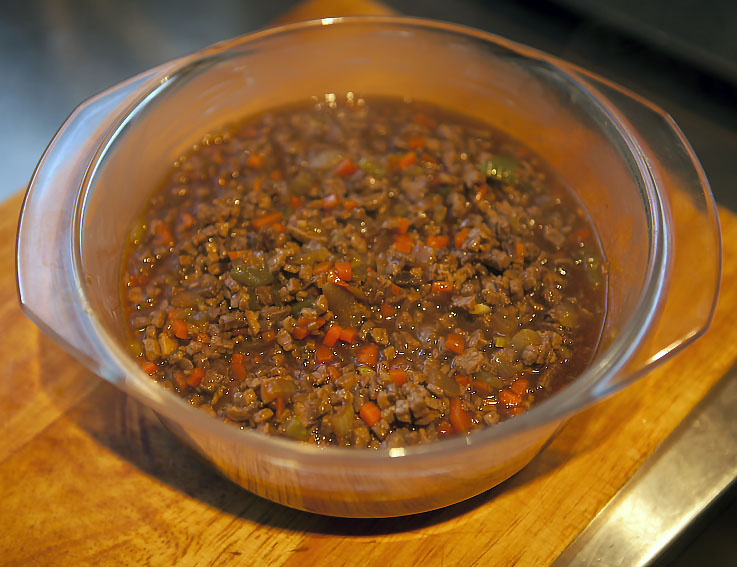
  8. Cook on a high heat until until the stock has reduced somewhat and the pan contents resemble a ragout.
  9. Check the seasoning and pour ingredients from the pan into a well buttered 2 pint oven dish.
  10. Leave to cool for about an hour, until a skin has formed on the surface of the ragout.
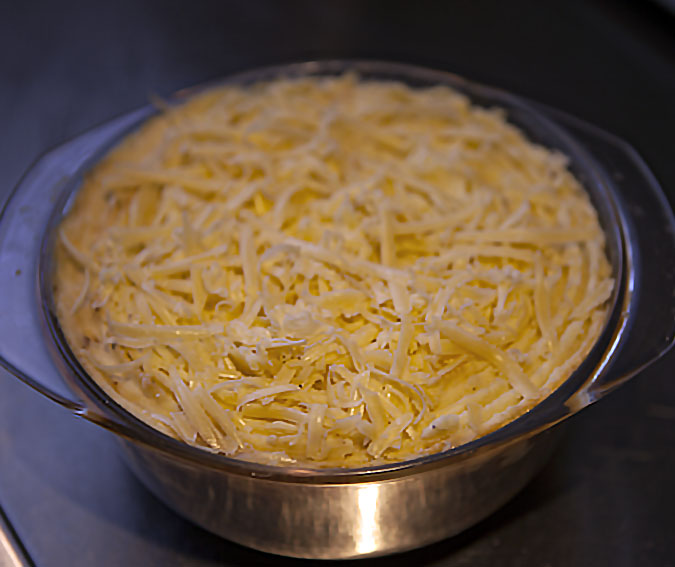
  11. Carefully spoon the mash onto the ragout – be careful not to push the potato into the ragout – then spread out with the back of a fork until the potato is level and neatly ridged.
  12. Sprinkle the grated cheese over the top.
  13. Place in the centre of the oven for 25 – 30 minutes until the pie is bubbling.
  14. Serve with a heap of fresh or frozen peas and wash down with a mug of strong English tea, a glass of good ale or a spicy Côtes du Rhône…

(For shepherd’s pie simply substitute the beef with lamb or mutton, use a lamb gravy or rich lamb stock, or a rich chicken stock, and omit the cheese topping.)

  • Hogget meat is from a sheep between 1 and 2 years of age; much loved by connoisseurs of the animal.