

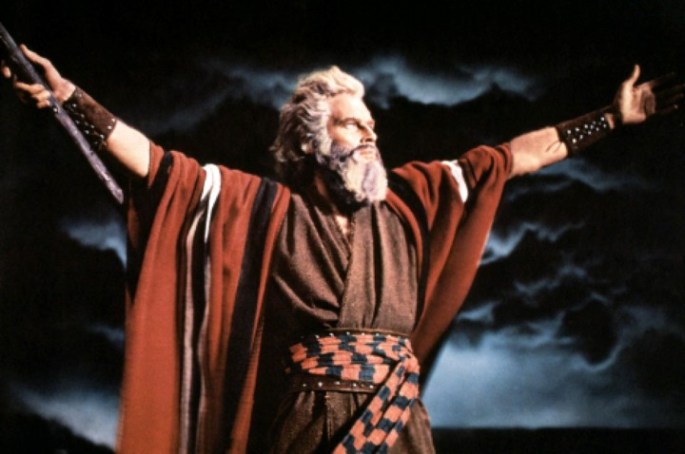
The artistic shaping of visual perceptions of, and sensibilities towards biblical events and personalities from Bible times to the present day.
The earliest attempts at putting biblical narratives on the silent black and white screen relied heavily on iconic 19th century mezzotints by people like Gustav Doré for visual inspiration. In these two examples from the mid-1920’s, Michael Curtiz and Cecil B DeMille respectively, using a typical tableau format virtually copied the great biblical engraver in every detail…
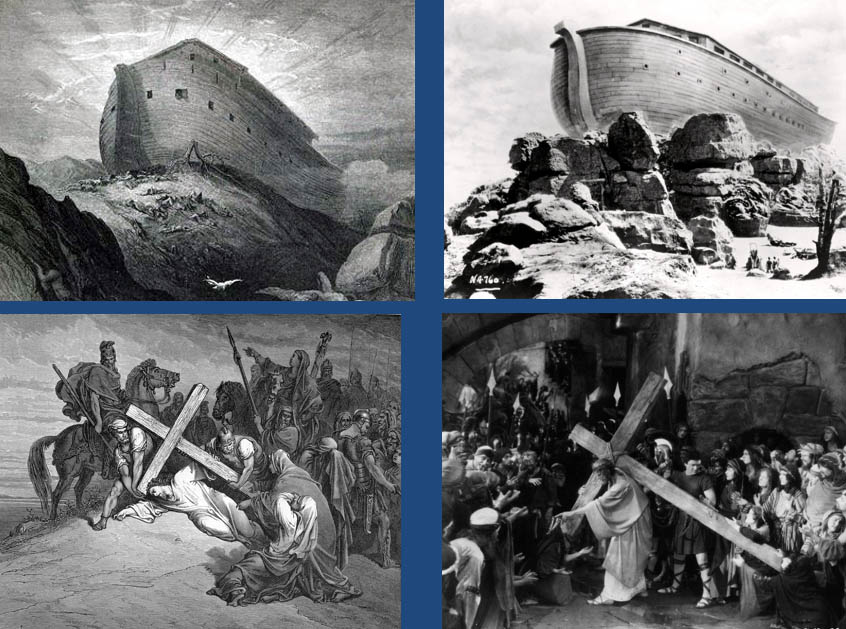
It was only with the advent of sound and Technicolor that film studios began to bring new energy and contemporary influences to their biblical epics.
They say it takes one to know one – and this is certainly true of entertainers. John Martin, as I mentioned in the previous post, was the consummate entertainer in paint of his era, and it was only natural that his genius was recognised and emulated by the consummate entertainers in celluloid of the following era in visual art. Perhaps the two cinematic artists and entertainers most directly influenced by the paintings of Martin were D. W. Griffith and more interestingly for our purposes here, Cecil B. DeMille, who also shared Martin’s fascination with biblical subject matter. If we look at their two versions of the parting of the Red Sea one above the other, you can see just how much DeMille was inspired by the Victorian artist…
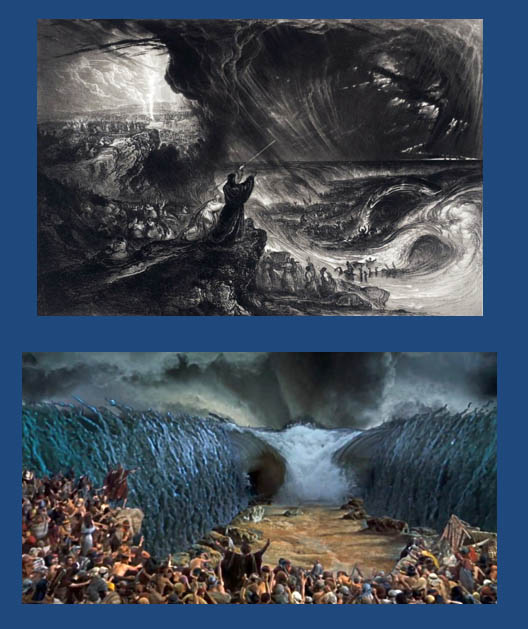
But while Martin’s motivation was primarily Christian in origin, DeMille’s main preoccupation, in his post-war epics, was with using the Bible as a propaganda tool for fighting the Cold War. For DeMille, in his 1956 Ten Commandments, the Hebrews are the Americans and the Egyptians are the Soviets.
DeMille’s earlier 1947 epic, Samson and Delilah, covered the same basic territory of vice and decadence, and its implicit association with Soviet tyranny – in Philistia this time – and faith and redemption and it’s implicit association with ideals of America and its way of life. An interesting, and little remembered footnote about this film, which further illustrates the malleability of the biblical message is the fact that DeMille based his screenplay for this film on a novella by Ze’ev (Vladimir) Jabotinsky, called Samson the Nazirite which described Samson as the ancient ideal for the modern young Zionist…
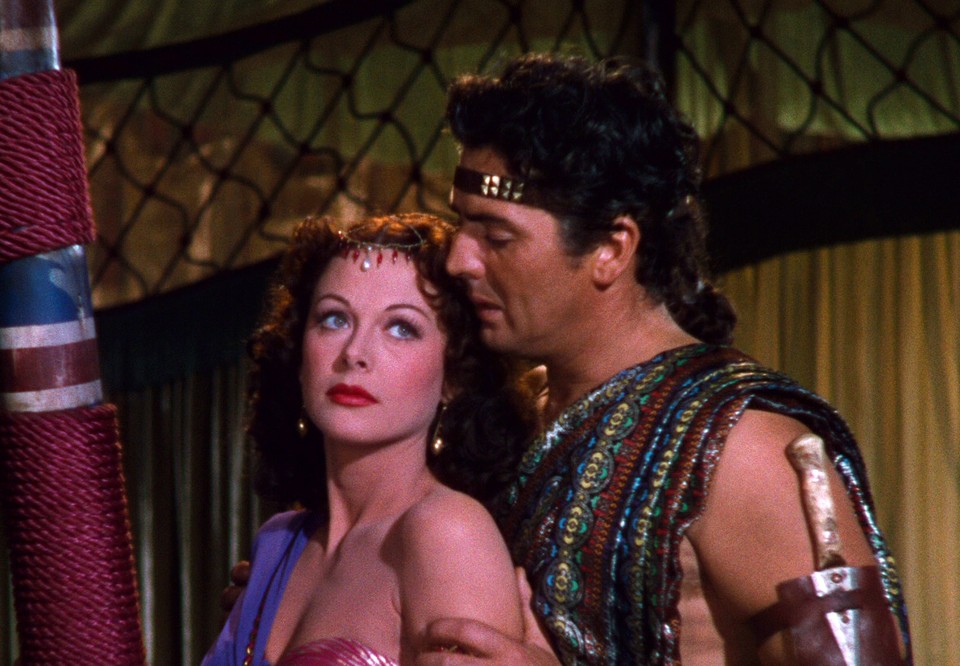
The pliability of biblical messages are not merely reflected by the way interpretations, stresses, agendas and sensibilities alter from one era to the next, but perhaps even more starkly, by the way readings of a single narrative offer divergent truths for exact contemporaries, and often, even when working upon the same movie project.
The Ten Commandments movie offers a graphic example: Firstly, there’s DeMille himself, an ultra-conservative for whom the Exodus text was, with just a wee tweak or two, an anti-Communist document. Moreover, it has even been suggested that Charlton Heston’s Moses was based upon Senator Joseph McCarthy. Another of his main stars was Edward G. Robinson, albeit playing a villain, was both a McCarthy victim and a proud Jew, for whom the main joy of the role was taking part in a recreation of the genesis of his people…
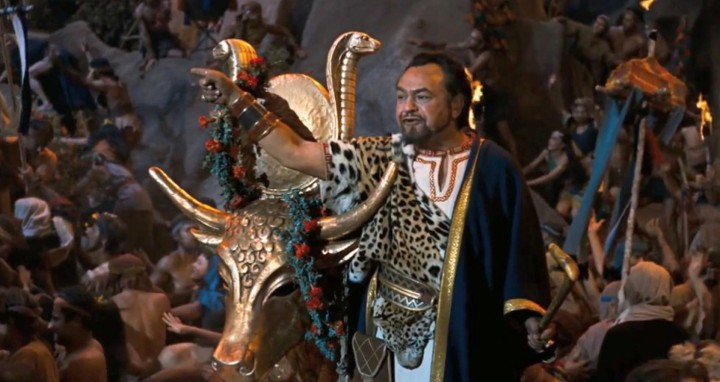
Meanwhile, DeMille commissioned another Jew, the young Elmer Bernstein to compose the score. Bernstein, a proud Zionist himself, had his own contemporaneous take on the Exodus narrative, and presumably, totally unbeknown to DeMille scored the incidental music to the Exodus from Egypt scene itself, an exuberant triumphal march, as a barely disguised version of The Hatikva, the new Jewish state’s national anthem!
Whatever the MaCarthy link – or not – DeMille’s primary reason for casting Heston as Moses was because he thought that the star resembled Michelangelo’s statue of Moses, which like Michelangelo’s God, and David, DeMille considered as visual templates…
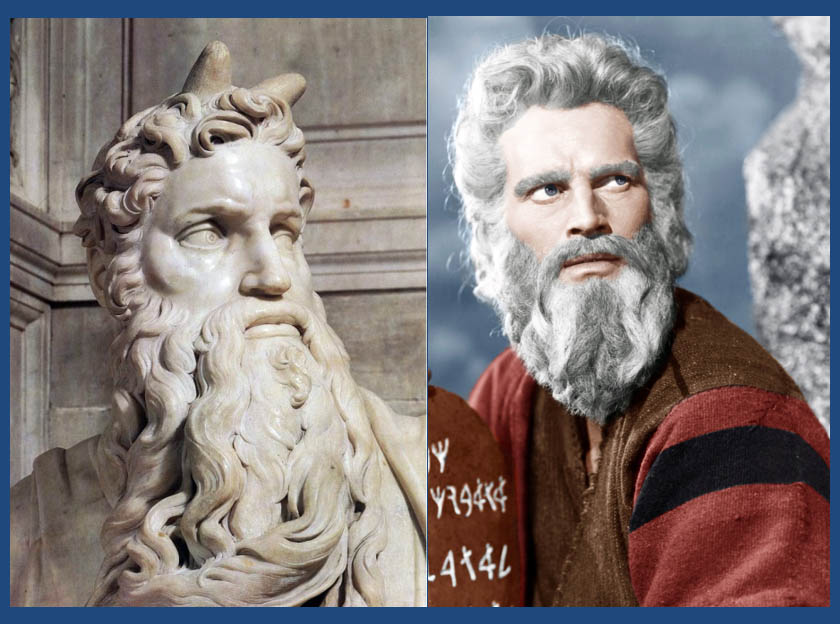
In other words, in just one biblical epic, we have a complex mélange of interpretations, analogies, symbolisms, and historical artistic influences, all revolving around a single biblical text. Ultimately, whatever one’s opinion of him as a person, the fact that today, for millions of people of my generation, whatever our academic knowledge and sense of historicity, our conditioned reflexive image of Moses, is a white-bearded Chuck Heston in his Levite robes testifies to DeMille’s indisputable artistic genius.
The repeated Cold War motif in DeMille’s post-war, biblical output was picked up by other directors too and continued throughout the 1950’s into the 1960’s. The Soviets reprised their Philistine incarnation in Henry King’s notoriously stodgy David and Bathsheba. Gregory Peck’s unusually wooden performance as King David did not only reflect his own discomfort and awkwardness in a role for which he was obviously well aware he was horribly miscast, but also his confusion at playing the supposedly, passionate, lusty monarch fighting his own immoral demons while in the otherwise presidential guise of a sort of biblical version of Abraham Lincoln-cum-FDR. Peck’s David notwithstanding, for sexual temptation read the lure of communism symbolised by Bathsheba’s / Susan Hayward’s red hair…

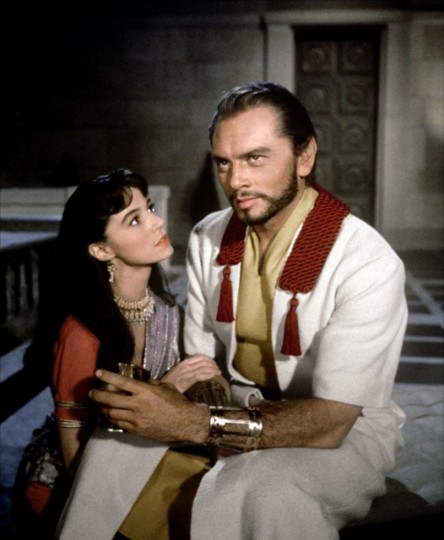
A few years later another King, King Vidor this time, filmed the story of David’s successor in the movie Solomon and Sheba. With no Philistines left to fight alas, the Egyptians are erroneously re-cast in the Soviet role with the beautiful temptress Sheba representing the “Red under the Bed” element – or more properly in this interpretation which really was very racy for a 1959 Hollywood production, “the Red in the Bed”.
Despite this, and a relatively daring orgy scene which pushed the Hays code regulations to their limits, the only real point of interest has nothing to do with the Bible or art, or art and the Bible, but the fact it was a rare opportunity to see Yul Brynner with hair!
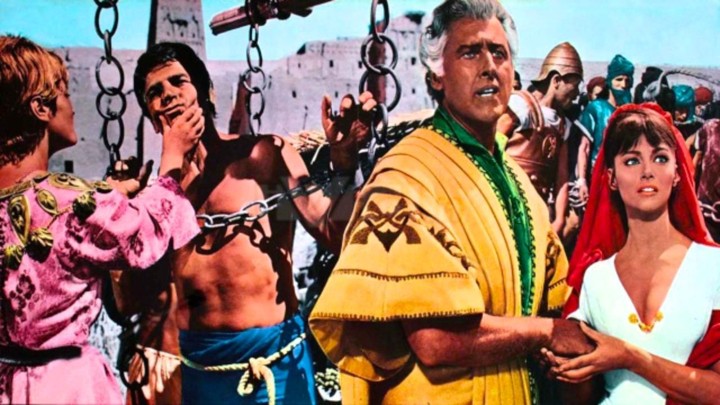
Another, and even more bizarre Old Testament epic with heaps of early 1960’s innuendo was Robert Ulrich’s Sodom and Gomorrah which, with its anachronistic anti-slavery / equality theme, and Christian-like Hebrews and its apocalyptic climax somehow managed to conflate civil rights with the nuclear threat.
As the 60’s rolled on and the rising spectre of Vietnam gradually replaced the Cold War and possible nuclear apocalypse as the main western socio political preoccupations, Hollywood begins to turn away from the sex and spectacle of the Old Testament and ever-more towards the story of Christ and the New Testament. Christianity-associated epics had been made in the 50’s, but movies like Quo Vadis, The Robe and Ben Hur, for all their solid Cold War credentials had little to do with actual biblical texts, using iconic isolated episodes such as the crucifixion merely as vehicles upon which to hang their non-biblical plots.
With Vietnam everything became more clouded, and as the socio-political certainties of the post-war years began to erode so did the brashness and confidence of the American biblical-themed movie makers. It seemed that these more nuanced times called for a more complex message, and for whatever reason, for the first time since the days of the silent screen, Hollywood turned back to the story of Jesus to either reflect and / or project its modern pre-occupations with themes like forgiveness, peace and love. It’s hardly coincidental then, that Nicholas Ray’s King of Kings coincided with the beginnings of the Hippie movement, even providing that movement with the ultimate proto-Hippie a full six years before The Summer of Love, in the form of Jeffrey Hunter’s fabulous-looking Jesus…

Four years later, Max Von Sydow played a more austere, more monkish Jesus – an antidote to what the critics had regarded as Hunter’s lightweight, cardboard Christ – in George Stevens’ The Greatest Story Ever Told. The message from the 1965 movie however, with the Vietnam War now in full throttle, was an even more strident call for peace…
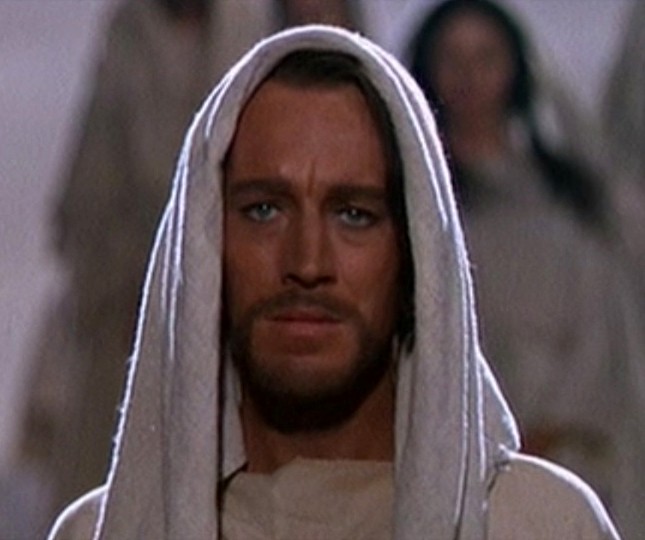
For many people of my generation, brought up on Hollywood movies, these were the images of Jesus I grew up with, and at the mention of Jesus, I’m as likely to visualise Jeffrey Hunter as I am anything suggested by a Renaissance or medieval artist. Cinema (and now TV too of course), more than sculpture or painting, and certainly more than literature, has emerged as our primary cypher for the absorption and dissemination of biblical texts, and for reflecting back upon those same texts, the current forces of social and political moral fashions and sensibility.
Two forces which govern just about every production of a modern biblical movie; The only two constants, are a need for realism, and a need for historicity. Whether your Jesus was a peace-loving environmentalist or a Sicarii resistance leader; A promotor of women priests or rabbinical traditionalist; A Talmudic homophobe or a misunderstood sexual libertarian; The actual Son of God or just a prophet of God; Whatever, these two forces now govern any biblical movie script, from whatever socio-political, religious, or even anti-religious perspective the given movie-maker is coming from.
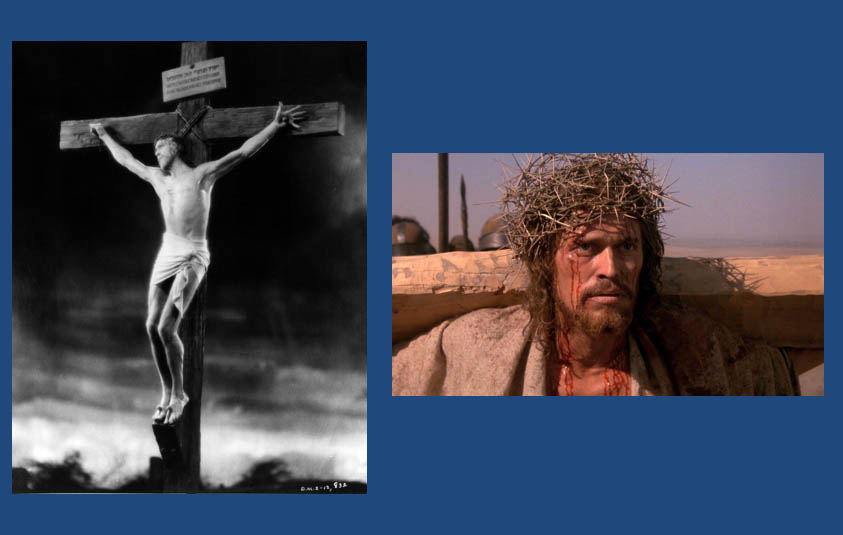
The Jesus of Martin Scorsese’s Last Temptation, for example, is a mass of contradictions that reflects these current dichotomous moral pressures as much as anything actually biblical / source related. The film, so nearly a masterpiece is brought down by its failure to harmonise both modern realism with historicity, a hopeless task by definition, and both of these with who and what the biblical Jesus and his message actually was…
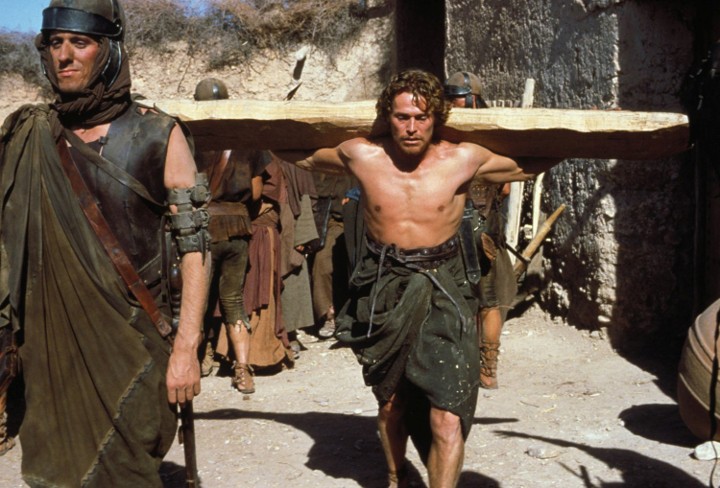
Perhaps, because of the relative failure of the Scorsese movie, it was another sixteen years before Hollywood – or more properly given the circumstances – a Hollywood director took up the challenge of filming the Gospels. Mel Gibson’s 2004 Passion of the Christ attempted to dodge the kind of message-related issues that were both the essence and the downfall of The Last Temptation by avoiding the issue of interpretation altogether and simply recreating an amalgam of the climactic narratives of four gospels (and additional sources) as faithfully as possible, even to the point of having the actors speak in Aramaic and Latin.
What was really interesting to me, as a Jew, was just how dull I found the movie. Following all the plethora of pre-release publicity, there I was, braced for an anti-Semitic diatribe of early-Church proportions, and instead, the primary thing which offended me about the movie was being utterly bored. The Passion of the Christ, for all its infamy and controversy was about as thrilling as one of The Simpson’s Reverend Lovejoy’s sermons, only with blood and gore…
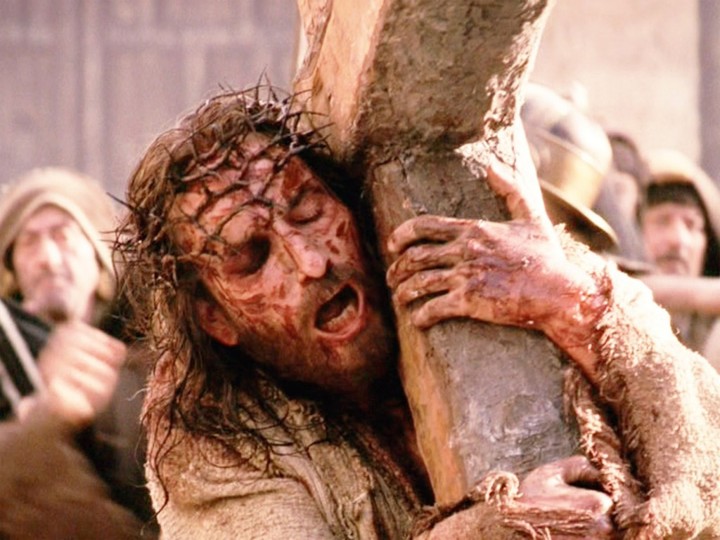
As I left the cinema I asked myself why it was that this, perhaps the most faithful and pious attempt at converting biblical texts to film since the advent of the moving picture had failed the first duty of movie making, and of making art too; the duty to entertain. Certainly it was popular with many pious Christians, for whom story of the Passion is thrilling, in and of itself, and for whom the movie really was the Gospels brought to life. Yet, for most of the rest of us, not of the faith, the film was strangely forgettable.
For me, the most useful lesson from Gibson’s Passion, was the realisation and understanding that the biblical texts are actually templates and blueprints. They are the basis of ideas, ever-ripe for further development and interpretation by authors, poets, artists, composers and movie makers gifted enough to handle the source material.
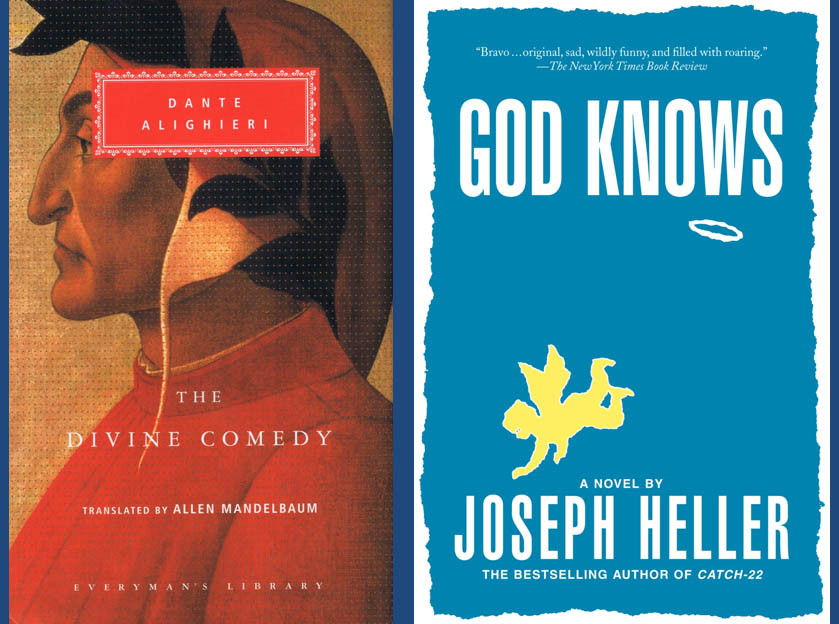
All great exponents of the written word, from Dante to Joseph Heller…
All great visual artists, from Michelangelo to Epstein…
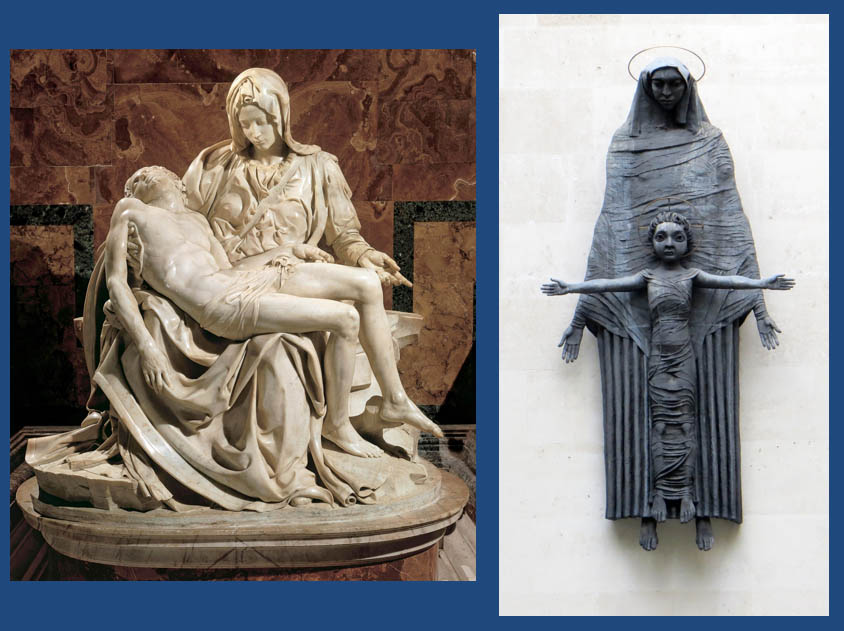
And all great movie makers, from DeMille to Scorsese, have instinctively understood this truth…
A truth which is the secret of the Bible’s success, its timeless ability to be relevant and to matter.
It is fascinating and somewhat ironic that the most faithful and fundamentalist approaches to biblical artistic interpretations are generally those with least to offer with regard to artistic expression or even the dissemination of biblical messages. Of course there is a place for sermons, but that is surely not on a Cinemascope screen or on the walls of a gallery. And, yet more ironically vis-à-vis the relationship of the visual arts with the Bible, is that it is those who come to the texts with open minds, questioning spirits and even degrees of cynicism that end up producing the richest offerings.
What I have attempted to present here, is a broad description of how visual artists’ responses to the biblical texts have evolved over the past three millennia, according to their own contemporaneous background noise, and to show the extraordinary power of some of those visual artists to condition the mind’s eyes of millions of people across the ages. Ultimately, whether or not God worked out is up to the artist concerned, and that I guess is just how the “God” of most of the artists we have been considering in these posts would have liked it.
 ARKS, ADAM AND AXARQUIA