SIDNEY – A Tribute: part 5*

the master of anecdote…

In addition to his many talents, Sidney was a fine raconteur and a master of the anecdote. I related one of his most amusing military national service stories in an earlier post, but the Studio also offered up many hysterical moments, none of which my uncle enjoyed relating more than the story of the prize ram…

About 1969/70, British Woolmark (now Woolmark Company) hired Sidney to do a campaign for them. In his wisdom, the director of the first shoot decided that it would be a good idea to position a prize ram between two pretty models wearing the latest woollen clothes. This might have been a good idea, had it been a pastoral location, but he wanted it to be a studio piece. So, one prize Merino ram, and his farmer were summoned from deepest Sussex to Arkwright Road NW3. Even then things might have worked, had not the ram been brought straight from the muddiest, rain-sodden pasture, it’s fleece – the focal point of the shoot – caked in thick mud.
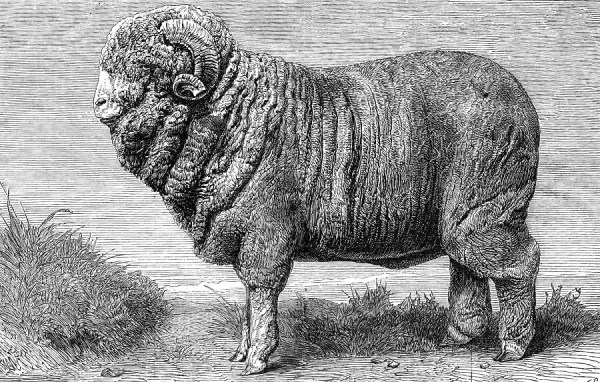
An old engraving of a Merino ram.

Sidney and his team had no option but to attempt to wash the ram, and with the farmer’s assistance, they managed to get the animal into the bathtub in Sidney’s flat – attached to the rear of the studio. However, the resulting bathe resulted in a drenched, grey woollen mat, rather than the snow-white, fluffy, pristine Merino fleece required by the director. Then someone suggested using a hairdryer to dry the sheep, which, after an hour or so actually worked but it still left the wool looking too dull. Then someone else had the brilliant idea to cover the ram with talcum powder. At this point, the farmer leant over to Sidney and warned him in his rich Sussex tones, “I should warn ye, that e do like to pass a bit o’wind…”.

The resulting photo session was a farcical nightmare: The ram was maneuvered onto the backing paper between the two models, donning their woolen finery. The talc, having got up the animals nose, caused it to sneeze and then fart. Every time it sneezed, a great cloud of talc filled the room like a fog. Every time it farted, a rich, pungent stench accompanied the fog, all of which caused the models to flee the room, choking and gagging. Then, the inevitable happened when the farting culminated in the ram evacuating its bowels – massively.

Somehow, eventually, the shoot was completed, with typically excellent pictures, of serenely smiling, elegantly attired girls, either side of a majestic, pristine and proud ram.

Unfortunately, I don’t have photos from the shoot to show here, but I do have another image which shows that The Studio could also be a place of intentional fun…
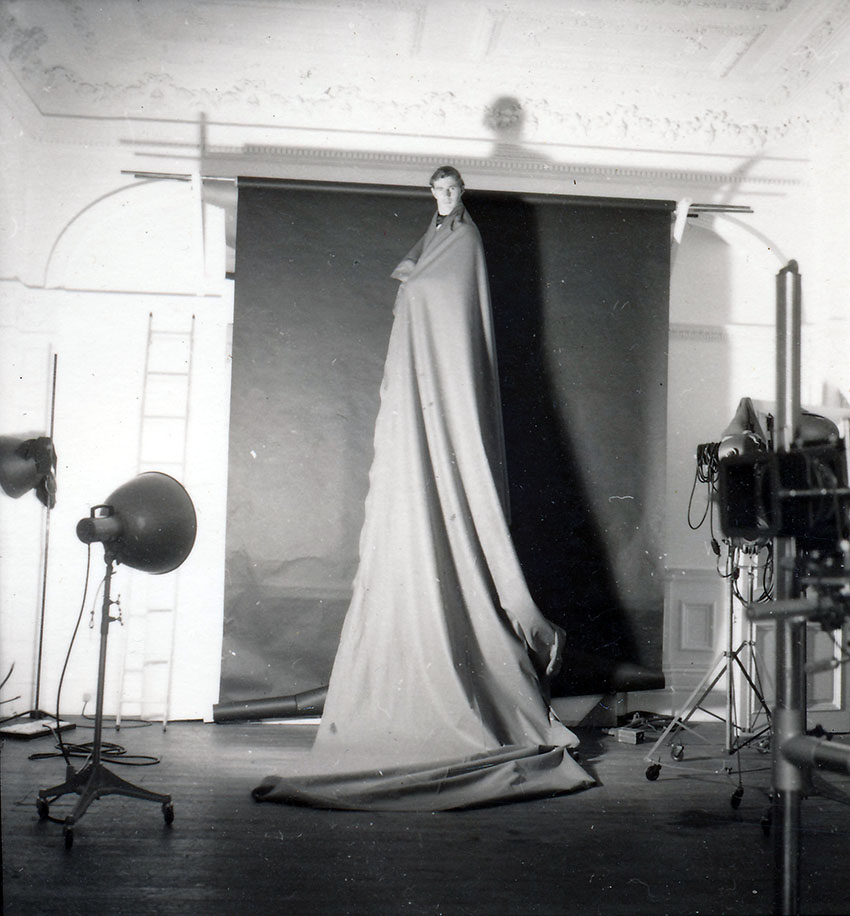
One of Sidney’s first assistants at the Studio was David Hendry. He was a tall man, but not quite this tall. This photo dates from around 1960.

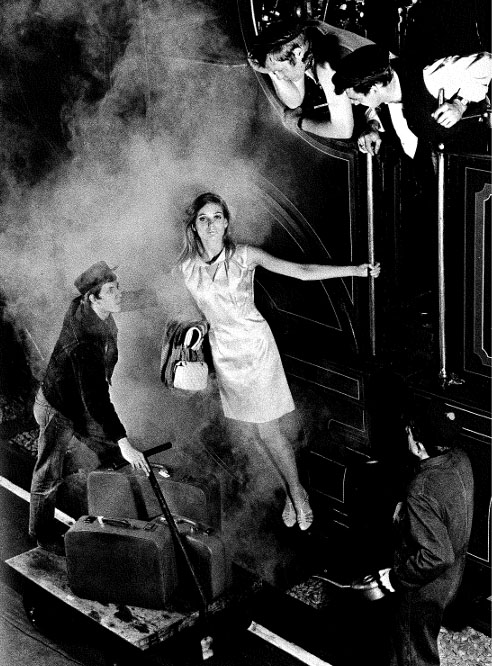
* The title picture of a typical location shot product of Sidney’s Studio of the stagier variety, from The Art Director’s Index to Photographers, 1970 edition. Sadly, I am unable to identify the model (all suggestions welcome!) or the brand. Even more sadly, I am unable to gain access to a whole load of Sidney’s and his colleagues material to share on this site, including many famous and culturally important images. Hopefully, one day they will get the exposure they deserve, if not here, on some other platform where their contribution to British and international advertising can be fully appreciated and even perhaps inspire future generations of photographers and advertisers. I feel sure that this is what Sidney himself would have wanted and it is the legacy he deserves…

SIDNEY – A Tribute: part 4*

From 1960 until 1975 “The Studio” was a hive of photographic activity. A seemingly unremarkable corner of NW3 (where Arkwright Road meets Frognal, to be precise) became the scene of remarkable commercial and artistic creativity. Some of the UK’s, Europe’s and even some of America’s most iconic advertising images of the era emerged from this most unflashy and unpretentious of locations. Sidney and his gifted, happy team produced a stream of pictures that encapsulated Britain’s mood shift away from dull, post-war straight-lace to swinging 60’s cool and verve.

My older brother Michael in a magazine ad for a-then-state-of-the-art Creda clothes dryer. We can imagine the caption that went with the picture

Moreover, their work didn’t merely reflect the prevailing trends but often set the tone of the times with a stream of iconic (a massively overused word, but not in this case), highly innovative and enduring images.

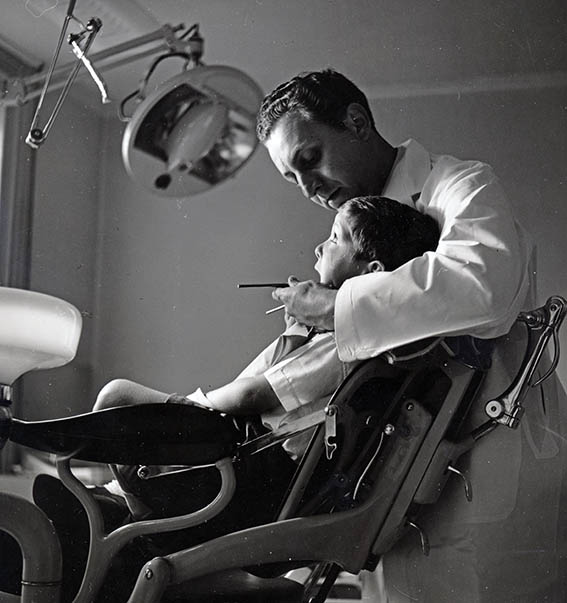
Sidney the model for once, at his dental practice, with Michael in the chair. My father Gerald Green was the art director of the shoot, and he probably took the photo. In the early days of the studio, Sidney got a lot of work through Gerry (as he was known then) and his partner Bill Young’s agency (Crane Advertising), which in turn received a lot of government sponsored commissions. This was part of a campaign to promote dental health in children…

Famous female faces to grace the Studio included Pattie Boyd (future wife to George Harrison, then Eric Clapton) Nancy Edgerton, Sandra Paul (now Howard), Joanna Lumley,  Celia Hammond, Julie Bishop, Adele Collins, Ann Kerr, Paula Heyworth, Jeanette Harding, Anya Sonn, Tammi Etherington, Davina Taylor, Biddy Lampard, Christine Williams, Julie Bishop, Pat Knight and Margaret Lorraine. Among the male models were Ken Swift, Geoff Wooten, George Lazenby (later 007), Pip Perkins, wrestler, Jackie Pallo and Norman Lambert .

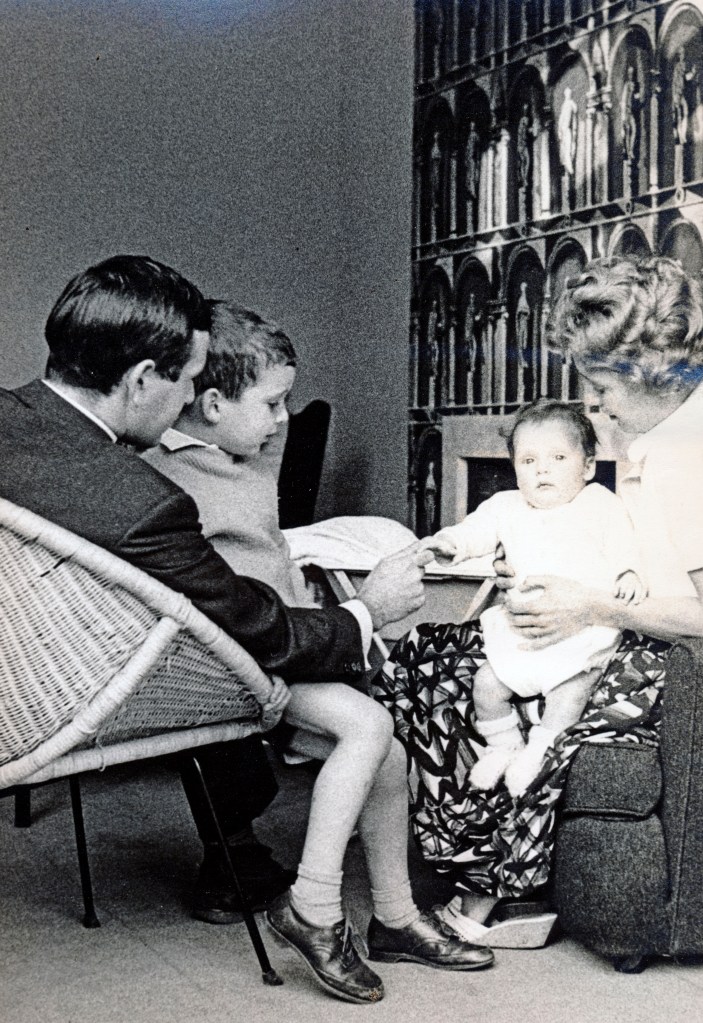
The Green family in another government sponsored ad for family planning, and The London Rubber Company (through the use of Durex). The poignant story behind this photo can be found in an earlier post…

In addition to Sidney and Co’s classic fashion shots, they gave 1960’s Britain an original and often defining glimpse of everything from Danish Bacon, Guinness, Heineken Lager, Paxo Turkey Stuffing, Carr’s Water Biscuits to Max Factor roll-on deodorant (and dozens of other products besides).

An ad for Selfridges boys shirts – in addition to all his many other activities, Sidney was staff dentist at Selfridges for over 30 years. This resulted in him doing much of their ad campaigns in the 60’s and 70’s, and, best of all, being given a lifetime 33⅓% discount card on all products – including sale goods. Being leant Sidney’s card was one of the most sought after perks by all those who worked with him and for him (including his family members such, as Michael and I in this shot)…

Apart from being a seriously good fashion photographer, Sidney was a master of head-shots and a genius with still-life. Long before “food styling” was a thing, Sidney’s food and drink ads in particular were masterpieces of light, colour, depth and shade, often setting benchmarks for all those that followed.

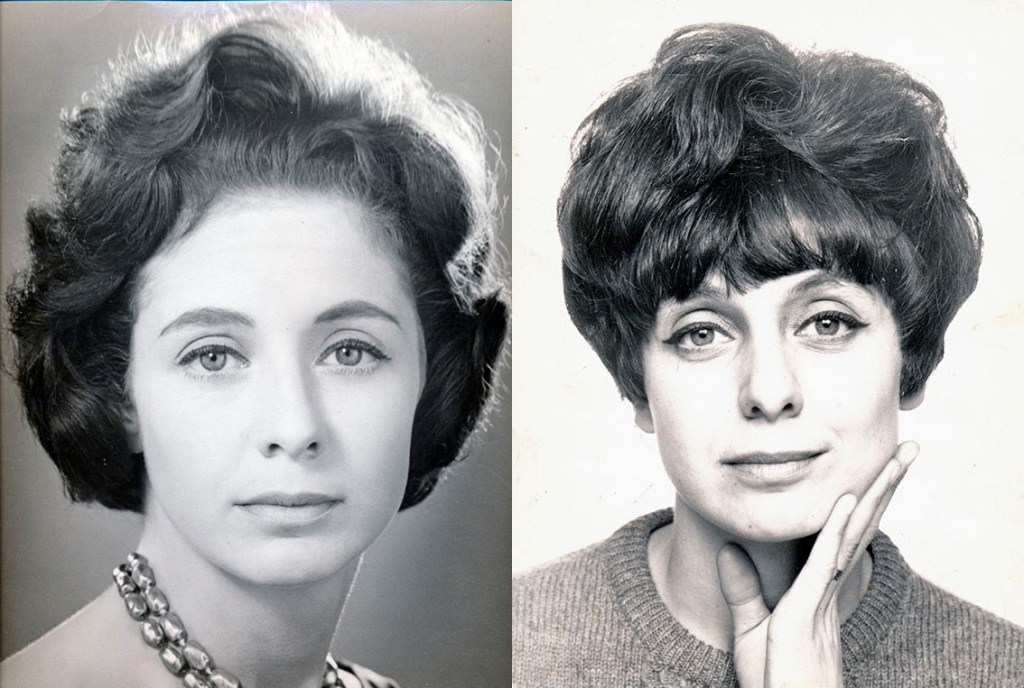
Hannah standing in for a model on a Max Factor shoot on the left, in 1964. The photo on the right dates from 1967, but I can’t recall what it was for. From my recollection models were often late for work, and I think mum was pulled in on at least three occasions for headshots like these…

Unfortunately, I do not have access to much of Sidney’s professional portfolio, and much of the material I do have, I do not have the rights to reproduce here. Nevertheless, I am fortunate to own all of Sidney’s work for which I, and other family members were the models. And, while some of these images will be familiar to regular readers of these posts, there are also one or two charming surprises which give at least a flavour and the atmosphere of the Studio’s output in the early-to- mid 1960’s.

I think this was the final time I modelled for Sidney, about 1967. I know the baseball boots were mine, so I’m presuming that it was for the clothes.

SIDNEY – A Tribute: part 3

the team behind the scenes…

When I began this series of posts on Sidney, I had originally planned to do just three, but since then I have had the privilege and the joy of reconnecting with several of his old colleagues, assistants and models, from the days when he ran one of London’s top advertising photography studios. Subsequently, I now have far more material – anecdotal and pictorial, than when I started out on this mission, and so this will now be number 3 of 5 posts in total.

The most striking – not to mention moving element of this process has been how each and every person I have been in contact with has had nothing but warm memories and kind words about Sidney and their time working at “The Studio”.

This post offers a small, illustrated, behind-the-scenes record of those exciting and pioneering times…

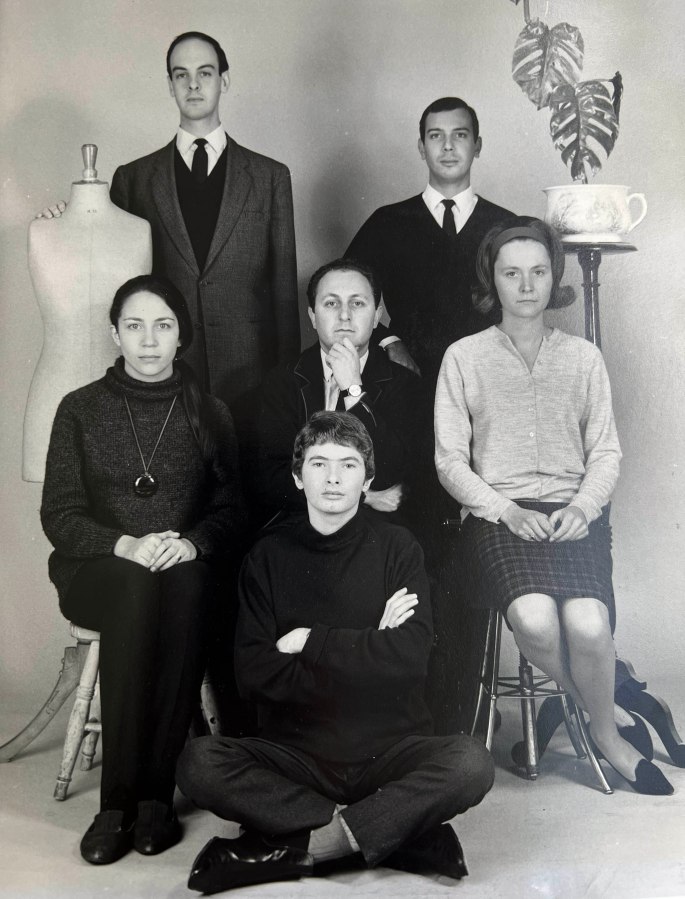
An early publicity shot of Sidney and his team (1964 – taken using a timer): Edgar Asher (TL), Henry Sudwarts (TR), Doreen Dahl (CL), Sidney (C), Faith Hollings (CR), Lawrence Sackman (F). Edgar was extremely tall and thin, and is the only person I know to break their leg playing the violin. He was a fine photographer in his own right and went on to work for the Israel Press and Photo Agency. Lawrence – the youngest of the group – learnt his craft well, and went on to a successful career in art and erotic photography, working with Guy Bourdin and Helmut Newton. More on the others below…
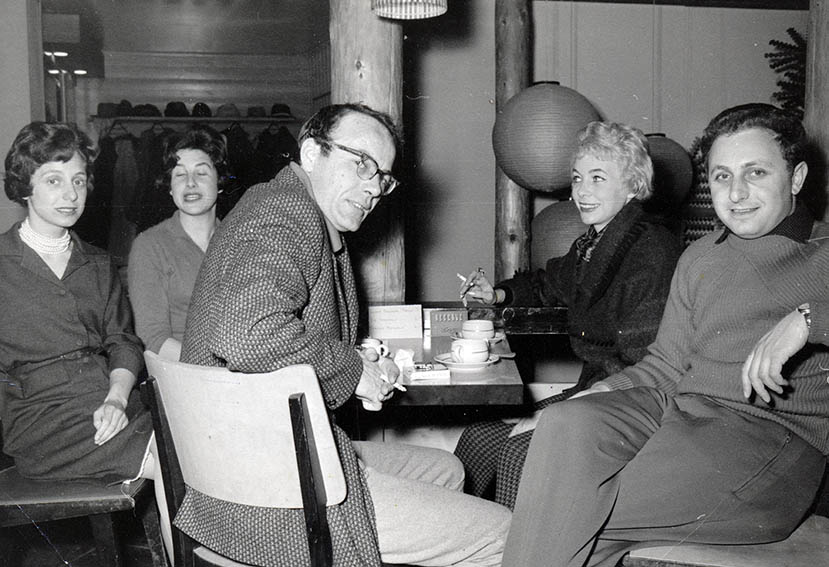
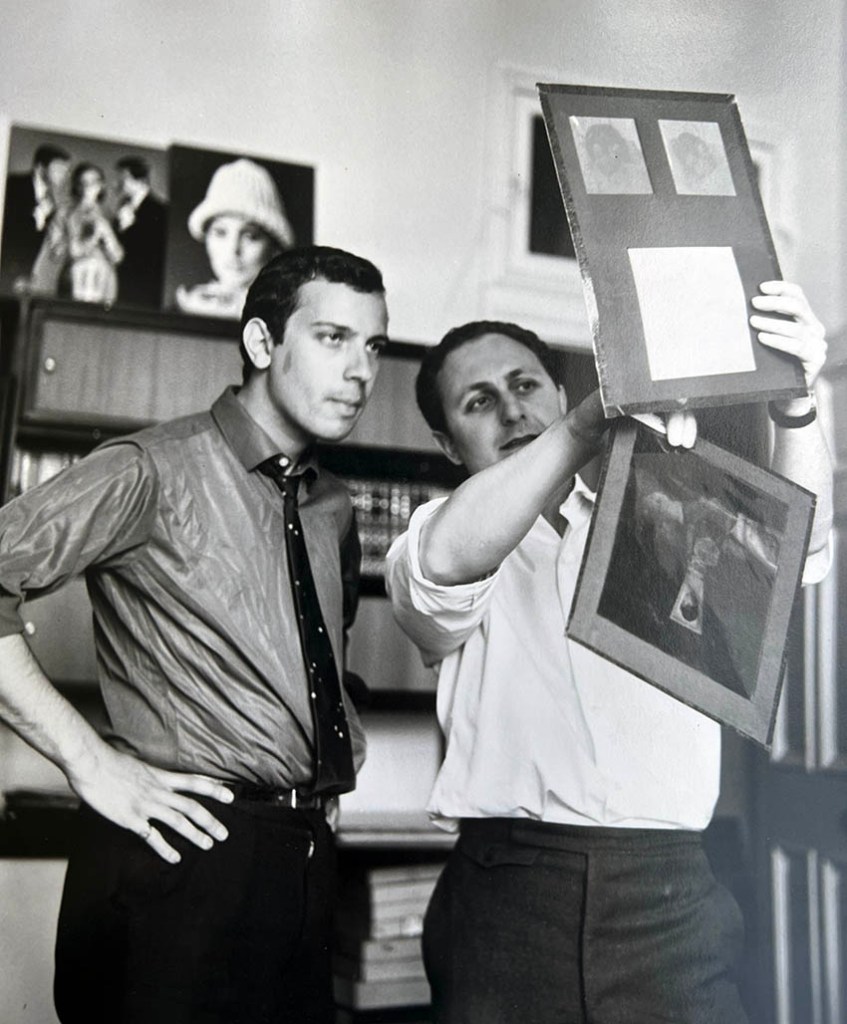
Probably taken by my father, Gerald Green (1960), this shows Sidney with Bill Young and my mother Hannah (far left – Sidney’s sister – and I’m presuming that the two other ladies were accompanying Sidney and Bill). Bill was my father’s partner and became good friends with Sidney. In addition to being an add-man he was also a darn good artist. Two of his gorgeous large oil landscapes adorned my childhood home and strongly influenced my own painting style…
Sidney with Henry Sudwarts, who contributed this and several others of the photos shown here and has some interesting recollections from his time at the Studio. Not only did he get to drive Sidney’s prized Alvis motor car, he also remembers a “Dell Boy”* -like handyman who used Sidney’s basement to stash away contraband cigarettes and radios off the back of a lorry! Henry too branched out on his own in fashion photography before moving into TV in Israel. Having married a South African in 1980 he then moved to Cape Town, where after 30 years working in things as diverse as jewelry and tourism, he picked up a camera again and became an acclaimed wildlife photographer . .
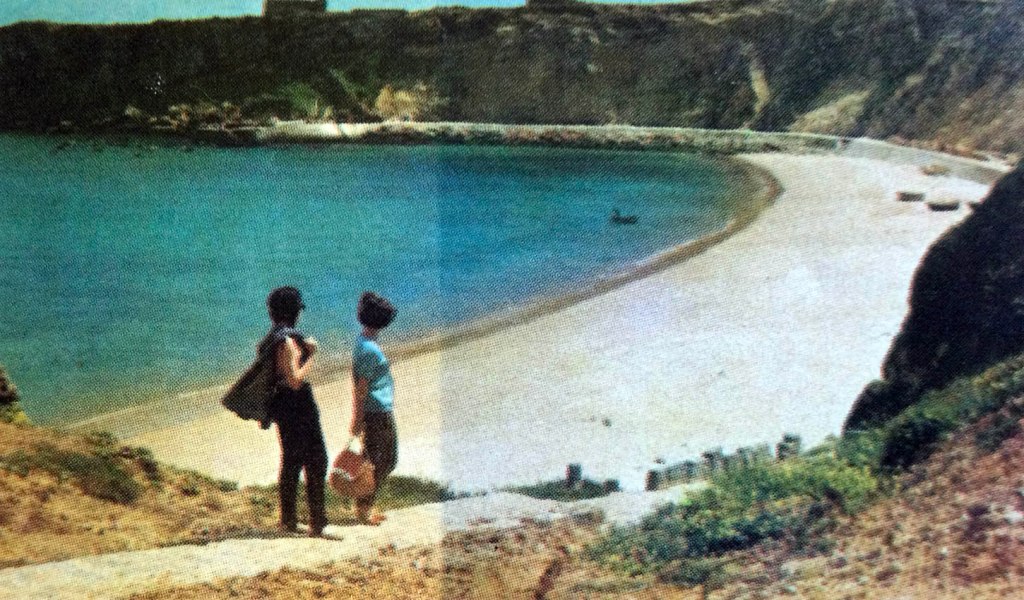
Doreen (left) and Faith from a mid-1960’s shot for BEA (British European Airlines) taken at Sagres on the southern Algarve of Portugal. The main purpose of the trip was a job for Women’s Own Magazine, and the girls were both assisting with the shoot. Faith, whose memories and information have been invaluable to me in compiling these posts, was one of Sidney’s photographic assistants. She has something interesting to say that “to his credit Sidney employed me as a photographic assistant even though I am a woman. Women of my age had to fight to earn a place in a male dominated profession and I had spent three years learning my craft at Guildford School of Art under the the wonderful Ifor Thomas, who was head of the Photographic Department.” Faith now lives in Portugal where she works for an animal charity
Henry with Doreen . Doreen was Sidney’s secretary (or PA in today’s terminology), and also an aspiring classical timpanist. Faith and Doreen became friends, and she would sometimes help Faith with photographic duties, including setting up a darkroom on travelling shoots, such as the one above in Sagres. My mother, who did additional secretarial work for Sidney, also became very fond of Doreen. Sadly, I haven’t yet discovered what has become of her or her timpani playing?
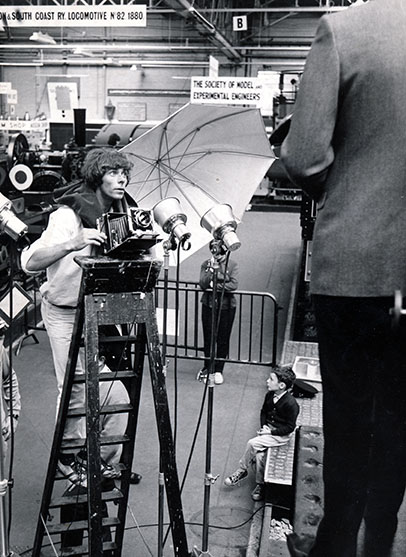
One of Sidney’s later assistant photographers was Peter Watkins, pictured here on a shoot at the London Transport Museum in London’s Covent Garden. Peter also went on to have a successful career as a fashion photographer. The young chap seated is yours truly. During school holidays I often got to watch shoots, but this one stood out for the fact Peter drove me there in his open topped MGB GT – my first time in a convertible sportscar. Other notable photographers and set technicians who worked for and/or with Sidney from 1960-1975 and who also helped me with my research, included Brian Jaquest, Derek Berg and David Hendry.

*For those reading this not acquainted with the long-running British sitcom, “Only Fools and Horses”, Del Boy was a spiv (someone who deals in dodgy and black-market goods), and the program’s main protagonist.