

AND OTHER INTERESTING THINGS ABOUT MY WIFE’S NAME
Many winters ago, Dido and I found ourselves sheltering from a -10°c Prague night in a cozy, smokey jazz club just off Wenceslas Square. The place was full and we had to share a table with a Viennese couple who fortunately turned out to be more interesting than the hapless wannabe Charlie Parker murdering his sax on the stage.
The fact that the couple were a similar age to ourselves, and both handsome and charming, with perfect English was pleasant enough, but it was when we exchanged names that we all almost fell off our seats. We introduced ourselves first with the customary, “I’m Dido”, “and I’m Adam”, to which they replied through wide-eyed grins, “and I’m Eve”, and after a short dramatic pause, “and I’m Aeneas…”
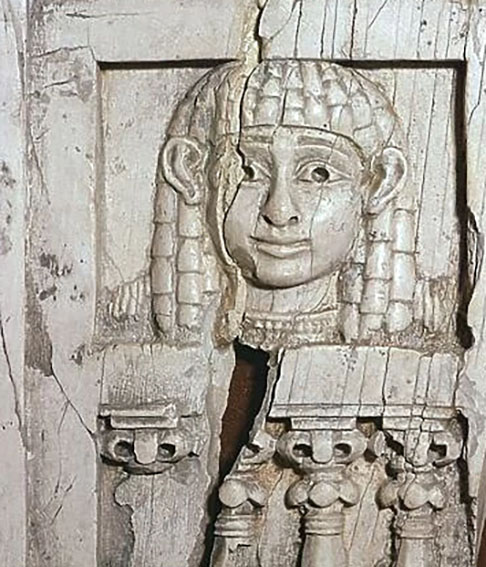
Not only was this a delightful and highly amusing coincidence (it was the only time we ever joked with another couple about the concept of partner swapping – purely in the interests of onomastic correction of course!!) it was also the diametric opposite to the normal response of people upon first hearing Dido’s name.
For one glorious instance no explanations were required, nor any brief lessons in classical mythology and ancient history, nor having to smile away the increasingly tedious “Ah! Like the singer?” (actually born Florian Cloud de Bounevialle Armstrong eleven years after “my” Dido). Instead, just an interesting exchange about why Aeneas, and why Dido: The former, it transpired, because his father was a classics professor in Vienna who specialized in the Roman poet Virgil, and the latter; because her parents had been expecting a boy (long before the days of ultrasound), they had no girl’s name prepared. As they were listening to Henry Purcell’s opera, Dido and Aeneas when her mum’s water broke, the name seemed apposite.

I repeat this story here because it is sweet and pleasant to recollect, but also to hopefully encourage all our friends and acquaintance, past, present and future, who may be ignorant of the facts behind the name to take five minutes and click on this link to learn about Dido (mythic and historic). It’s not only informative, it’s also genuinely fascinating with contemporary resonance (like much myth and history).
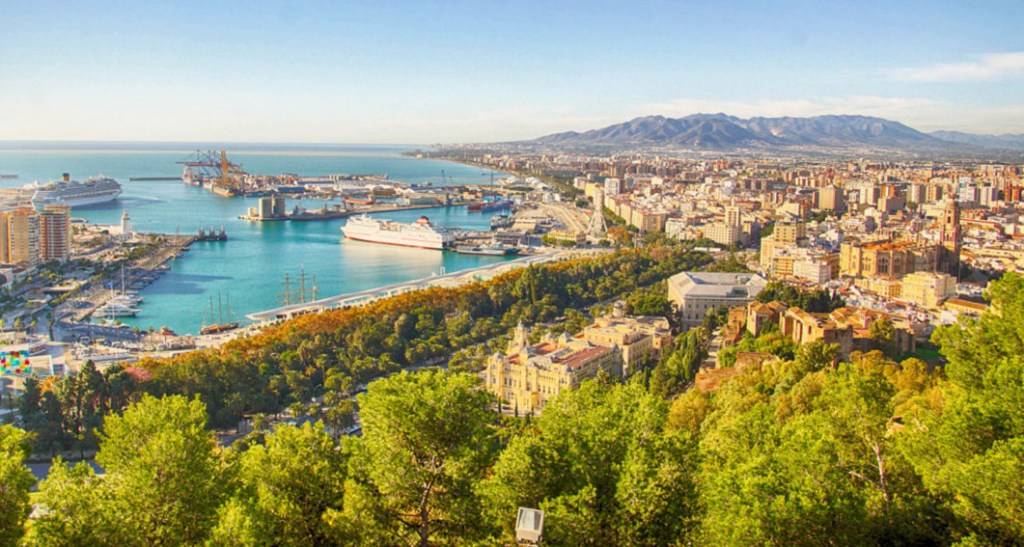
For instance, how many of the people reading this, including my Spanish readers. know that the city of Malaga was founded by Queen Dido’s Phoenician compatriots (and probable subjects) about 2,800 years ago as Málaka (the same time as the founding of Carthage itself). Phoenician was a Semitic sister language of ancient Hebrew, with many close similarities (see this earlier post). Málaka could mean a place where fish was preserved in salt , or it could have something to do with “sailors”. However, given that the Phoenician for queen, is Malgah/Malkah, a more likely meaning is the Queen’s city. And if so, the most likely queen to have a new colony dedicated to her by Phoenician settlers would be their-then queen and sponsor, Dido (more properly, Elissa in her Phoenician form).
In other words, it is quite possible, that my wife Dido, has a home in the province titled for her ancient namesake, and I at least, find that possibility pretty damn cool.
 ARKS, ADAM AND AXARQUIA