


AND OTHER MEMORABLE MEALS IN FORGETTABLE PLACES…
Francophones have long understood the difference between a hearty gourmand and a fastidious gourmet, and their two sharply distinct gastronomic philosophies – the first being a love of all good food (and all good drink), and the latter, a love of the refinement of good food (and good drink). These days, the closest Anglophone equivalent would be “foodie” versus “trencherman” or “trencherwoman”.
As someone who both used to eat regularly in Michelin starred restaurants (including many 3-star establishments), and who makes wine I am often presumed to fall into the “foodie” camp. Yet, while it’s certainly true that I found many of those fine dining experiences highly enjoyable, none of them provided me with unforgettable plates of food. Quite the opposite in the majority of cases, when the theatre of the experience, and the food’s appearance was deemed far more important than what the stuff plated up actually tasted like.
While the advent of Nouvelle Cuisine began my disillusionment with “fine dining”, the arrival of its evil twin-spawn, “molecular gastronomy” and “New Nordic” killed off any lingering affection I had for the concept of haute cuisine. Although, in fairness, the few such up-scale dining experiences I was unable to avoid were incredibly memorable – albeit, for their smug, and aloof awfulness. These days, the minute I see a self-consciously-ernest chef wielding a pair of tweezers I’m outa there quicker than spittle on a red-hot skillet. Ironic really, that the Nordics of all people, should have created the gastronomic equivalent of the emperor’s new clothes. Hans Christian Anderson, being the devout trencherman he was must be turning in his grave.
The reason I mention all of the above, is because I was asked the other day by an old friend to name the best meals from all my years of travel? Then, as I began running through the half dozen or so plates of food that immediately sprung to mind, he and I noticed that not one of them had been served up at a posh restaurant. On the contrary, each and every item was as simple and basic as the eatery in which it had been prepared. So surprised was my old mate by my list, he suggested I devote a post to it, and hence this, which if nothing else, and despite a touch of self-indulgence, might help convince one or two people, especially in these financially stretched times, to look for their culinary treats in good, honest, modest establishments, where flavour and quality is everything.

Wild rabbit stewed with prunes and red wine: Driving down from Catalonia to the south of Spain, we stopped at lunchtime at an empty and drearily decorated cafe-type place – pealing linoleum floor, steel counters and flickering fluorescent strip lights near Gerri de la Sal. Seeing only things like egg, chorizo and chips on the grease-smeared laminated menu, I asked the apparently depressed girl serving us if there was anything else to eat? She said that her father had shot a rabbit that morning and that it had been stewing all day in a “nice gravy”. It was my first ever taste of rabbit of any variety, and it, and the red wine gravy, generously populated with large, juicy prunes was simply exquisite. It remains the best lunch I have ever eaten – anywhere: Price, with a glass of local red; about €4.00 in today’s money.
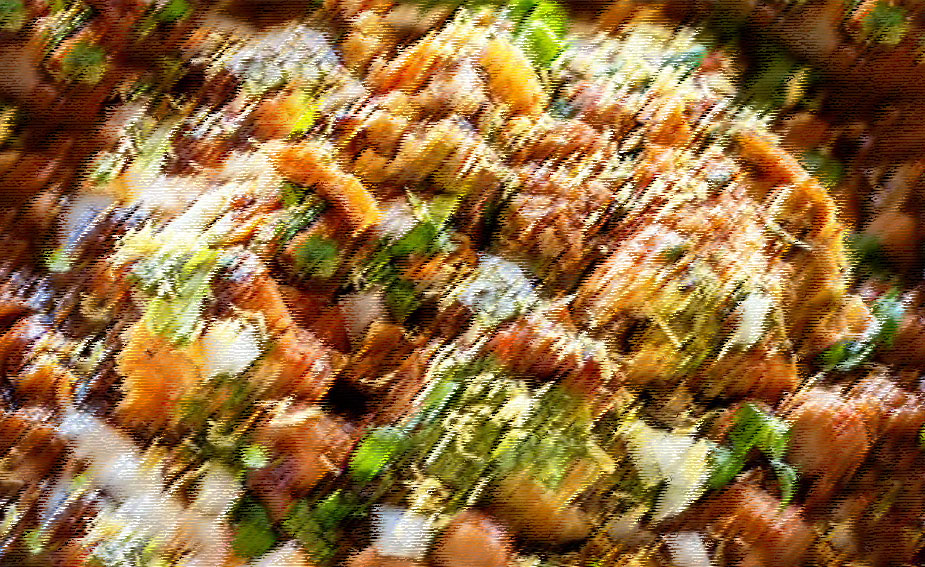
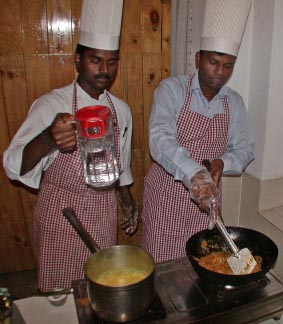
Samosa chaat: During our trip to southern India, we were based in the industrial city of Coimbatore in Tamil Nadu, where Dido was helping set up an autism clinic. One day, while Dido was working, the son of our host took me shopping for “authentic tailor made” “Pierre Cardin” shirts. While the three shirts were being made up we went for lunch at a highly recommended near-by street-food cafe. It was suggested that I try the samosa chaat, which I presumed would be a typical, potato and pea filled pasty with an accompanying bowl of chickpea chhole (stew). But while I was correct about the constituent parts of my lunch, I could never have guessed that the samosa would be broken up and mashed into the chhole, and then eaten scooped up with a couple of fresh chapatis. It was a flavour/texture revelation, and easily the tastiest thing I ate in all our time in India – and boy, that’s really saying something. I washed it down with a bottle of King Fisher lager (a very different and much better beer in India than the swill brewed under license in the UK): Price, about 50 pence, in UK money.
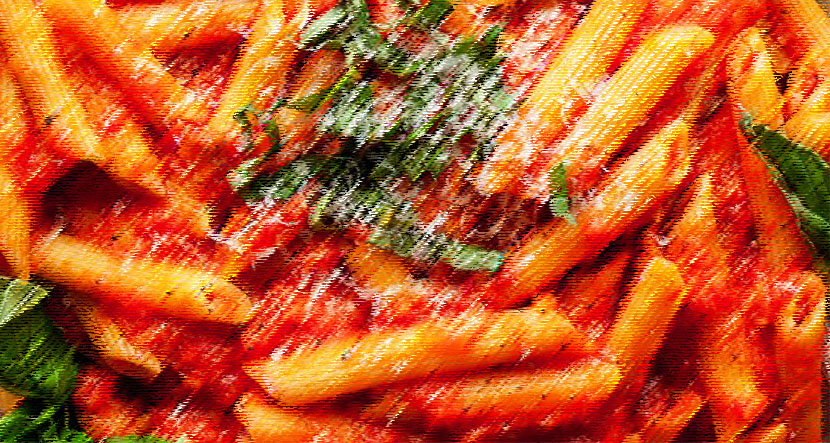
Penne pomodoro: I can’t be the only person to have found that in general, pasta (and pizza) is always better when eaten in Italy. While there might be an element of the truism in this claim, it is certainly true that the only two memorable pasta meals I enjoyed were both eaten in that country. While one was merely the excellence expected from a tagliatelle a la Bolognaise served in a Bologna osteria, the other was something surprising as it was inexplicable. As the main dish element of a set lunch in a lorry stop outside Piacenza we were served deep bowls of penne coated in a tomato sauce (made from freshly skinned and crushed tomatoes), sprinkled with the usual parmesan and black pepper. Neither Dido nor I could tell you quite why, but this remains the single plate of food we first remember as a couple (Dido did not eat the rabbit mentioned above). All I can say, is that it exemplified why so many Italians are happy to dine on such simple food on a daily basis. It was taste and texture in perfect harmony: Total cost of menu, with as much local red sfusi as we liked about €4 each.

Fried chicken with slaw: Swap fermata del camion for truck stop gas station diner, and northern Italy for south east Missouri and imagine a plate of such perfect fried chicken that I found myself chewing on the bones themselves. And to accompany this with a freshly made, tangy and sweet, crunchy slaw, washed down with an ice cold diet Coke, was for me at least, as close to every-day American food heaven as it’s possible to achieve. Tragically, we can’t remember the name of the diner or its exact location, except that it was about an hour south of St. Louis on Route 67. If anyone reading this has an idea where we experienced this poultry perfection, I would be keen to record it: Price for one, about $12.00.
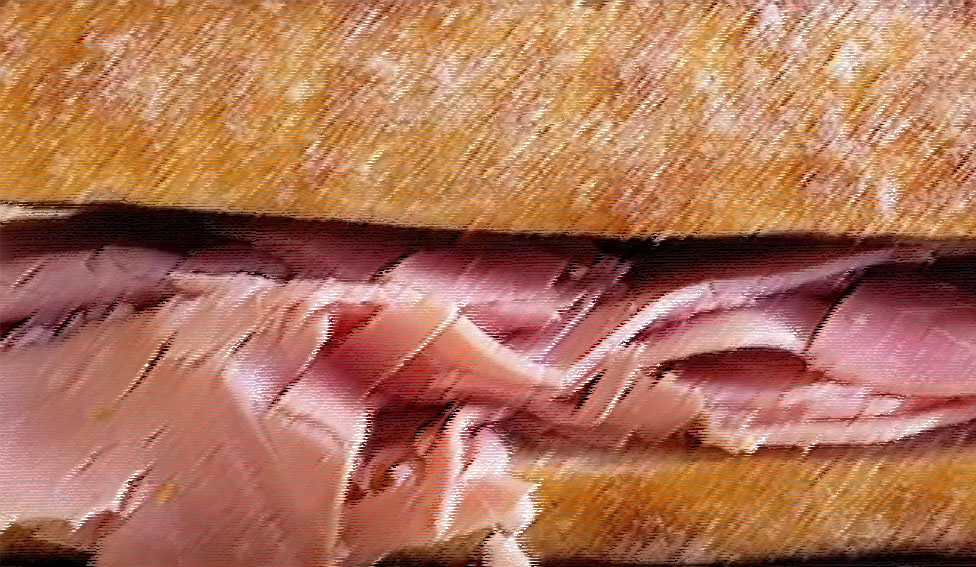
Ham sandwich: I acquired severe flying phobia in my mid-20’s and it lasted about 10 years (long story). As luck would have it, this coincided with our move down to southern Spain, which meant that from 1993 until about 1997 whenever we needed to get back to England we had to drive. The good side of this was that we got to eat lots of lunches and suppers on the roads of France and Spain, including some pretty amazing plates of food – a particular portion of sauteed calves liver in France, and grilled quail in Spain spring to mind. But, by far the most memorable thing we ate was for breakfast, at a rough and ready cafe/bar, in a small town just south of Amiens. We had caught the very early morning ferry and had eaten nothing since leaving London about five hours earlier, so it is possible that extreme hunger played its part in our response to what remains the best meat sandwich we ever ate. Our normal road trip breakfast in France was simply a plain croissant with a cafe au lait. But the large, moustachioed proprietor of this humble bar – drawn straight from the pages of Asterix – was having none of that. We did get our coffees, but with them he put on the little table two sandwiches, comprising long sections of a broad super-sized home-baked baguette, still warm from the oven, encasing thick, unctuous slathers of moist cooked ham, dressed with about half a packet of locally made Normandy butter each, and lashings of Dijon mustard. My mouth is watering even now with the memory. Our constant smiles while eating these enormous slabs of, soft, chewy, yielding, savoury heaven, were as broad as the loaves themselves. Truly, the equal of anything either of us had in all our hundreds of meals in France: Price for two, with coffee, about €6.

Hamburger: Dido and I went to Australia three times for her work in the early 2000’s, and always made sure to find time for some road travel. On one such drive we were travelling around the wine country west of Sydney in New South Wales, when the hunger pangs began, and we agreed to stop at the first place we came to. This turned out to be a another truck stop (something of a theme developing here) in a small ex-mining town (actually referred to as village by the locals) called Barmedman. The diner was almost as vast inside as the lorry park was outside, and just as bleak – all formica, steel and the ubiquitous strip lighting. So, when we saw the poster, above the grill with the boast, in huge red letters, “BEST BURGERS IN AUSTRALIA”, we remained dubious. However, Dido decided to take up the challenge and ordered the most basic beef burger on offer, while I went with that day’s special – a lasagna. We were surprised when the very friendly lady doing the cooking asked Dido how she wanted the burger cooked, and thus confirming that the patties were home made. Dido asked for it to be medium-rare. My lasagna was as acceptable as it was unremarkable, but Dido’s burger was a masterpiece of the genre. Again, as with the penne above, hard to explain in words exactly why? Perhaps the typically excellent Aussie beef (as good as any on the planet) – prime chuck, hand chopped and formed, and simply seasoned (no egg, rusk, filler or flavourings); the light charing from the grill; the quality cheddar slice, perfectly melted, and the sweet tomato, red onion and crunchy, lettuce trimmings; and also the bun itself – soft on the inside but with a just firm enough crust to retain its integrity from first to final bite. Fortunately for me, the burger was as big as it was delicious, so I got to eat that final bite, plus some more besides. Pure burger bliss: Price with fries and a soft drink, around A$ 8.00.
Close runners up to all of the above are equally uncomplicated, and would include the likes of just about any felafel I ate at the old Tel Aviv main bus station; and a grilled fillet steak accompanied by a bottle of Penfolds Grange (greatest “Rhone” made outside of France and one of the very few wines worth splashing out more than £50 on) in the Qantas First lounge restaurant at Melbourne Airport – certainly the best “free” meal I ever had.
In any event, I hope this piece finally settles my status as a trencherman, and not a foodie. Friends, please take note!
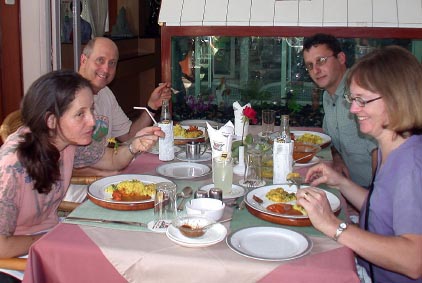
*Header photo is an old-school selfie taken at the Barmedman truck stop while waiting for our meal.

 ARKS, ADAM AND AXARQUIA