WHAT DO [WE] DO WITH OUR OLIVES? DO [WE] MAKE THEM INTO OIL?

THE ANSWER TO THE QUESTION/S WE ARE ASKED THE MOST…*

Well, not exactly, is the answer, in that they do all nearly end up as oil, but the oil is not made by us.

Olive presses, in all their forms, are serious pieces of machinery and far too ambitious and expensive for a small farm like ours. That is why, we, in common with all of our neighbouring growers take our harvests to one of the several local presses or factories.

Most of the larger growers will typically belong to a cooperative such as the one in our local village, and which has its own press. Smaller “independent” growers like us will head to one of the nearby commercial operations.
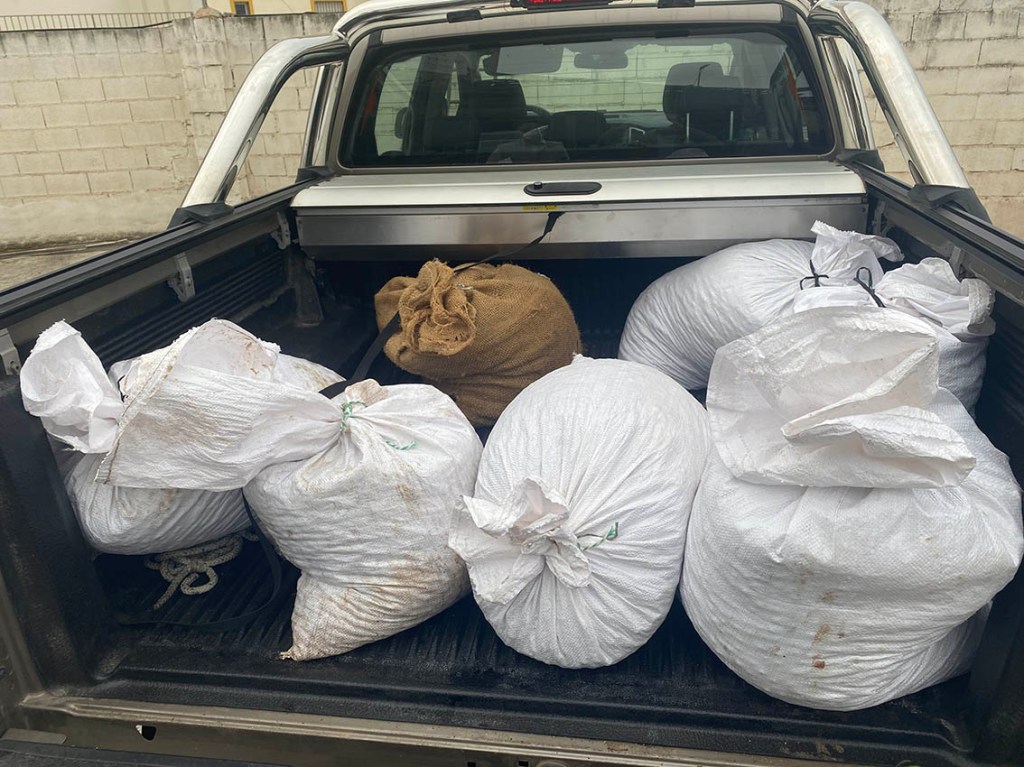
This year’s olive harvest on the back of our truck. Half an imperial ton, so not bad for two old codgers!

The larger growers will have hundreds of trees, sometimes thousands, producing several tons of fruit. Smaller growers like us, will have anything from half-a-dozen to a hundred trees, giving crops from a couple of sacks to a couple of tons. When we purchased our finca in 1993 it had only three young olive trees (the finca being then primarily turned over to almond and vines). Since then, we have planted around fifty more olive trees which is about as many we can handle on our own, vis-à-vis, annual pruning, burning off and harvesting.
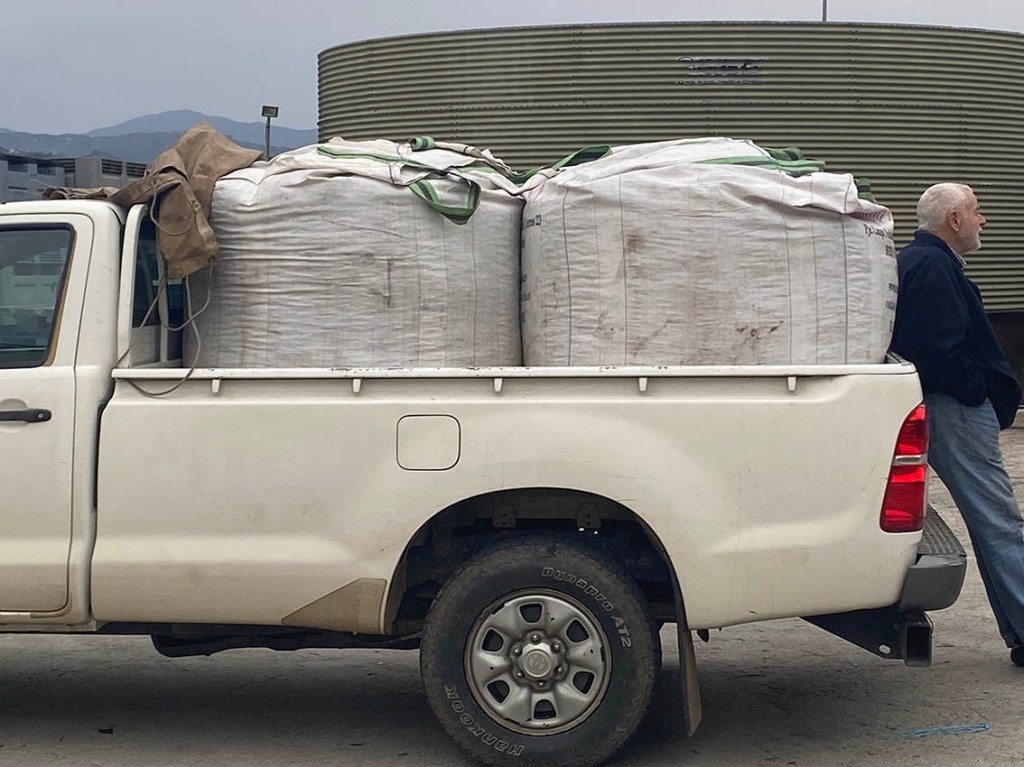
The guy before us at the press, with nearly a ton and a half of olives…

We normally harvest in late December/early January. The smaller trees we pick simply by hand, but the larger trees in heavy crop, require the setting up of nets and the use of whacking-sticks, and picking all the fruits often means quite a bit of climbing too. Fortunately, Dido and I both retain an almost childlike enthusiasm for tree-climbing!

Most of the local presses (including the cooperative) produce first cold-pressed extra-virgin oil. However, as a rule, to get a proportion of your own oil back, one’s load must exceed 500 kilos (half a metric tonne / about 1100 pounds). Although our crop is doubling each year, now that our trees are all “on-line”, we still only managed about 250 kilos this past harvest. This means that although we do get about 20 litres of fabulous oil in exchange (the press retains 50% of the oil yield), it is not actually ours. Hopefully, if this coming year is as fecund as the last, next year we will comfortably reach the 500 kilo target and receive oil from our own fruits for the first time.
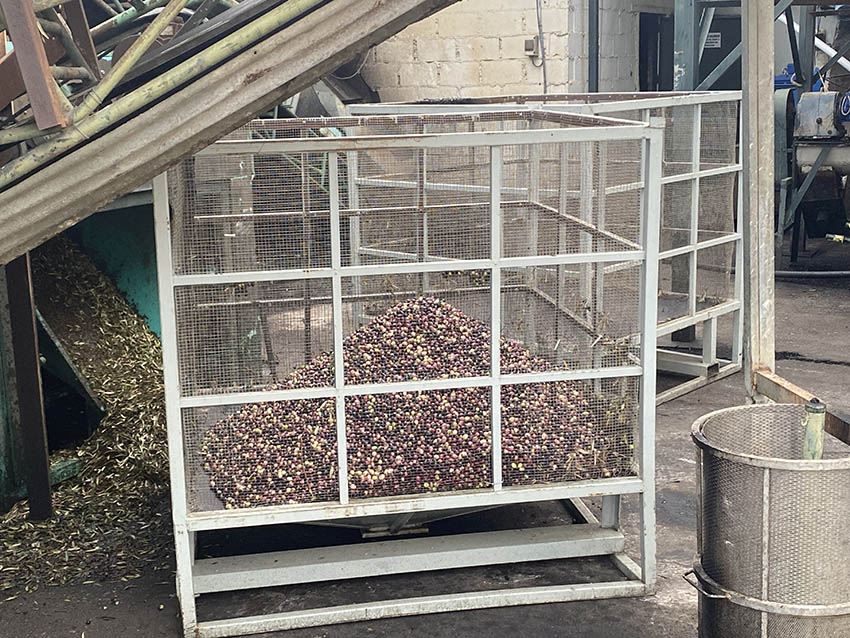
Our olives, ready for the press.

As for our local Axarquian oil, it is famed throughout Spain for its low acidity, and its smooth, slightly peppery apple flavours. Of course I am biased, but I far prefer it to most mainland-French and mainland-Italian oils, which tend to be too astringent for my taste. In style, our oil compares well with, and is very similar to those from Sicily, Corsica, Sardinia, Greece and the Levant. Fundamentally, the stronger the sun, the smoother and more buttery the olive oil.

* The header photo shows our main olive grove, about eight years ago, a year or two before they all began to yield significant amounts of olive.
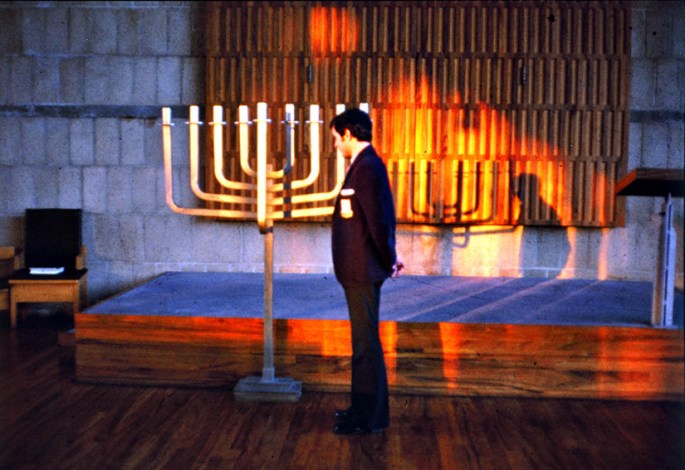
“A light unto the nations”* like it or not…

an optimistic new year message

This year we have a bumper olive harvest – the biggest, since we planted our new grove twenty years ago. The work of picking, pruning and burning off is the most intense of the year.

The large crop feels somehow auspicious, as do the copious rains and the unusually crisp temperatures. When we first arrived on these rugged hills, some 33 years ago in 1993, we remember hearing a climate scientist assuring us that due to global warming this region of Spain would resemble the Sahara by 2003. We heard this on the BBC World Service program “Science in Action” on our short wave radio, our only form of communication back then with the outside world. Having just settled here, and having absolute faith in the reliability of the BBC you can imagine how this highly confident prediction alarmed and depressed us.

Well, since then, many things have happened, both predictable and unpredictable from the continued veridian fecundity of the Andalusian countryside, to the increasing unreliability of the once-great BBC.

New years have a funny way of making us reflect on all of these things. They are times of rejoicing but also of deep, and often sad reflection. We are reminded of those we have lost and of our own mortality and of those we love, and of those we do not – and of those who love us, and of those who do not.

All of which brings me to the Hanukkah story: The story centres around the miracle of the olive oil for the Jerusalem Temple Menorah – sufficient only for one day’s illumination, but miraculously lasting the eight days required for new oil to be made and sanctified (hence the eight stemmed candlesticks lit in the windows of most Jewish homes). As an olive farmer, whose crop is exchanged for oil, the story has become increasingly resonant and moving with each successive harvest, and never more so than this year, following the horrific events on Bondi Beach.

As many of you reading this know, I am not religious, but I am nevertheless deeply moved by the symbolism and central message of Hanukkah on a fundamental human level; that message being one of enduring light and of steadfast hope despite the worst efforts of all those who oppose our existence.

Thus, at the risk of contradicting/upsetting “omni-causers” everywhere, my predictions for 2026 and many more years to come, are repeated Andalucian olive harvests, the continued and uncowed thriving of the Jewish People, and the assured reoccurrence of the light of the Hanukkiah – itself, a metaphor for Isaiah’s famous dictum, that our credo was, is and forever will be, “as a light unto the nations “.

Happy New Year, and a hearty l’chaim!

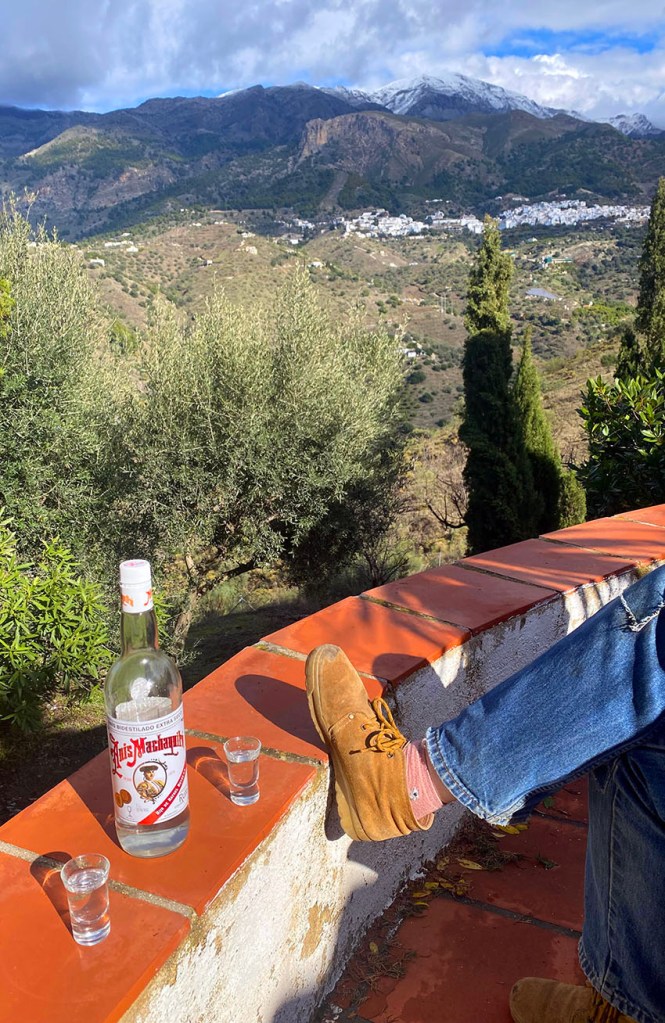
A sustaining mid-morning tipple with a snow-capped Mount Maroma in the background.

*Isaiah 42:6. Header photo shows the large Hanukkiah (the Hanukkah candelabra) in the synagogue at my old school, Carmel College.

DELICIOUS TINNED ANCHOVIES – YES REALLY!!

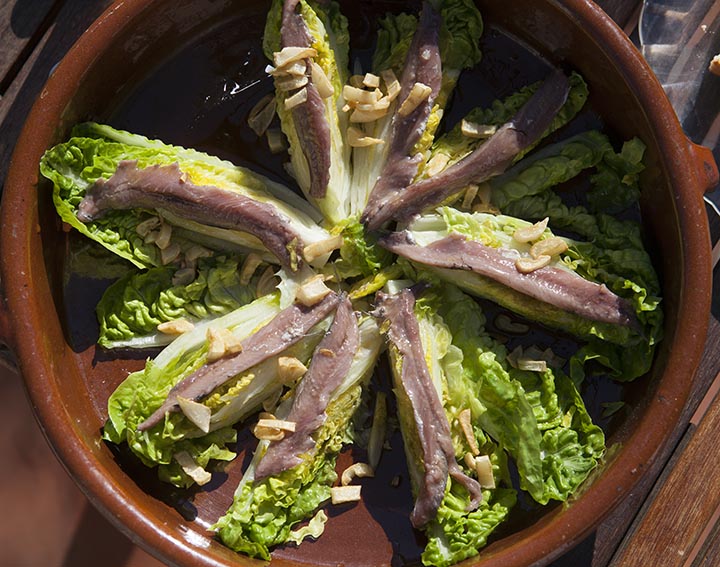
This is a dish where the whole is significantly greater than the sum of its parts. It’s delicious and simple and works equally well as a light lunch or an hors d’oeuvre. “Cogollos con anchoas” – Little Gem hearts with anchovy fillets is a classic north Spanish dish popular throughout Spain. The secret is to get hold of a tin or jar of fat, salted Cantabrican or Basque anchovies and a head of fresh, firm sweet garlic. Don’t bother with the typical flat tins of dried-out, woody little fillets we all hated as kids (and which give preserved anchovies a bad name generally) and don’t use old garlic. Anyhow – for two people – simply wash/refresh and quarter two lettuce hearts length-ways and place as shown in the photo in a large, round, heat-proof dish. Cut four anchovy fillets in half, also length-ways and lay the eight halves along the ridge of the eight lettuce segments. Heat a half-cup of decent “cooking” olive oil in a skillet  on a medium flame. Meanwhile take eight large cloves of the garlic, peel, and slice roughly, then drop into the hot oil. Fry until golden brown but DO NOT BURN!! Pour all the garlic and oil over the lettuce and anchovies and serve with a fresh baguette or any crusty sour-dough bread. Goes brilliantly with our own Malaga wine (as in the photo). We tend to eat the hearts and anchovies first then finish by dunking the bread in the olive oil and garlic. The combined tastes of the anchovies, olive oil and garlic are synergy in the mouth…

IMG_2180

IMG_2179