
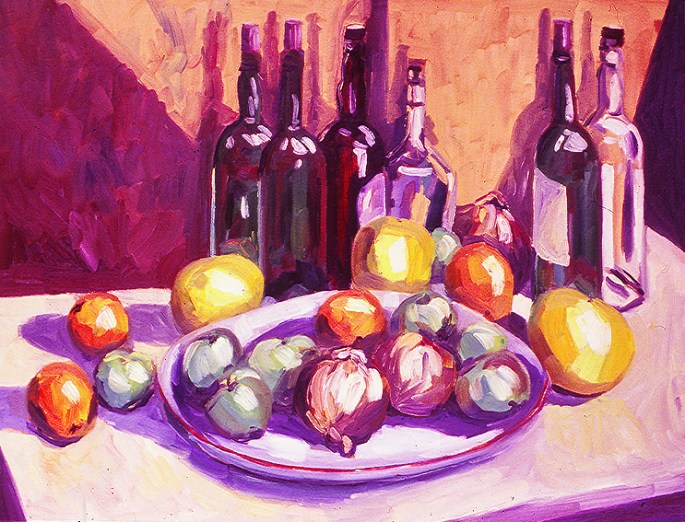
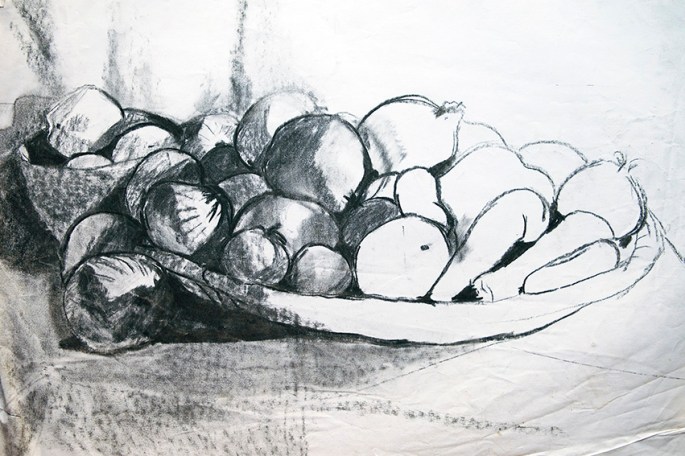
In a long-lost period of art (except perhaps, for those attending Royal Academy Schools – in the UK at least), both the formal study of the human form (alive and dead) and the formal study of inanimate objects, known under the coverall of still life, formed the foundation of an art education. In exactly the same way as the great literary figures and music composers of yesteryear relied upon solid groundings in grammar and notation respectively, a mastery of observation was regarded a prerequisite for an aspirant artist.

Dramatic, but little feel for the space between the objects…
My own time at art school, beginning in 1976, coincided with the end of that ages-old period, so that even during my foundation course it was the finished image that mattered and not so much how it was created.

Jazzy, but obsessed with the spaces between at the expense of solid drawing…
How much this matters is a debate that has continued unabated since “Modernism” in art began, about the time of my birth in 1960, and not a subject I wish to go into now. However, my own opinion of the matter is well known to regular readers and followers of these pages and evidenced pretty obviously by the pictures displayed here.

Sober but with a touch of drama and some half-decent drawing…
Lacking any formal/traditional grounding/tuition in the skills of my trade, early on in my time at art school I began to resort to self-education. As the pictures here attest, at first, I was pretty rudderless, but gradually, over about three years began to evolve a reasonably articulate language built upon a fairly solid visual and observational grammar – albeit, and with apologies to RA Scholars everywhere – personal to me.

Formal composition, but with contained elements of painterly expression.


 ARKS, ADAM AND AXARQUIA