
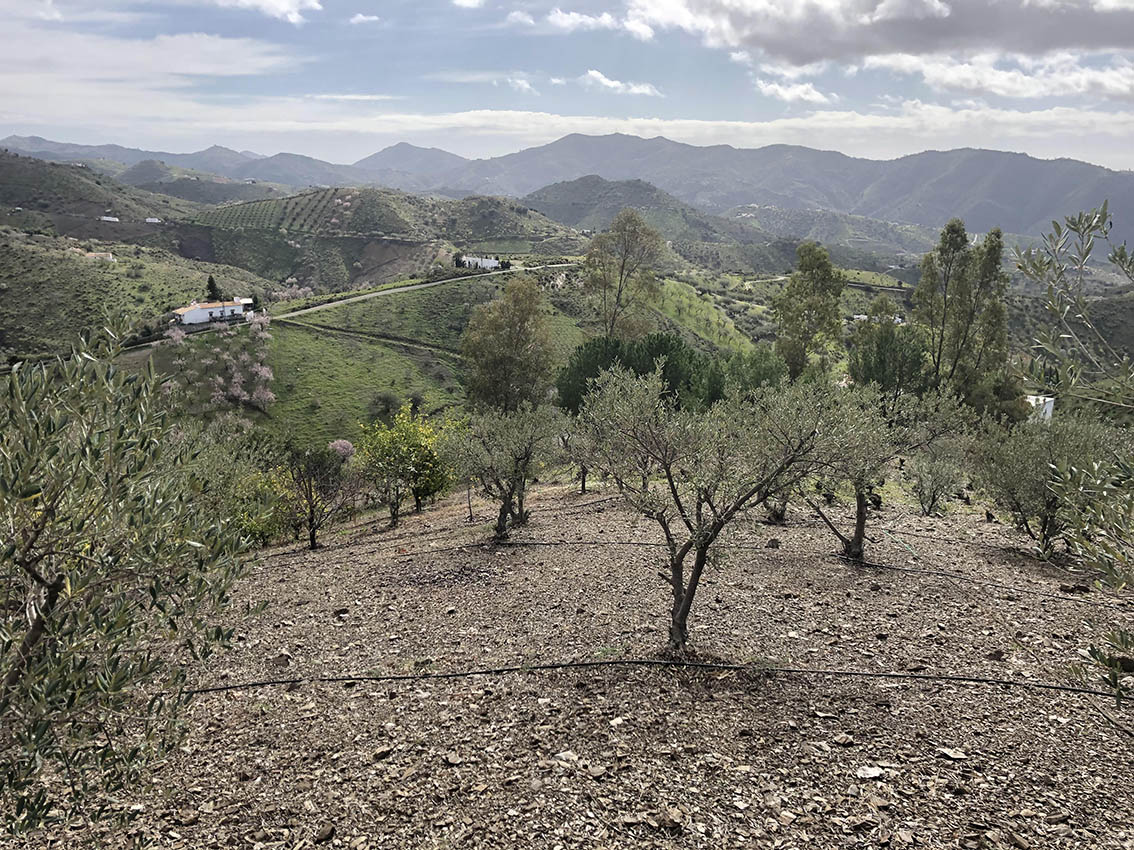
THE ANSWER TO THE QUESTION/S WE ARE ASKED THE MOST…*
Well, not exactly, is the answer, in that they do all nearly end up as oil, but the oil is not made by us.
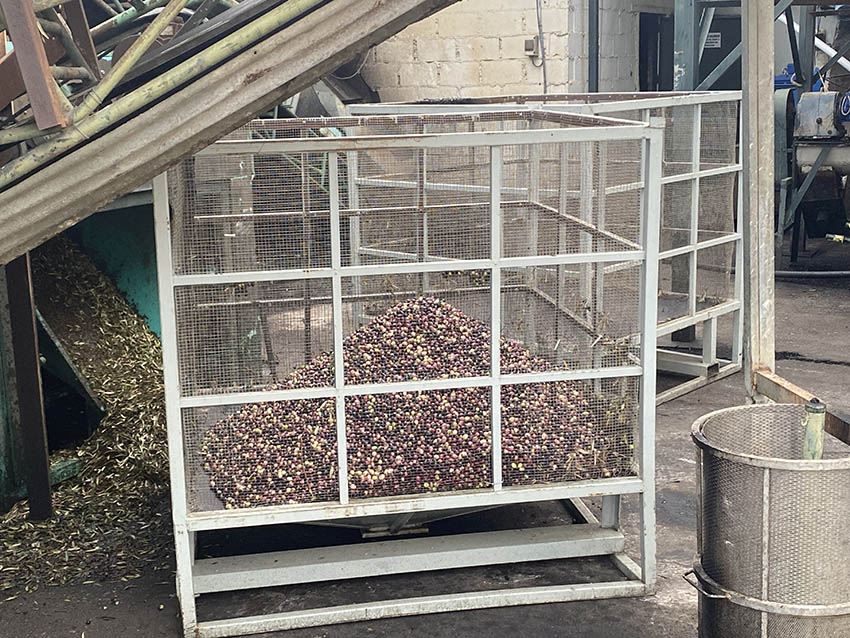
Olive presses, in all their forms, are serious pieces of machinery and far too ambitious and expensive for a small farm like ours. That is why, we, in common with all of our neighbouring growers take our harvests to one of the several local presses or factories.
Most of the larger growers will typically belong to a cooperative such as the one in our local village, and which has its own press. Smaller “independent” growers like us will head to one of the nearby commercial operations.
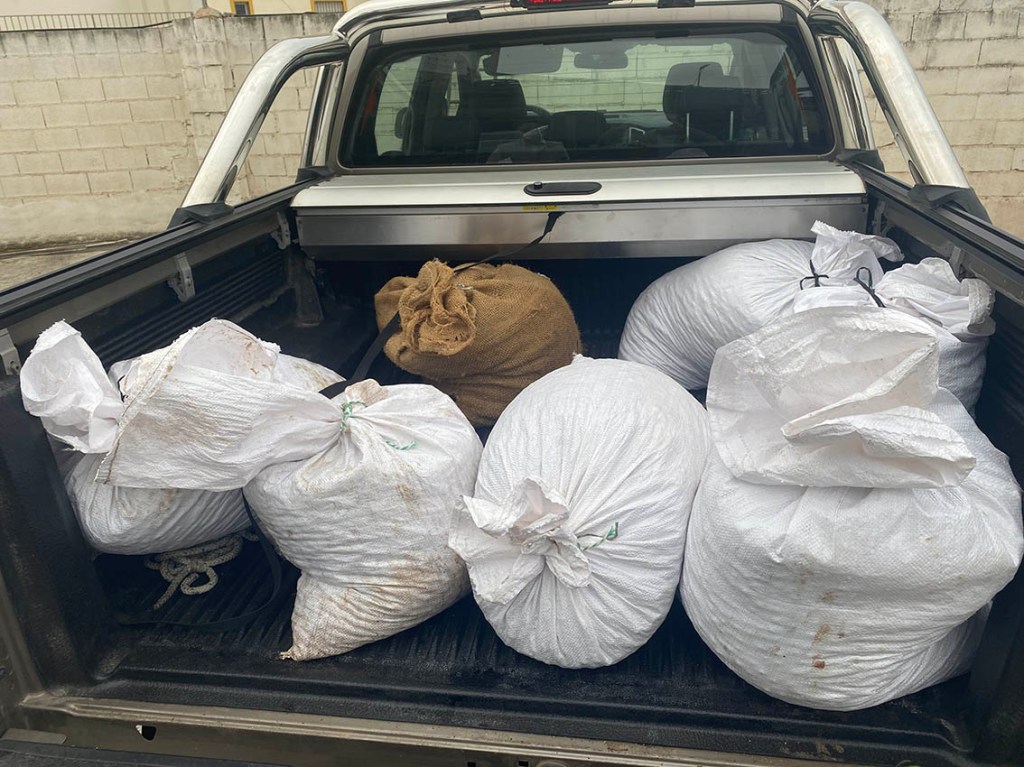
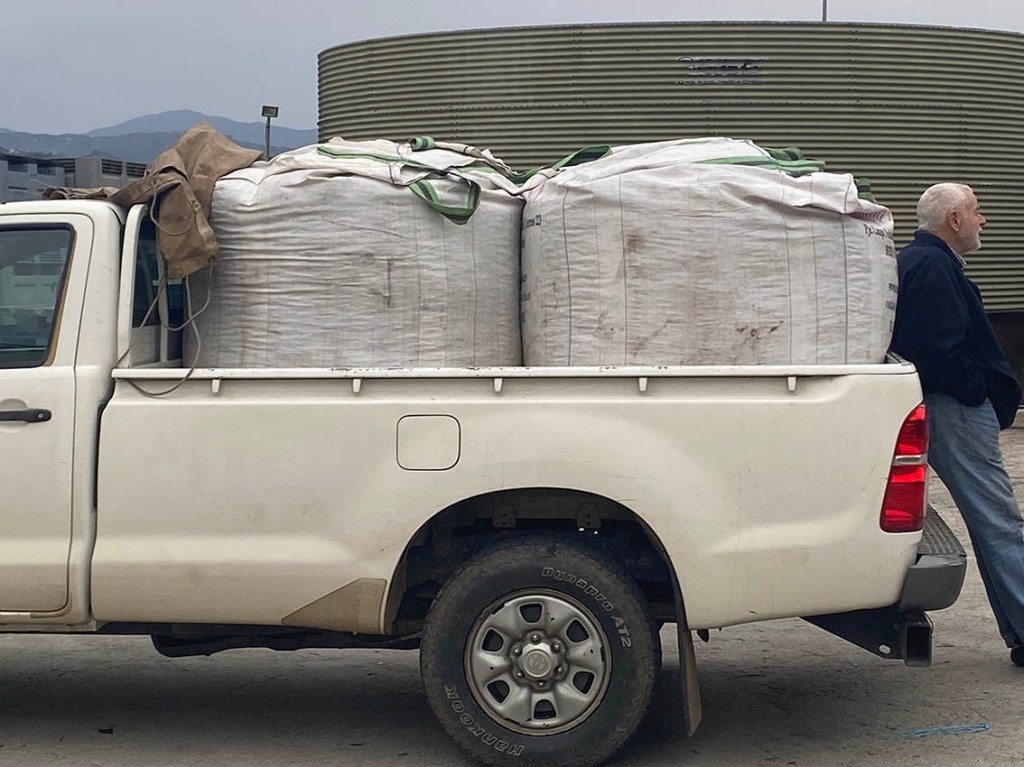
The larger growers will have hundreds of trees, sometimes thousands, producing several tons of fruit. Smaller growers like us, will have anything from half-a-dozen to a hundred trees, giving crops from a couple of sacks to a couple of tons. When we purchased our finca in 1993 it had only three young olive trees (the finca being then primarily turned over to almond and vines). Since then, we have planted around fifty more olive trees which is about as many we can handle on our own, vis-à-vis, annual pruning, burning off and harvesting.
We normally harvest in late December/early January. The smaller trees we pick simply by hand, but the larger trees in heavy crop, require the setting up of nets and the use of whacking-sticks, and picking all the fruits often means quite a bit of climbing too. Fortunately, Dido and I both retain an almost childlike enthusiasm for tree-climbing!
Most of the local presses (including the cooperative) produce first cold-pressed extra-virgin oil. However, as a rule, to get a proportion of your own oil back, one’s load must exceed 500 kilos (half a metric tonne / about 1100 pounds). Although our crop is doubling each year, now that our trees are all “on-line”, we still only managed about 250 kilos this past harvest. This means that although we do get about 20 litres of fabulous oil in exchange (the press retains 50% of the oil yield), it is not actually ours. Hopefully, if this coming year is as fecund as the last, next year we will comfortably reach the 500 kilo target and receive oil from our own fruits for the first time.
As for our local Axarquian oil, it is famed throughout Spain for its low acidity, and its smooth, slightly peppery apple flavours. Of course I am biased, but I far prefer it to most mainland-French and mainland-Italian oils, which tend to be too astringent for my taste. In style, our oil compares well with, and is very similar to those from Sicily, Corsica, Sardinia, Greece and the Levant. Fundamentally, the stronger the sun, the smoother and more buttery the olive oil.
* The header photo shows our main olive grove, about eight years ago, a year or two before they all began to yield significant amounts of olive.


“Dido and I both retain an almost childlike enthusiasm for tree-climbing!” Not quite old codgers yet! 👍
LikeLiked by 1 person
I have been meaning to ask you about the harvest Adam so this is very timely and an interesting read. Would love to try some but doubt any would make it all the way to our local organic stores in Belsize Park..
As an aside…. The thought of you two climbing tres brought a genuine chuckle… love it… and I can think of some uses for those ‘whacking’ sticks when they are our if commission the rest of the year 🤪🤣
Hope all is well xx
LikeLiked by 1 person
Climbing Trees not Tres… ( blimin predictive text! )
LikeLiked by 1 person
Yes! Ian Drury and a certain song comes to mind!! Actually, there probably is a Spanish word or phrase for the sticks of which we are unaware? In truth, over the years, we have invented a virtual dictionary of words related to our various agricultural chores.
LikeLike