WANDERINGS AND WONDERING OF YOUTH

Regular readers of these pages will know that travel comprises a significant part of my life, even to the point that I once had homes concurrently in three different countries.

But, when I look back now, of all the hundreds of journeys, vacations and adventures since my first flight – aged three – to Zurich from London on a Swiss Air Caravelle (I remember that we sat facing each other with a little table between us, as on a train) – there are eight trips of which every detail remains etched into my memory.

All of these trips were specifically formative in that they either changed my life in a literal sense, or my perceptions of life in some fundamental way. Followers of this blog might already be aware of some of these episodes.

Firstly there was the trip to Israel in 1967 just weeks after the Six-Day War which blew both my 7-year old mind and my 1960’s, suburban British olfactory senses. I vividly remember being on the Golan Heights, walking along the safe paths marked out by Israeli mine disposal teams, into Quneitra and dozens of Syrian military documents blowing on the dusty hot winds like confetti. And equally, I recall the first time I tasted real humus and roasted eggplant and being almost emotionally overcome with the sheer pleasure of it;

Then there was a gastronomic drive along the length of France in 1970 which turned me into one of the England’s most precocious connoisseurs of food and wine;

A year later, I was treated to my first visit to Spain where I discovered the hitherto (to a typical Jewish lad like me) forbidden twin joys of fried bacon and fresh shellfish in addition to poolside cocktails and luxury hotels. The fact this was all part of a photographic shoot for Max Factor and that I spent the entire time in the company of two of the UK’s top fashion models was the icing on the cake for a sexually curious eleven-year-old;

Fourteen years after it was Andalusia again, but this time a romantic five days in Seville, in the company of a beautiful law student, where I discovered the exotic joys of tapas washed down with ice-cold fino and late-night flamenco.

About a decade later in 1991 saw my first flight across the Pond, where the sublime “New World” strangeness of newly-democratic Chile bludgeoned me back into painting landscapes and left me a life-long lover of cazuela de pollo;

Then, twelve years after that in 2003, there was our visit to southern India where I was held enthral to the equally glorious and wonderful strangeness of ancient Tamil Nadu and Kerala and where I discovered that a mostly vegetarian diet could almost be fun (not to mention hugely fattening);

In 2007, I made my first trip to Australia, which, especially in magnificent Melbourne turned out to be quite simply the most enjoyable and mentally invigorating shattering of dearly-held pre-conceptions I have ever experienced;

And finally, just this January, when the cliché “better (incredibly) late than never” took on a whole new profundity for me after my first visit to New York City left me and all my senses dazed, awestruck and ecstatic in equal measure.

However, when I ask myself what was the trip that played the biggest and most enduring role in shaping the adult I eventually became, it would have to be another of the trips I made to Israel; this time in in 1978, during the summer break of my first year at Saint Martin’s School of Art.

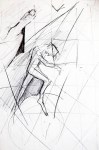
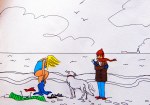
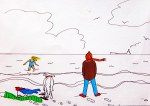
The pictures below are all that remain of my “Wanderers Period” and represent the most eloquent way I can describe the feeling and atmosphere of those six weeks; the highlight of which was when four of us – two guys and two girls – walked the entire circumference of the Sea of Galilee in two days. We slept on the pebble beaches, and lived on falafel and bags of crisps washed down with cheap wine, accompanied by the dulcet tones of Weekend in LA on our cassette player. Without going into details, it became my coming-of-age drama in every sense, emotional, intellectual, spiritual and of course, sensual. It was my “Summer of 42”, except it was 78. It was when I truly fell in love with life and this Earth (and the incomparable virtuosity of George Benson).

Most unfortunately, the large canvases that emerged from these sketches and scrawls I painted over the following year after my art school tutors deemed them “unsubtle, hopelessly romantic and naïve” – they were a bunch of passionless idiots, but that’s another story. Nevertheless, I think these pictures, for all their rawness, convey the power of an 18-year old’s emotions, lusts, yearnings and wondering (and one or two aren’t bad drawings either)…

MY GAL’ – THE FELLOW…*

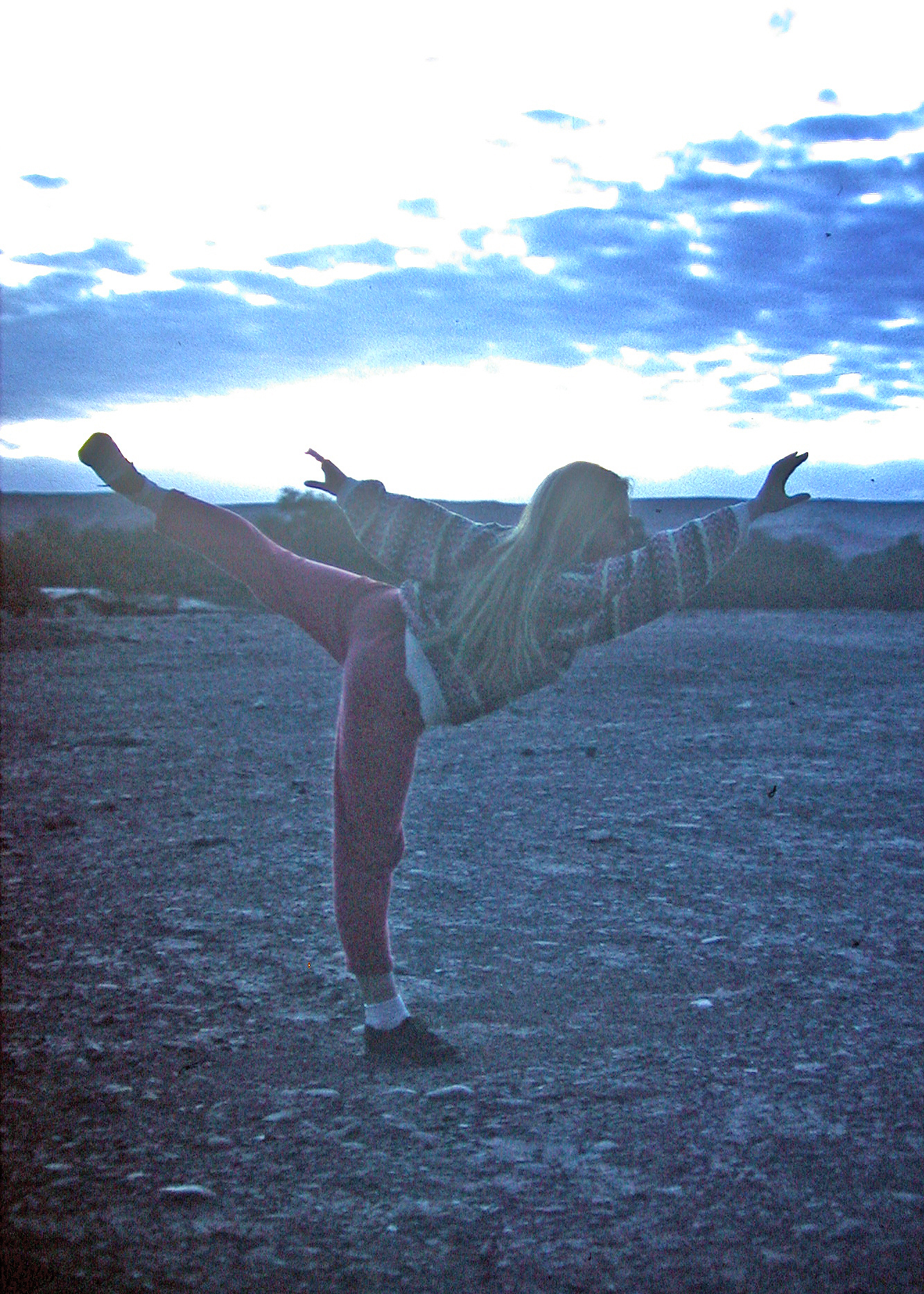
One of my most visited posts was Before We Met – a photo record of my wife Dido’s career as a professional ballerina and model. Dido was injured out of the ballet in 1985, about four years before we met, and so very sadly, I never got to see her dance.

1-san-pedro-de-atacama

Nevertheless, I was privileged to witness Dido as she utilised the single-minded commitment and personal discipline she learned as a classical dancer to retrain; firstly as an occupational therapist (OT) and then later as a scientist specialising in the development of children’s brains. These qualities combined with her intelligence, imagination and wit meant that ballet’s loss has been a considerable gain for countless numbers of children with a range of conditions from autism to hemiplegia.

3-calama-atacama

Seasoned readers and followers of this blog may already be familiar with our trip to Chile through my series Our Real Cartoon Adventure. But, for those who are not in the know, I should explain that in that in 1991 Dido – then starting out as an OT – was awarded a generous Winston Churchill Travelling Fellowship to go to Chile to study the role of folk dance as a therapeutic tool to support social integration and participation for children with learning problems. As we were only recently wed, and as Dido would be gone for several months we decided that I would travel along, ostensibly (and actually, to a significant degree) as her cameraman (still and video) and thus provide a visual record of her work.

4-cerro-unitas-atacama

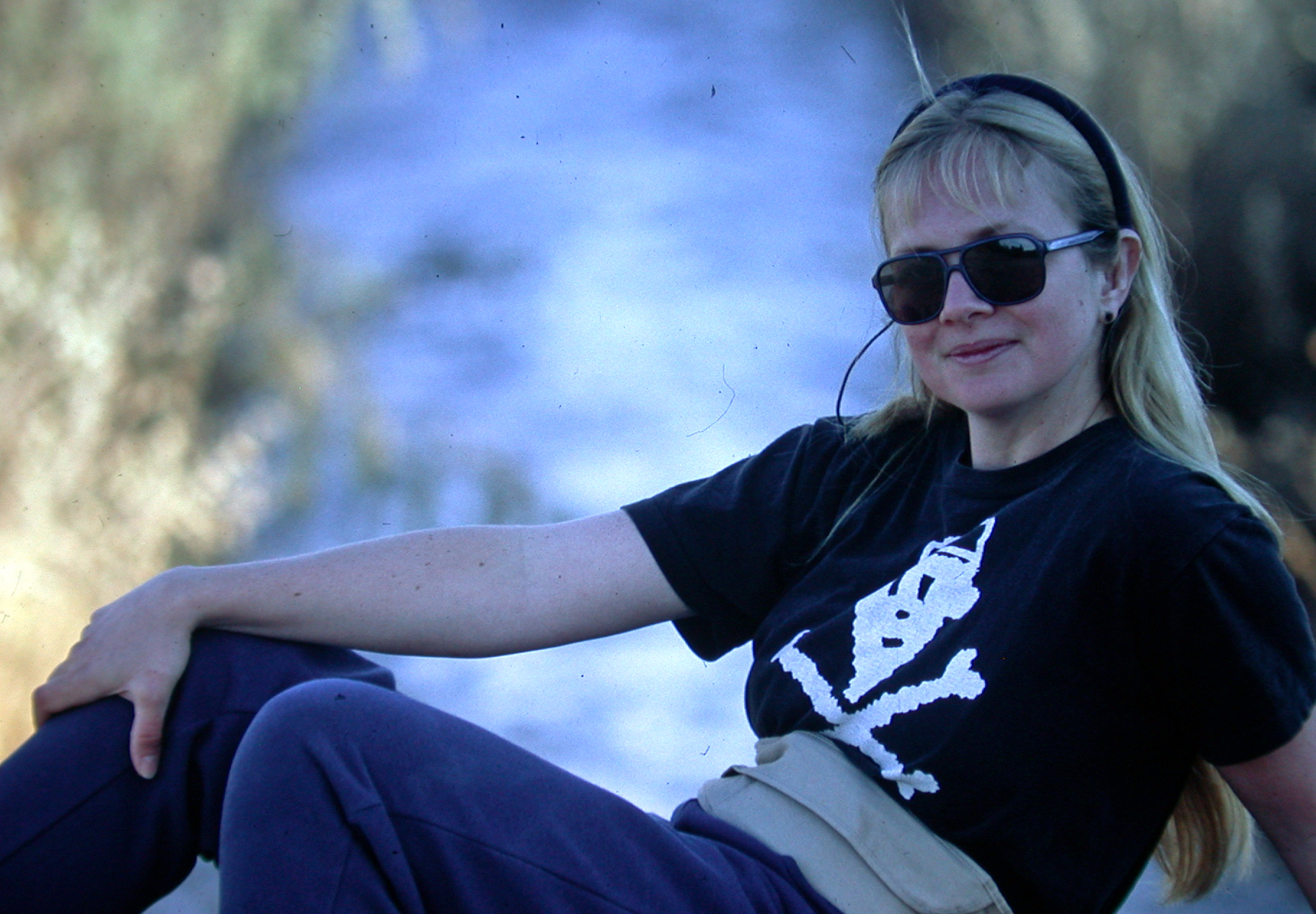
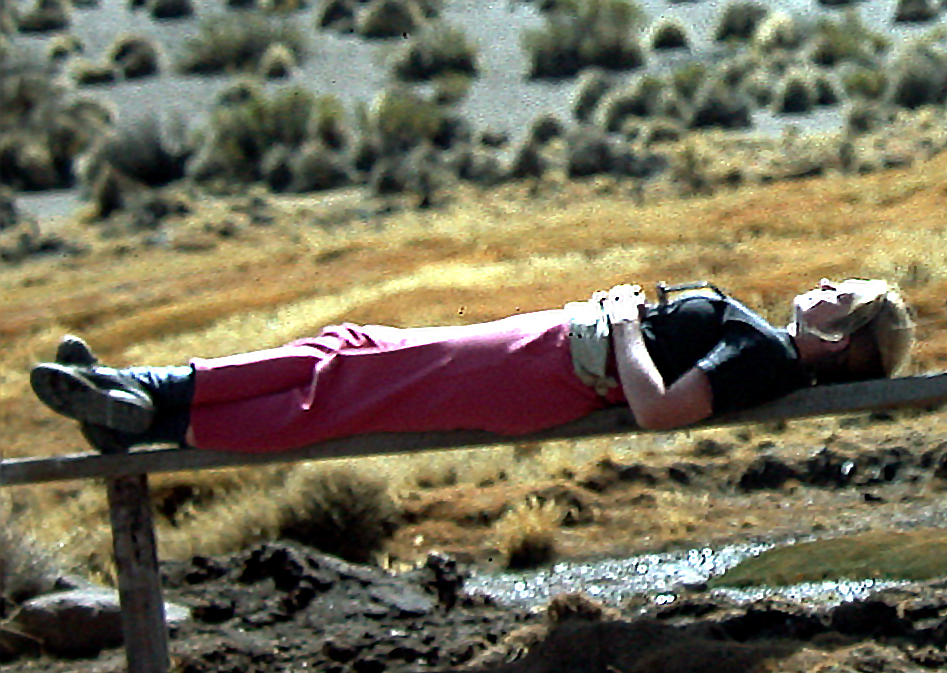
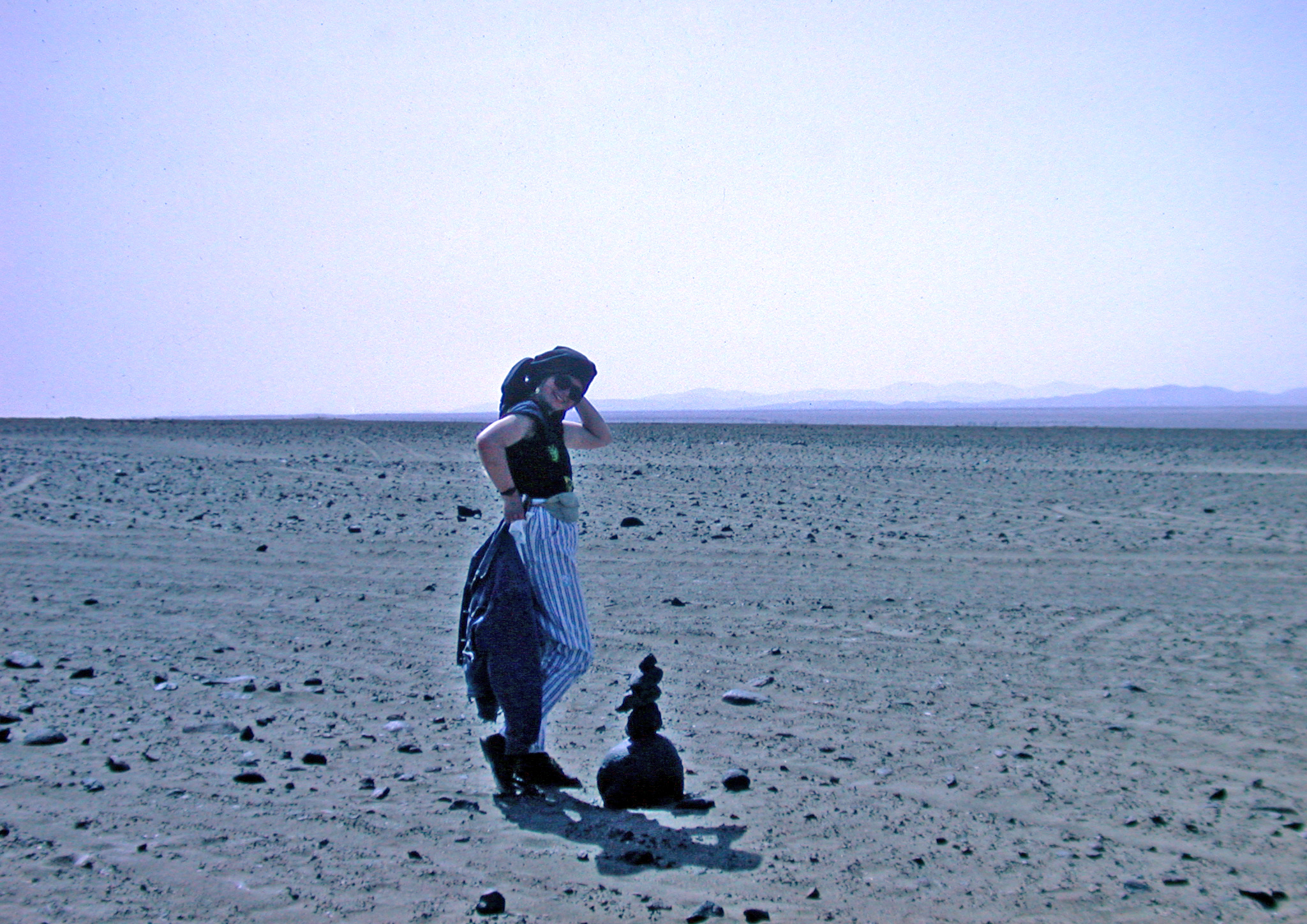
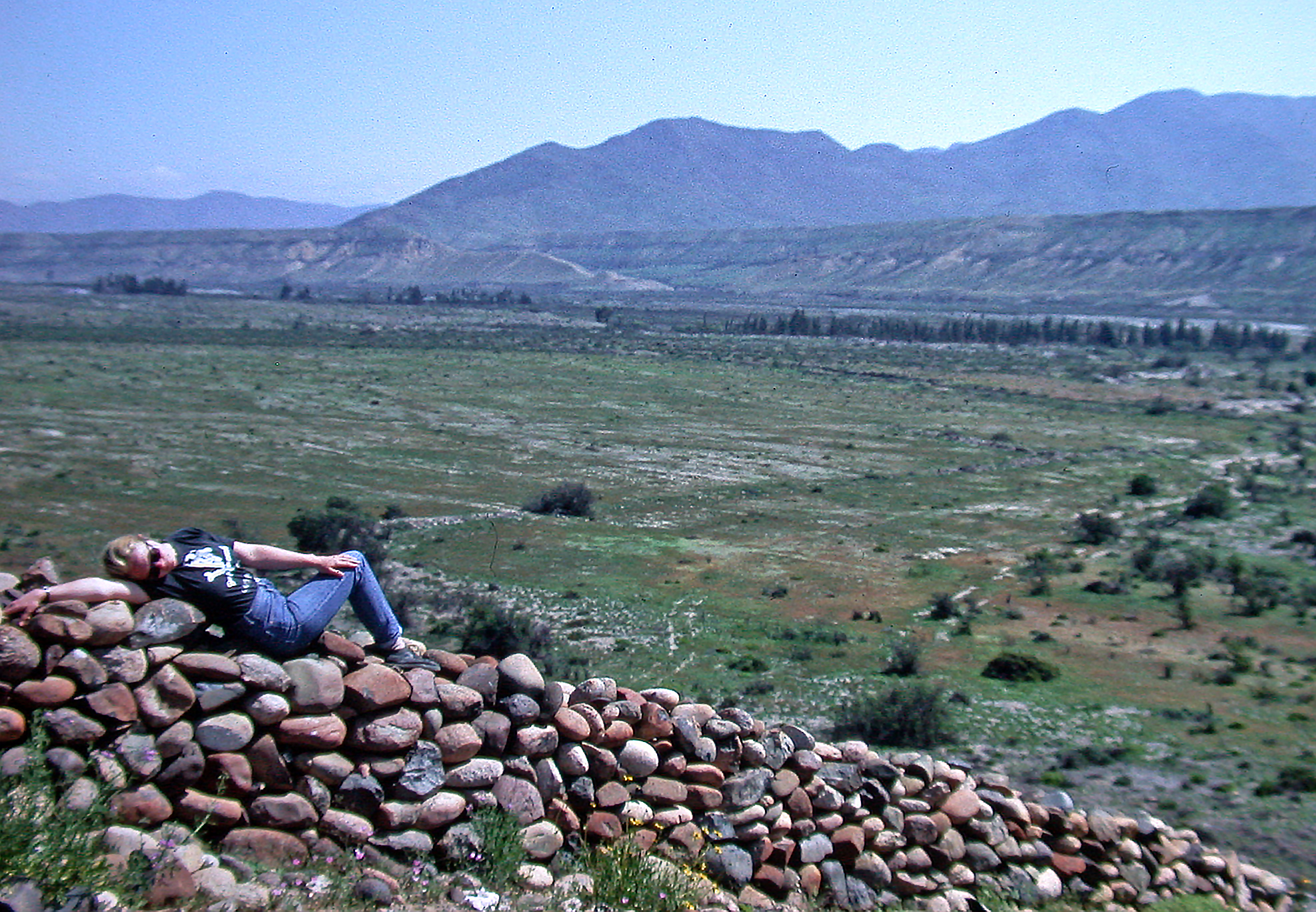
All but one of the photos presented here are recreational however, and provide a happy record of our travels through that wonderful country, from Lago Chungara in the extreme north to Lago Llanquehue in the southern Lake District. What I particularly love about these pictures is the way they illustrate Dido’s adventurous spirit, her sense of fun, her incredible toughness and her beauty – inside and out. Moreover, they provide compelling evidence that there’s lots of life to be had beyond showbiz!

6-chungara

*In addition to being a Winston Churchill Fellow, Dido was recently made a Fellow of the Royal Society of Arts for her contributions to Neuroscience, Occupational Therapy and the Arts.

5-cerro-unitas-atacama
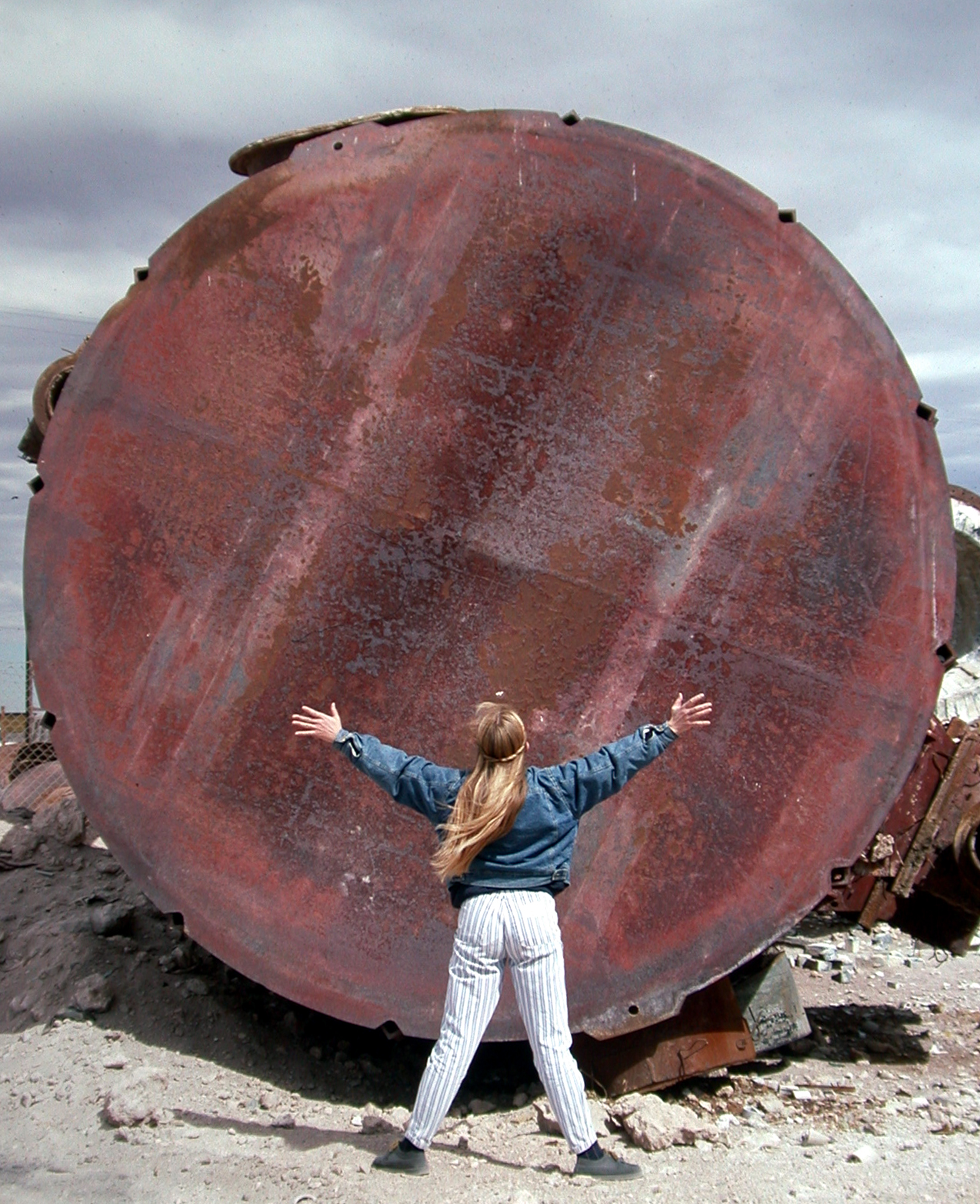
Glyph and Lady (Cerro Unitas – Atacama)
7-coquimbo
Lying down again at Coquimbo
8-la-serena
Racing the tanker…Pacific swim at La Serena
9-la-serena
Mi bella esposa neuva en La Serena
10-lago-llanquehue
Emerging from a near-freezing Lago Llanquehue
11-after-lago-llanquehue
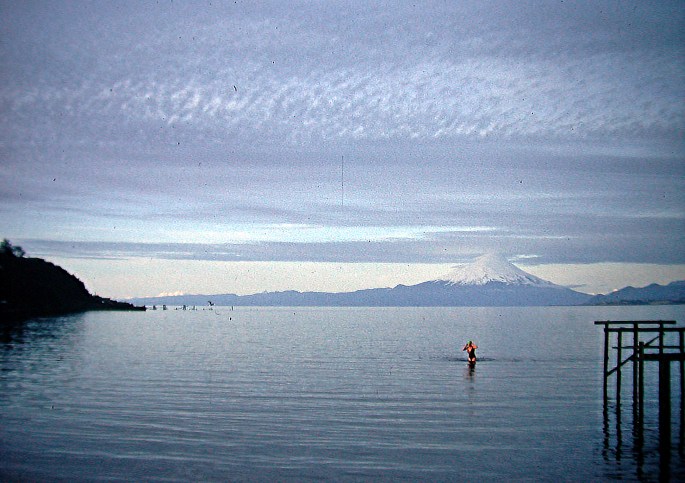
A happy swimmer with Volcan Osorno in the background (Llanquehue – Chilean Lakes)
13-lago-todos-los-santos
A seriously cold Lago Todos Los Santos (Petrohue – Chilean Lakes)
15-hogar-in-santiago
At work with the kids in Santiago.

DOG DAYS 7 – “DIDO’S STRONG SWIM”

The parable contained here is obvious; that a love of long distance, wild-water swimming and extreme myopia are a dangerous combination.

Those of you who know my wife Dido will be aware that this combination exists strongly within her person and the strip below tells the tale of what once nearly happened because of it. Just a couple of things to point out; firstly, the actual swim happened at La Serena on the Pacific coast of Chile, and not on a cold winter’s day in the UK – my point at the time (I made these comics in 1994) was to highlight Dido’s love of freezing conditions. She was one of those strange people who used to break the ice of the Serpentine Lake in London’s Hyde Park on New Year’s Day, and once, she even managed to shock a load of hardy Swedes by going for an inter-Island swim near Stockholm, in mid-winter. And secondly (and also obviously), she didn’t actually crash into the oil tanker (let alone sink it), but merely swam far too close to it, causing a crew-member to warn her away using a megaphone.

Aura and I spent many a terrifying hour, just as depicted in the strip, staring out to sea, waiting for Dido to return, which thank goodness, she always did, eventually, though often landing up a mile or so up the coast because of currents and her appalling eyesight.

These days, with the mellowing of age, and out of compassion for me, she only swims “laterally” so that I can keep an eye on her at all times…

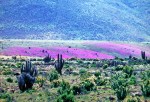
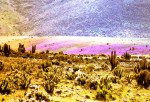
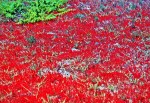
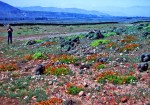
ATACAMA – IN MAUVES AND GREENS

Followers of this site will already be familiar with many of the details of our remarkable trip to Chile back in 1991, just several months after the demise the Pinochet regime.

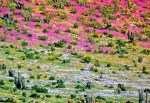
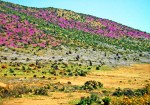
As if to mark this new era of democracy, freedom and hope, the month we arrived, the southern Atacama Desert experienced – what we were assured by the locals – were the first meaningful rains in forty years, and so exploded in a celebratory riot of colour. It was as if a vast technicolour carpet had been laid atop the normally monochromatic desert floor as every cactus, every succulent and every dormant seed erupted into flower.

Even in normal circumstances Chile’s many disparate landscapes offer a stunning smorgasbord for the visual senses, but this was simply wondrous. Rarely have we experienced, before or since such good luck being in the right place at the right time.

The dozen or so images presented here give a taste of what we were so privileged to witness with our own eyes…

(Camera used: Nikon FE with Agfachrome film)

SOME PEOPLE OF CHILE

Those of you familiar with my posts might already have seen my cartoon record of our trip to Chile in 1991. Well, here are some images from that same wondrous journey, from photos taken just months after the new democracy had been born. From the man moodily anticipating his bowl of chicken cazuela in a Santiago soup cafe to the gentleman posing dignified and proud before his humble Antofagasta home, the people of of this amazing country were an endless source of photogenic fascination. But of all the images here, the unfocused and shaky picture of two waitresses doing an impromptu cueca (Chile’s famous national dance) remains one my most cherished visual records from all of my many travels…

CHILE – OUR REAL CARTOON ADVENTURE (part 11 of 11)

(SEE PART 10 HERE)

31

During our time in Santiago one restaurant in particular became something of a regular stop for us, both for its fairly priced good local food (the roast partridge was our favourite) and the fact that we became friends with Sergio, the guy who ran it.

So friendly did we become with Sergio that one Sunday he invited us and some other of our new acquaintances to visit him at his cabin in the countryside south of the city. There he would show us his small holding where, in addition to growing  all his own herbs and vegetables, he also raised rabbit, chicken and partridge for the restaurant. The idea was that we should get to him mid afternoon so that after looking over the farm he would feed us a leisurely Sunday lunch of his own roast suckling pig.

Unfortunately we never got to see Sergio’s farm or eat his Sunday lunch. The girl driving us was an old friend of his and should have known the route as she claimed to have been to his country home many times, but for whatever reason, she became hopelessly lost soon after leaving the main road. So, instead of dining on roast suckling pig and washing it down with copious amounts of the excellent local cab’ we spent hour after hour driving along the dirt roads between the rural towns of Rancagua and San Fernando. By the time we returned to Santiago later that evening, weary, hungry and thirsty, the main memory of our aimless tour had been getting stuck behind a pair of Holstein cows fornicating in the middle of the road – a formidable sight I have never seen repeated, even on the cow-strewn roads of India!

(Sergio, true to his kindly “sympatico” nature, rather than be angry, took pity and gave us a complementary slap-up dinner at the restaurant the following evening…)

31 Lost in the wine country

32

Our final excursion from Santiago was a day-trip to the famous port city (and the seat of Chile’s parliament – an astonishing example of late 20th century brutalist architecture) – Valparaiso.

Most of what I thought I knew about Valparaiso was from old novels and black and white movies. But modern Valparaiso had about as much in common with those preconceptions as does Casablanca with its 1942 Hollywood counterpart.

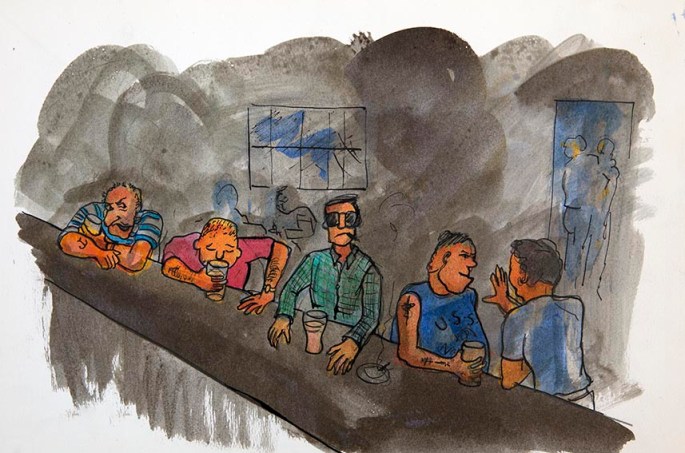
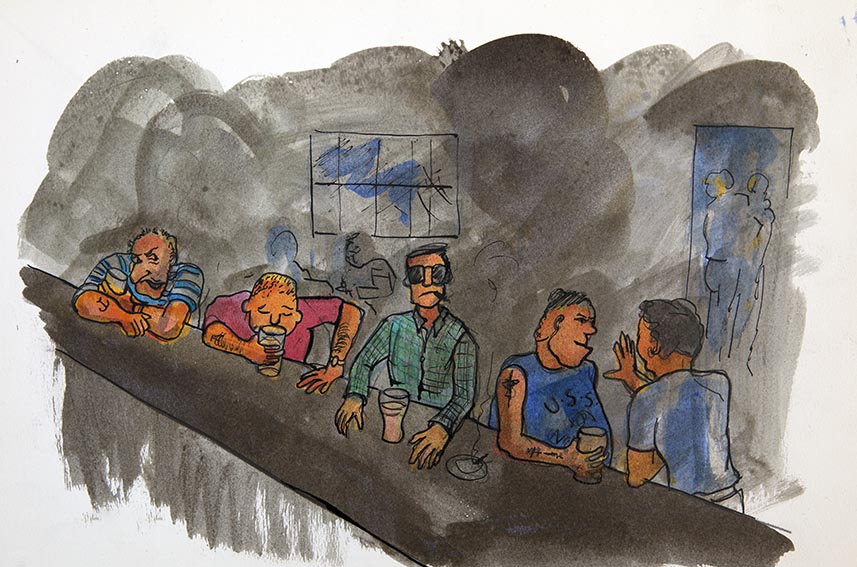
So imagine my reality shock when walking into a “typical sailors'” bar (as described in our travel book) on the port itself and instead of seeing a scene from To Have and have Not – with a Hoagy Carmichael-type gently tinkling the ivories in a corner, while a Lauren Bacall lookalike leaned against the piano, wiggling her hips provocatively, warbling a soft, sexy accompaniment – we were confronted with a dysptopian, murky prediction of the bar set from Blade Runner. Admittedly, there were no androids (at least I don’t think there were) and no actual freaks of human nature; but this was the most intimidating, grim and unwelcoming drinking establishment we had ever encountered.  Not only was there no Humphrey Bogart-like character in the bar, Bogart at his toughest would have been fearful of entering. The thing I remember mostly now was the greyness of the place – everything was either painted or coated grey – and peering through an almost tangible fug of cigarette smoke towards a bar, at which were seated about half-a-dozen men who looked as if they had been selected from central casting, under the “maritime-thug” label.

As a seasoned traveler I’m well used to entering bars and pubs where one’s presence  is made to feel surplus to requirements, either by the regular drinkers, the tavern-keepers or both. But never – not in deepest Wiltshire, not in the roughest part of Marseilles and not even as a Pom in an Aussie pub in Perth full of Aussie miners, with an Ashes cricket match on the TV –  have I felt the level of sheer dread, merely at the thought of approaching a bar, that I experienced that day in Valparaiso. Needless to say, we went somewhere else…

32 On second thoughts - a coffee perhaps...

33

As a fitting to finale to our trip, on our very last day in Chile, Dido had somehow arranged for a meeting with Chile’s top academic in the field of South American folk music and dance. Among other things she was keen to learn more from him about the native dances of Chile, especially the history of the national dance of Chile, the famous Cueca.

The good professor – who shall remain nameless – manifested as a human whirlwind. A cross between the Looney Tunes’ Tasmanian Devil and a classical ballet dancer, from the instant he welcomed us into his small office at the University of Santiago until the time it came for us to leave he was in perpetual motion. We never sat down during the hour or so we were with him and neither did he and I don’t recall seeing a single chair in the room. In fact, thinking about it now, I don’t think that the professor was physically capable of sitting down, any more than a goldfish can stop swimming. Occasionally, as he considered one of Dido’s many queries, he would momentarily hover on one leg balancing himself by making elegant conductor-like movements with his outstretched arms. Then, as an answer came to him he would pirouette back into spinning mode, all the time grabbing papers and pamphlets from the top of shelves and filing cabinets – before seemingly in one motion, depositing them in an ever-growing pile in Dido’s grateful arms.

Like his beloved Chile, the professor was quirky and rewarding in equal measure, and we will never forget him or his equally weird and wonderful country.

33 The professor of ethnic music

CHILE – OUR REAL CARTOON ADVENTURE (part 10 of 11)

(SEE PART 9 HERE)

28

A few hours following our brush with the youthful vigilantes our car broke down. The good news was that we had only just passed by a small town so the walk back for assistance wouldn’t be too long – the bad news, was that it was a Sunday and we didn’t have high expectations of finding a mechanic who would be working. As it happened, our ballet friend spoke good Spanish so Dido sent the two of us off back to town on foot while she stayed to mind the car.

The walk back to the town, including a fruitless hunt for a mechanic, took us around an hour I guess, and we were both in low spirits as we began the traipse back to Dido with the bad news. Our despair turned to puzzlement however as soon as our car came back into view. At first, we both thought that the shimmering heat-haze rising from the distant tarmac was playing tricks with our eyes: We thought we could see our car with its bonnet raised, and several motorcycles with flashing blue lights parked behind it; and then as our pace instinctively quickened and we got nearer, we thought we could make out two policemen ostentatiously directing traffic passed our car; and then (by now we had broken into a jog) we thought we could make out a line of traffic cones placed around our car. And as we got closer, and realised that our eyes were not deceiving us, our puzzlement was increased by the fact, that of Dido, there was absolutely not a trace…

When we reached the car, we passed by three parked police motorcycles, and approached the fist of the two cops directing the traffic. Our ballet friend asked him what had happened and he merely gestured with his head towards the front of the car and as we walked round we at last understood why Dido had apparently disappeared: In what remains one of the most surreal scenes of all our many weeks in Chile (which the drawing below barely does justice to) she was in fact immersed beneath the bonnet, leaning into the engine, together with a third policeman on he left and a man in bluejeans on her right.

What had apparently occurred was that twenty minutes after we left for the town, the three motorcycle cops appeared on the scene. After Dido – doing her “best blonde damsel in distress routine” – explained the problem one of them took a look under the bonnet and diagnosed a loose alternator belt. A few minutes later they hailed down a passing truck belonging to a local mechanic. Although he protested that it was his day off  and he was on his way to his mother’s for Sunday lunch they insisted that he fix our car first. He grumpily confirmed that it was the alternator belt, but that without the kit from his garage he would need two spare pairs of hands if he was to fix the problem in situ.

It seemed that, in common with their Guardia Civil Traffico cousins in Spain, the Chilean carabineros had an ethos that cars broken down on the highway must be got moving again at all costs. Hence, Dido coerced into immersing herself in car engine together with a policeman, holding on with all their combined might to a clamp, while the mechanic tightened the belt sufficiently for us to make it back to Santiago.

After many weeks in Chile we remained uncomfortable around the carabineros, and so it took a while for the fact to sink in that we owed those three cops an enormous debt of gratitude…

28 Atacama breakdown

29

We met several wonderful people during our stay in Chile, and made some enduring friendships. Perhaps the most exotic and exciting person we met was Georgina Gubbins, an English-born woman with a truly international upbringing, who had ended up with Chile as her’s and her family’s primary home. Craftswoman, artist, author and  beautiful mother of three equally beautiful daughters Georgina was (and is still) one of those energetic people whose bristling enthusiasm is truly infectious, so that she has this knack of getting her friends to do things they wouldn’t normally consider in a month of Sundays.

I can’t quite recall what prompted Georgina to suggest we try going up in a glider over Santiago – bizarrely it might have had something to do with me telling her about the acute flying phobia I was suffering from at the time – but I can honestly say it was an activity which neither of us had ever before contemplated. Anyhow, one afternoon towards the end our trip, somehow, and before we knew what was going on, she had driven us to a Santiago gliding club and convinced us both to “have a go” in a powerless aircraft.

I should point out at this point, before readers get too alarmed that these were two-seater gliders, and that we were in the hands of experienced pilots. Nevertheless, as we were towed thousands of feet up into the sky by a single-engine biplane I’ve rarely felt a greater thrill.

Like most people who had only ever viewed them from terra firma I had always had two firm conceptions about gliders and gliding, both of which were dispelled the moment we were released from the towrope. Gliding is neither silent nor smooth; quite the opposite in fact! The air whistles and howls around the cockpit canopy, and the wind buffets and jolts the wings and fuselage with each and every movement of the aircraft for the entirety of the flight . So much so, that my pilot was forced to yelling at me when he wanted to point out all the gob-smacking sights and vistas beneath and around us.

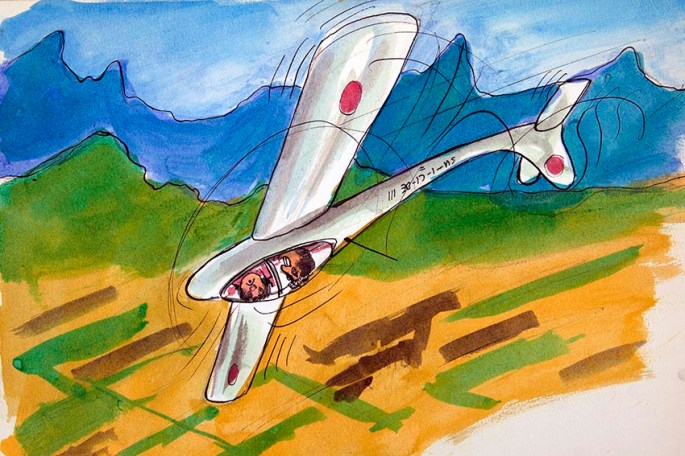
Most of the flight was over Santiago’s sprawling eastern suburbs, but we also skimmed past the western edge of the neighboring Andean wall of snow-capped mountains, the tallest of which in the very far Argentinian distance was the mighty Aconcagua. Towards the end of the mini-voyage we flew over a large compound that comprised the dwelling of the retired dictator, Augosto Pinochet, and shortly after that the pilot gave me control of the glider. The picture below describes what happened next – or at least how it seemed to me at the time, when in my over-excited state I put the glider into a virtual role. Thankfully, my pilot was unfazed by my surprise maneuver  and instantly regained control to land us safely back at the gliding club.

My amateur aerobatics notwithstanding, the brief glide over the outskirts of Santiago remains a vivid and treasured memory from a trip already rich in awe-inspiring memories. Thank you Georgina!

(Readers interested in learning more about the remarkable Georgina Gubbins can visit her website here: http://www.georginagubbins.cl/)

 29 Rolling over Pinochet's house

30

So mortified was I from my disastrous jet-lag experience at the start of the trip at the  Italian restaurant  in Antofagasta, I still had misgivings about entering another such establishment  some ten weeks later. However, we’d reached that stage again where we were keen for an alternative to Chilean cooking and thus decided to chance our palettes on a highly-recommended uptown tratoria.

As things turned out the food was indeed excellent and I managed to avoid losing consciousness for the entire meal. But even if I had suffered a freak recurrence of that temporary narcolepsy I doubt very much that I would have actually fallen asleep at this particular restaurant; for this particular restaurant was “blessed” with the presence of a singing maitre d. And the singing maitre d didn’t merely sing the occasional refrain from a popular tune; he didn’t restrict himself to the odd verse from o sole mio; this was no mere gondola crooner; no, this guy fancied himself as the real, full-on, operatic deal.

The only time he stopped singing was when he had to talk to his guests, and even then he didn’t so much talk as warble in a form of recitative – whether recommending a wine or pointing out the way to the toilets.

At first, both the novelty of the experience, and the fact he did have a decent enough little tenor voice meant that we didn’t find the singing too intrusive upon our dining – which was after all, our primary reason for being at the tratoria. But after about half-an-hour it began to irk, and then it began to grate, until by the time he warbled to us the deserts of the day we were ready to throttle him – but then something much better happened.

A diner at a neighbouring table, with a far bigger and better tenor voice decided to sing back at the maitre d. The maitre d in turn, not getting the message, and not knowing when he was beaten sang back – louder! This then descended into an all out competition, culminating in the two men not so much singing at each other, but actually screaming. It ended eventually- much to the relief of everyone in the restaurant – when the maitre d’s voice finally cracked, breaking down into a pathetic croak…

30 Duel of the tenors

CHILE – OUR REAL CARTOON ADVENTURE (part 9 of 11)

(SEE PART 8 HERE)

25

One of Dido’s most onerous tasks during our Chile trip entailed her working with a group of mentally and emotionally handicapped teenage boys, several of whom had what these days we euphemistically refer to as “challenging behaviours”; in truth, one or two of the lads turned out to be downright psychotic. To help her share some of the organisational and practical load Dido enrolled the assistance, for two weeks, of a former ballet colleague whom she had flown down from Los Angeles. But however difficult the forthcoming days with the boys would be, nothing could have been more “challenging” than the act of merely meeting said-colleague at Santiago Airport.

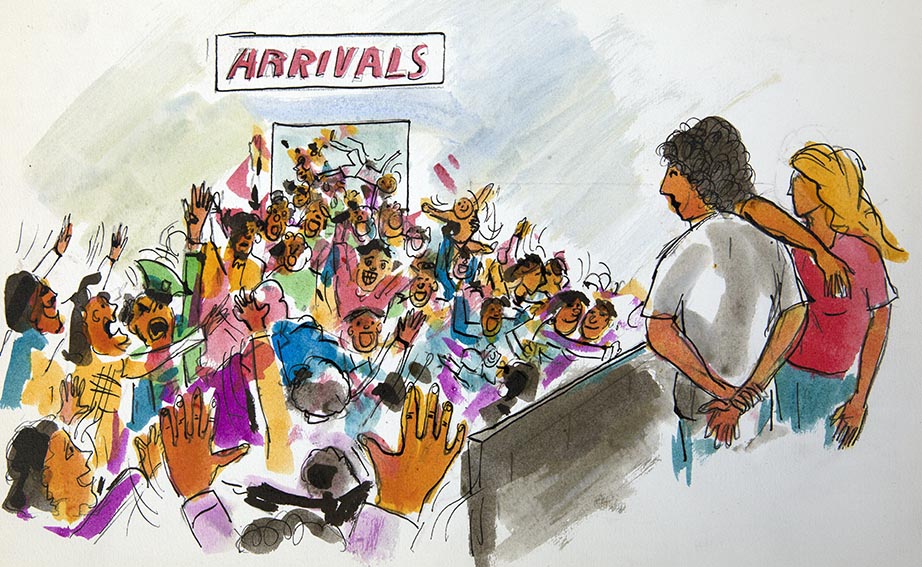
I wonder how many people reading these adventures remember the delirious scenes of joy and celebration on the tarmac at Ben Gurion Airport in Tel Aviv following the dramatic rescue of the hostages from Entebbe by Israeli commandos in 1976? Well, the arrivals hall at Santiago was that scene, but on steroids, and was happening when we arrived to meet our friend, and continued without abatement until the time we left – some three hours later – having failed in our endeavour. Fortunately, our friend – another seasoned traveller – on failing to meet up with us in the melee, used her initiative and made her own way to our hotel. As for why the arrivals hall was in such a state of continuous delirium, we never discovered…

.

25 Arrivals

26

Before the three of us began what would be an intense five days of work with the kids, we hired a car and drove up north to the small coastal town of Tongoy. Set on broad sands at the south tip of a spectacular bay it seemed like an excellent place for enjoying a few days by the South Pacific. But as with just about every feature of our Chilean adventure whatever our preconceptions or expectations had been before we arrived at a given location, the reality always had surprises in store for us. In Tongoy, as with so many of our previous destinations, it was our hotel which offered the biggest shock to the system. But in this case at least, it wasn’t a detrimental shock – no Nazis, no squalor, no shared butter and no gravity defying showers – but rather a jolt to our visual senses: For our hotel was decorated to such a degree of kitsch, it was like walking into a cliché. Each and every surface was coated, draped, carpeted or covered in garish, luridly decorated flower motifs – every facade clashing dramatically with its neighbour; Every chair, table and bed, painted, lacquered or otherwise coated in every colour, shade and tone of the spectrum and beyond; Each and every shelf and windowsill densely “adorned” with myriad pieces of chintz and fake ivory, such that if “ivorine” came from “real” plastic elephants, then plastic elephants would surely have been as an endangered a species as their actual living-breathing inspirations. And to cap it all there was the owner of the hotel: A movable temple of kitsch in her own right, who, as she strolled proudly through her establishment: With her stiffly set blue-rinse; down through her heavily painted, rouged and lipsticked face; to her violent-pink, be-flowered, polyester dress to her spangle-encrusted, patent turquoise stilettos, she resembled a chameleon in a psychedelic forest…

26 The Lady of Kitsch

27

As we had a car for a few days we decided to explore the Coquimbo region. At one stop we received a lesson in “car-parking vigilantism” Chilean-style. We’d parked up by some roadside cafe miles from anywhere and were about to go inside for a snack when three boys – of disparate age and stature – appeared from behind the building. Before we had a chance to get out of the car they had positioned themselves around the vehicle in a manner that I can only describe as casually menacing. The largest and oldest of the three boys leaned against my side of the car and tapped on the window. Nervously, I wound the window down and in my best Spanish asked him what he wanted. He asked me if we intended to park the car here, to which I replied, yes. He then asked me; ‘But who’s going to protect your car while you’re in the cafe?’ to which I ingenuously replied; ‘Why do we need the car protected? There’s nobody here!?’ He then smiled wryly at me, with an expression far too cynical for a lad of his tender years, and said knowingly; ‘Well my friend, you never know do you? You never can tell what could happen, even in a place like this…’ then he revealed – as if by magic – a long piece of wood, an old bat of some kind, with a jagged nail protruding from its tip. He swung it nonchalantly by his side with his wrist then added; ‘But of course, with three trusty guys like us guarding your car, I can assure you that nothing will happen to it…but if not’ he continued, waving the bat more vigorously now, ‘I would be very concerned…’

We wanted to just drive on, but the next stop was over three hours further down the road, so with a mixture of repressed rage, fear and frustration I dug out a handful of pesos from my jeans pocket and placed it in the open palms of the smallest boy whose hands were reaching up towards me. 

To be fair, the big lad was as good as his word, and they did indeed guard the car for the entire time we were in the cafe, and nothing bad happened to it…

27 We can take care of your car...

CHILE – OUR REAL CARTOON ADVENTURE (part 8 of 11)

(SEE PART 7 HERE)

22

Germans had been colonizing the Lake District of Chile since the mid 19th century but somehow we were totally unprepared for just how much their presence influenced the region.

This was a break for us from Dido’s work and represented a chance to have a few days r&r and for that reason we decided to splash the cash and stay at a decent hotel. Our Lonely Planets guide suggested a timber-faced  chalet-style establishment on the edge of Villarica Lake, but what it omitted to describe was the intensity of the Teutonic atmosphere within the building. As our luck would have it, the day we arrived was some sort of German related  holiday and the entire staff together with all the German guests were donning national (Bavarian) dress, with all the men resplendent in lederhosen and feathered hats, and their “wenches” in dirndl. I’d ski-id as a youth in Austria, so I was used to this festive sartorial tradition. But what I wasn’t used to and hadn’t expected – at least not quite so overtly – was the proud and brazen identification of the hotel management with their Fatherland’s recent military past. Of course, I knew all about Nazis fleeing to South America at the end of the war, and about Eichmann and Mengele, but somehow I’d always connected this sort of thing with Argentina, Brazil and Uruguay. I was rudely disabused of my ignorance however, just after we had checked-in and the bellhop took us into the elevator, which, instead of the usual mirrors was decorated with numerous photographs of Panzer crews posing on and about their tanks. Amazed and naively thinking that this was some sort of retro decorative gimmick – albeit in alarmingly poor taste, but essentially innocent – I asked the bellhop who these soldiers were?

‘Ach!’ he exclaimed, putting our bags down on the the floor, obviously thrilled that I had shown an interest; ‘This vas mine faater’s Panzer groupen”  he said in an accent which was all German without a trace of Spanish,

‘Das man here’  pointing at the largest of the photos at a black-uniformed soldier leaning nonchalantly against his vehicle, ‘das man here ist mine grandfaater. A hero ov ze Eastern front!’

‘Oh gosh’ I replied limply.

‘Ya! A great hero – unt all his camaraden – all heroes!’ he added, gesturing expansively  about the elevator. ‘Such gut fellows – yah…’ he suddenly tailed off in sombre contemplation.

‘He was a great man for sure’ I said trying not to betray my total insincerity.

‘But no! Nicht vas my friend!’ he responded.

‘What do you mean?’ I queried, fearing the answer.

‘Nicht vas‘ he repeated. ‘You just met him – zer olt man at zer reception…’

As he walked us down the corridor to our room I pondered what was worse: That I had just shaken the hand of a Nazi “war hero”, or that he had our passports in his possession…

22 The Boremann Suite

23

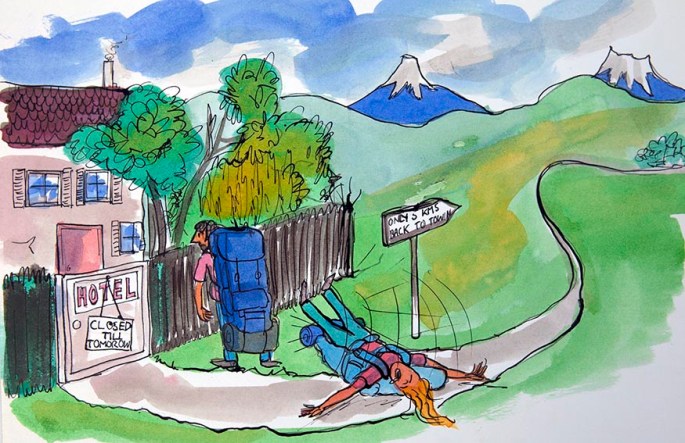
The Chile trip was our first and last experiment with Lonely Planet travel guides.  While most of gripes with the book could be regarded as somewhat subjective – e.g. our constant disagreement with the guide’s descriptive terminology, such as “basic”, when they really meant “squalid”; “faded” when they really meant “decrepit” and; “comfortable” when they really meant “incredibly uncomfortable” – the several times they got essential facts wrong were far more serious. The worst example was when we decided to hike the five miles from our old hotel on Lake Villarica to another hotel out in the country. We knew it would be a long hard yomp, carrying our rucksacks and that was fine, because we wanted the exercise and most importantly, because we also “knew” – from our Lonely Planet Guide – that the hotel was open and that because this was the beginning of the season there was absolutely no need to phone first to reserve a room. Sadly for us, the hotel didn’t in fact open until the following day. The picture tells only half the story as we had to walk all the way back too!

23 Lonely Planets - we hate you!!

24

We decided to end our visit to the Lakes region of Chile with a day-trip to the famous Island of Chiloe – famous among other things for being the original home of the potato. However, when we’d planned the excursion we hadn’t realised that the ferries which conveyed people and their motor vehicles from the mainland to the island were converted military landing craft – apparently of 1940’s vintage. As our bus rolled onto the craft we were perturbed when we noticed no safety gear of any kind – no life-jackets, no life-rings and certainly no life-craft. Our anxiety was increased by the fact that even with the front part of the boat on the landing ramp we were already being buffeted by an extremely rough sea. Once again, with our recent flirtations with mortality still fresh in the memory, after a mere exchange of looks we were off that bus, and off that boat before you had time to say “Herald of Free Enterprise”! Chiloe would have to wait for another time…

24 Chiloe - not quite

CHILE – OUR REAL CARTOON ADVENTURE (part 7 of 11)

(SEE PART 6 HERE)

19

The second of the two fruit checks took place on the border of the Atacama and Coquimbo regions. The bad thing, was that it was in the middle of the night and we were woken from our sleep, but the good news was that on this occasion we weren’t forced off the bus. For whatever reason the policemen concentrated this time on examining the luggage holds and it wasn’t long before their search paid fruit or, to be more precise, onions – a bloody-great crate of prime cooking onions. Now it was the coach driver who received the wagging finger treatment as he was asked to explain the presence of the contraband Allium bulbs. Somehow it was obvious to the carabineros that he was the guilty party and the poor chap was taken away to a little booth by the side of the road where he was interrogated for the next hour or so. Eventually, evidently chastened and downcast he was returned to us and permitted to continue driving us to Santiago…

19 Whose onions!!

20

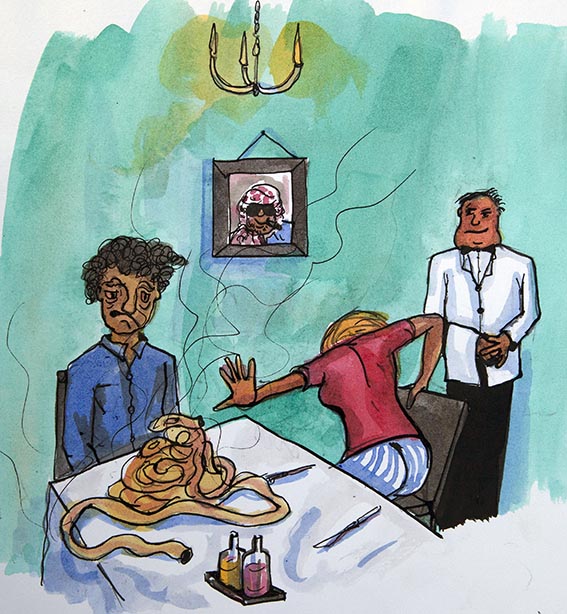
As much as were enjoying the Chilean diet, after several weeks in the country we felt the need for a change. Having spent a great deal of time in Israel we both had passion for Middle Eastern cuisine – Jewish and Arab. So one evening when we stumbled upon a Palestinian restaurant near our hotel in Santiago we thought we’d give it a go. So long as we observed Basil Fawlty’s wise dictum; not to “mention the war” – or wars in this case – we presumed that we could relax and enjoy some fine Arab cooking.  However, the meal we were served up had about as much relationship to the exquisite humus and salads of Abu Shukri in Jerusalem, or the sumptuous seafood and grilled meats of the Crusaders in Caesarea as a Birmingham balti chicken has to do with real Indian street food – i.e. not very much. The two memorable things about the meal was the fact that everything presented to us was grey in colour and utterly tasteless, from the cement-like humus and baba ganush to Dido’s choice of main course – supposedly braised, whole poussin, stuffed with cracked wheat and apricots (yes, grey apricots). But the piece de resistance for awfulness was my main course. What I was thinking when I ordered stuffed sheep’s intestine is one thing, but even allowing for my foolhardyness, nobody could have expected what was placed before me that evening – including all the other diners who used their menus to screen themselves from the revolting sight of my dish.  I suppose I was anticipating something along the lines of haggis or Balkan-style stuffed “kishke”, both of which I love. But this was, as depicted in the picture below, simply a steaming hot pile of sheep intestine in all its unadulterated gory, glory – somehow stuffed with rice (dried-out grey rice in keeping with the rest of the meal). Worse still was the smell; reminiscent of compost and dirty damp towels – it made Dido come close to retching. And the fact that the head waiter stood over me, oozing pride for his establishment’s signature dish, eager to see how much I liked it made this one of the most potentially awkward dining experiences of my life. But then fate smiled on us! The intestine, having the texture of tyre rubber meant that my knife couldn’t make the slightest impression on it. The waiter slapped his head as if to chastise himself for his remissness and went back to the kitchen to get me a sharper implement. At this, without needing to utter a word to each other, we stood up, slammed more than enough money on the table to cover the bill and marched full-speed to the exit…

20 Arafat's revenge

21

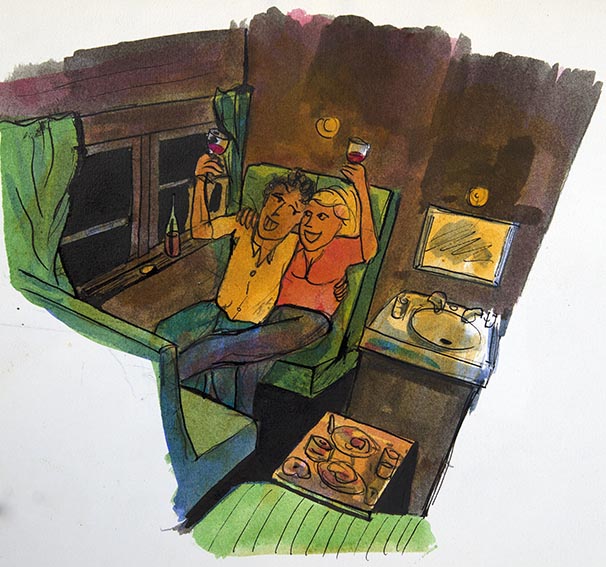
About halfway through our stay in Chile we decided to take a few days off and visit the lake district. We booked the train for the overnight journey from Santiago to Puerto Varas and believed we had reserved a compartment. However, we were disappointed to discover on boarding that we were in a couchette with half-dozen other people. A short time out of Santiago Dido went looking for the loo. She returned in an animated state saying that the next carriage comprised only compartments, and that they were all empty. When the porter then came to clip our tickets I asked him if it was possible to upgrade to a compartment to which he shrugged, smiled and muttered under his breath ‘perhaps’… Without thinking I reached into my pocket, and pulled out about $40.00 worth of Chilean Pesos from my wallet . Then, checking his expression and seeing that he was receptive I discreetly slipped the money into his hand. ‘Twenty minutes’ he said gesturing with his head back towards the next carriage; ‘I will prepare the first compartment for you’. And good to his word, the compartment was prepared. It was beautiful: Old British rolling stock from the age of steam, like a scene from From Russia with Love or Murder on Orient Express; only slightly faded, deep green velvet drapes and furniture and shimmering mahogany paneling. The porter had immaculately turned down the crisp Egyptian cotton sheets on the two broad bunk beds, in addition to his final touch – two expertly prepared pisco sours in old-style crystal cocktail glasses placed on the little pull out table. We were in romantic heaven, and needless to say we enjoyed one of the best nights of our trip…

21 Who says bribery doesn't pay!