

especially when the truth is more newsworthy
This must have happened to most people reading this post. You mislay a possession somewhere in your home, and while turning out various drawers, cupboards and shelves searching for it, you discover something else, long-forgotten, and often more precious than the original object.
Last week I was rummaging through a wooden chest we use for storing bits and pieces, looking for a lost drawing when instead, I turned up a small bundle, packed with old photos of my wife Dido from her time as a ballerina and a model. My curiosity at finding dozens of images that I had never seen before was heightened, when among the pictures I also found a yellowed, newspaper article from the Saturday edition of the Glasgow Evening Times, featuring Dido and another Sadlers Wells dancer, Nick Millington.

However, while I of course enjoyed the article, and got the whole forthcoming Scottish tour – Scottish interest thing, there were several details, probably due to a desire to accentuate a direct Scots connection, the journalist got slightly wrong. And, as is often the case, the more complicated truth, is also much more interesting.
While Dido’s parents regarded themselves as proud Scots, they were both born continents and oceans distant from Saltcoats and Edinburgh respectively.
Ann’s very Scottish father (who was from Saltcoats) was a high ranking doctor in the British Army of India, where she was born in Murree (now Kashmiri Pakistan). Following the war, Ann was educated at the famous Quaker private school, The Mount in York where she met Judy Dench, a fellow pupil. So, while some of Ann’s family did indeed hail from Saltcoats (others also hailed from Pitlochry), she herself, was not a native.
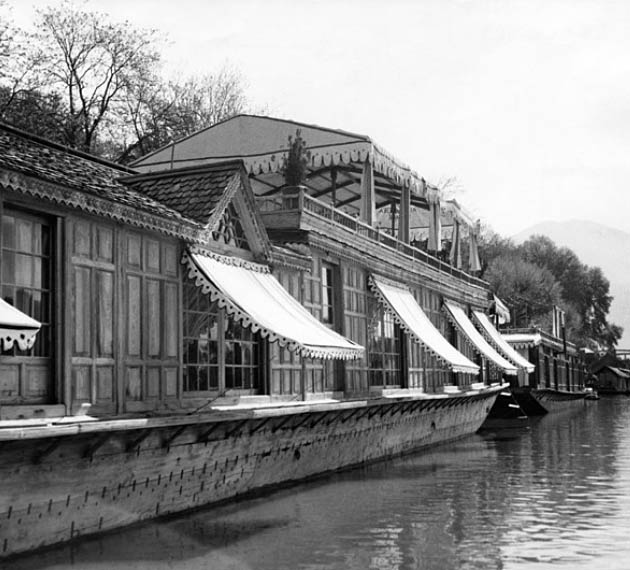
Dido’s father, David, was born in Long Island (New York) during the journey to the UK from Chile where the family had interests in copper mines. He was later educated in Scotland where he attended Loretto School outside Edinburgh (Scotland’s oldest boarding school)) before leaving Scotland for London, where he studied medicine at Guy’s (teaching) Hospital (NOT “Edinburgh University”). David eventually became a general practitioner, later specialising in pulmonary medicine.

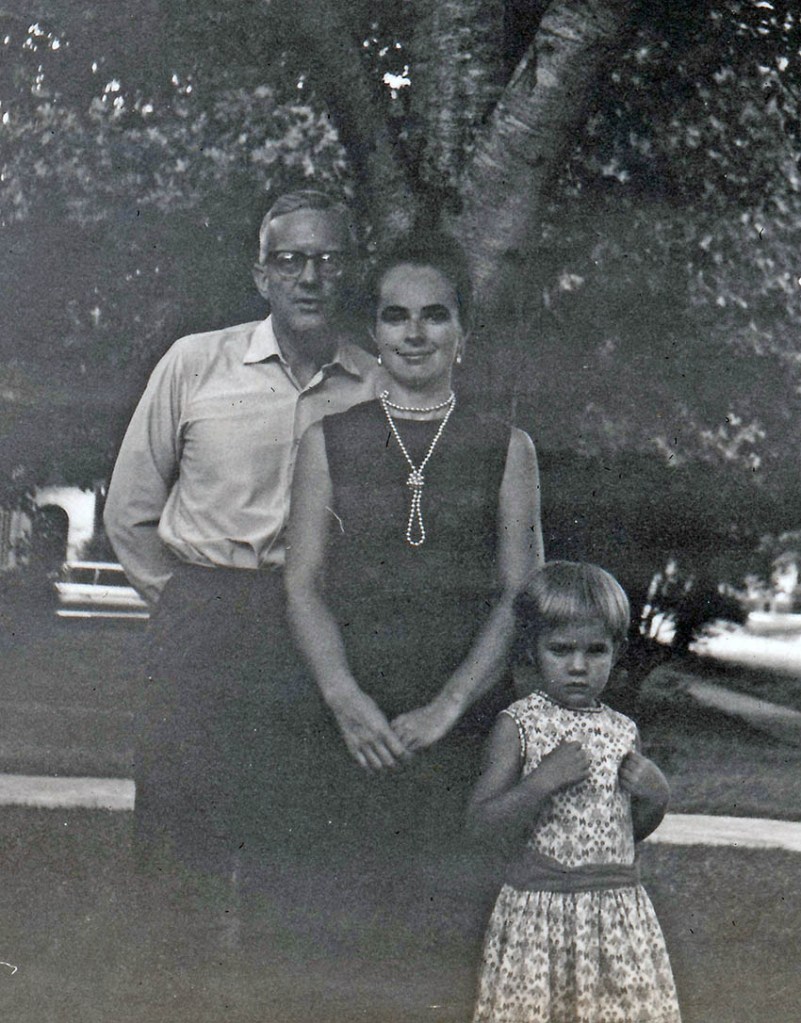
David met Ann in London where she was an opera student at LAMDA (London school of Music and Dramatic Art) and working as an usherette at Covent Garden. Soon after they married, they immigrated to Canada in the early 1960’s, and then on to Dallas (Texas). Together with their two children, Dido and her older brother Niall, they then moved around the United States according to David’s latest medical posting, including spells in Kentucky and Ohio before finally settling in Little Rock (Arkansas). There, David worked at the UAMS (University of Arkansas Medical School) and the VA (Veterans’) Hospital as professor of pulmonary medicine until his retirement, while Ann became something of an Arkansas celebrity, broadcasting a weekly culture “magazine” show (“Arts Scene“) for the state university radio station (KLRE-KUAR). In all that time, they never took up US citizenship – preferring the status of resident aliens, and “proud Scots”.
Thus, as I said, while Saltcoats and Edinburgh did feature in Dido’s immediate ancestry, it wasn’t in quite the way the journalist reported it. As for her “attractive Stateside drawl…”, these days it’s still attractive, but more mid-Atlantic.














 ARKS, ADAM AND AXARQUIA