Pain and Pleasure at the Rijksmuseum (June 2024)

obscure gems, camera-obscured vermeers and an unwatchable nightwatch…

I am a very fortunate and privileged person. In 1987 I and my then-girlfriend visited the Alhambra Palace in Granada, and had the entire place to ourselves. The stillness of the Court of the Lions in particular, with its serene Solomonic atmosphere, only disturbed by the wing flutters of doves and the chirping of swallows was a transcendental experience.

About ten years later, I had an equally powerful-yet-serene artistic moment of solitary good fortune in the Rijksmuseum in Amsterdam, when I had its famous collection of nine Vermeers all to my lonesome. This was especially lucky, as few great works of art demand peaceful contemplation more than those of the genius from Delft. It was probably no more than five minutes, but easily sufficient time to appreciate a unique opportunity for private quality time with nine of the finest paintings ever conceived.

Young Italian Woman with Puck the Dog – Thérèse Schwartze (1884/5 – oil on canvas). Ashamed to say that I had never heard of Thérèse Schwartze, but I’ll never forget her now after being thrilled by this life-size study of attitude and poise…

But that was then, and now things have changed for the worst, at both the Alhambra and the Rijksmuseum.

Both places are victims of their own massive popularity and their increased accessibility due to an exponential rise in mass-tourism. And, both places resorted to the same “remedy” for dealing with the ever larger crowds of people wanting to see their glories – the dreaded time-slots…

I have visited Amsterdam many times since 1997, but because I knew I could never repeat that incredible Vermeer encounter, I had avoided the museum – until last week.

We were in town for 48 hours and our hotel was next door. Everytime I stepped out onto the street, there was the great red-brick edifice, staring me in the face, taunting me. So, I gave in, and booked a 10 am (and first of the day) slot on my iPhone for the second day. Get there early I thought, and I might just have a chance of beating the crowds to the Vermeers, even if only by a minute or two, it would be worth the €20 for the ticket.

A Young Woman Warming her Hands Over a Brazier: Allegory of Winter – Cesar Boetius van Everdingen (1644-48 – oil on canvas)
Again (although here I was aware of the painting), I had only a vague knowledge of this exceptionally gifted Dutchman. As with the Schwartze above, the painting in the flesh (so to speak) is unbelievably compelling. These iPhone photos, don’t convey a fraction of their power in real life...

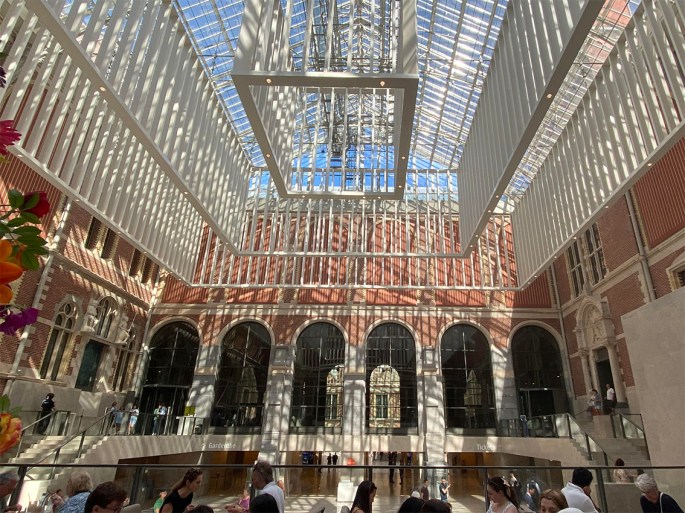
How wrong I was. I got to the entrance at 9.45 (15 minutes before the official opening time) and, much to my pleasant surprise was allowed in. However, my cheerfulness was instantly doused, the moment I entered the grand vestibule, to discover it full of people – mostly grouped in tour parties, with tour guides, whose competing, amplified voices, filled the space with a kind of strident, oddly-American-accented hiss.

On my way to the Vermeers I passed large classes of school children, many spread out, sitting on the floor spaces, surrounding their teachers, like bees around a queen, but all (teachers and children) dressed in white lab-coats. And no, I haven’t a clue either, but it all added to overall feeling of organised pandemonium.

Having navigated my way past these sizable (and voluble) obstacles I eventually made it to the gallery containing the Vermeers, but of course, I was too late. I don’t know when wouldn’t have been too late, seeing as I had entered the museum 15 minutes before the official opening time, but I’m guessing, some time around three in the morning? How/why/where all these people came from – hundreds of them – in yet more tour-guide parties, between me and getting anywhere near the paintings, is a mystery. But whatever, I wasn’t going to see the Vermeers – not that I would have wanted to given the football-crowd environment engulfing them.
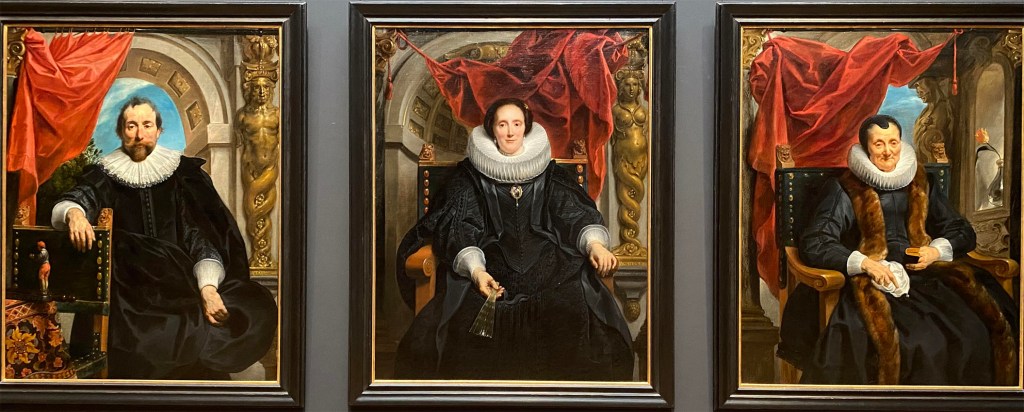
Three Portraits of Notables of Antwerp – Jacques Jordaens (1635/36 – oil on canvas)
If, like me, you’re a sucker for the wow-factor possible from supreme painting technique, then this virtual triptych of life-size portraits, by yet another artist I barely knew of (Flemish this time, not Dutch) is the exhibit for you. While it might not have the subtle deftness of The Night Watch, for example, they’re packed with empathy, presence and attitude – and most importantly of all, have no unsightly screens, and rarely any people between them and you!

So, as a second prize I tried for the Rembrandts but fared little better, and ultimately settled for distant side galleries and the often surprisingly superb consolations on offer, which comprises most of the illustrated story accompanying this post.

In short, do visit the Rijksmuseum next time you are in Amsterdam, but be prepared to make do with side galleries and supposedly “minor” exhibits. Fortunately, being one of the greatest art galleries on the planet, insures that there are plenty of allegedly “lesser” gems of outstanding and memorable value on offer, to enjoy in relative peace and harmony.
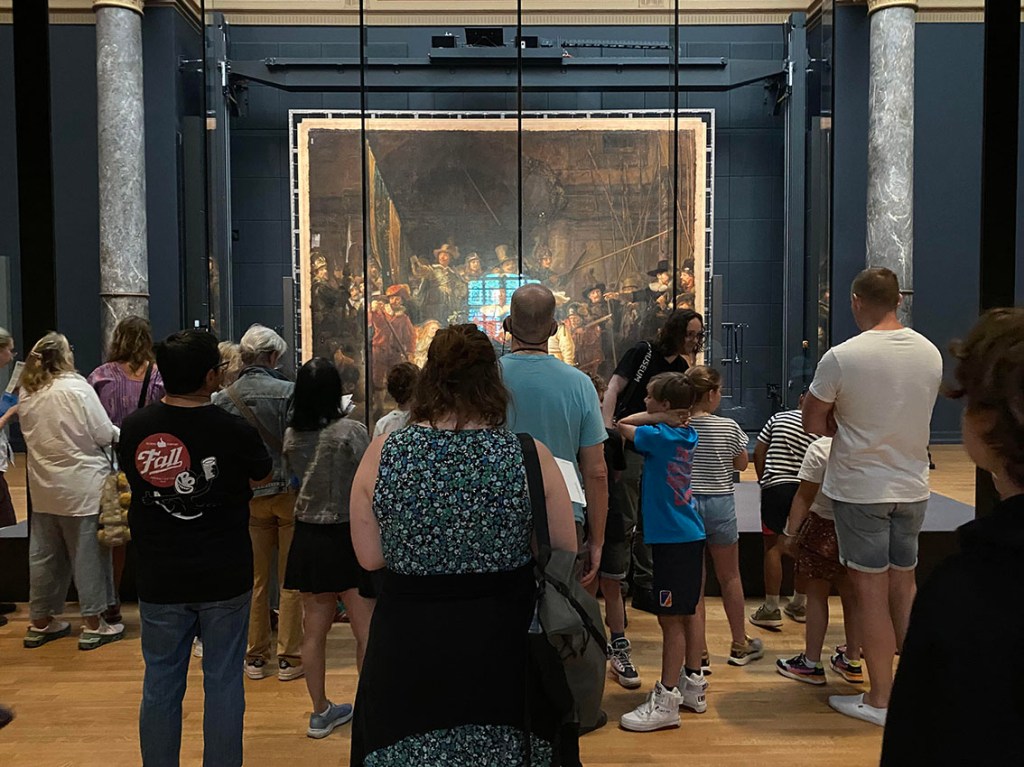
The other side of the Rijksmuseum coin. Somewhere behind all of that lurks The Night Watch. There has to be a better way…

NINE SAINTS OF SANTIAGO

MY PICTORIAL tribute to nine great kids

Regular readers of these posts will be aware of how prominently our 1991 trip to Chile has featured, and of its main purpose; for Dido to study the role of folk dance as a therapeutic tool to support social integration and participation for children with learning problems. Thus far however, I’ve only ever touched upon that key element of the trip, focusing more on our impressions as first-time travellers to an incredible country (and-then reborn democracy).  

While it would be lying to say that whenever I hear a mention of Chile, my instant mental vision is not of mind-blowing epic scenery, it is also true, that this is always quickly followed by a starkly contrasting melancholy caused by memories of the faces shown here.

The plain truth is, and one of the main reasons I’ve avoided the subject as far as possible, despite the fact this happened nearly 30 years ago, there are issues of confidentiality which severely compromise my scope for description.

Suffice to say here, that with the cache of her Winston Churchill Travelling Fellowship behind her, Dido was able to convince the relevant government authorities in Santiago to grant us access to a group of nine children (all boys in this case) with whom she could work. Nothing however could have prepared us for the circumstances in which the work would take place, for instead of a regular school, or, as we had naively expected, a special needs school, we found ourselves that first morning being driven through the security gates of a home for young male offenders – a borstal.

More shocking still, was that none of the nine boys – all of whom had either been orphaned or abandoned as babies and who all suffered from various forms of mental and/or physical disability – were themselves offenders or delinquents of any sort. Their only crime was to be born into a Chilean society, then-ill-equipped to properly care for them. Hopefully, during the years since, as Chile has developed into a more stable (the current, popular ructions notwithstanding) and socially sophisticated democracy, children born into similar circumstances enjoy a less bleak prospect.

Nevertheless, from the start of the week we spent with them, we were struck by most of the boy’s cheerfulness and sense of optimism, and their enthusiasm and excitement for Dido’s program of dance-based therapy. Despite some shyness and reluctance from a couple of the lads to begin with, by the end of the week all nine boys had become thoroughly engaged and were already showing significant progress with regards to their levels of creative social engagement.  

The idea had been for one or two carers and/or teachers working in the home to at least observe, and hopefully participate in the activities, and thereby learn to continue the therapy once we had left. Sadly though, despite their repeated assurances to the contrary, neither the government department who facilitated the project, nor anyone employed at the home showed the slightest curiosity or interest in what Dido was doing until the very last day, by which time, it was too late.

Thus, we left the boys for the last time with as much frustration as satisfaction, and saddened in the realisation that this week had probably been the highlight of their young lives rather than merely the beginning of a brighter future.

Following our return to England, and during the months which followed Dido often wrote to her Chilean contacts in an attempt to secure some kind of followup to her work – at least for the nine boys. Unfortunately, all her appeals went unanswered. The painting here was meant as both an expression of our frustration and also intended to insure that at least we would never forget those nine remarkable young individuals.

THE NINE SAINTS OF SANTIAGO – oil on canvas – 1992 – 100 x 78″ (254 x 198 cm)

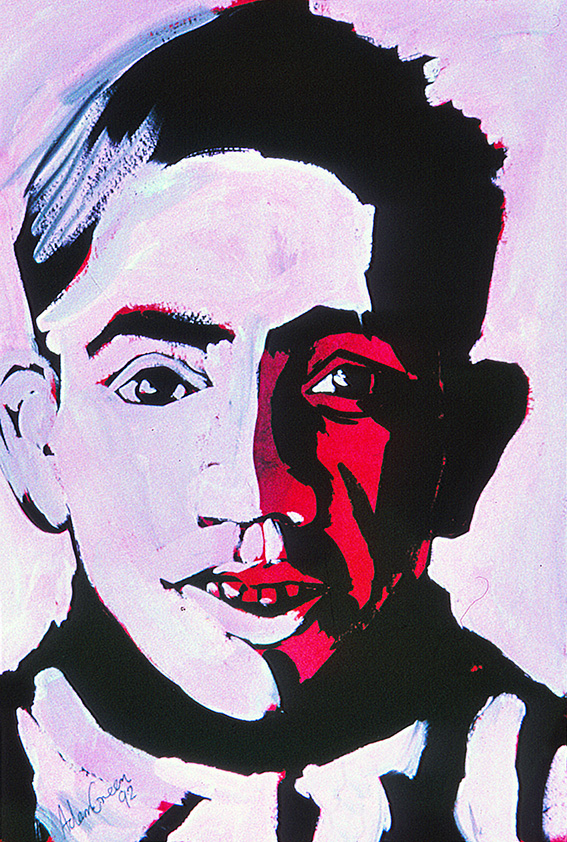
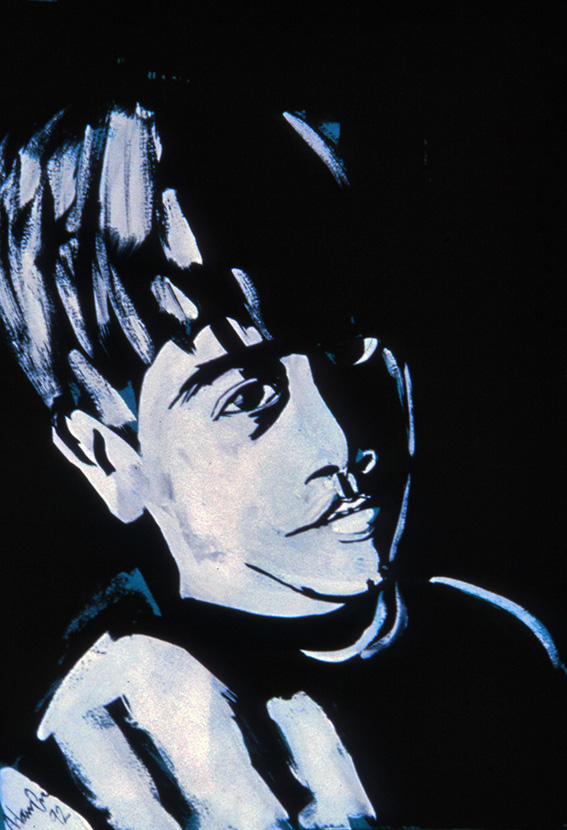
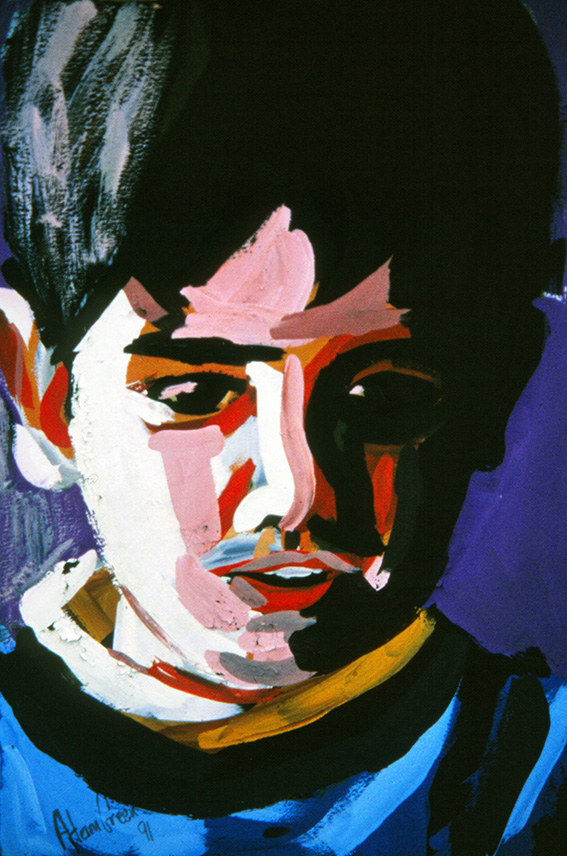
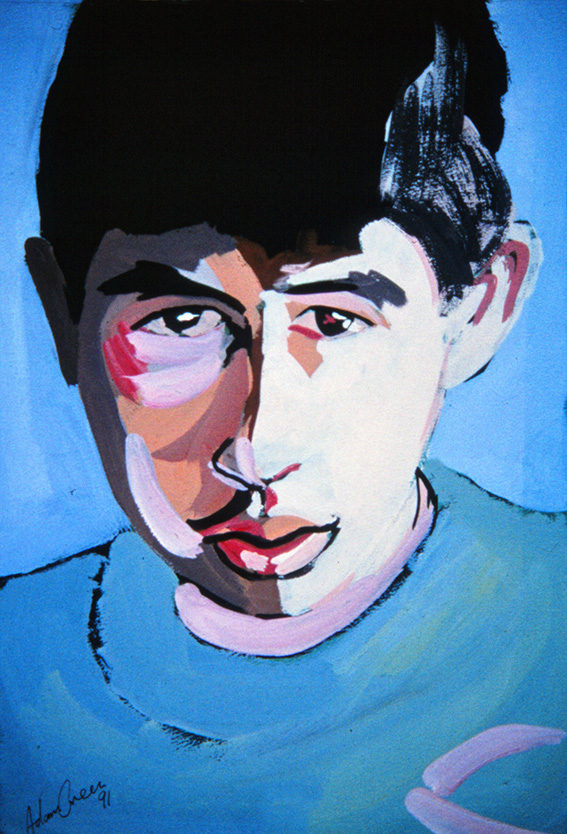
This is arguably the most monumental of all my large paintings, and it is certainly the most deeply felt. The “missing” ninth lad, who suffered from schizophrenia, did not want to be sketched and is represented by the padlock in the centre of the painting. The padlock is obviously a metaphor for him and much more besides. The blues and lilacs represent the uniform they all wore.

The sketches above are all gouache on paper.

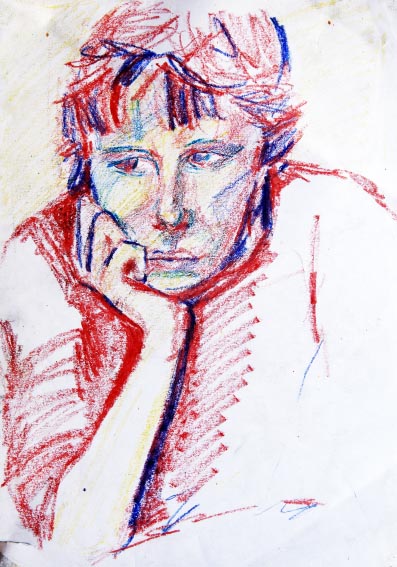
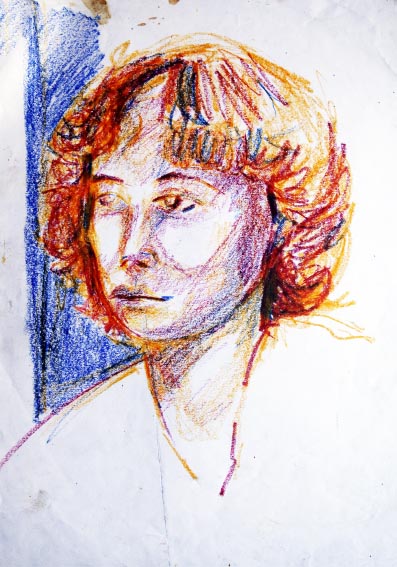
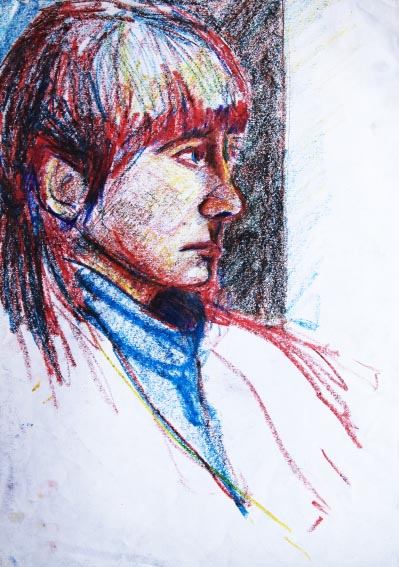
HOMERTON GIRLS

One of my first girlfriends, more years ago than I care to remember, got into Homerton College, Cambridge about the same time I started at Saint Martin’s in London.

Sadly, our relationship did not survive long into our enforced “academic” separation, but I was privileged to visit her once during her first term at Homerton, and very enjoyable it was too. Not only did my girlfriend manage to sneak me into her all-girls halls of residence, but I was also able to stay the night.

Obviously, everything was above board, and we were the models of decorum and virtuous behaviour, but I can’t deny that I found the company of her and her equally clever and gifted and pretty friends hugely stimulating. And, as was often the case for me in those days, I would channel my stimulation through my drawing and painting.

So, when looking at these extremely modest pastel sketches it’s important to remember that they were done by a young man in his late teens while in a highly “stimulated state”. Whatever their quality (and I have no illusions about that, I assure you), they remain a treasured memory…