Did God Workout? (Part 4 – Destiny)

The artistic shaping of visual perceptions of, and sensibilities  towards biblical events and personalities from Bible times to the present day.

Destiny – Israel’s destiny in particular and mankind’s in general, is not merely the dominating theme of the entire biblical canon, but arguably, and naturally the most discussed and examined topic down through the ages. And thus, not only does destiny constitute the central theme of the two most seminal pieces of biblical-inspired literature in the shapes of Dante’s Inferno and Milton’s Paradise Lost, but they in turn, prompted a vast outpouring of visual artistic creativity that is distinct from everything we have considered up until now, for rather than being drawn directly from the biblical text these images are in fact twice-removed from the source material.

Thus, when Yan Dargent and Gustav Dore portray Satan (below), are they portraying what they themselves imagined from their own familiarity with the Bible or were they only considering Dante’s or Milton’s vision. Moreover, how much was the more recent Dargent Satan (left) informed by the earlier Dore depiction (right)?
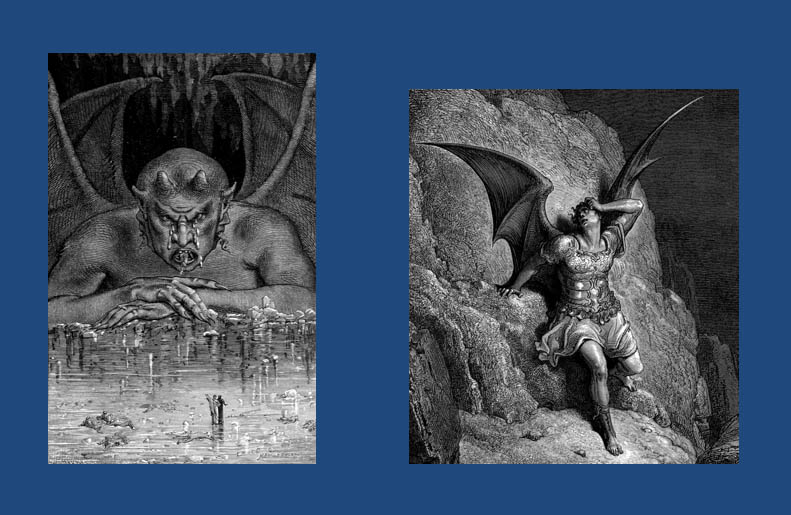
Regardless, perhaps the most important factor – even more so than in the three previous topics we’ve been discussing – is the socio-political context of the given artist’s lifetime. If we go back to time of Micah the prophet for example, for him, the end of the world was signified by great armies of chariots and foot soldiers bristling with iron tipped spears coming down upon Israel and Judah from the north accompanied by plague and earthquake. By contrast, when I was growing up, during the Cold War, the end of the world meant great mechanised armies invading from the east, followed by nuclear bombs and then nuclear fallout. For Assyria, read Soviet Union – and for plague read radiation sickness etc. etc…

The biblical artists of Mica’s time – had there been any – and those of my youth would therefor reflect what is fundamentally the same apocalypse, but with different contextual devices and symbols.

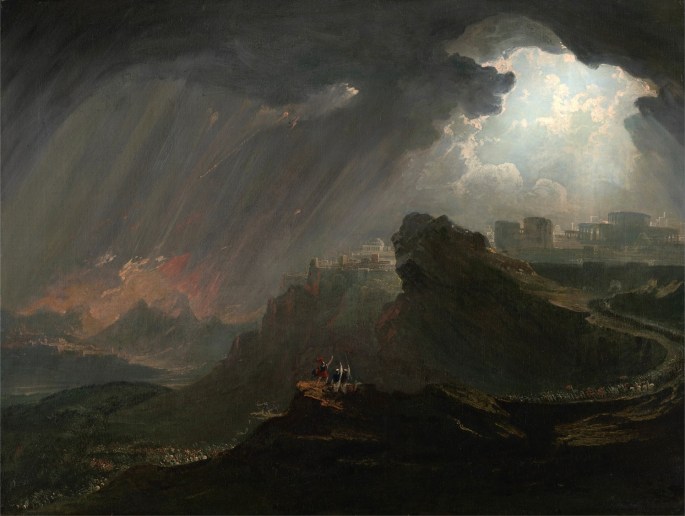
When we then look at what I regard as the golden age and golden location of apocalyptic art – a sadly much overlooked movement of fabulous British painting – we can see how another set of powerful contextual contemporaneous factors, driven by the Industrial revolution, influenced the visions of painters like William Blake and John Martin.

For the visionary Blake, the Industrial Revolution was, in his own famous words, Satanic. The mills and factories sprouting up throughout the land were an ever-growing stain upon the beautiful English countryside. Their bristling chimney stacks spewed out evil smoke casting a black shroud across the heavens and upon the land. His biblical paintings, even when not directly concerned with the end of days nearly all reflect a feeling of imminent doom, such as his painting of Elohim / God creating Adam, where everything, from the tonality and colouration to the expression upon his (heavily Michelangelo-influenced) God’s face is leaden and bleak…
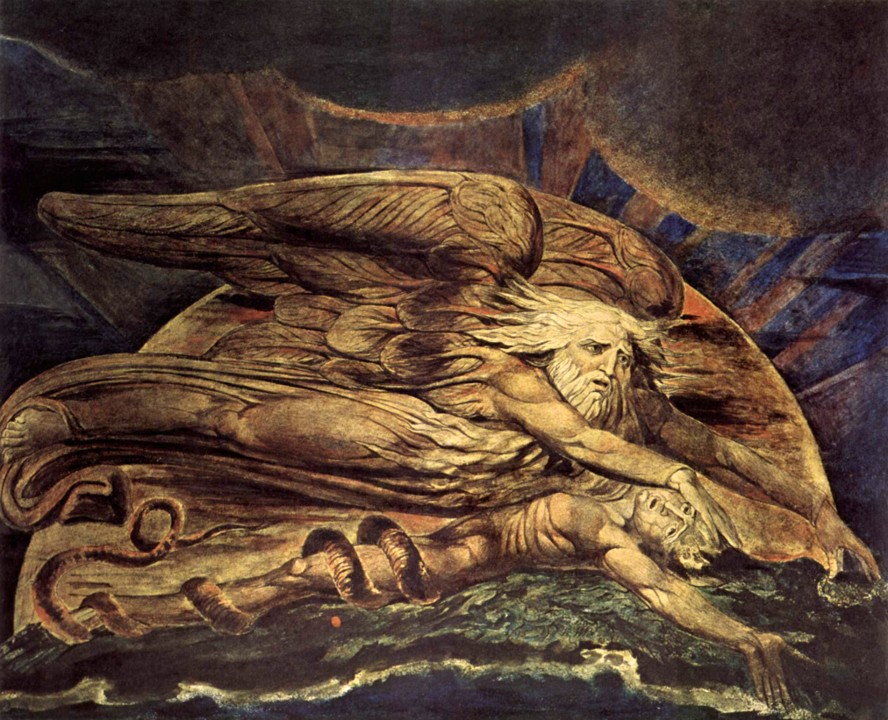
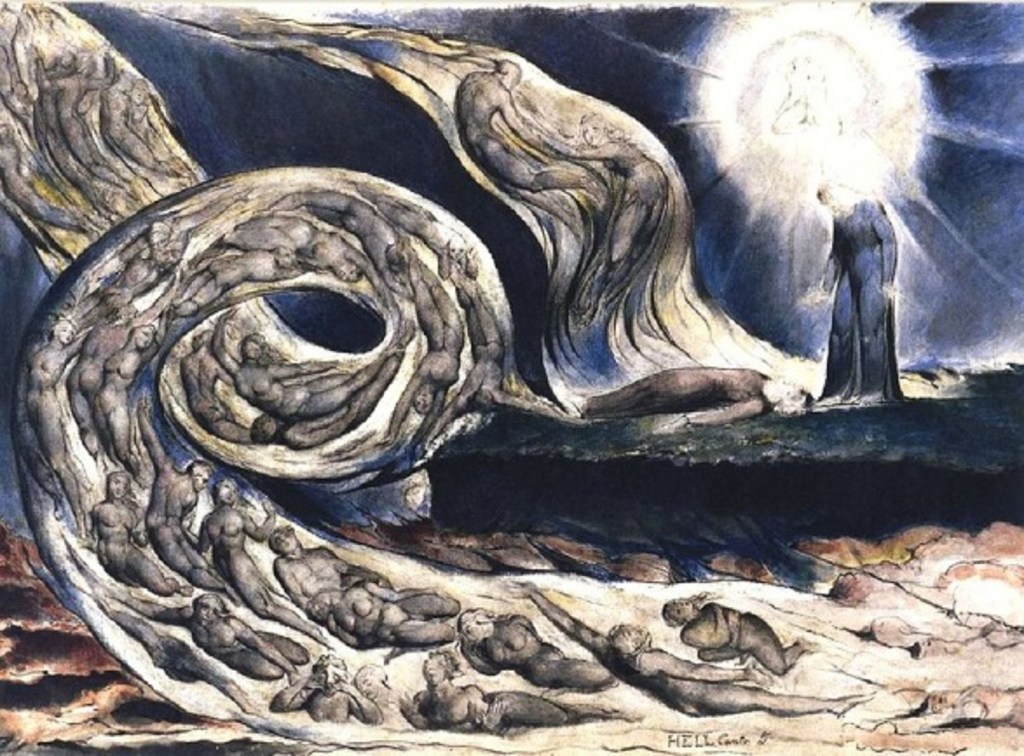
Blake is as much a prophet as an artist, and his entire output, in writing and on canvas is a mixture or warnings and guidance, and a plea to change paths before it is too late. In style and mood, Blake is closer to an Ezekiel than a Jeremiah, unhappy with the present, but offering a promise of a bright future if man – English-man in particular – changes his ways before all is lost. Like Dore, Blake also illustrated the respective hells from The Divine Comedy and Paradise Lost, but unlike Dore’s literalistic approach, Blake took the two themes and filtered them to his own visionary purpose. Thus, whereas Dore gave us his interpretation of Dante’s description of the biblical afterlife, Blake gave us his own nightmarish vision of a sort of post-industrial winter…
In stark contrast to Blake, pious Christian and believer in natural religion, John Martin’s visions of the apocalypse contained an overriding sense of sublime inevitability.

For those unfamiliar with Martin and his work, he was a younger contemporary of Blake who ended his days as one of England’s most successful Victorian painters, whose fame was only equalled by his friend William Turner, and by John Constable. In relative terms, Martin was the most successful and famous English artist who ever lived. At the height of his career his latest canvas could elicit the sort of excitement and public hysteria we associate with the Beatles seven generations later. Cordons of burly policeman were employed to keep the adoring masses back from his paintings, and thousands of people would pre-book, weeks in advance to make sure they could get to see his latest masterpiece. Long before the likes of the Beatles and the Rolling Stones blazed a trail for popular British cultural imports across the Pond, more than a century before the Fab Four landed in New York, over a million New Yorkers flocked to see John Martin’s Last Judgement triptych during its extensive world tour – part of an estimated eight million people in total during the entire trip.

His vast, painstaking and technically superb epic biblical scenes were his most popular works and seemed to have touched something deep within the sensibilities of his contemporaries. And whereas Blake’s surrealism seemed strange and uncomfortable to the average viewer, Martin’s work was obvious and intellectually undemanding. Unlike Blake, Martin, an acceptor of Darwinism, embraced the Industrial Revolution which he saw as simply an inevitable stage in mankind’s evolution, and a crucial part of God’s grand scheme. Ideas he advanced practically moreover, with his own revolutionary designs for London’s drainage, sewerage and his early ideas for underground railway tunnels – all of which strongly influenced London’s city planners and engineers a few years later.

Although Martin shared Blake’s sense of foreboding by the Industrial developments going around them, his fatalistic attitude towards the end of days apocalypse was diametrically opposed to Blake’s concept of avoidable doom. And while for Blake, a return to a spiritual state was synonymous with a return to nature and natural ways, for Martin, nature, for all its beauty and wonder is ultimately another tool in God’s ultimate plan for mankind’s destruction.
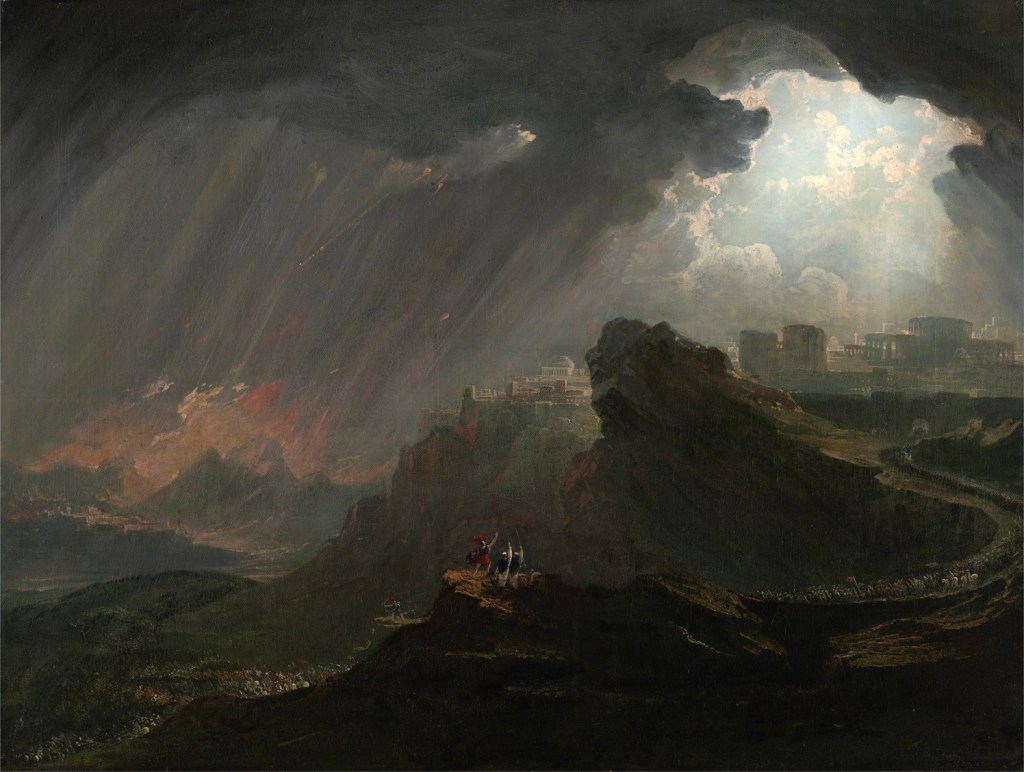
In this painting above for example, Joshua Commanding the Sun to Stand Still, the composition, just as revolutionary in its day as Blake’s surrealism, is a figure of eight, with the left-hand tunnel containing the doom-laden distance and the right the city of Ai. For Martin, tunnels and iron smelting were the two most potent symbols of his age and he uses them repeatedly as compositional motifs in his epic compositions, including in his greatest work; His final set of paintings, the aforementioned triptych, The Last Judgement, based upon Revelation…
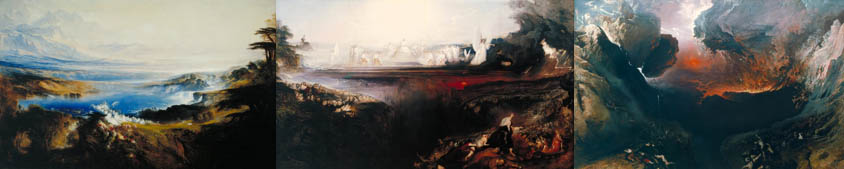
If you’ve ever been fortunate enough to stand before these three huge canvases (in the old Tate Gallery in London) as I did many times, then you might agree with me, that as “impact” picture viewing experiences go its right up there with the Sistine Chapel ceiling or being in room full of Rothko’s, such is their overwhelming presence.

For me, from my first viewing as boy of eight or nine years of age, it was always the right hand panel, The Great Day of His Wrath, that captivated me the most. Of course I didn’t know then, that this was the ultimate expression of Martin’s tunnel symbolism or that the central volcanic fires are based upon his impressions of iron smelting. It was actually another five or six years before I even knew that the destruction was based upon the words of John the Evangelist. Little Jewish lad that I was at the time of my first viewing, I had never heard of this mysterious figure from the New Testament, nor his remarkable description of the end of the world. In fact, I had no knowledge of the host of theories, both sensible and downright wacky, that exist around this masterpiece and its alleged influences. But the one certain thing, had I known it at the time, was that this was an amazing expression by a devout-yet–modern thinking Christian artist, about Industrial Man’s destiny at the hands of nature.

Unlike Blake, Martin’s vision is not at all preachy or aspirational. It is the apocalypse presented as inevitable, and as entertainment for a mid-Victorian audience. While Blake’s longed-for spiritual nirvana hearkens back to a mythological past, the route to Martin’s Plains of Heaven is through the unavoidable chimney smoke and smelting fires of his contemporary world. Unlike Blake, with his surreal, unattainable imagery that left the masses cold and confused, Martin, from the very start had a natural ability to entertain and thrill his Victorian audience, even when presenting them with a vision of their own doom.

I would argue that with these paintings by John Martin, biblical-inspired painting reached its zenith — certainly with regard to how influential fine art was, and ever would be again upon the conditioning of our imaginations.
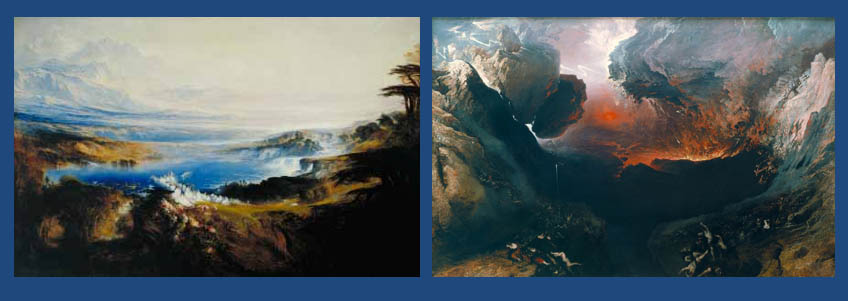
This is not to discount the work of later artists, from Pre-Raphaelites like Ford Maddox Brown…
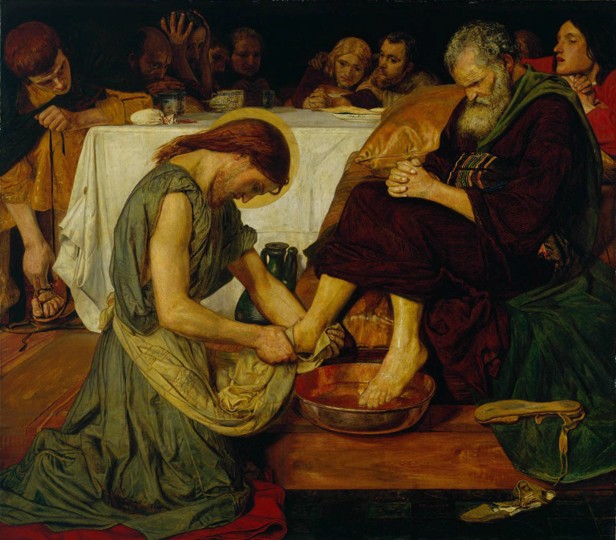
Nor surrealists, cubist and fauvists like Chagall and Spencer…
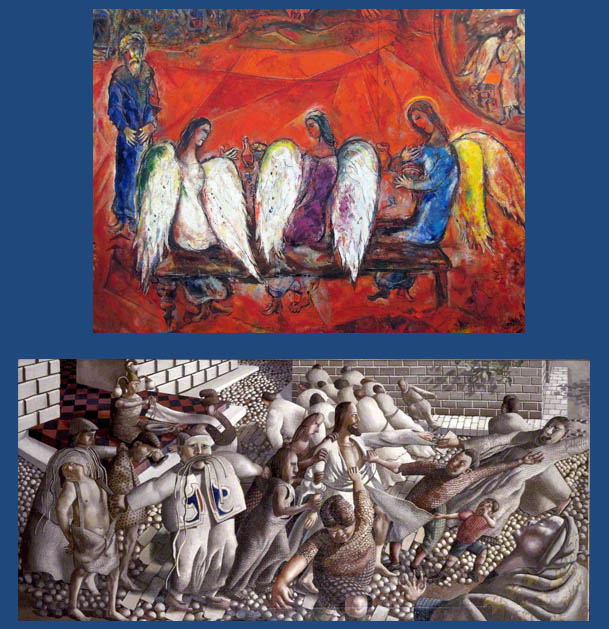
Or monumental sculptors like Jacob Epstein…
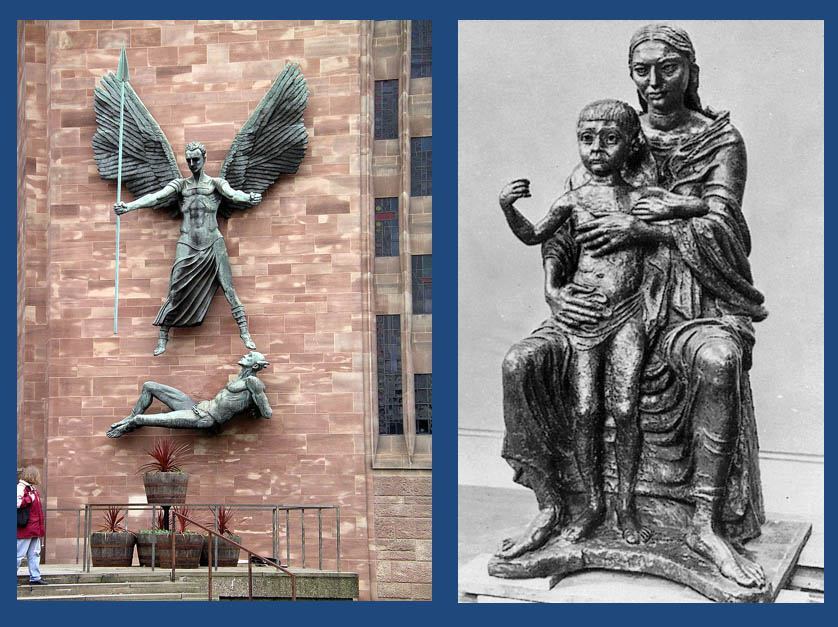
But despite the undoubted originality and genius of many of these artworks none of them succeeded in implanting universal, and durable images in the consciousness’s of the masses. It was only with the emergence and development of cinema, and Hollywood in particular that visual art can be said to have resumed the shaping of visual and intellectual Bible-related ideas for a mass audience.
Did God Workout? (Part 3 – God’s Women)

The artistic shaping of visual perceptions of, and sensibilities  towards biblical events and personalities from Bible times to the present day.

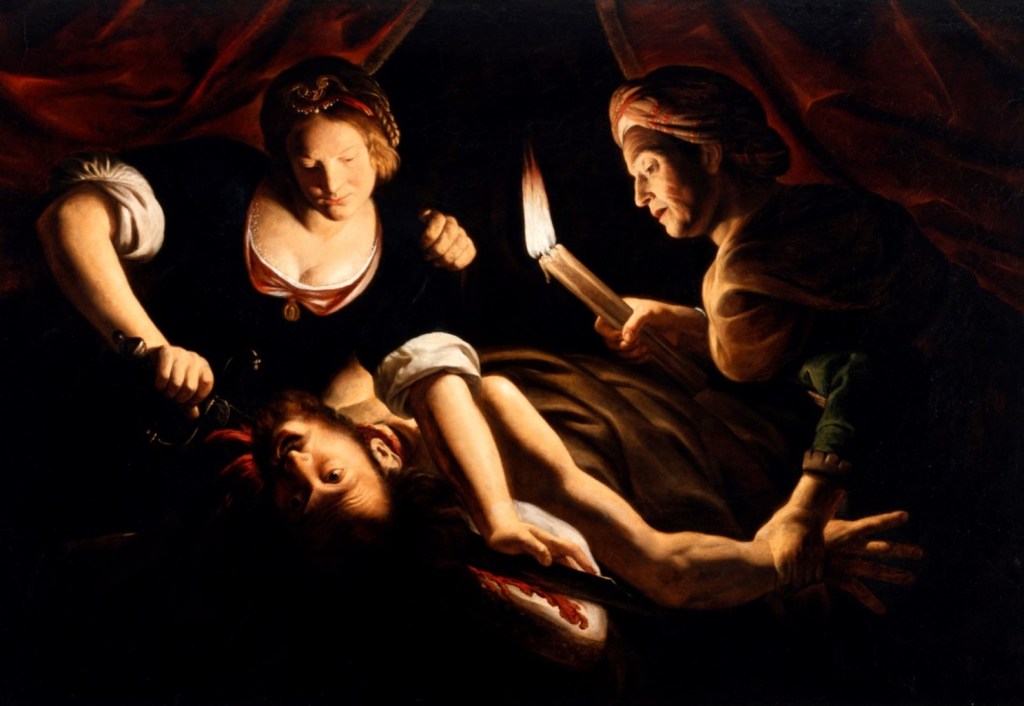
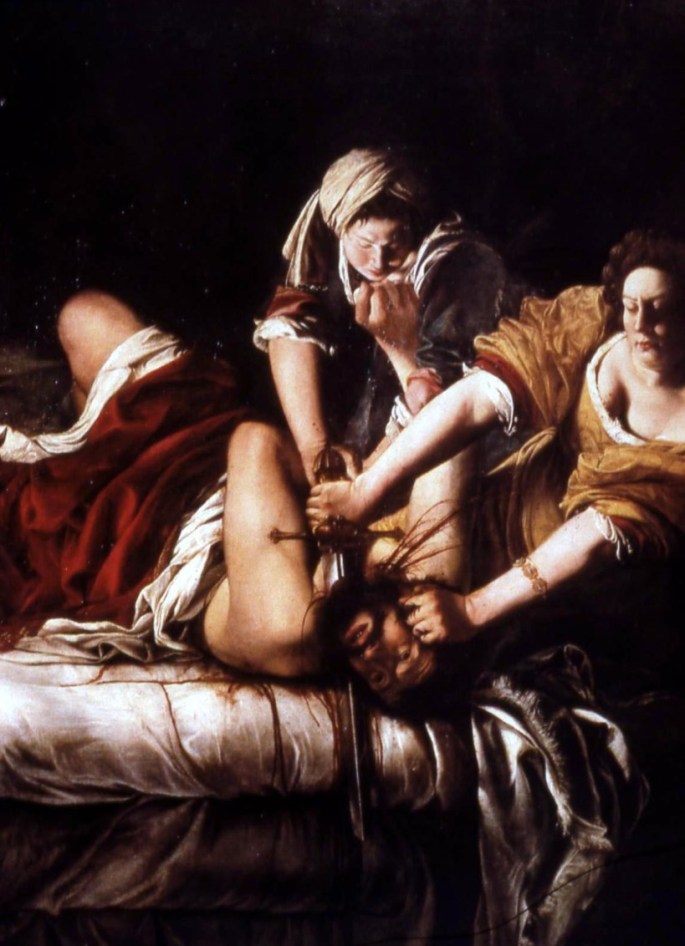
If the High Renaissance saw the visual portrayal of God reach its climax upon the lofty surface of Michael Angelo’s Sistine Chapel, it would be another century or so before the genesis of authentic female portrayal in art. And, if Michelangelo’s name is synonymous with the ultimate visual image of God and several of the Bible’s star male personalities, then it is the remarkable Artemisia Gentileschi who, with her masterpiece Judith and Holofernes, gave us our first experience of believable and empathetic biblical womankind in paint. While this isn’t the place to examine in detail the life, the struggles and the triumphs of this courageous woman and supremely gifted artist, her most famous painting heading this piece nevertheless reveals much about Artemisia Gentileschi and her times.

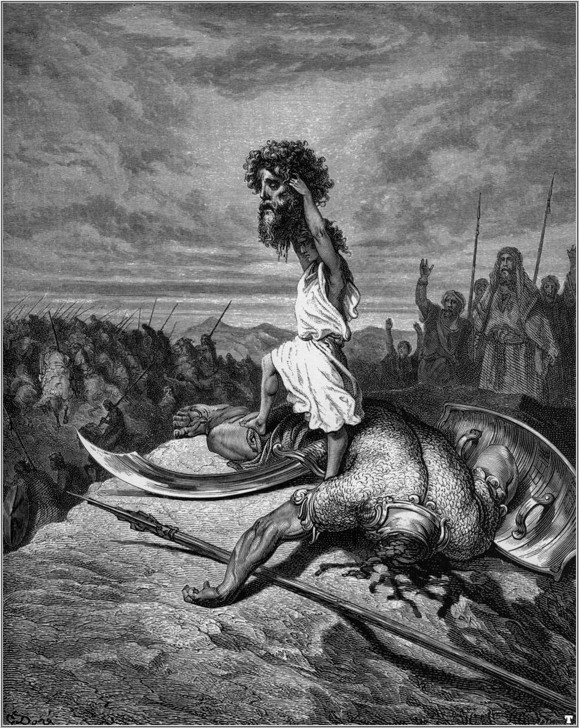
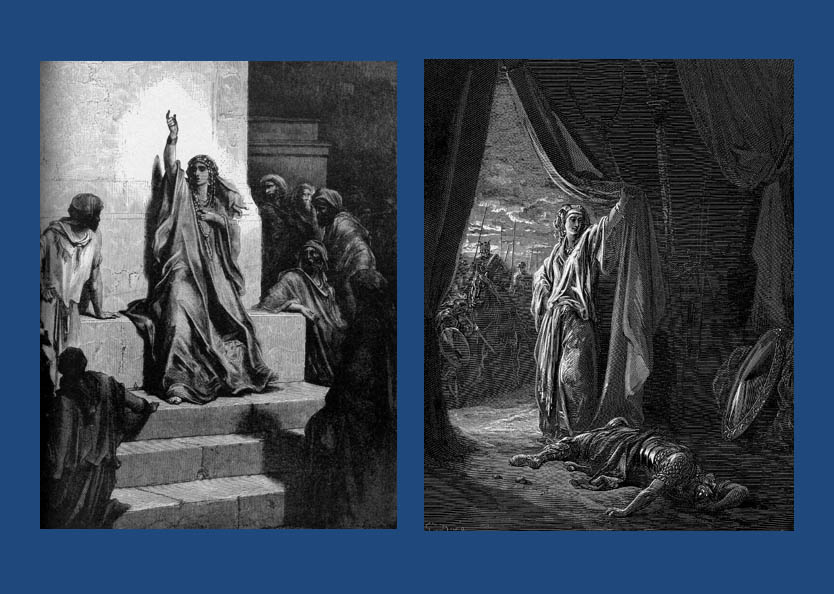
Prior to Gentileschi, artists generally restricted biblical female characters to a narrow range of stereotypes – albeit both they themselves and their roles often having technical importance – from people like the prophetess Deborah (portrayed here by Dore in an appropriately “Marianne”-like pose) commanding Israel into war and her compatriot Jael (also by Dore – and probably the source character for Judith herself) cementing the victory of that war…

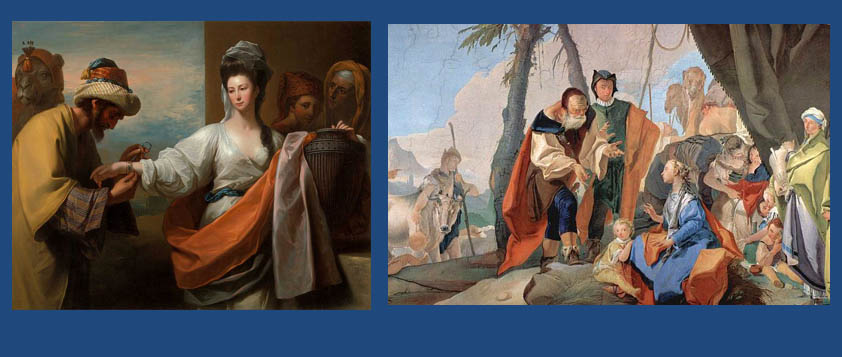
…to being national matriarchs such as Rebecca and Rachel, depicted here by Benjamin West and Giovanni Battista Tiepolo respectably…

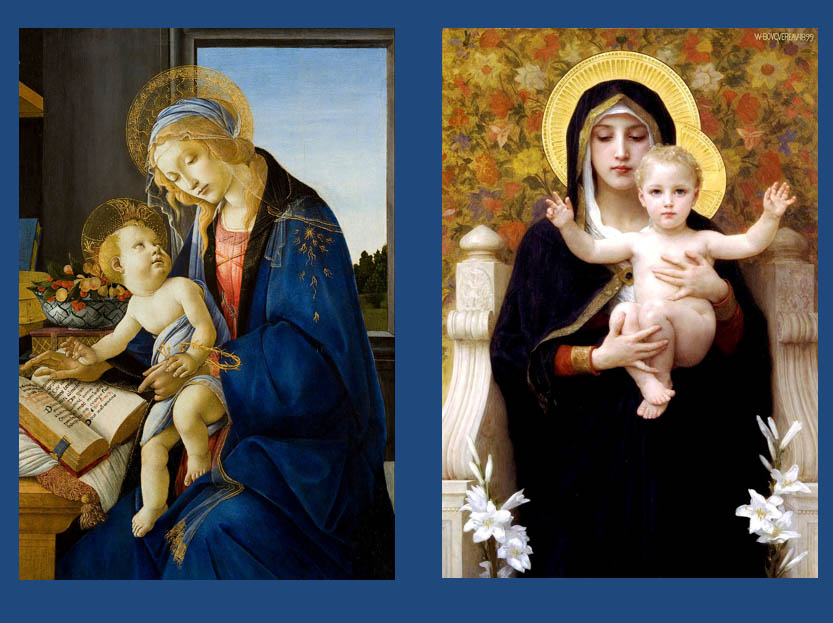
…and even being the bearer of the Son of God as portrayed here by Botticelli and William-Adolphe Bouguereau…

Bible women folk, and their deeds and purposes were predominantly passive. In the few cases, where women showed personality and/or character, or initiative, socially or actively, these words and deeds were almost always described as basely motivated at best, or outright treachery at worst, and always deserving of patronising chastisement and/or severe punishment. The examples of Sarah laughing at the news of her imminent pregnancy and the contempt towards David displayed by Saul’s daughter Michal are typical examples of this and artists across the ages – all of them men of course – loved to paint them.

The fact that Sarah’s incredulity, given that she would have been well into her 70’s at the time, was perfectly understandable, and that Michal was a proud daughter of a usurped king are irrelevant to the mostly pious biblical illustrators for whom a woman’s role was almost exclusively, to be faithful to her husband and to God, and to propagate the race, no matter the context.

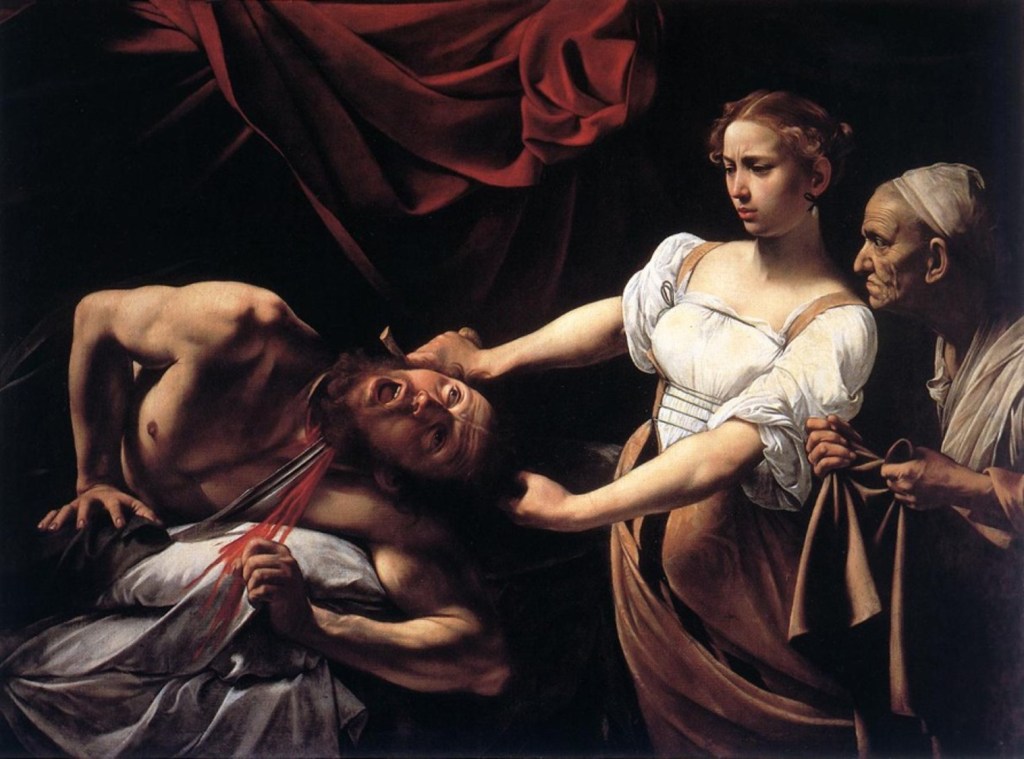
In Christianity, until the unveiling of Artemisia Gentileschi’s Judith and Holofernes the overriding adjectives to cover the artistic attitude towards the women of the Bible were noble passivity for the good girls and fickle treacherousness – often revolving around sexual misbehaviour – for the naughty girls. Thus, Judith (and her role model Jael) whose deed was both proactively heroic and righteous presented a conundrum for all of Gentileschi’s predecessors (and many of those who followed), epitomised by the likes of Caravaggio below (left)…

Caravaggio’s Judith, despite its undoubted artistic, technical mastery has all the passion of a medical autopsy whereas Gentileschi’s heroine is deadly earnest, determined and resolute. She’s obviously doing something that has to be done, that simply must be done. It is a struggle, and her equally heroic and resolute maid has to actively help her pin Holofernes to the bed , as if Gentileschi is stressing this is a universal struggle faced by women in general, of all backgrounds.

However, Caravaggio’s Judith beheading of the Assyrian general is effortless, almost like a child pulling the wings off a butterfly. Yes, she’s a young woman killing a large powerful man, but for Caravaggio, even in this act the noble woman must retain her innocence and femininity at all costs. In other words, for Caravaggio and by implication for the Church, and the Italian world of the late 16th century, the Judith and Holofernes narrative is actually an aberration – a unique exception to prove an unshakeable rule. The more one looks at the Caravaggio painting – with Judith’s attitude of curious disinterest, plus the almost voyeuristic presence of her ugly maid – the more one realises that the artist actually disapproves of her actions. It’s as if he’s telling us through the canvas that yes, I know we’re supposed to admire this women for doing this, but…

It is hard to overstate the impact the Gentileschi painting made upon Christian Baroque sensibilities when it first appeared, with its graphic depiction of a woman taking control of hers and her people’s destiny. Gentileschi, one of the first women of her era to successfully pursue her own male attacker through the courts of law, imbues her Judith – who she gives her own face and body – with this same spirit of pioneering defiance against the male brute, who is similarly, a likeness of her own attacker.

I’m neither the first person to so-juxtapose these two Judith paintings or to suggest a strong element of autobiographical feeling in the Gentileschi, yet the fact that the Baroque masterpiece sits more than comfortably with its Renaissance forerunner is rarely admitted. This state of affairs betrays a significant element of a sadly enduring sexist bias.

Artemisia Gentileschi was one of a long line of great women artists going back to at least the early 15th century and she had several notable contemporaries. However, it was only Gentileschi who significantly challenged the received versions of biblical womankind with her famous masterpiece in a way unheard of before her day, and very sadly, not sufficiently emulated since. Nevertheless, the fact that an essay like this would be incomplete without a significant consideration of her work is a testament to the scale of her achievement.

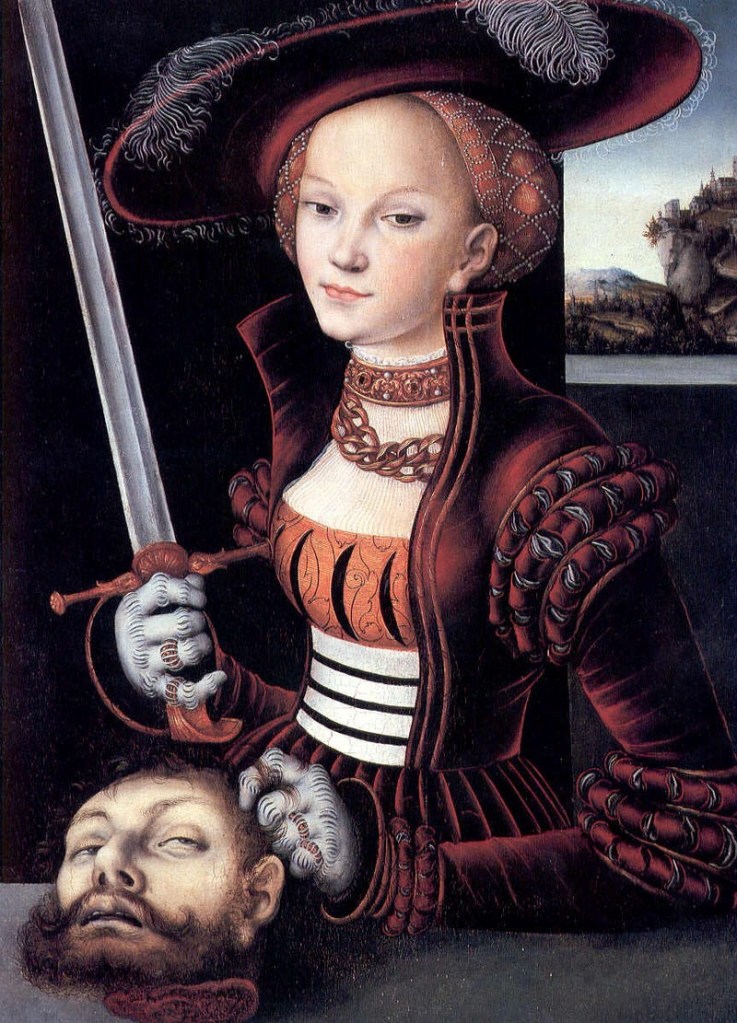
To emphasise this point, here is a selection of alternative, lesser versions of the same supposedly grizzly incident by inferior artists like Lucas Cranach the Elder, whose offering from the previous century presents a bizarrely immaculate and elegant Judith presenting Holofernes’ head as a sort of fashion accessory, like the latest handbag. No wonder she looks so smug! This is one seriously cool and curiously untroubled lady…

Trophime Bigot’s Judith (painted about the same time as Gentileschi’s) is normally described as “serene” but for me she seems less serene than effortlessly adept – like an experienced butcher approaching boning a piece of meat, while her maid looks on in the manner of an attentive apprentice …

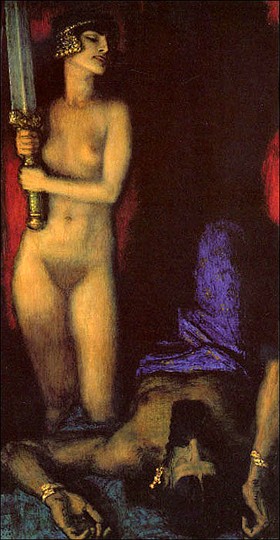
But if there’s an element of ambiguity over Bigot’s painting, that certainly isn’t the case with this final example by early 20th century German artist, Franz Stuck, whose sensually naked Judith anticipates what she is about to do as blatantly erotic. Stuck succeeds, albeit with elegant artistic skill, in reducing the episode to soft porn…

Conditioned as I am by my traditional Jewish upbringing, with women supposedly knowing their place, especially in the synagogue, where they are put upstairs and out of the way, I have always found the Jewish take on biblical women and their roles, paradoxically, to be more nuanced, and less defined than in Christianity, and certainly more proactive.

Somewhat counterintuitively, this might be because of our lack of a pictorial tradition. For the very reason we, as Jews, had so little fixed female imagery, our imaginings of women like Miriam, who stood up to Moses her brother, the formidable Deborah, a national leader, the heroic Jael (and Judith) and the spirited and defiant Michal, daughter of Saul; certainly, as drawn in the biblical narratives – fiercely patriotic, physically courageous, independent spirits – don’t easily make the transition onto the canvases and frescos of Christian inspired pious art.

In fact, it would be tempting to say that within the Christian world, it took a woman artist, in the form of Artemisia Gentileschi to paint the first biblically accurate portrayal of an Old Testament biblical female personality, which perhaps explains why, from a pious traditional Jewish perspective, despite its decidedly non-feminist reputation, the Judith painting was and remains somehow less intimidating than it did, and still does to many traditional, pious Christians.

DID GOD WORKOUT? (Part 2 – Kings and Things)

The artistic shaping of visual perceptions of, and sensibilities  towards biblical events and personalities from Bible times to the present day.

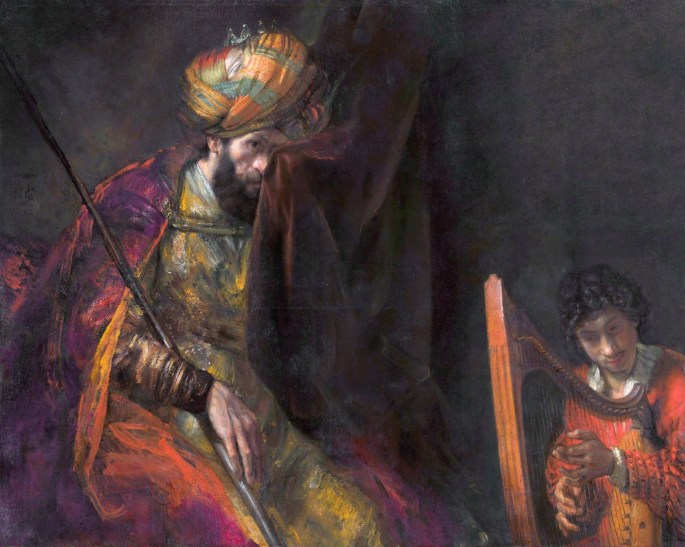
The image above, of an anguished, middle aged Dutchman in some kind of oriental fancy-dress remains many people’s instinctive vision of Israel’s first king, Saul.

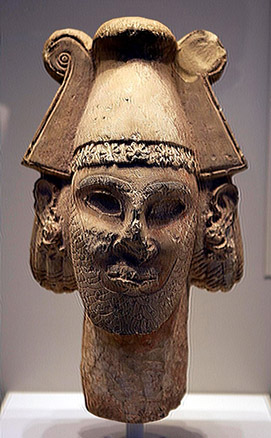
For me, the spell of received imagery was only truly broken when, as young teenager, I first set my eyes upon a fuzzy little black and white photo in a book by modern Israeli soldier and politician Moshe Dayan, called Living with the Bible. The nondescript illustration, which was oddly described as a “king’s crown” caught my attention big-time. I sensed instantly that it was a photo of something potentially remarkable.

Moshe Dayan and a minority of respected archaeologists and historians believe this to be the bust of an early (late 11th century BC) Israelite or Ammonite king, perhaps even of Saul or David. However, even if the alternative expert majority theory is correct, that this is in fact a depiction of an Ammonite or Israelite divinity or king from the 10th Century BC it could still be, at the very least, an immediate descendant of either Saul, David or of their Ammonite contemporaries Nahash or Hanun.

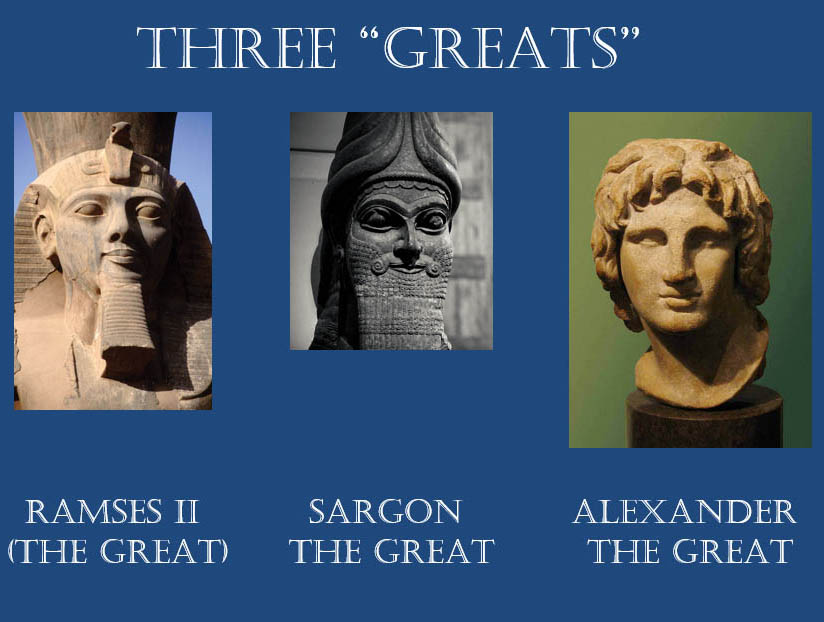
For millennia we’ve become used to gazing upon the faces of the pharaohs of Egypt and the kings of Hatti, Babylon, Assyria and Persia. And as for relatively more recent rulers, from Alexander to Constantine, many of us are so familiar with their representations in marble, stone and from friezes that we have accepted ideas of what they looked like in our heads. Here are some examples of what I mean, all of rulers contemporaneous with the biblical epoch.

So familiar are some of these portraits that later artists and then even movie makers felt obliged to adhere as closely as possible to their likenesses. Yet, with Israelite biblical personalities, from Moses to Jesus, we have virtually no contemporaneous portraiture of any of them, or the people they governed, and or came from.

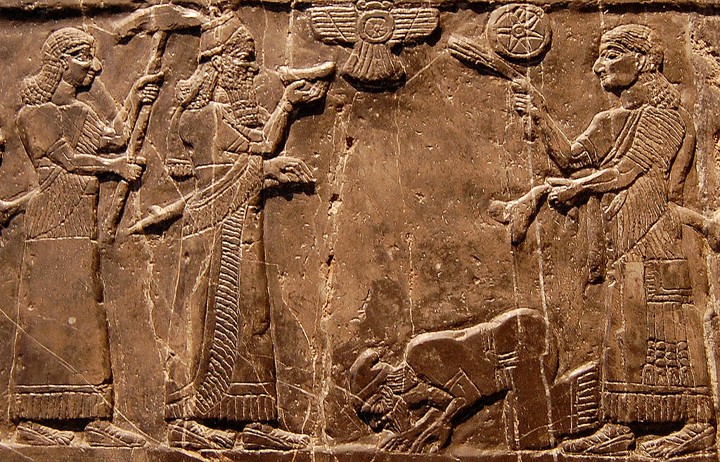
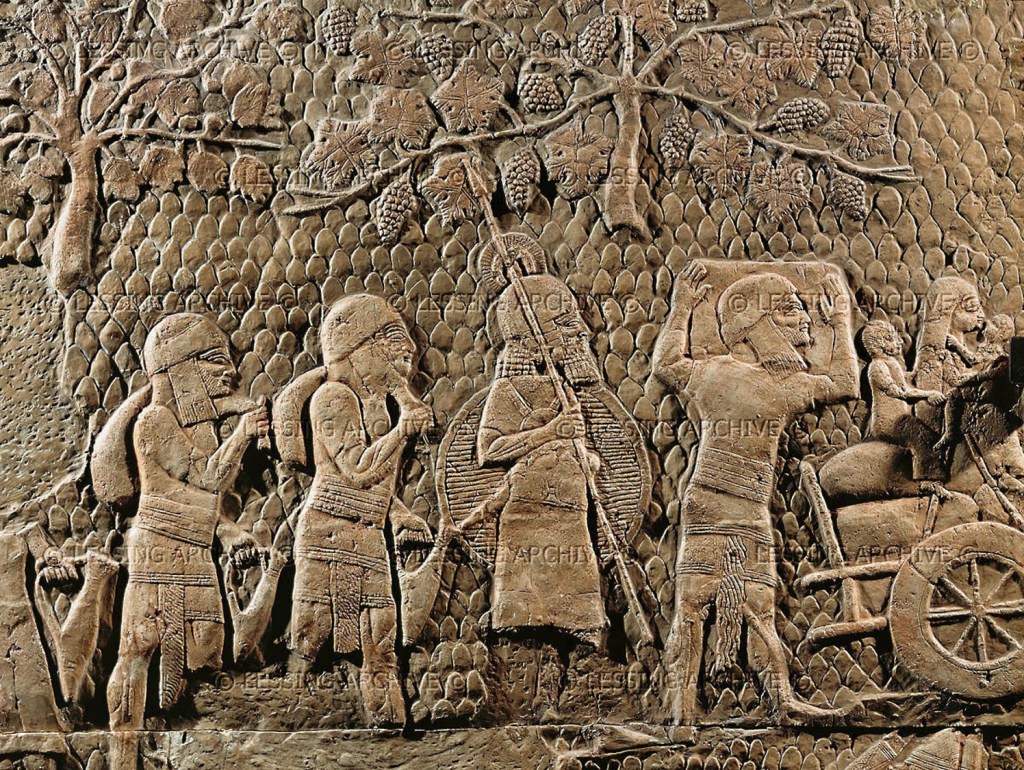
The single contemporary representation of an Israelite monarch is this rather inglorious depiction of King Jehu of Israel grovelling at the feet of Shalmaneser III from about 841 BC. In fact, this counts as the first ever confirmed depiction of an Israelite of any kind! And it’s to the Assyrians again that we are indebted for the only other contemporary depiction of Israelites from Bible times. This time though, warriors and their families during and after the siege and fall of the Judahite city of Lachish to Sennacherib, dating sometime between 701 and 688 BC.

So far as we can be certain, these Assyrian images are our very earliest, and only clue today to what my Judahite ancestors looked like during any period of the Old Testament.

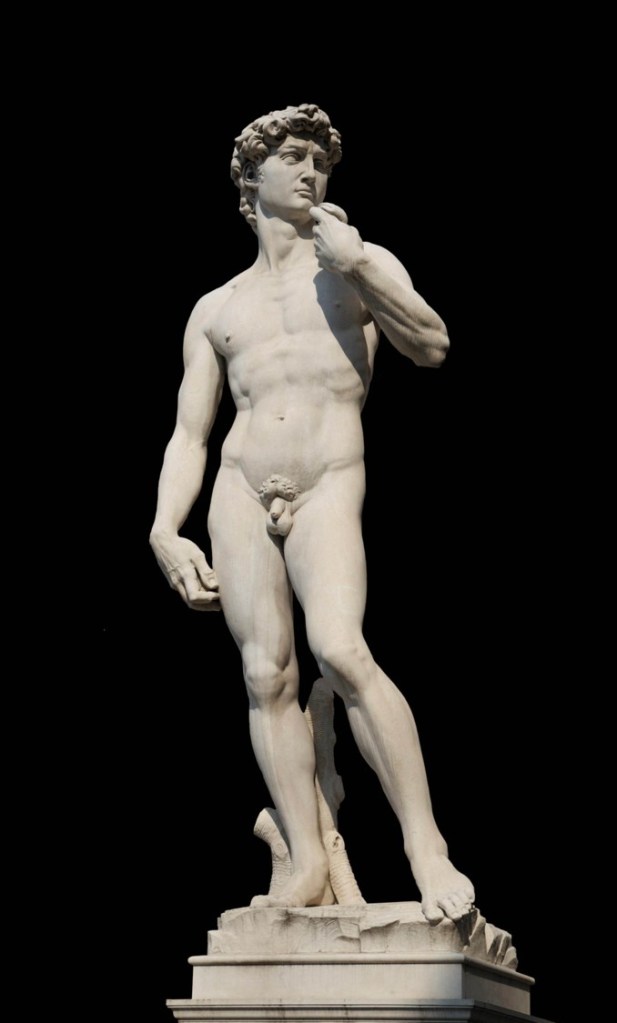
Again, this is not the time or place to get into a discussion of how much of non-Israelite pottery and artefacts might or might not actually be proto-Israelite or actual Israelite, nor is it the time to discuss the whole thorny issue of the exact nature of early Israelite religion, but so far as most people are concerned — outside of that highly specialised debate —we have scant idea what Saul, David and their subjects looked like. However, thanks again to the likes of Michelangelo and then so many other artists from the High Renaissance onwards, as with the image of God, we do have instinctive, reflexive mental impressions of people like Saul and David.

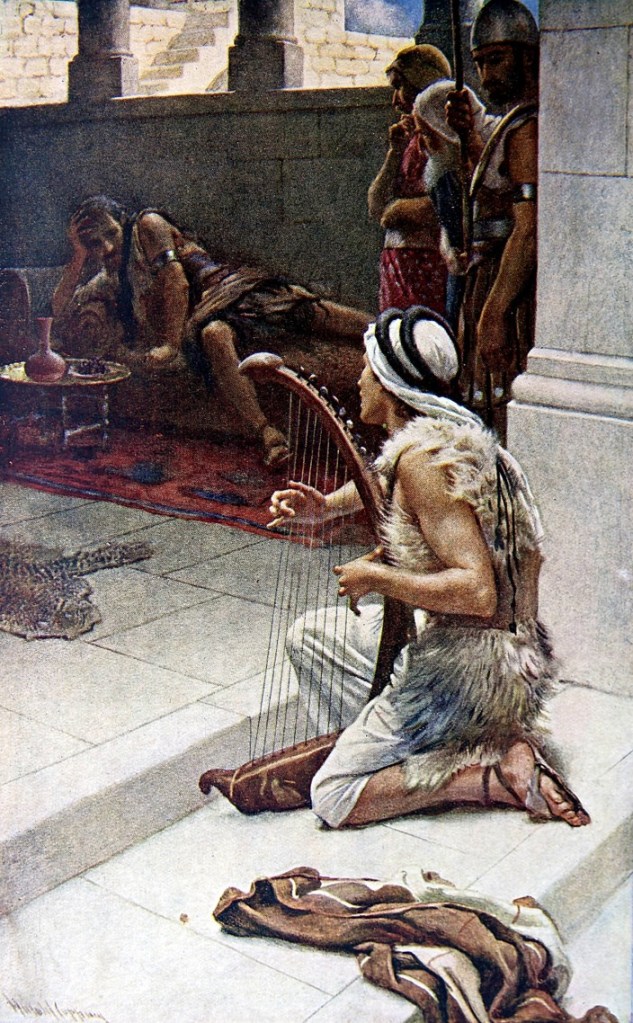
My first childhood imaginings were framed by the works of an unnamed, yet highly skilled artist who illustrated the books of The Religious Tract Society.* These were my nascent guides to what some of the seminal moments and main protagonists from the biblical texts looked like. This was my first King Saul, for example, even before I’d seen the Rembrandt version; just as gloomy, you’ll notice, but at least with a touch of naturalism and a feeling for historical accuracy — the Caucasian David aside.

However, even in this era the dominant images within the massed western consciousness remained— and remain to this day — those planted by earlier geniuses such as Michelangelo…

…and Gustav Dore…

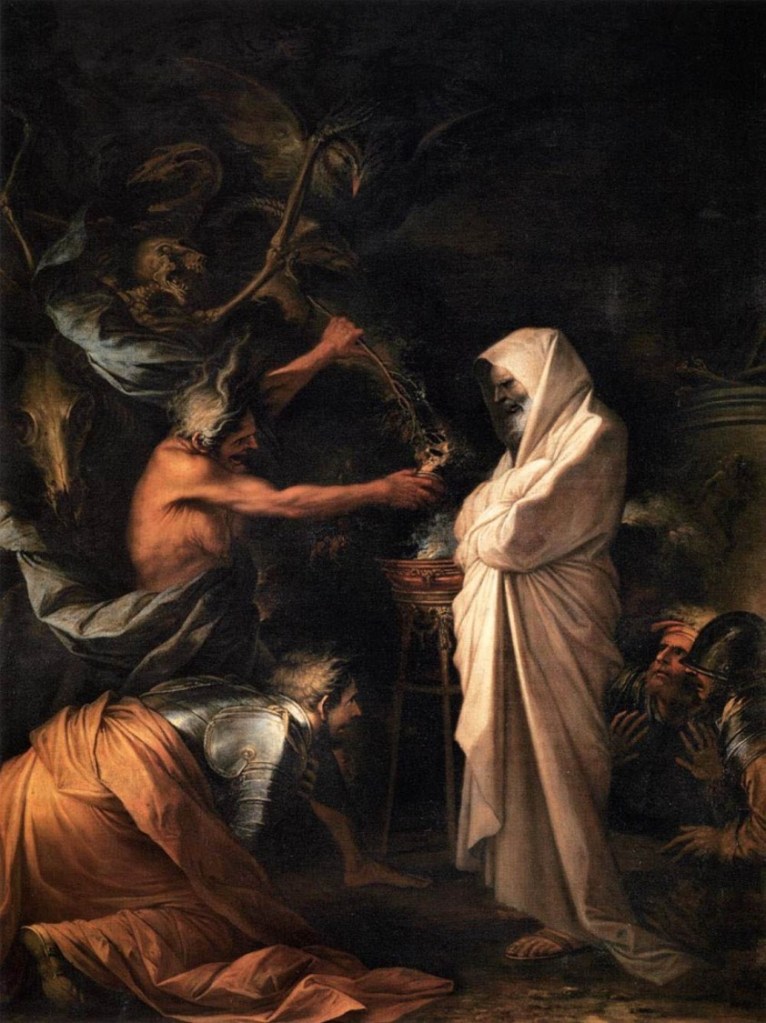
…and by Salvator Rosa, who produced this defining image of a pathetic King Saul cowering before the ghost of the prophet Samuel.

All these powerful images prove the power of narrative and propaganda, often at the expense of historical accuracy.

* The books of the Religious Tract Society were published by Britain’s (and perhaps Europe’s) oldest commercial/independent publisher, the Cambridge-based Lutterworth Press. Little could I have imagined that about four decades after I was first enthralled by the beautiful illustration of David playing for Saul above, Lutterworth would publish my own biography of King Saul. Life can be a truly wonderous thing.