ADAM’S NORTH LONDON…

the end of a close 65-year relationship*

Last month we sold our little flat in Hampstead, North London. In and of itself, not exactly an earth-shattering event, but in the context of my life, an extraordinary moment. The reason being, that for the first time in my then-64 years and 11 months I no-longer had even a toe-hold in the city of my birth.

Regular readers of these posts will know that I have always endeavoured to keep my blog as free from controversial subjects as possible, despite the fact – as those who know me well can testify – I am highly politically aware with a range of opinions, some strongly held.

Given the recent and current state of the world, this policy has not always been easy, but this blog, originally intended to publicise my books and my art, is not a forum I wish to use for expressing my views on putting the world to rights. Ultimately, from my own experience of sampling and following other people’s politicized sites, one inevitably ends up with a corrosive and destructive clash of echo chambers. Thus, our reasons for leaving London will remain known to only our intimates.

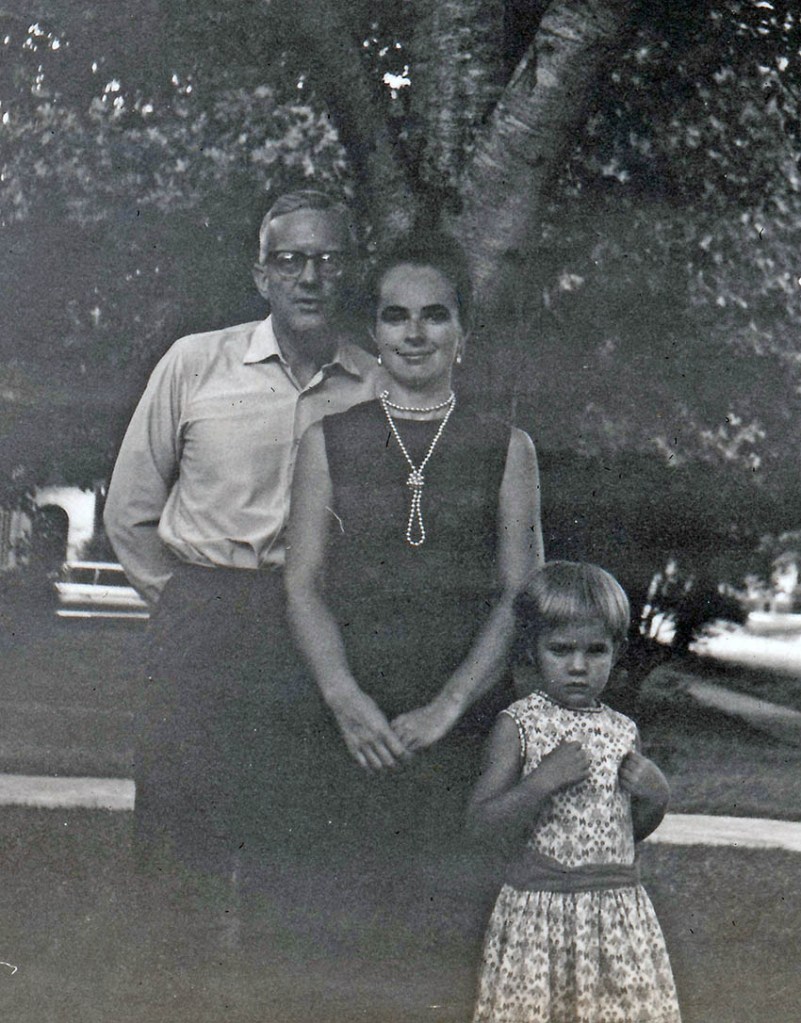
Presented here is a photo-record of the first 30 years of my own personal London life (several suitably grainy and scarred), from times past, when I could never have dreamed that I would ever cut my ties with my once-beloved city “north of the river”.

I was born in Edgware, in the county of Middlesex in 1960, strictly speaking, before it became part of Greater London. Famous for its eponymous Roman road, as the composer Handel’s temporary home, and being at the end of the Northern Line Tube, it was where I grew up. This picture shows me as a baby, with my mum, Hannah, older brother Michael and my great auntie Ray at my grandparents flat…
My final day at nursery in 1963 with my mum (left) and a friend. I seem to be clutching a postcard though I have no idea who from…
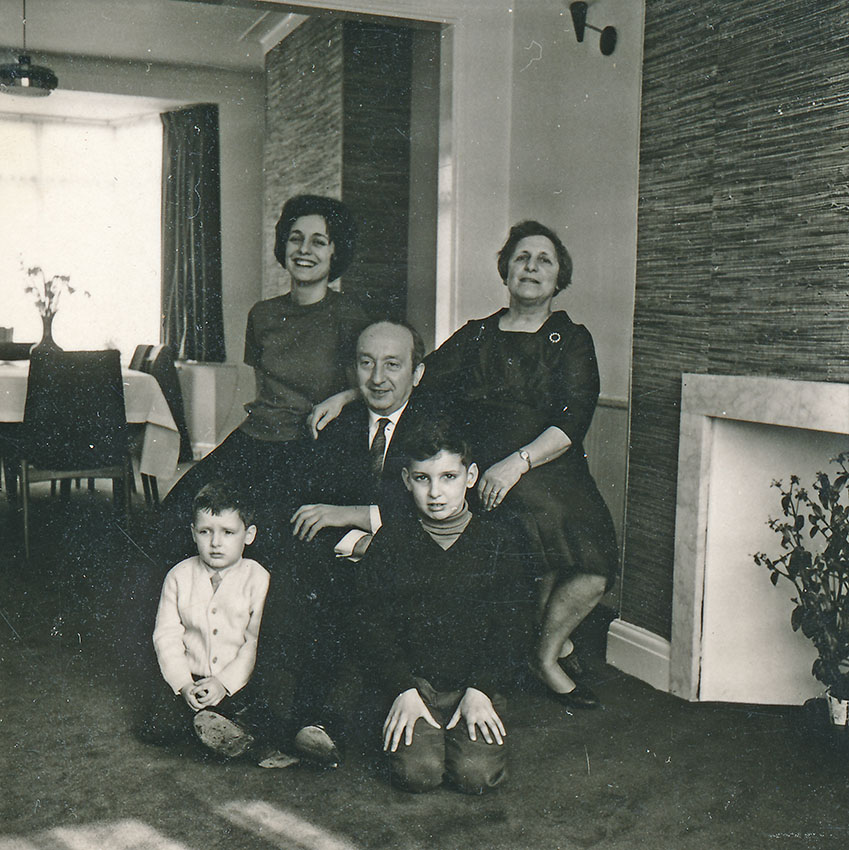
Apart from a bout of glandular fever when I was six, my childhood was exceptionally happy. Although my father had departed the scene when I was a babe-in-arms, my little family was a more than adequate compensation for his absence. Here we have Hannah and her parents, Becky and Harry, me and my brother Michael (my uncle Sidney took the picture), in my first home…
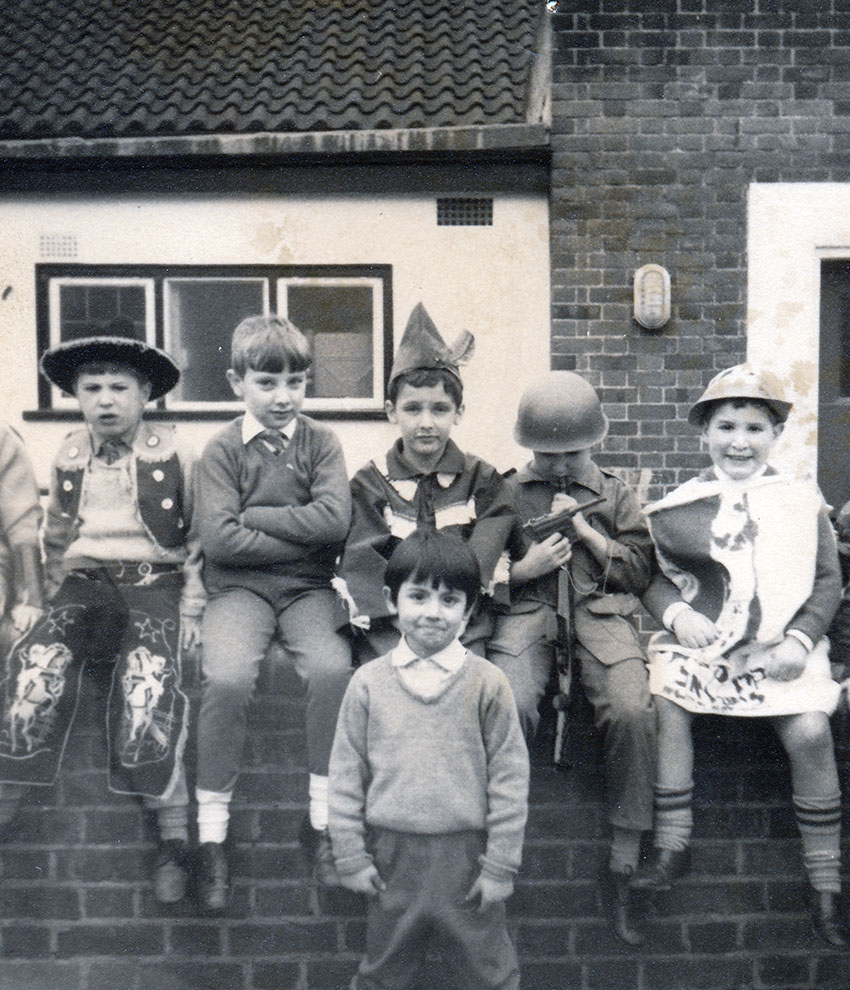
Purim at my primary school. I’m a rather lame-looking Robin Hood sat between cowboys and GI’s
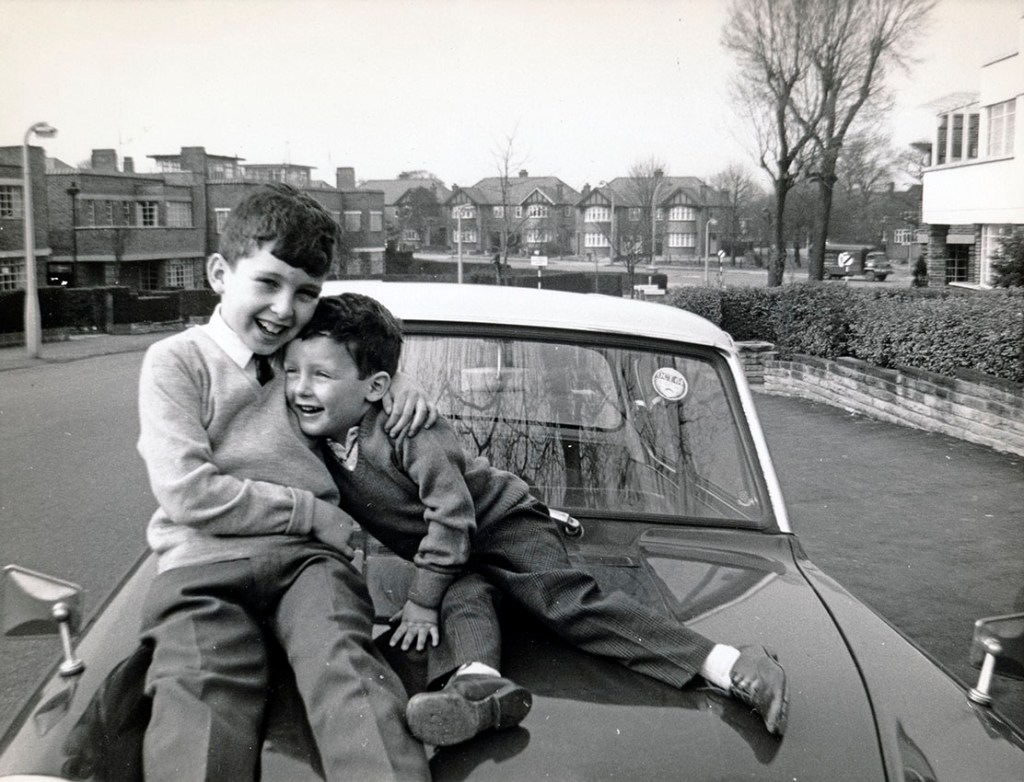
Between the War and my birth, my mum’s family lived in Hendon. Many of our closest family friends remained there, and this is Michael and I during a visit to one of them. We’re sitting on the bonnet of mum’s first Ford Anglia – eat your heart out, Harry Potter!
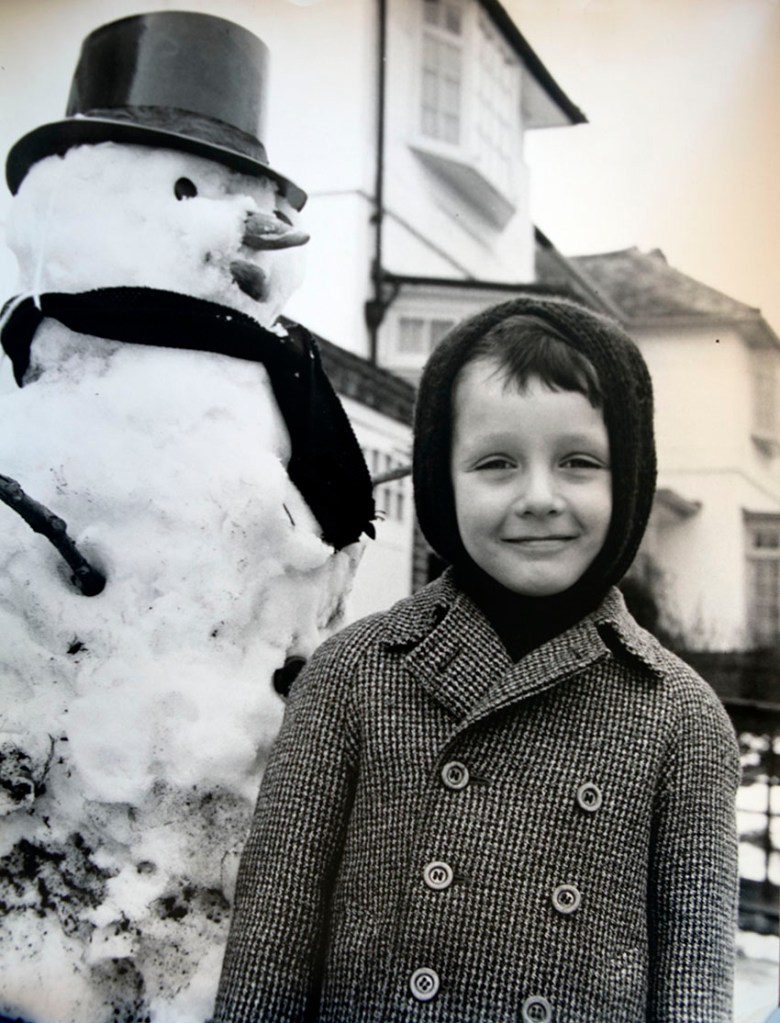
We took our snowmen very seriously back then
Our second house in Edgware had a large back garden and by “London-clay” standards, half-decent soil. Sidney and I were both keen gardeners, something I remain to this day…
My studio space at Saint Martin’s, with friends and fellow students. The guy on the far left is my lifelong friend Simon – not an artist, just visiting. Next to him, looking at the camera is Robert, a hugely gifted portraitist, and the girl is Piyawan, another very talented painter and cartoonist. Judging by the coats, this was at the end of the day and when we would typically be preparing for a visit to one of the many local Soho pubs…
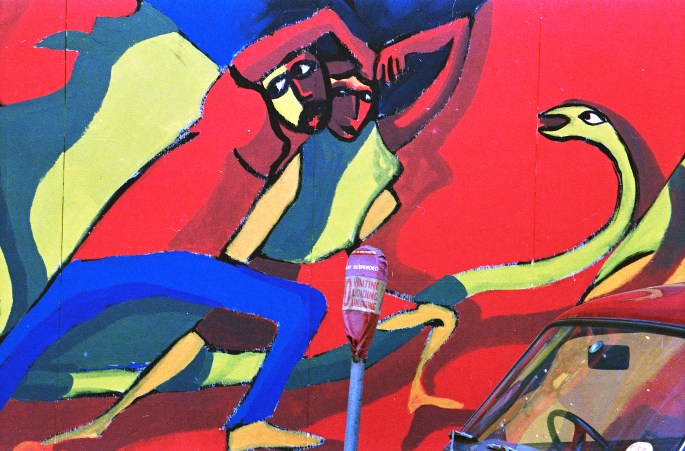
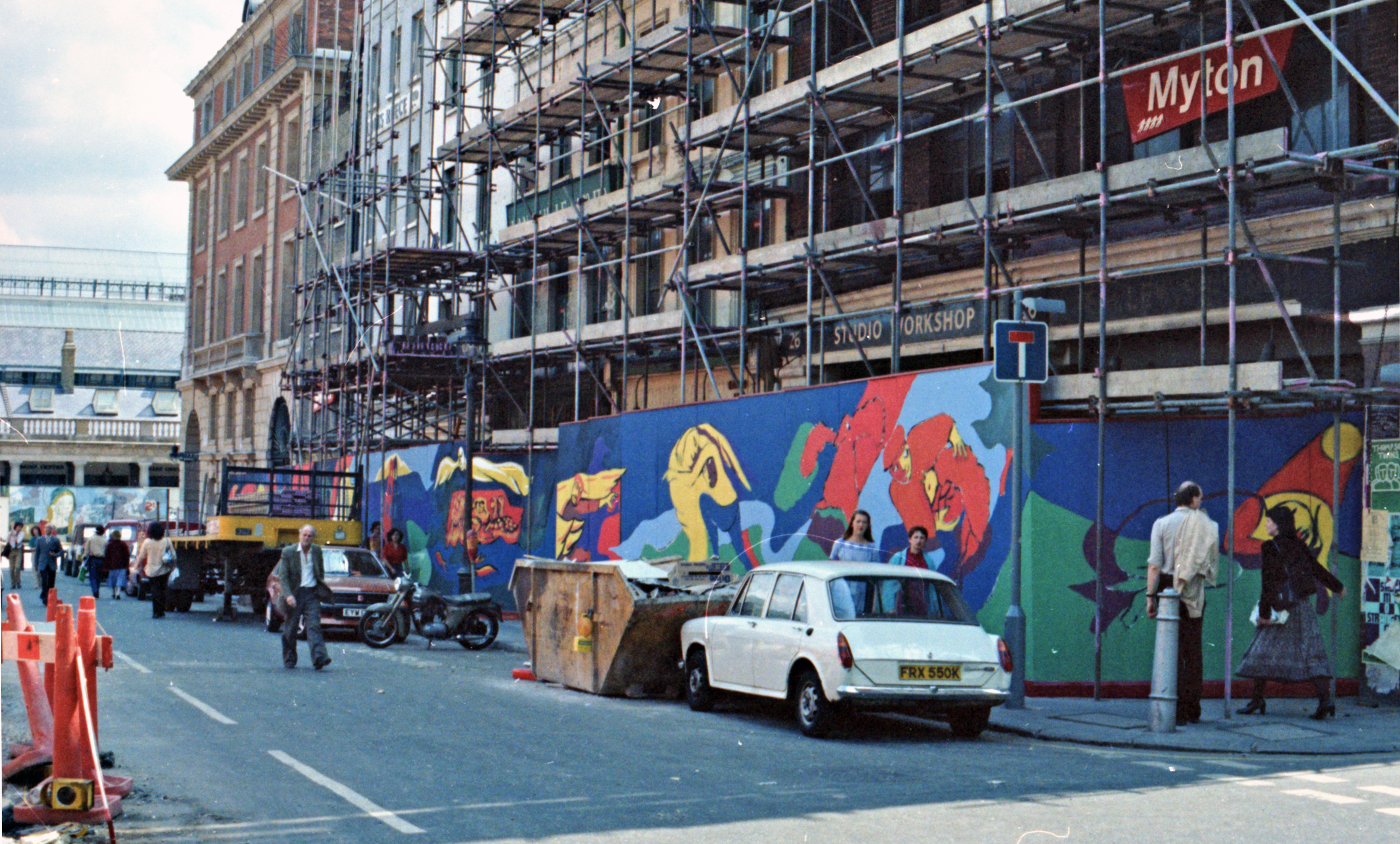
My final act at St. Martin’s was to undertake this temporary mural commission (I describe the story here) in James Street, Covent Garden
My grandparents were moderately observant Jews (outside the Haredi communities – and even they differ from one another – there are as many nuances and degrees of “observant” as there are Jews who observe), and the traditional Shabbat supper was always partaken of. Here I’m “making Kiddush” (the blessing over wine) on one such occasion. By this time we had left Edgware and moved to West Hampstead, also North London, but closer to the centre…
I lived at home (in West Hampstead) well into my late 20’s, and this was my painting studio, which we built at the end of the garden…
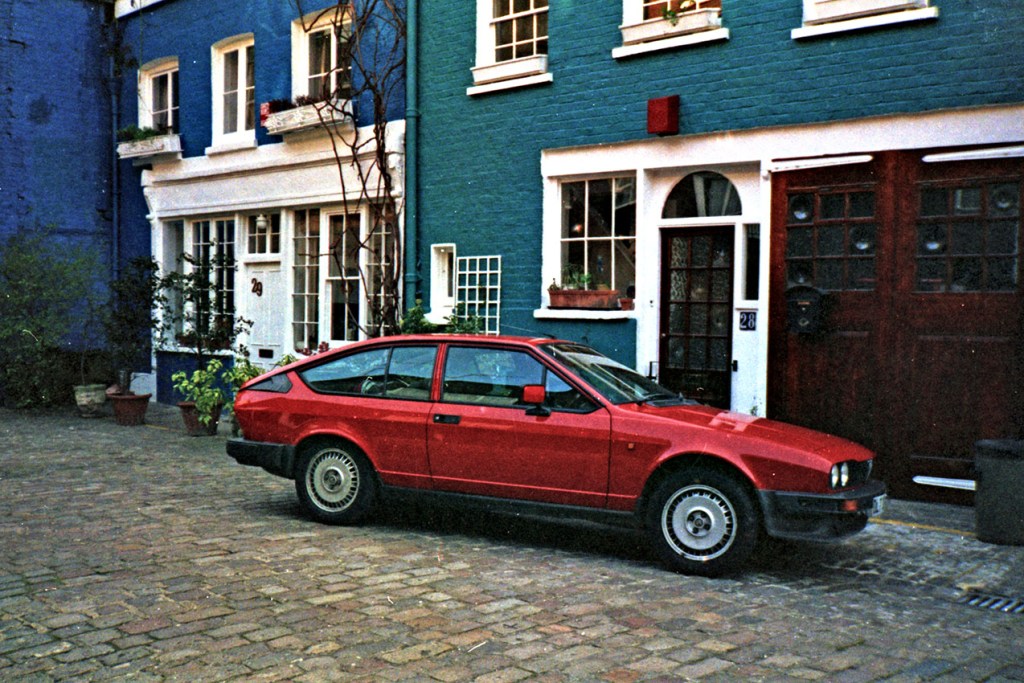
I met my future wife, Dido Nicholson, in 1988 and we married two years later. This was her cute little mews house in Lancaster Gate, close to Paddington Station and Hyde Park. She inherited the Alfa GTV from her uncle Leonard, who sadly died while playing real tennis at Lords (the “HQ” of world cricket)...
Dido and I were married at Marylebone Registry office, attended by her parents, my mum and Sidney, and of course, our maid of honour, our best friend Aura, looking unusually sheepish for a large sheepdog…
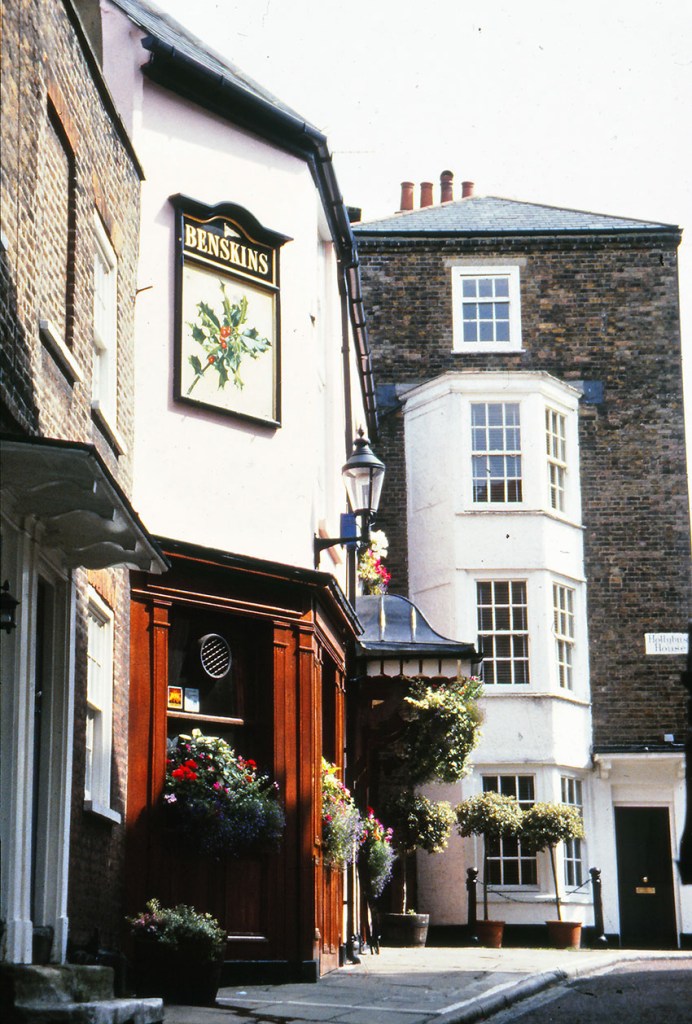
Like most Londoners, I was rarely happier than when visiting one of my local pubs, like the Holly Bush, here in Hampstead, which has turned out to be our final London Address…
A melancholic New-Years-Day scene on the tow-path of the Regent’s Park, one of our favourite regular walks, and a fitting image to end this homage to a lost city.
  • The title picture is the top of Primrose Hill. It offers, arguably, the best view of London from north-west of the city. I always found the scene somehow reassuring, and no more so than one misty autumn morning in 2010, when my mother had just left for the airport on her way to Dignitas.

DON’T BELIEVE EVERYTHING YOU READ IN THE PRESS…

especially when the truth is more newsworthy

This must have happened to most people reading this post. You mislay a possession somewhere in your home, and while turning out various drawers, cupboards and shelves searching for it, you discover something else, long-forgotten, and often more precious than the original object.

Last week I was rummaging through a wooden chest we use for storing bits and pieces, looking for a lost drawing when instead, I turned up a small bundle, packed with old photos of my wife Dido from her time as a ballerina and a model. My curiosity at finding dozens of images that I had never seen before was heightened, when among the pictures I also found a yellowed, newspaper article from the Saturday edition of the Glasgow Evening Times, featuring Dido and another Sadlers Wells dancer, Nick Millington.

Although the article was for a Glasgow newspaper, the shoot was done in London, before a Scottish tour. The reporter, Rosemary Long, writes an entertaining piece, but she gets a couple of things slightly wrong; Dido’s “huge – doe-like” eyes are blue-grey, not “brown”, and the other issues I deal with below.

However, while I of course enjoyed the article, and got the whole forthcoming Scottish tour – Scottish interest thing, there were several details, probably due to a desire to accentuate a direct Scots connection, the journalist got slightly wrong. And, as is often the case, the more complicated truth, is also much more interesting.

While Dido’s parents regarded themselves as proud Scots, they were both born continents and oceans distant from Saltcoats and Edinburgh respectively.

Ann’s very Scottish father (who was from Saltcoats) was a high ranking doctor in the British Army of India, where she was born in Murree (now Kashmiri Pakistan). Following the war, Ann was educated at the famous Quaker private school, The Mount in York where she met Judy Dench, a fellow pupil. So, while some of Ann’s family did indeed hail from Saltcoats (others also hailed from Pitlochry), she herself, was not a native.

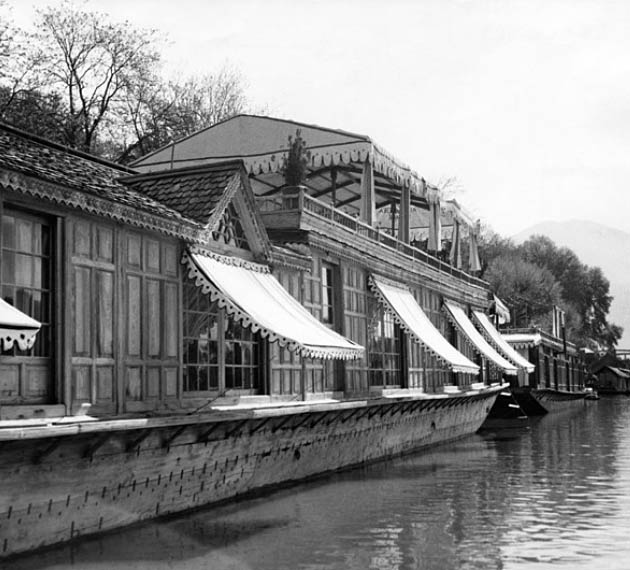
Ann’s family lived on a houseboat during her childhood in Murree, probably similar to this, from the 1930’s

Dido’s father, David, was born in Long Island (New York) during the journey to the UK from Chile where the family had interests in copper mines. He was later educated in Scotland where he attended Loretto School outside Edinburgh (Scotland’s oldest boarding school)) before leaving Scotland for London, where he studied medicine at Guy’s (teaching) Hospital (NOT “Edinburgh University”). David eventually became a general practitioner, later specialising in pulmonary medicine.

David’s family moved from Chile to the slightly less exotic west London suburb of Northolt, where he spent his childhood.

David met Ann in London where she was an opera student at LAMDA (London school of Music and Dramatic Art) and working as an usherette at Covent Garden. Soon after they married, they immigrated to Canada in the early 1960’s, and then on to Dallas (Texas). Together with their two children, Dido and her older brother Niall, they then moved around the United States according to David’s latest medical posting, including spells in Kentucky and Ohio before finally settling in Little Rock (Arkansas). There, David worked at the UAMS (University of Arkansas Medical School) and the VA (Veterans’) Hospital as professor of pulmonary medicine until his retirement, while Ann became something of an Arkansas celebrity, broadcasting a weekly culture “magazine” show (“Arts Scene“) for the state university radio station (KLRE-KUAR). In all that time, they never took up US citizenship – preferring the status of resident aliens, and “proud Scots”.

Thus, as I said, while Saltcoats and Edinburgh did feature in Dido’s immediate ancestry, it wasn’t in quite the way the journalist reported it. As for her “attractive Stateside drawl…”, these days it’s still attractive, but more mid-Atlantic.

Dido, with her parents, David and Ann, in Dallas.

BEGIN THE BEGUINE – ON THE MUSICAL SAW & CHRISTMAS CAKE AT COVENT GARDEN…

remembering my great-uncle sid

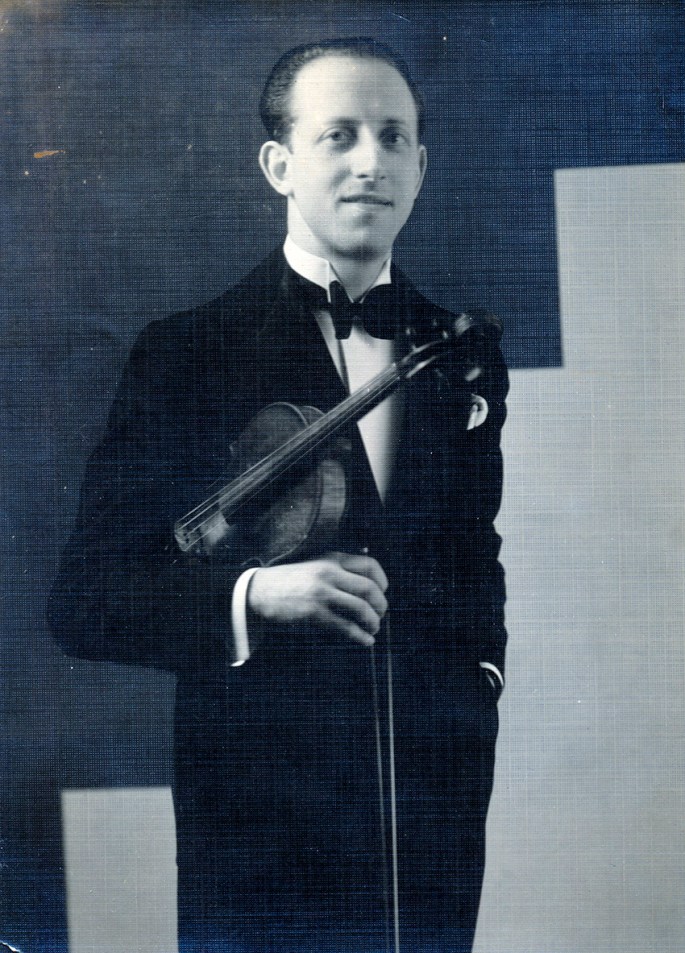
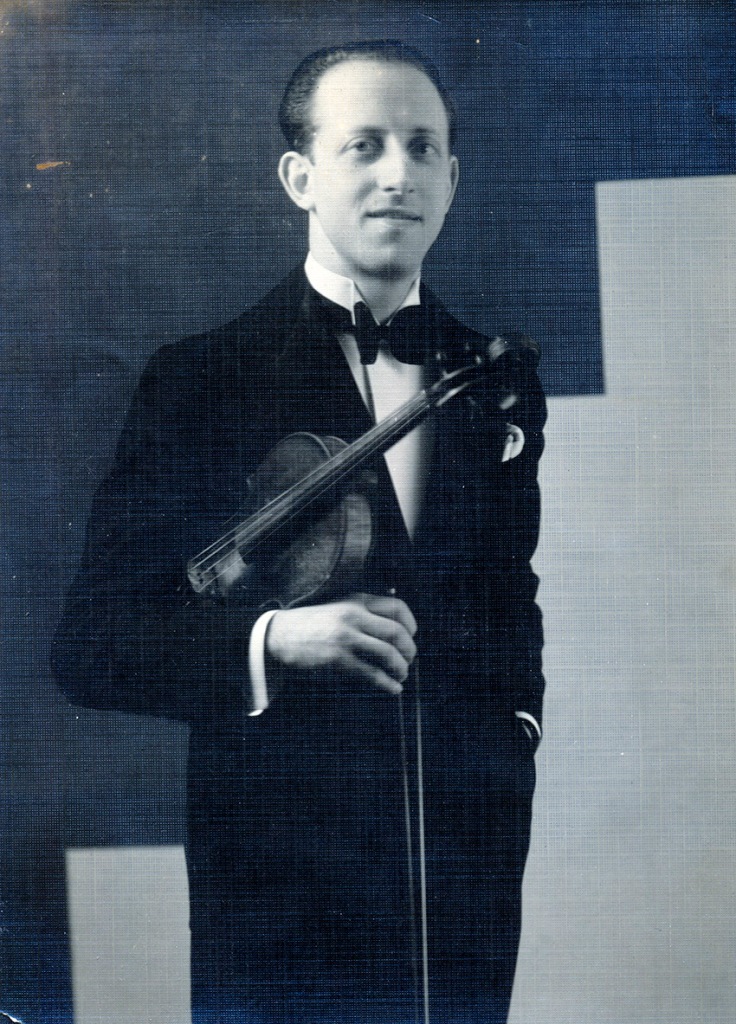
Great-Uncle Sid Marcus, in a publicity photo taken at the outset of his career, around 1936.

My mother’s uncle, Sidney Marcus was a gifted musician and an accomplished violinist, and like many gifted people, he was also slightly eccentric. Occasionally, his eccentricity and his musicianship would overlap, such as when he led the band at my mother’s wedding; not with his fiddle, but on the musical saw!* To this day I’ve yet to learn of another wedding, or function of any kind, where the opening dance was Begin the Beguine, to the eerie strains of a vibrating hand saw. And then there was the incident at the Royal Opera House, Covent Garden, with Sid and the Christmas Cake…

However, before I relate this tale I should perhaps provide some illuminating context: Firstly, we’re going back to the late 1960’s, around the time Sid rose to be first violin of the Royal Opera House Orchestra; Secondly, the fact that this elevation coincided with my mother and her brother Sidney’s (my family went for a narrow range of names back in the day) infatuation with grand Italian opera; Thirdly, that Sid became a source of complementary tickets for productions of those very works; And finally, that Sid’s non-Jewish wife Edie provided us with a fabulous Christmas cake every December. Thus, the scene is set…

It’s a late December evening, shortly before Christmas at the Royal Opera House, ten-minutes before the curtain is due to rise on a production of Aida, or Tosca, or something along those lines. My mother and Sidney have just settled down into their fifth-row stalls seats, eagerly anticipating the approaching performance when they spy uncle Sid peering over at them from the orchestra pit, presumably from the conductor’s rostrum. As soon as Sid sees they have spotted him, he firmly beckons Sidney to come to him, which he dutifully does. Sid then produces a large box, tied with a ribbon, and hands it over to Sidney. The box turns out not only to be very large, but also very heavy. “It’s from Edie” says Sid to Sidney, “Keep it this way up, it’s a Christmas cake…” and then, without further ado, about turns and disappears into the bowels of the orchestra pit, leaving his suddenly-burdened nephew to negotiate his way back to his seat past a host of bemused fellow opera-goers.

The box was too large to put on the floor, and thus poor, red-faced Sidney had no choice but to sit with it on his lap throughout the evening. By the time opera was finished, his legs had gone to sleep and he could barely stagger to Covent Garden Tube to get the train home. Fortunately, he did get it home though, and in one piece, for Edie’s cake was as delicious as it was enormous.

On a more serious note, it would be remis of me not to mention, that in addition to being an exceptional violinist, and an eccentric, great-uncle Sid was one of the gentlest, kindest and most generous people one could hope to meet.

*Subsequent to my publishing this post, I found out much more about my incredible great uncle Sid from a most unexpected quarter…

THE HERETIC SAVES THE DAY – or, how I came to paint the James Street Mural…

General ViewAs an amateur student of history, one of the phenomena I’ve noticed is how human nonconformities sometimes transform into mass consensus. It is perhaps one of the great historical ironies that people and ideas which start out on the margins of society, once adopted by society, have a tendency to marginalise the people of the existing consensus who previously marginalised them. This is a pattern common to all fields of putative human coexistence, which more often than not results in the followers of the usurped consensus being persecuted by the holders of the new. These persecutions are usually most obvious and brutal in the areas of religion and politics but they happen with equal intellectual ferocity at a cultural level.

In the 1960’s and 70’s Saint Martin’s School of Art was one of the world’s high temples of the-then recently adopted art consensus of Abstract Expressionism.

Abstract Expressionism developed out of the near-century old grand consensus of Modernism, in a similar way to how a reformed religion develops out of an existing ancient religion, with similar intellectual tensions and conflicts resulting – albeit without the physical violence.

Thus, when in 1978, a callow 18-year-old “classical” modernist, realist painter misguidedly found himself stuck for three years in the beating heart of western European Abstract Expressionism, his creative life was always going to be something of a struggle.

That young aspiring artist was me, and my time at Saint Martin’s School of Art was in fact, one long battle of wills between me and a group of teachers who almost* to a man and a woman regarded me as a hopeless heretic from the start. My overall experience of being “taught” comprised a mixture of verbal bullying – in an attempt to bend me to their will – and / or complete indifference to my work when these efforts eventually failed.

But one day in the Spring of 1981 during my final term at the school all that changed, when I was paid a rare visit to my studio by my 3rd-year head tutor John Edwards, who came bearing a surprising request.

The Greater London Council (now defunct) together with the construction company, Myton Taylor Woodrow were looking for a student artist to paint a temporary street mural to jolly up a large hoarding in James Street, Covent Garden during the area’s major refurbishment. They wanted a student because they only had £100 on offer for the commission, and they wanted that student to be from the local art college, which was Saint Martin’s. However, they also wanted the mural to be figurative, and that was where I came in.

Edwards was typically candid with me, and admitted that when first approached by the GLC he had suggested one or other of his star students in Abstract Expressionism, but when they insisted on a figurative artist, the only person he could think of was me. While there were a couple of other representational heretics in our year, Edwards told me that he thought I was the only one with sufficient mastery of grand scale painting to handle such a large mural.

With just a £100 to spend and two weeks to execute the project, I was tempted to refuse what was a virtually impossible commission. But the certain public exposure of painting a mural in a bustling London street adjacent to Covent Garden Opera House was an opportunity too good to turn down; so much to John Edward’s and the school’s relief I accepted.

With half the £100, I employed two of my fellow student “Modernist heretics”† to help me with the huge physical task of covering so much white hoarding in paint. This left me all of £50 with which to purchase the paint itself, the brushes and rollers and plastic paint-mixing buckets. The only paint I could afford in sufficient quantity to finish the job was the cheapest industrial emulsion, and because of the time constraint, it had to be quick-drying “matt”. In other words, this was hardly going to be a Michelangelo or a de Rivera so far as colour intensity was concerned.

In the end, the subject matter of the painting was as much determined by these extreme material and time limitations, as it was by the unusually wide configuration of the street “canvas”. And so I came up with the idea of all the highlights of the Book of Genesis, with each chosen episode “bleeding” into the next. With only a few days to make a scale sketch and then just five days (London weather permitting) to execute the actual mural I decided to go with a kind of Chagall-meets-comic strip approach, allowing for quick, strongly drawn cartoon outlines coloured in with simple large blocks of colour.

As things turned out, the weather was unusually kind for May in London, and the three of us completed the mural with hours to spare.

All things considered, including the lifeless paint, it looked pretty good, and graced James Street for about the following two years. It received favourable reviews from the London and Jewish press and was probably my first claim to 15 minutes of fame. Perhaps more importantly though, it earned me the appreciation of my school and its tutors for the first time, and I’ll never forget John Edward’s response upon viewing it; “You know Adam, I’ve often wondered why we accepted you at Saint Martin’s, but seeing this, all I can say is that I’m bloody glad we did!” Even heretics have their uses I guess?

*David Hepher and the late Henry Mundy were glorious exceptions to this general dereliction of tutorship, and for that they both have my undying gratitude.

Danny Gibson (now a brilliant printmaker) and Robert Lewenstein (the most gifted portraitist I ever knew).