DID GOD WORKOUT? (Part 2 – Kings and Things)

The artistic shaping of visual perceptions of, and sensibilities  towards biblical events and personalities from Bible times to the present day.

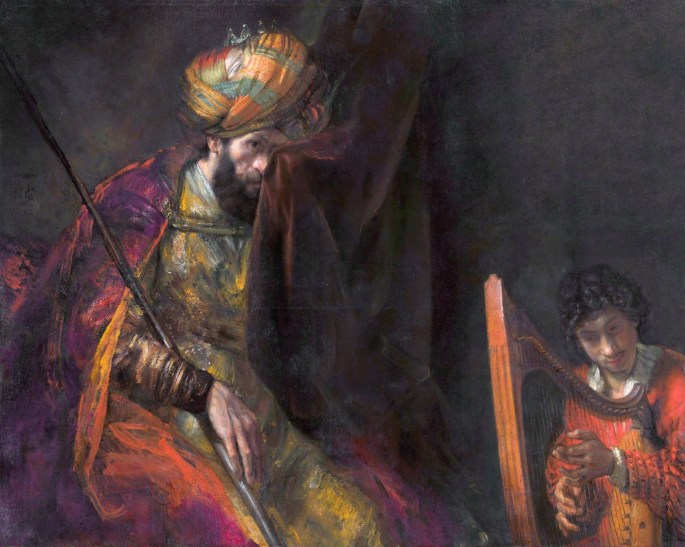
The image above, of an anguished, middle aged Dutchman in some kind of oriental fancy-dress remains many people’s instinctive vision of Israel’s first king, Saul.

For me, the spell of received imagery was only truly broken when, as young teenager, I first set my eyes upon a fuzzy little black and white photo in a book by modern Israeli soldier and politician Moshe Dayan, called Living with the Bible. The nondescript illustration, which was oddly described as a “king’s crown” caught my attention big-time. I sensed instantly that it was a photo of something potentially remarkable.
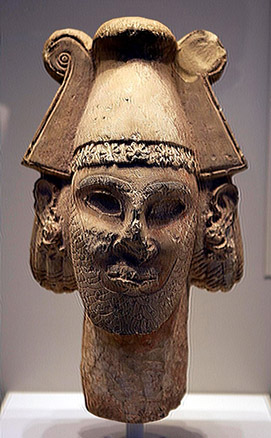
Moshe Dayan and a minority of respected archaeologists and historians believe this to be the bust of an early (late 11th century BC) Israelite or Ammonite king, perhaps even of Saul or David. However, even if the alternative expert majority theory is correct, that this is in fact a depiction of an Ammonite or Israelite divinity or king from the 10th Century BC it could still be, at the very least, an immediate descendant of either Saul, David or of their Ammonite contemporaries Nahash or Hanun.

For millennia we’ve become used to gazing upon the faces of the pharaohs of Egypt and the kings of Hatti, Babylon, Assyria and Persia. And as for relatively more recent rulers, from Alexander to Constantine, many of us are so familiar with their representations in marble, stone and from friezes that we have accepted ideas of what they looked like in our heads. Here are some examples of what I mean, all of rulers contemporaneous with the biblical epoch.
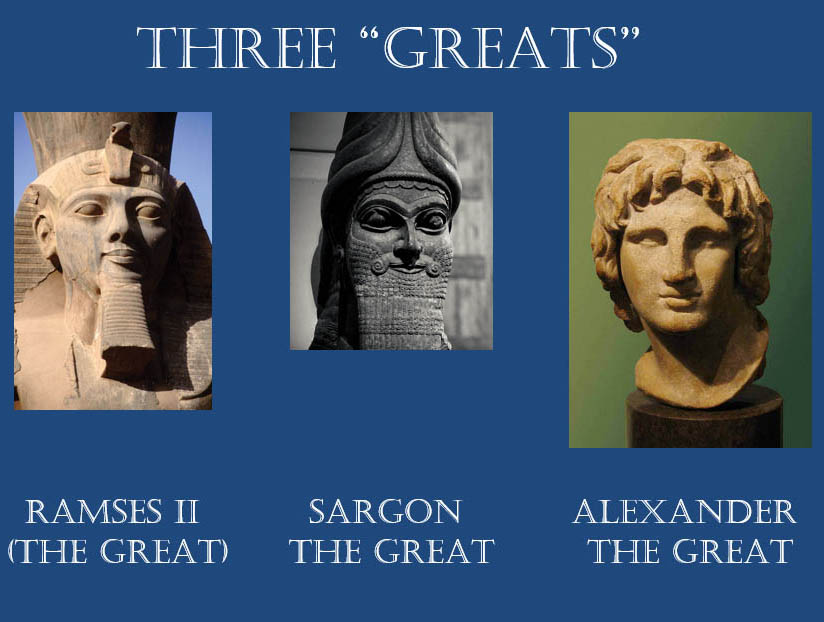
So familiar are some of these portraits that later artists and then even movie makers felt obliged to adhere as closely as possible to their likenesses. Yet, with Israelite biblical personalities, from Moses to Jesus, we have virtually no contemporaneous portraiture of any of them, or the people they governed, and or came from.
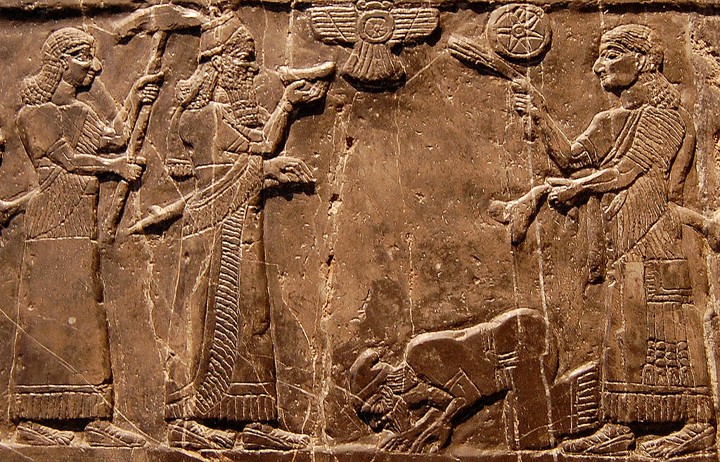
The single contemporary representation of an Israelite monarch is this rather inglorious depiction of King Jehu of Israel grovelling at the feet of Shalmaneser III from about 841 BC. In fact, this counts as the first ever confirmed depiction of an Israelite of any kind! And it’s to the Assyrians again that we are indebted for the only other contemporary depiction of Israelites from Bible times. This time though, warriors and their families during and after the siege and fall of the Judahite city of Lachish to Sennacherib, dating sometime between 701 and 688 BC.
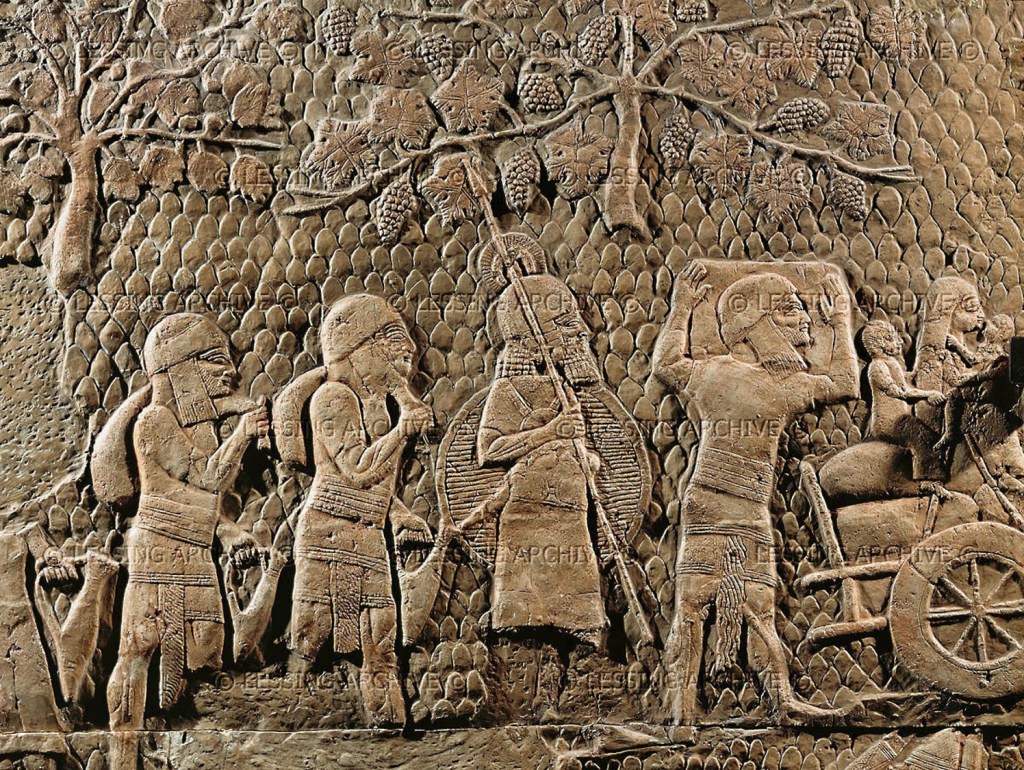
So far as we can be certain, these Assyrian images are our very earliest, and only clue today to what my Judahite ancestors looked like during any period of the Old Testament.

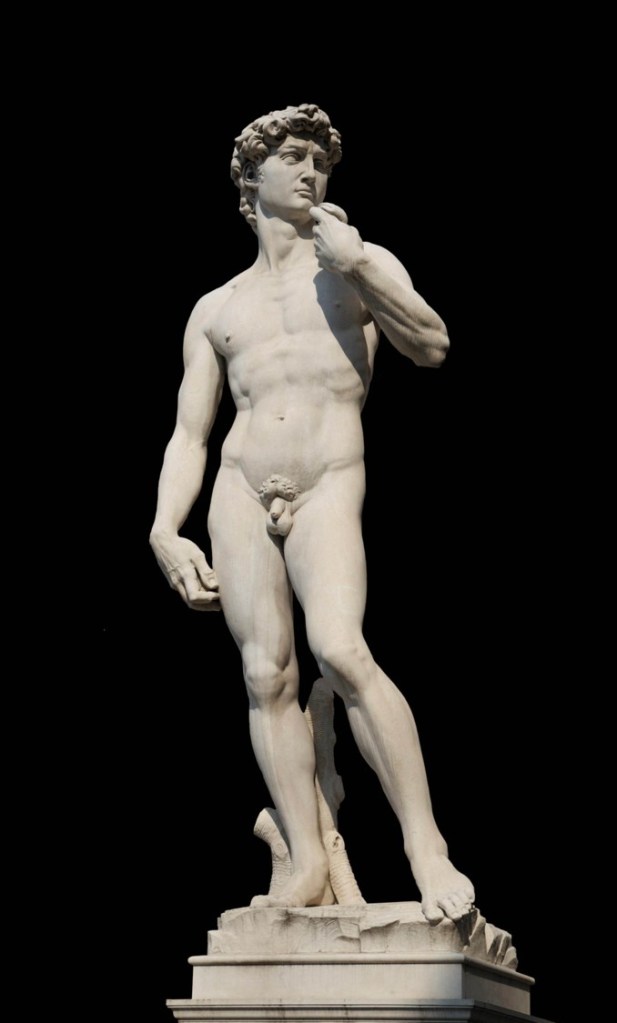
Again, this is not the time or place to get into a discussion of how much of non-Israelite pottery and artefacts might or might not actually be proto-Israelite or actual Israelite, nor is it the time to discuss the whole thorny issue of the exact nature of early Israelite religion, but so far as most people are concerned — outside of that highly specialised debate —we have scant idea what Saul, David and their subjects looked like. However, thanks again to the likes of Michelangelo and then so many other artists from the High Renaissance onwards, as with the image of God, we do have instinctive, reflexive mental impressions of people like Saul and David.

My first childhood imaginings were framed by the works of an unnamed, yet highly skilled artist who illustrated the books of The Religious Tract Society.* These were my nascent guides to what some of the seminal moments and main protagonists from the biblical texts looked like. This was my first King Saul, for example, even before I’d seen the Rembrandt version; just as gloomy, you’ll notice, but at least with a touch of naturalism and a feeling for historical accuracy — the Caucasian David aside.
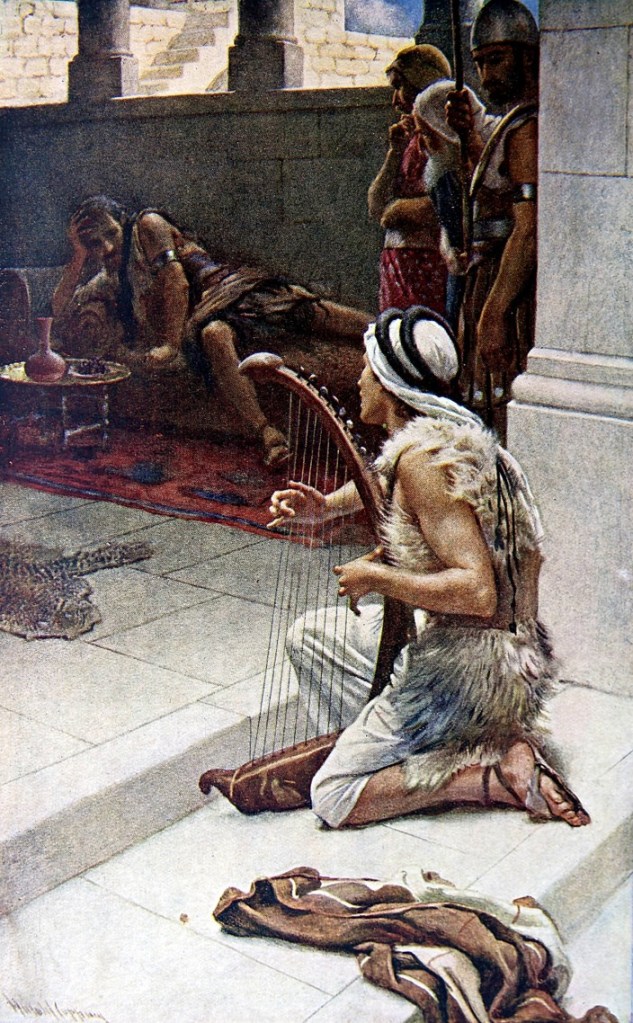
However, even in this era the dominant images within the massed western consciousness remained— and remain to this day — those planted by earlier geniuses such as Michelangelo…
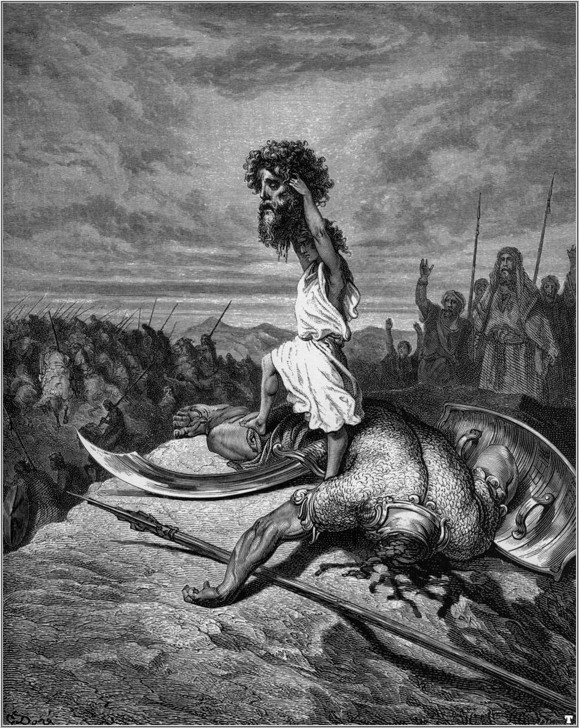
…and Gustav Dore…
…and by Salvator Rosa, who produced this defining image of a pathetic King Saul cowering before the ghost of the prophet Samuel.
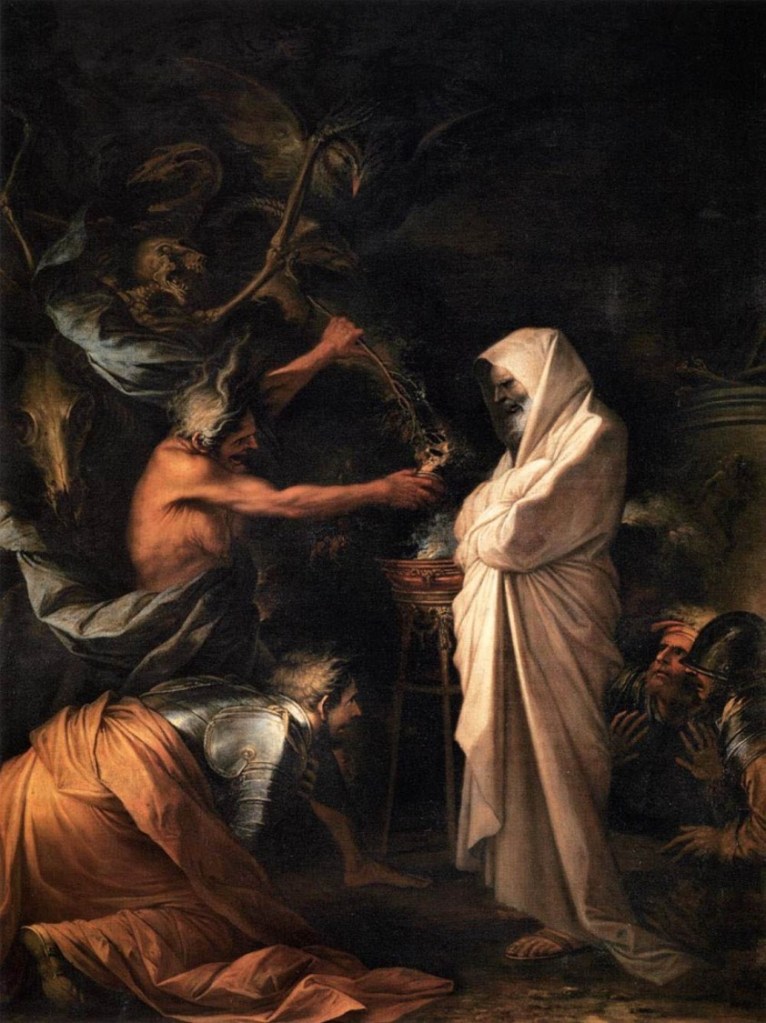
All these powerful images prove the power of narrative and propaganda, often at the expense of historical accuracy.

* The books of the Religious Tract Society were published by Britain’s (and perhaps Europe’s) oldest commercial/independent publisher, the Cambridge-based Lutterworth Press. Little could I have imagined that about four decades after I was first enthralled by the beautiful illustration of David playing for Saul above, Lutterworth would publish my own biography of King Saul. Life can be a truly wonderous thing.
Pain and Pleasure at the Rijksmuseum (June 2024)

obscure gems, camera-obscured vermeers and an unwatchable nightwatch…

I am a very fortunate and privileged person. In 1987 I and my then-girlfriend visited the Alhambra Palace in Granada, and had the entire place to ourselves. The stillness of the Court of the Lions in particular, with its serene Solomonic atmosphere, only disturbed by the wing flutters of doves and the chirping of swallows was a transcendental experience.

About ten years later, I had an equally powerful-yet-serene artistic moment of solitary good fortune in the Rijksmuseum in Amsterdam, when I had its famous collection of nine Vermeers all to my lonesome. This was especially lucky, as few great works of art demand peaceful contemplation more than those of the genius from Delft. It was probably no more than five minutes, but easily sufficient time to appreciate a unique opportunity for private quality time with nine of the finest paintings ever conceived.

Young Italian Woman with Puck the Dog – Thérèse Schwartze (1884/5 – oil on canvas). Ashamed to say that I had never heard of Thérèse Schwartze, but I’ll never forget her now after being thrilled by this life-size study of attitude and poise…

But that was then, and now things have changed for the worst, at both the Alhambra and the Rijksmuseum.

Both places are victims of their own massive popularity and their increased accessibility due to an exponential rise in mass-tourism. And, both places resorted to the same “remedy” for dealing with the ever larger crowds of people wanting to see their glories – the dreaded time-slots…

I have visited Amsterdam many times since 1997, but because I knew I could never repeat that incredible Vermeer encounter, I had avoided the museum – until last week.

We were in town for 48 hours and our hotel was next door. Everytime I stepped out onto the street, there was the great red-brick edifice, staring me in the face, taunting me. So, I gave in, and booked a 10 am (and first of the day) slot on my iPhone for the second day. Get there early I thought, and I might just have a chance of beating the crowds to the Vermeers, even if only by a minute or two, it would be worth the €20 for the ticket.

A Young Woman Warming her Hands Over a Brazier: Allegory of Winter – Cesar Boetius van Everdingen (1644-48 – oil on canvas)
Again (although here I was aware of the painting), I had only a vague knowledge of this exceptionally gifted Dutchman. As with the Schwartze above, the painting in the flesh (so to speak) is unbelievably compelling. These iPhone photos, don’t convey a fraction of their power in real life...

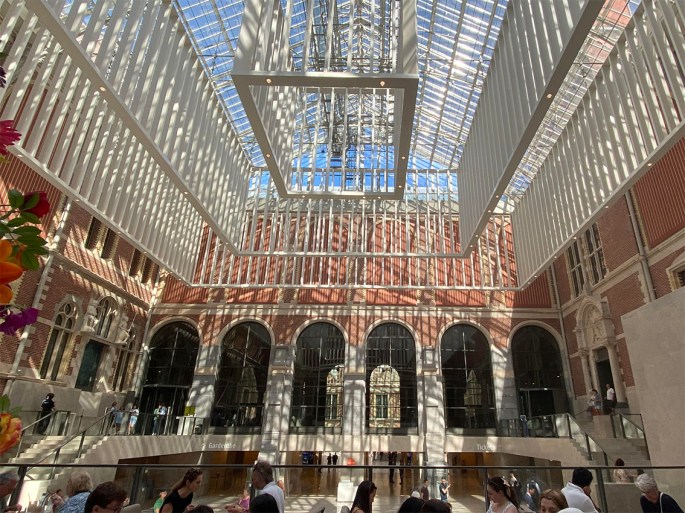
How wrong I was. I got to the entrance at 9.45 (15 minutes before the official opening time) and, much to my pleasant surprise was allowed in. However, my cheerfulness was instantly doused, the moment I entered the grand vestibule, to discover it full of people – mostly grouped in tour parties, with tour guides, whose competing, amplified voices, filled the space with a kind of strident, oddly-American-accented hiss.

On my way to the Vermeers I passed large classes of school children, many spread out, sitting on the floor spaces, surrounding their teachers, like bees around a queen, but all (teachers and children) dressed in white lab-coats. And no, I haven’t a clue either, but it all added to overall feeling of organised pandemonium.

Having navigated my way past these sizable (and voluble) obstacles I eventually made it to the gallery containing the Vermeers, but of course, I was too late. I don’t know when wouldn’t have been too late, seeing as I had entered the museum 15 minutes before the official opening time, but I’m guessing, some time around three in the morning? How/why/where all these people came from – hundreds of them – in yet more tour-guide parties, between me and getting anywhere near the paintings, is a mystery. But whatever, I wasn’t going to see the Vermeers – not that I would have wanted to given the football-crowd environment engulfing them.

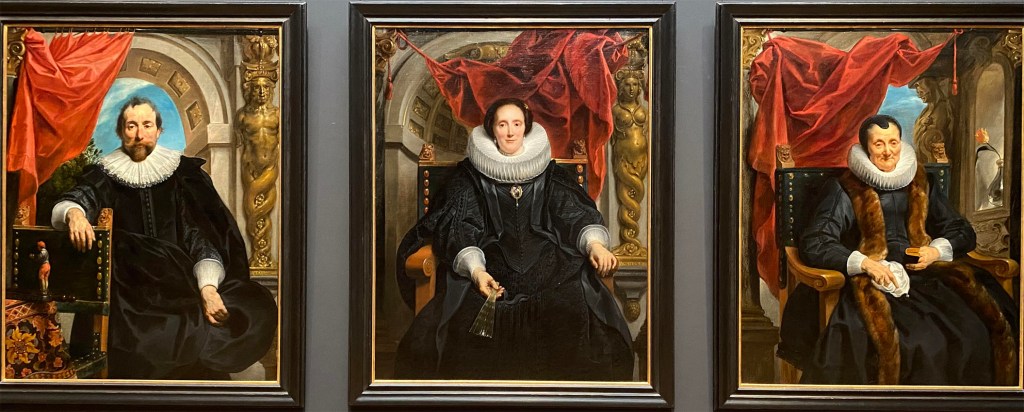
Three Portraits of Notables of Antwerp – Jacques Jordaens (1635/36 – oil on canvas)
If, like me, you’re a sucker for the wow-factor possible from supreme painting technique, then this virtual triptych of life-size portraits, by yet another artist I barely knew of (Flemish this time, not Dutch) is the exhibit for you. While it might not have the subtle deftness of The Night Watch, for example, they’re packed with empathy, presence and attitude – and most importantly of all, have no unsightly screens, and rarely any people between them and you!

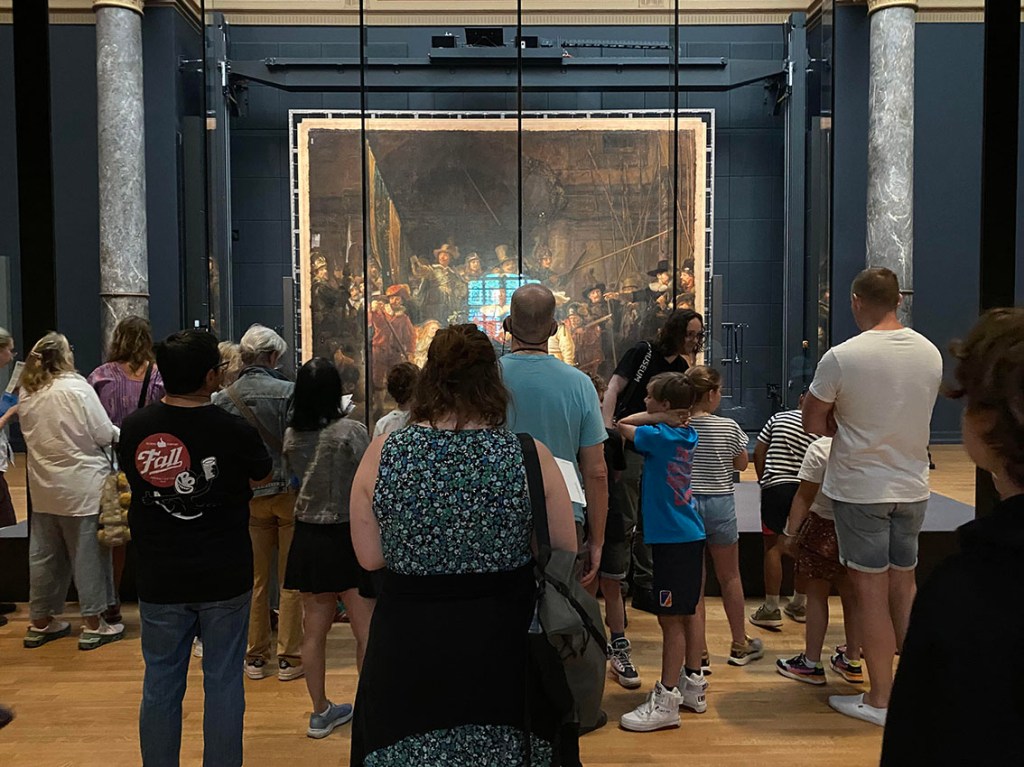
So, as a second prize I tried for the Rembrandts but fared little better, and ultimately settled for distant side galleries and the often surprisingly superb consolations on offer, which comprises most of the illustrated story accompanying this post.

In short, do visit the Rijksmuseum next time you are in Amsterdam, but be prepared to make do with side galleries and supposedly “minor” exhibits. Fortunately, being one of the greatest art galleries on the planet, insures that there are plenty of allegedly “lesser” gems of outstanding and memorable value on offer, to enjoy in relative peace and harmony.

The other side of the Rijksmuseum coin. Somewhere behind all of that lurks The Night Watch. There has to be a better way…