SIDNEY – A Tribute: part 5*

the master of anecdote…

In addition to his many talents, Sidney was a fine raconteur and a master of the anecdote. I related one of his most amusing military national service stories in an earlier post, but the Studio also offered up many hysterical moments, none of which my uncle enjoyed relating more than the story of the prize ram…

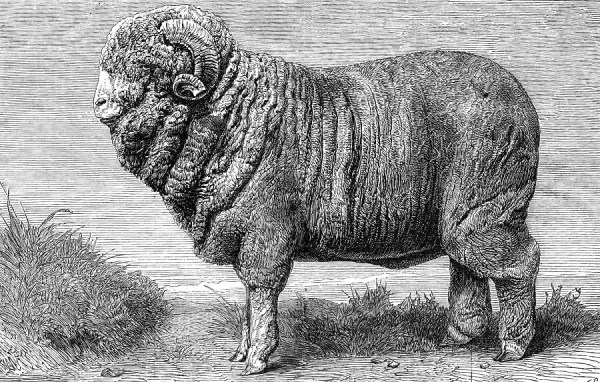
About 1969/70, British Woolmark (now Woolmark Company) hired Sidney to do a campaign for them. In his wisdom, the director of the first shoot decided that it would be a good idea to position a prize ram between two pretty models wearing the latest woollen clothes. This might have been a good idea, had it been a pastoral location, but he wanted it to be a studio piece. So, one prize Merino ram, and his farmer were summoned from deepest Sussex to Arkwright Road NW3. Even then things might have worked, had not the ram been brought straight from the muddiest, rain-sodden pasture, it’s fleece – the focal point of the shoot – caked in thick mud.

An old engraving of a Merino ram.

Sidney and his team had no option but to attempt to wash the ram, and with the farmer’s assistance, they managed to get the animal into the bathtub in Sidney’s flat – attached to the rear of the studio. However, the resulting bathe resulted in a drenched, grey woollen mat, rather than the snow-white, fluffy, pristine Merino fleece required by the director. Then someone suggested using a hairdryer to dry the sheep, which, after an hour or so actually worked but it still left the wool looking too dull. Then someone else had the brilliant idea to cover the ram with talcum powder. At this point, the farmer leant over to Sidney and warned him in his rich Sussex tones, “I should warn ye, that e do like to pass a bit o’wind…”.

The resulting photo session was a farcical nightmare: The ram was maneuvered onto the backing paper between the two models, donning their woolen finery. The talc, having got up the animals nose, caused it to sneeze and then fart. Every time it sneezed, a great cloud of talc filled the room like a fog. Every time it farted, a rich, pungent stench accompanied the fog, all of which caused the models to flee the room, choking and gagging. Then, the inevitable happened when the farting culminated in the ram evacuating its bowels – massively.

Somehow, eventually, the shoot was completed, with typically excellent pictures, of serenely smiling, elegantly attired girls, either side of a majestic, pristine and proud ram.

Unfortunately, I don’t have photos from the shoot to show here, but I do have another image which shows that The Studio could also be a place of intentional fun…

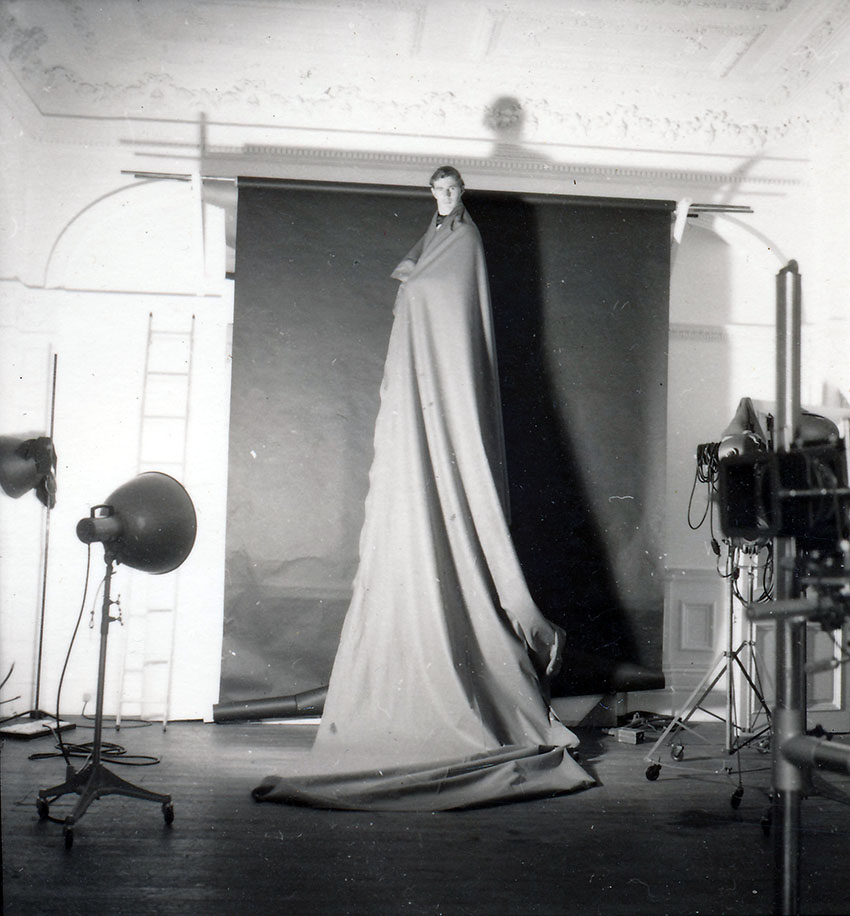
One of Sidney’s first assistants at the Studio was David Hendry. He was a tall man, but not quite this tall. This photo dates from around 1960.

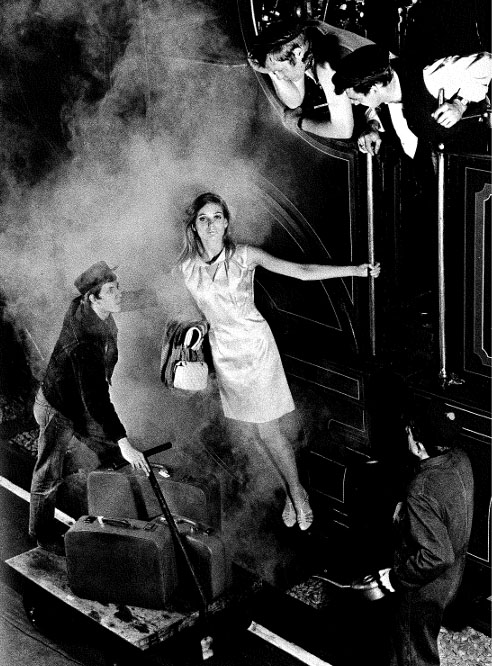
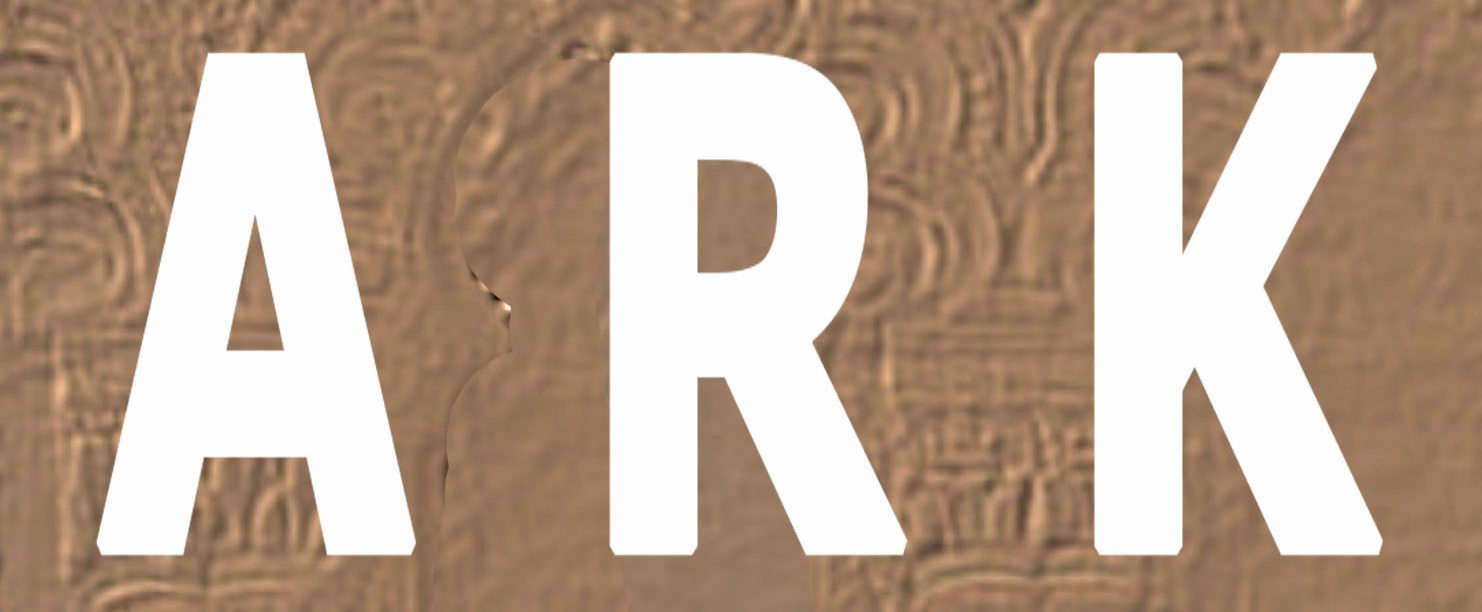
* The title picture of a typical location shot product of Sidney’s Studio of the stagier variety, from The Art Director’s Index to Photographers, 1970 edition. Sadly, I am unable to identify the model (all suggestions welcome!) or the brand. Even more sadly, I am unable to gain access to a whole load of Sidney’s and his colleagues material to share on this site, including many famous and culturally important images. Hopefully, one day they will get the exposure they deserve, if not here, on some other platform where their contribution to British and international advertising can be fully appreciated and even perhaps inspire future generations of photographers and advertisers. I feel sure that this is what Sidney himself would have wanted and it is the legacy he deserves…

JOHN’S SHOPPING, BUT NOT COPING…

If you ever wondered what all those dots and dashes are for on Scandinavian words then the name of the town in Sweden Dido and I are soon to move to might help.

Jönköping without its umlauts (or “umplaghs” as Dido refers to them) looks fairly straightforward to the English eye. Jonkoping instinctively, phonetically looks like it should be pronounced “John-coping”, but the presence of the umlauts immediately sets alarm bells ringing. You just know that “John-coping” is wrong with the result that you find yourself instinctively “accenting” the word. However, unless you are familiar with “Northern Germanic” languages the chances are that instinctive accenting will be wide of the mark.

In my case for instance, before I knew better, I found myself pronouncing it something like “Jern-kerping” whereas after being corrected by a helpful Swede I was told to pronounce it more like “John-shopping”. Of course, “John-shopping” is only an approximation of the correct Swedish pronunciation, but it does at least indicate the effect of the umlauts.  Moreover, since I’ve been using it, the constant stream of polite corrections from dismayed Swedes has ceased.

The one thing all our new Swedish acquaintances have told us is that our ability to pronounce Swedish words correctly, including Jönköping will improve over time.

Whether or not we have sufficient time in Sweden to master Swedish enunciation will depend upon how well Dido’s new tenure at Jönköping University works out. As things stand she’s planning on this being her professional swansong, but even at 57 this still leaves us with plenty of time – potentially…

Far more accessible than Jönköping’s correct pronunciation is its pleasant geography. The town is situated on the banks of Sweden’s second largest lake, Vättern (yes, another umlaut, and no, I haven’t been informed yet and all guidance welcome) and during our recent visit I manged to get some striking images of it, and the natives enjoying themselves along its beach.

One of the things that I’m falling in love with in Sweden, and something I already miss when I’m not there is the astonishing crystalline light and the startlingly vivid colours and tones it produces on everything it touches. These pictures illustrate this pretty well…


SIDNEY – A Tribute: part 1

The making of the man…

Of all the people I have ever encountered who should have been famous, but were not, my uncle Sidney Pizan, who passed away in December aged 94, is the greatest example I can think of.

Immensely intelligent (declared a genius upon entering grammar school aged only nine); a brain equally at home in the sciences and the arts; a star medical student at London’s University College Medical School; a gifted and highly successful commercial photographer; picture framing entrepreneur; a multi linguist fluent in six languages; plus, a discerning antiquarian bibliophile and all-round connoisseur and collector of the arts with an internationally respected knowledge of Art Nouveau, Sidney was the epitome of a renaissance man.

Moreover, hailing as he did from humble Jewish origins in London’s East End, the son of shopkeepers, Sidney lived a sort of British version of the American Dream, proving, that with a rich combination of nouse and grit, the sky was virtually the limit… I say virtually, because Sidney’s medical ambitions at least were curtailed by a shameful quota on Jewish medical students permitted to become doctors, meaning he had to settle for dentistry (chiropody and ophthalmics being alternative options). That notwithstanding, the only thing that stopped him going on to true fame and fortune was his own lack of hunger for any such things.

At least until his fifties, as regards his profession/s, his pastimes, his social and his family life, Sidney enjoyed a contentedness which perhaps, in a way, dampened any greater ambitions he might have had. Then, following his belated discovery of a partner, and then later wife, he discovered another level of contentment. Ultimately, Sidney was happy as anyone reasonably can expect to be with his lots, firstly as a bachelor and then later with a far quieter, settled existence.

The pictures presented here, show Sidney as a child, mostly together with his younger sister (my late mother, Hannah), and take us up to the time just before he became a professional photographer – a period comprising about 25 years. I hope, and think, that even for strangers looking in on this post, they offer a charming window into a lost world…

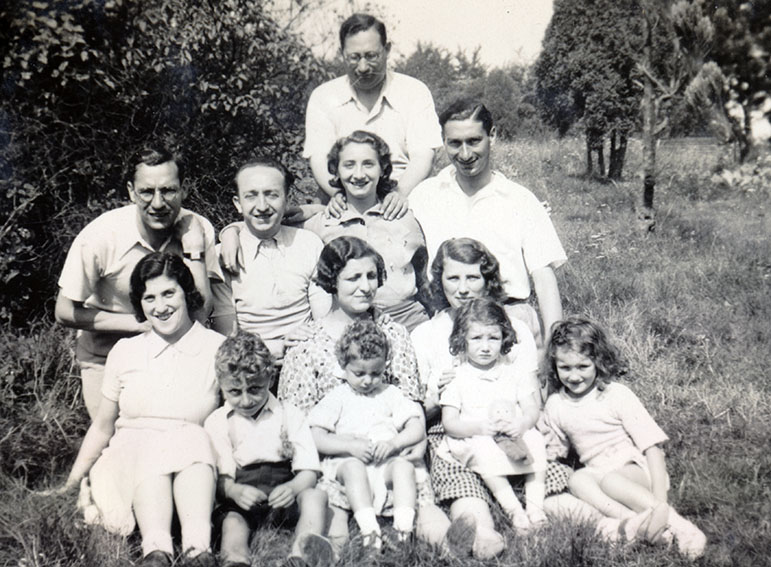
A family outing around 1935, perhaps in Epping Forrest. Sidney is the boy with the blonde curls in the front, with his little sister (my mum) next to him, on their mother’s lap (Becky). Their father, Harry is the chap kneeling, second from the left. At this time they lived in the Mile End Road in Stepney, East London. Harry was a grocer and they lived above the shop. Despite their modest means they enjoyed life and wanted for nothing, as I think the glow radiating from this happy assortment of cousins, uncles and aunts clearly reveals…
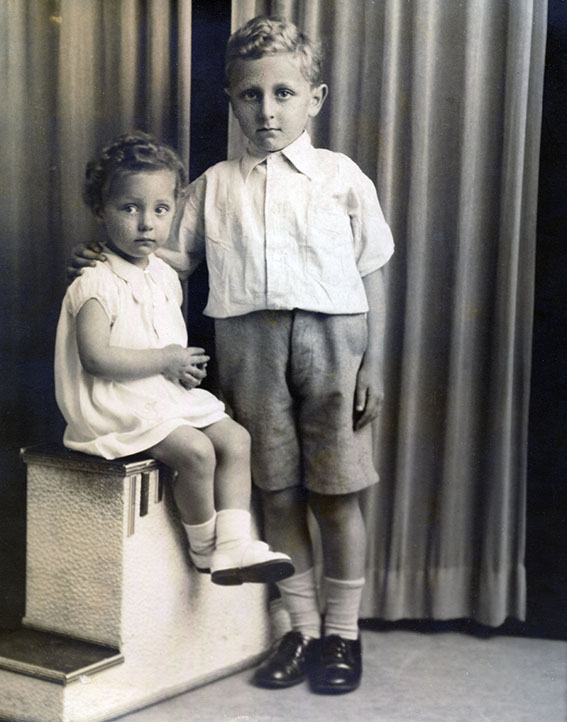
A formal studio portrait of Hannah and Sidney, circa 1936
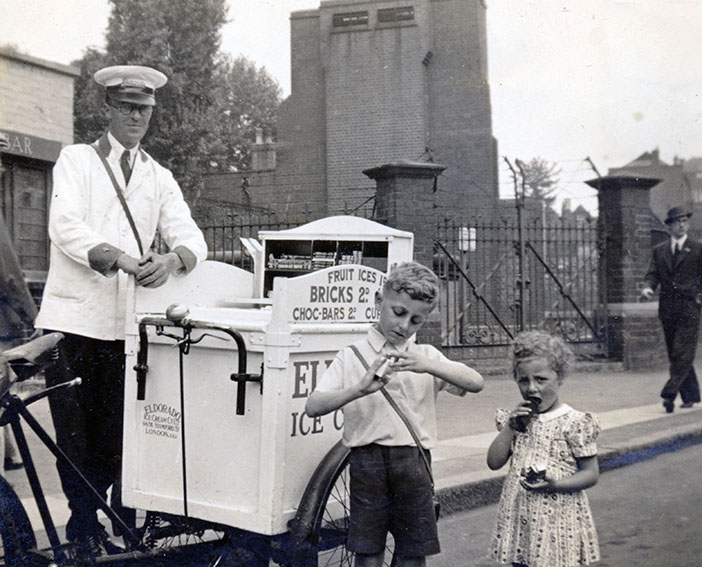
Sidney and Hannah enjoying a treat…
A school sports photo taken about 1948. At the height of the London Blitz, Harry moved the family to the north-London suburb of Hendon, to avoid the worst of the bombing. Sidney (back row, third from the right) and Hannah (front row, fifth from the left) both excelled at the local grammar school, Hendon County. The headmaster, Maynard Potts declared Sidney the second cleverest student ever to attend the school (the cleverest being Sidney’s classmate, Lionel Blue – later to become a radio celebrity Rabbi on the BBC – standing third from right with spectacles – I think).
Brother and sister around 1949, shortly before Sidney began his two years national service.
Sidney in his first dental practice in Ecclestone Street, Victoria, in central London.
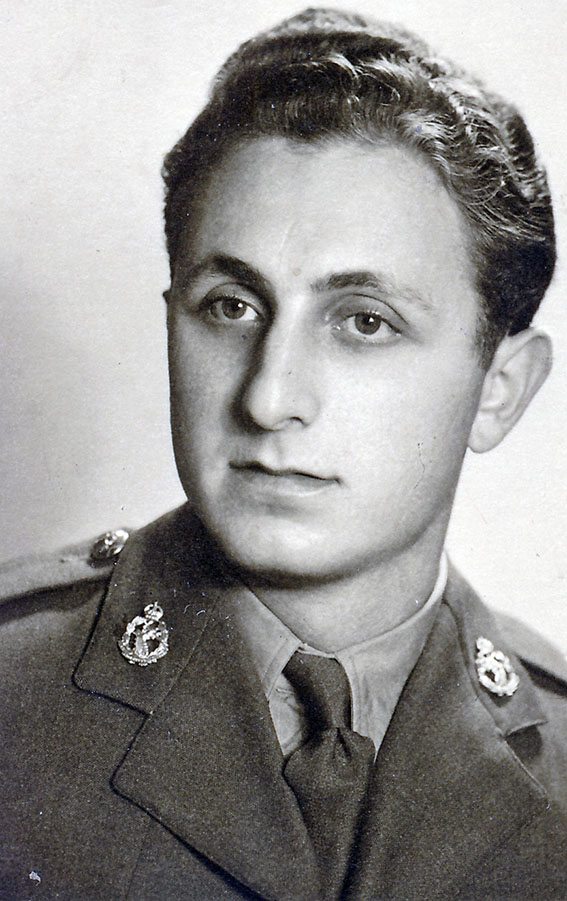
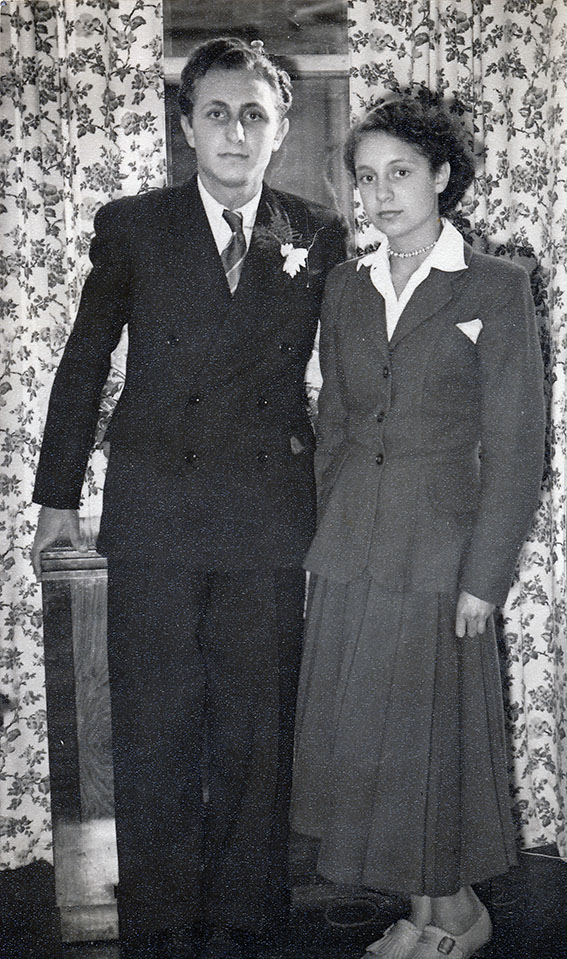
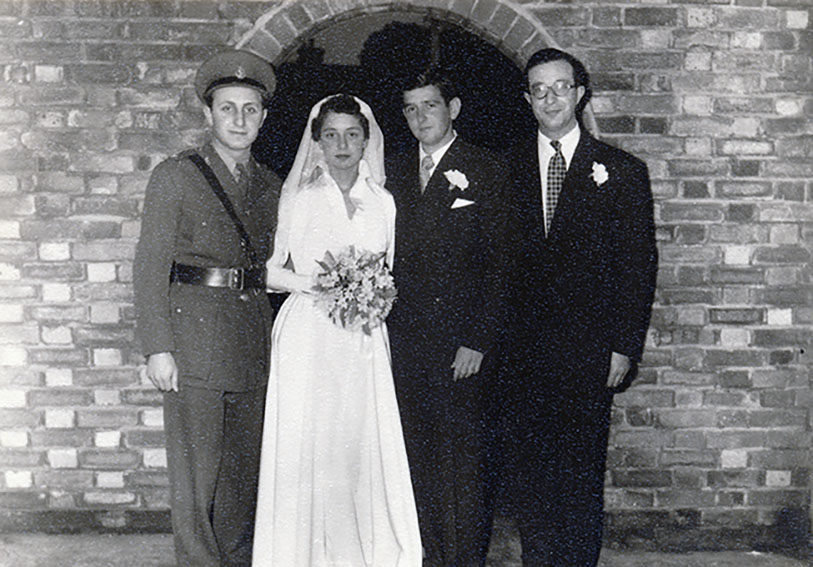
Captain Pizan (Sidney was an officer in the medical corps – stationed in a schloss in the Black Forest, Sidney spent most of his time learning to ski, drive and taking care of the castle’s substantial wine cellar – he also became fluent in German) attending Hannah’s wedding to my father, Gerald Green in 1953. Gerry, as he was known then, ended up in advertising, and it was he who persuaded Sidney to do commercial photographs for his company, thus beginning a whole new chapter in his life…
…to be continued…

THE UNHOLY OF UNHOLIES

EXERPT 6 FROM MY NOVEL “ARK”

The basilica at the Valley of the Fallen is hewn from living granite forming a vast man-made cave. 

After entering, it took several seconds for the three companions’ eyes to adjust to the relative gloom of the artificially illuminated interior after the blinding glare of the white paved esplanade. 

The most striking thing upon entering was the sweet cave smell accompanied by a wave of cold air which enveloped them like a cool blanket. It reminded Omri of walking into the treasury at Petra which although much smaller offered a similar effect on the senses; especially the nasal senses. No doubt the Jordanian sandstone emitted a subtly different smell to this Spanish granite, like two distinct wines but the general effect was almost identical.

They left the porch and passed under the ornate wrought ironwork gate with its pair of Hapsburg Imperial Eagles and into the crypt. 

Despite her best efforts even Elena could not help but stare upwards at the arched vault of the ceiling and marvel at the sheer scale and ambition of the space. The roof in particular had been cleverly worked with undeniable skill to simulate a lattice of arched beams and dressed stone supporting the raw rock above.  

Beneath stretched the crypt, all eight hundred plus feet of it, including at the far end a great transept and choir containing the high altar and tombs of Franco and de Rivera set under a carved domed cupola.

But then, just a few steps after they had passed beneath the iron gate Omri stopped and gasped audibly. He had caught site of two towering black metallic sculptures, dramatically up-lit and set into two raised niches facing each other across the alter. The statues were of massive winged angels cast in a heavy deco style, their gazes averted slightly towards the floor and both gripping downward pointing broadswords.

For a second or two Omri just stood there looking from one angel to the other in obvious amazement. ‘What is it Omri?’ demanded Elena tersely, mistaking his astonishment for admiration. ‘Surely you don’t like those statues too? They’re so…they’re just so clumsy. They’re exactly the kind of clunky brutalism you’d expect from an artist commissioned by a fascist dictator.’

‘But don’t you see it?’ replied Omri looking inquiringly at Elena and then at Alex.

‘See what?’ Elena came back still sounding curt.

‘Don’t either of you see what I’m seeing—really?’ Omri was almost pleading with them. ‘I thought that you guys had been steeped in this Ark stuff long enough to see what I’m seeing.’

But they both just looked back at him and then at each other in blank bewilderment. 

‘Look!’ he almost shouted at them, his arms outstretched towards the two statues while gesturing with his head to each angel in turn, his eyes glaring and then pointing towards the alter with his camera.  ‘Of course!’ exclaimed Alex.

Of course, what?’ Elena said almost demanding to be let in on the secret.

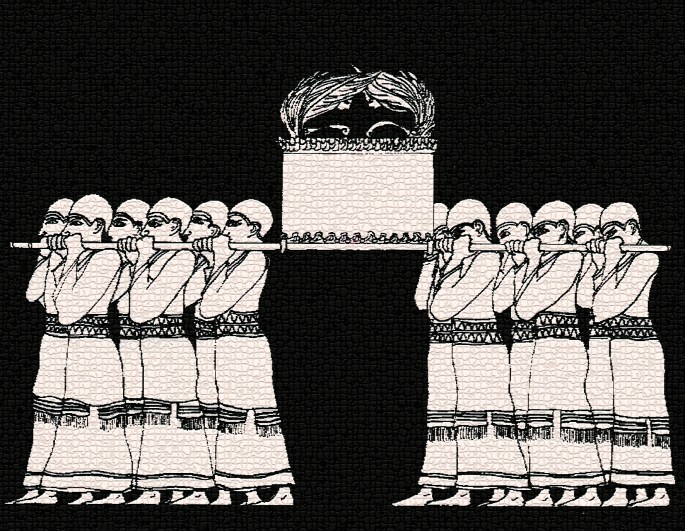
‘Elena’ Alex said now grinning broadly, cupping her cheeks in his hands. ‘Do you remember reading about the Ark in the first book of Kings in the Bible and how it sat in the Holy of Holies in Solomon’s Temple? Do you remember what else was in there, in the Holy of Holies guarding it?’

He gave her a moment to think, grinning and nodding at Omri.

Then she too broke into an open-mouthed smile before exclaiming; ‘Oh yes! Two massive carved angels!

The Ark sat between two protective angels.’

‘Two angles ten cubits tall to be precise’ added Omri. ‘And I’d be willing to bet that these two fellows here are about five metres tall, from their feet to their wing tips—in other words, about ten cubits.’  

‘So what does this mean?’ Elena asked looking at

Omri. ‘It’s just a coincidence, isn’t it?’

‘Unless your husband is mistaken’ Omri said grinning mischievously at Alex, ‘and your government really does know about the Ark and placed these two statues here as some kind of secret acknowledgement, then yes it’s obviously a coincidence.’

‘I can assure you that it’s a coincidence’ said Alex ignoring the jibe; ‘These statues were commissioned at the same time as the basilica itself, decades before Franco knew about the Ark.’

‘Still, it’s an amazing piece of happenstance’ Omri declared, ‘although my high school RE teacher always assured me that there’s no such thing as coincidences.’

As they continued slowly down the centre of the aisle the Israeli resumed his photography taking pictures of each of the six apses, of the ceiling, of the floor and the seating and then the stairs leading up to the transept and the choir.

They passed behind the raised altar and stared up at the cupola before arriving at the two marble slabs denoting the tombs of Franco and de Rivera, about ten yards apart.

‘So where exactly is our object?’ asked Omri in a lowered voice.

‘You’re standing on it now’ Alex said looking at the slab beneath Omri’s feat. ‘You’re right on top of it.’ 

Instinctively Omri took a quick half-step backwards. Then he bent his neck and looked down at the grey paving stone beneath his feet, his chin seemingly glued to his chest. His arms sank to his sides and he just stood there like that, stock-still, for almost a minute.

Omri dropped down onto one knee. He glanced around the transept to make sure that there was no one else within earshot before taking the camera in both hands and sliding open the little panel on its rear. He then held down the button with his left thumb and began slowly moving the camera over the stone slab. 

Almost immediately the camera started emitting a sharp crackly high-pitched whine, causing Omri to twitch momentarily as if he had received a mild electric shock. His entire frame remained rigid except for the circular motion of his arms as he scanned the floor. 

Alex and Elena stood either side of him, both of them transfixed by Omri’s sudden display of physical concentration. Although they could only see his partial profile, they could sense the intensity etched on his face.

Then Omri relaxed and he reached down towards the slab with his hand and delicately, hesitantly touched the stone with his fingertips like it was an old master canvas hanging in a great gallery. As he did so they heard him mutter something to himself in Hebrew. And then he raised his face to look at them and they saw that his eyes were glistening. 

He slowly stood up, spent another two- or three-minutes staring at the floor, breathing slowly and deeply, regaining his composure. Finally, he turned to them and said; ‘Forgive me for doubting you Alex. Forgive me for doubting a Son of Kohath.’

He then continued photographing, taking at least half a dozen shots of the paving stone and its immediate vicinity.

In all the years Alex had known Omri he had never seen him display emotion of this sort. Sure, there had been the many heated scholarly disputes, mostly with Ron and even the odd row but never anything like this.

Not even on the Arad dig when on one occasion a shard was uncovered with an inscription on it that seemed at first to contain the name of Solomon’s son King Rehoboam (but which later turned out to be merely the Holy Land’s oldest discovered laundry list). Not even then did Omri do anything more than smile broadly and congratulate the young student discoverer with a firm pat on the back

As they began their return walk back down the aisle towards the rectangle of white daylight at the entrance Alex gave Omri’s arm an affectionate squeeze. He said; ‘If you don’t mind me asking, was that some kind of prayer you made back there?’

‘Gracious no! Nothing like that!’ replied Omri returning his friend’s arm squeeze, ‘I pray about as much as you do.’

‘I never pray.’

‘Exactly.’

‘So, what were you saying? Can you tell me?’

‘Sure, I can tell you and Elena too—but no one else. Not even Carlos Garcia—at least not yet.’ He stopped and looked directly at Alex and then at Elena. ‘Do you both understand?’

‘We understand Omri’ confirmed Elena, ‘but what did you say?’

‘I spoke to the Ark.’

You spoke to the Ark? Alex repeated in disbelief.

‘You didn’t pray but you spoke to the Ark! I think I’d rather you had prayed.’

‘Do you think that the Ark understands Modern Hebrew?’ teased Elena.

‘Of course not!’ replied Omri playing along with her. ‘That’s why I used Classical Hebrew.’

‘And what did you say to the Ark in Classical Hebrew?’

‘I merely told it that I thought it was about time it came home.’

And with that Omri thrust the camera back in his bag and marched back out into the searing daylight.

THE PENANCE OF CARLOS

EXERPT 5 FROM MY NOVEL “ARK” 

After Ramirez left Carlos sent everyone home. 

 Marie Carmen protested, saying that she wanted to clean the bathroom but Carlos told her that he would do it himself. She then complained that he had never so much as cleaned a cup so how on earth would he manage to clean a bathtub. 

‘I don’t expect you to understand my love’ he said to her holding her gently by her broad muscular and fleshy shoulders, ‘but this is something I have to do myself. I owe it to Miguel.’

She did not answer but simply looked back at him with her typical doleful open mouthed expression.

‘Now you be a good girl Marie Carmen and go home and get some rest. I’ll follow just as soon as I’ve finished here. I’ll clean the bath and then I’ll phone Jorge and Moisés and then I’ll walk home. Then we can start arranging the funeral and the wake.’

Carlos saw her to the door and watched her large form silhouetted against the early evening autumn sky waddle away heavily down Loli’s immaculate narrow path. 

He watched her with that same mixture of affection and pity that had characterised his attitude to her for most of their forty years together. 

Still, he thought it was better what he felt for her now than when their two families had forced them together in matrimony all those years ago, even though she had at least been slim and pretty then.

But it had never been her looks that had bothered him nor her considerable dowry. It was the fact that she was so intellectually backward and dull; an ‘idiot’ in fact, as he had complained bitterly to his father when the wedding was announced.

‘So, you’ll educate her!’ his father would respond laughing.

‘But she’s not educable Father, she’s verging on being retarded…’

‘What the hell do you care if she’s retarded? She’s about to make you rich!’

‘But I can’t discuss anything with her. She doesn’t understand anything I say…’

‘So what? Wives aren’t meant for discourse! They’re for child rearing and for cooking your meals and keeping your home. If you need to chat, do it with your colleagues and your friends. You can even find educated whores who will listen to what you have to say, just so long as you pay them.’

‘I don’t love her father, I don’t even like her.’

‘Please Carlos—be sensible about this. Be content that you’re getting an attractive and wealthy young wife. For goodness sake boy, at least she isn’t ugly! If she was ugly I might have some sympathy with you, but this? This is a dream marriage—one of Malaga’s most eligible girls wedding Malaga’s—and perhaps Spain’s—most promising young scientist’

‘But Father…’

‘And anyway Carlos, you’ll learn to like her, I guarantee it. You might even come to love her in time.’

With time Carlos’ feelings for Marie Carmen did indeed change but not quite in the way his father had predicted. He never grew to love her, or even like her but familiarity and regular and comfortable sex made him feel a tenderness towards her that evolved over the years. So much so, that even as childbirth took its toll on her body and she gradually grew into the broad shape typical of most Malagueña matrons his tenderness merely faded into a kind of protective compassion.

The only blip in his ‘virtual matrimonial idyll’ (as he described it wryly to himself) occurred several years later when his youngest brother Miguel, with barely a raised eyebrow from their father married the girl of his choice; Gloria Hernandez.

‘But you’re our first born Carlos’ their father would say whenever the subject was broached. 

‘Little Miguel is not my heir—you are. And in any case, his Loli is from a good Madrid family—no money worries there. He has done well for himself. But with you, we had to be certain. You were a loose cannon and we couldn’t take a chance.’ And then he would pause for a moment before adding with sublime insensitivity; ‘It’s funny how things work out isn’t it Carlos? You, the brainy one of the family wedded to a dimwit and Miguel, the dimwit of the family married to one of the brightest and most talented girls in Madrid. Ha!’ Then he would walk off, chortling at his own sense of irony.

But it was not so much the relative injustice of the two unions that irked Carlos as it was the painful fact that he fell in love with Loli the instant Miguel first introduced her to the family in Malaga.

The moment she walked into the large sitting room of the Garcia house, slightly ahead of Miguel, full of purpose and self-assurance he knew that she was everything that Marie Carmen was not. 

Loli was petite, with the bearing, poise and physique of a classical dancer, with pert breasts, a narrow waist, toned bottom and lean athletic legs. Her short jet black hair cut immaculately, framing a small but elegantly sculpted face oozing intelligence with every glance of her large green eyes.

The fact that later in the evening she entertained the family at the piano with the skill of a young Rubenstein and that she was charming and attentive towards Marie Carmen throughout and that she was his little brother’s girl all conspired to make Carlos thoroughly enchanted and miserable in equal measure. And while the passage of time helped him come to terms with his marriage to Marie Carmen it did nothing to temper his feelings of love and desire towards his sister in law. 

Not that there was anything he ever would have done to assuage these feelings, even if Loli had been ‘available’ which she most definitely was not. The idea of betraying Miguel and jeopardising their good relationship was abhorrent to him. 

Ultimately Carlos learned to channel his feelings for Loli into his fantasies, both when alone and when having sex with Marie Carmen. Then later, when he got tenure at the University of Madrid and they began to see Miguel and Loli practically every weekend and holiday he found an even more effective way of sublimating his desire. He embarked upon a long series of affairs; at first, mostly with secretaries, but later in the 50’s and 60’s, as more girls joined the faculty, with students, and occasionally the odd colleague. 

Somehow, through all of this Marie Carmen remained none the wiser. Either because she was not sufficiently mentally alert to understand and interpret all the many oversights and faux-pars that Carlos made; such as the scent of perfume on his clothes, lipstick on his collars, dried semen stains around his flies, on his underwear and most typically, him calling her by the name of his current fling; or that he somehow managed to part with all of his girlfriends on amicable terms so that none of them ever “made trouble” for him. So it was, that evening, alone at last in his brother’s house when he entered the bathroom Carlos had the feeling he was about to embark upon an act of penance. 

He stood for a moment looking down at the bath now drained of water. Almost the entire tub, except for two oval patches where Loli’s buttocks had been pressed against the enamel was stained with a dark maroon film. The blood spatter on the wall tiles around the soap tray where Loli had placed the razor had turned a deep umber. 

Carlos looked around for a cloth of some kind and spotted an orange moppet on a low shelf behind the sink. He rolled up his shirt sleeves, took the flat sponge and turned on the telephone shaped hand-shower above the bath taps.

As he started wiping and rinsing around the wall, diluted blood and water seeped from the sponge and ran through his fingers and down his wrist and forearm.

Instinctively, almost unconsciously Carlos put the back of his hand to his mouth and then touched the moisture with his tongue. 

Tears began to well in the geneticist’s eyes and he continued with his curiously intimate chore.  

‘It’s amazing’ he thought, ‘how easily blood washes away—just like life itself.’ 

Then he imagined Loli’s DNA diluting into the Madrid drains.

“THE CAUDILLO IS RAISING HELL…!”

EXERPT 2 FROM MY NOVEL “ARK”

When he arrived in his office at the institute, there on his desk barely a day after he had submitted the samples for examination, was a thin dog-eared envelope with the words “analysis results” scrawled across the front in biro. 

The slim envelope instantly set alarm bells off in Alex’s head. He knew that meaningful reports took weeks and more often months to complete and would be presented in the form of a weighty file. But when he then read the note contained within the envelope his alarm turned to dismay:

Dear Professor Martinez,

Following careful examination, we find nothing remarkable to report regarding the nature of the stone, the timber or the graffito at the Transito site. In the light of these unexceptional findings, it has been decided to resume the engineering works to the synagogue’s eastern wall in the interests of securing the building with immediate effect.

The Department thanks you and your team for all your efforts in this matter.

Sincerely,

Diego Ruiz – Chief Secretary, Department of Antiquities

Alex immediately telephoned his main contact at the department, the medieval projects manager Miguel Garcia. 

Garcia claimed tersely that he knew nothing about it and refused to put him through to Ruiz saying that the director was busy. He then offered Alex a piece of ‘friendly advice’ to ‘drop the whole thing.’ 

Alex reminded Garcia that he had ‘uncovered a site of potentially great importance to the cultural heritage of Spain and that ‘both as an archaeologist and a patriot he was bound to publish a full site report.’

‘Nevertheless’ Garcia told him, ‘do not under any circumstances publish a report.’

To which Alex replied; ‘You mean like the people who discovered the structure in 1964?’

For several seconds there was silence at the other end of the phone. Then Garcia asked; ‘How the hell do you know that it was discovered in 1964? How can you know that?’

‘Hombre! I’m trained to know these things’ he replied surprised at the effectiveness of his gambit. ‘It’s what the government pays me for. Now would you be so kind as to tell me what is this all about? What’s with all the fucking secrecy?’

Alex’s swearing had an incendiary effect on Garcia. ‘There’s no fucking secrecy!’ he yelled. ‘No fucking anything! Just a fucking boring, fucking meaningless little fucking structure…’

Meaningless!’ Alex cried back. ‘A structure unique in Iberian medieval architecture decorated with enough solid gold to shame the tomb of the average Pharaoh! A structure moreover in perfect condition—except for the fact ten years ago someone removed its roof and then covered it over again as if nothing had happened? If that’s meaningless then I’m a Dutchman!’

‘Alex, I’m telling you again as a friend’ Miguel said quietly, almost pleading, ‘just forget all about this. It’s all a mistake, a bloody great cock-up!’

‘A mistake? What do you mean a mistake?’

‘The excavation Alex—the excavation was a mistake. It should never have been sanctioned. Whoever ticked off on the excavation didn’t know. He didn’t know about the original works in 64. But now they’ve found the old records and it should never have been sanctioned. The Caudillo himself is raising hell here Alex. Please, please just let it go.’ 

Both the desperation in Garcia’s voice and the mention of Franco were disturbing. Alex had always enjoyed a cordial and constructive working relationship with Miguel Garcia. He’d found him to be an affable chap always willing to go that extra mile for a colleague. This exchange was totally out of character. 

‘Listen Miguel, I don’t want to make problems for you. I just want…I just need to know one thing and then I’ll leave you alone. I promise.’

‘What is it?’

‘Whoever took the roof off the canopy found something inside it, and whatever it was, they removed it in a big hurry…’

‘How do you know all this?’

‘Why else would they have deserted nearly half a ton of gold panelling? They must have found something so…so hot…’

Hot?’

‘I don’t know hombre! Hot, incredible, astonishing―something so precious in some way that they ignored the gold and covered up their tracks in a rush.’  Garcia did not respond. Alex could hear him breathing heavily down the phone.

‘I won’t write anything Miguel. No report. But please just tell me what was inside the structure?’

After another few seconds Garcia eventually said in a low weary voice; ‘Nothing Alex…they found absolutely nothing.’

‘You swear to me that’s the truth Miguel? You’re telling me that the Caudillo is getting all worked up over nothing because you’re acting like they found the fucking Holy Grail or something?’  Again, silence at the other end of the phone.

Calmly now, he repeated the question; ‘Miguel. Do you swear to me that what you just told me is the truth?’ 

Garcia hung up without answering.

MY BEST WORST-PAID JOB – and how I cracked Krak…

In my previous post I discussed some of my work on book covers back in the late 1980’s, which also happened to be among the best paid work I ever did. Best paid, both in regards to the amounts, and the time-to-work ratio. I think that the longest I ever spent on a cover was about two days, with the pay, rarely less than four-figure sums, and in the spectacular case of Billy Bathgate, just 20 minutes work for over £3000!

I also made many illustrations for the inside pages of books, and these were often less well rewarded financially. Normally, if one was contributing a single illustration to a text-book, the rule of thumb was £250 for a half-page, and £500 for a full plate. And even this, seemed pretty good most of the time, when the typical job took less than a day to complete. However, on one occasion, in 1996, I received a commission for a half-page illustration which turned out to be the polar-time-to-work-ratio-opposite of the Billy Bathgate job.

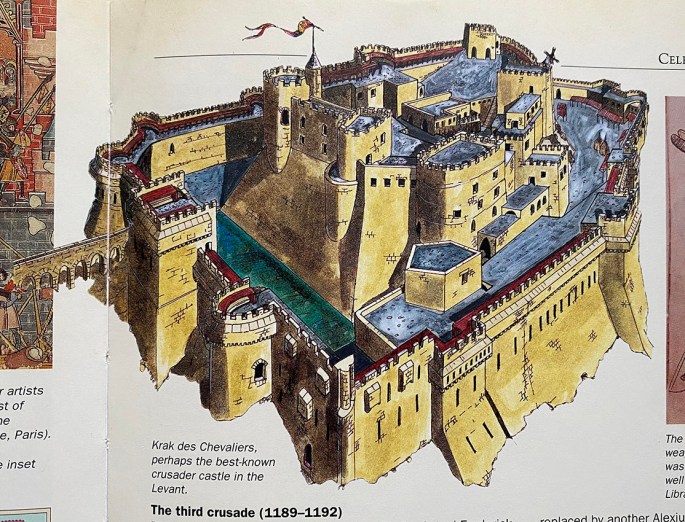
My half-page reconstruction of Krak des Chevaliers – the original being pen and ink, with ink wash.

The commission offer was for only £150 (the lowest offer I ever accepted in my ten years or so as an illustrator), and I knew from the brief, that it would be enormously time-consuming. But, just as struggling actors, never turn down a role, however bleak, so it is with most freelance illustrators (as I then was).

Fortunately, as things turned out, what the commission lacked in remuneration, it more than made up for in job-satisfaction. For, not only was the illustration for a Thames and Hudson publication – the sort of encyclopaedic book I’d devoured as a child – the subject matter – the great Crusader castle of Krak des Chevaliers, in modern Syria – was truly thrilling, and not to mention, extremely challenging.

My task was to draw and colour an accurate as possible reconstruction of the castle based on two large black and white photographs, supplied by the art director, of its ruined state. Fortunately, I dug up some additional colour photos from my local library, and with just a touch of artistic license, after nearly three weeks of hard work, I arrived at a plausible vision for the how Krak would have looked in its intimidating pomp.

When, a little while later, I received my complementary copy of the book, I can honestly say, that seeing one of my own, lovingly executed illustrations, gracing the very sort of book which had thrilled me as a little boy, I have never experienced more gratification. Which all just goes to prove, it isn’t always only about the dosh!

Incidentally, for those interested in some photographic record of how the castle looks today (fortunately, I believe it has escaped the ravages of the civil war) do take a look at my cousin Ian Harris’s recent post from his 1997 trip to Syria and beyond…https://ianlouisharris.com/1997/03/06/journey-to-lebanon-syria-jordan-eilat-israel-day-four-tripoli-krak-des-chevaliers-on-to-homs-6-march-1997/

GETTING IT COVERED

Book covers were generally my most fun jobs as a commercial artist and illustrator, and I think it shows in much of the work that resulted. The main reason for the success of these commissions was the fact that I was employed by art directors, who were often artists themselves, and who thus gave good, clear briefs.

My first job as a professional commercial artist. The original artwork was gouache on board.

I’ve already discussed my successful partnership with George Sharp for Pan Picador in relation to my cover for the novel Billy Bathgate, but that was just one of several enjoyable collaborations. In fact, my first ever professional commercial art commission (soon after I joined the Virgil Pomfret Agency in late 1989), was for another Picador publication, called The Fruit Palace by the noted travel author, Charles Nicholl. In this case, George simply wanted me to copy the author’s own photograph of a Bogota street corner, in my classic poster style. It was an easy, dream first commission.

At the outset of my career as a freelance artist, I targeted several travel companies, sending them mini-folios of my travel poster artwork. Within days of my first mail-shot, I received a phone call from Thomas Cook Publishing, who went on to commission a series of covers from me for their new set of travel guides. They were all done in oil pastel, again, on board. This I always felt was the most successful of the group.

However, things got even better a few years later, when I tried my hand at freelancing, and found that I could target publishers and companies that appealed to me and my personal travel and epicurean related enthusiasms. Hence, for a period of about two years I became something of a go-to artist for those wanting hand-conceived images for the covers of travel guides and the like.

This was another of those exciting coincidences that seems to have occurred throughout my adult life, as within days of handing this in to Thomas Cook – having never been to the USA before – I was on a plane flying out to Seattle.

Book covers, as opposed to general illustrations (of which I also did plenty) were well paid and particularly gratifying. Short of seeing one’s own book in the window of your local book store, spying one’s own cover comes a very close second. The fact that I was often stimulated by the subject matter also didn’t hurt.

I love pubs and British beer almost as much as I love travelling. In fact, after nearly every spell abroad, my first port of call on my return to England will be to my local pub for a pint of fine ale. I did two covers for CAMRA (the Campaign for Real Ale); one for their cider guide, and this for family-friendly pubs. In this case, the model family entering the pub were our friends, the Crouches, from Tunbridge Wells in Kent, and that’s our late Maremma Sheepdog, Aura, sleeping on the lawn. The irony behind this particular cover is – being an adult (and well behaved dog) only pub seeker – that I tend to avoid family-friendly pubs at all costs, and thus I actually used the guide to help me steer clear of such terrifying establishments!

A POSTCARD FROM “BC”

AND WHEN LONG-HAUL FLYING WAS ALMOST FUN

Not wishing to bore anyone with all the tedious whys and wherefores (which will be pretty obvious to many), suffice to say here, that long-haul travel – even when “turning left” onto a brand new 787c Dreamliner is something we will not do again until normal/normal returns – which probably means never.

Our recent flights, to and from the United States, to scatter my mother-in-law’s ashes, among many other essential tasks related to her passing 13 months ago would have been a sombre experience in any event, but with the added maelstrom of Covid-19 related dos and don’ts, a sad business was transformed into a sinister taste of dystopia.

But never mind all of that; these posts were never intended as platforms for my views on anything more serious than daubs of paint, poor grammar and the correct way to render chicken fat. Although, over the past two years I have hinted at my opinion on Covid, and our various governments attempts at dealing with it, I realised by the first April of the crisis, that my views were at odds with the consensus, and thus I risked being regarded as a hopeless heretic – at best! So, not wishing to alienate or offend many of the readers of these pages, I have thus far kept my feelings more or less to myself, and this post will be no different.

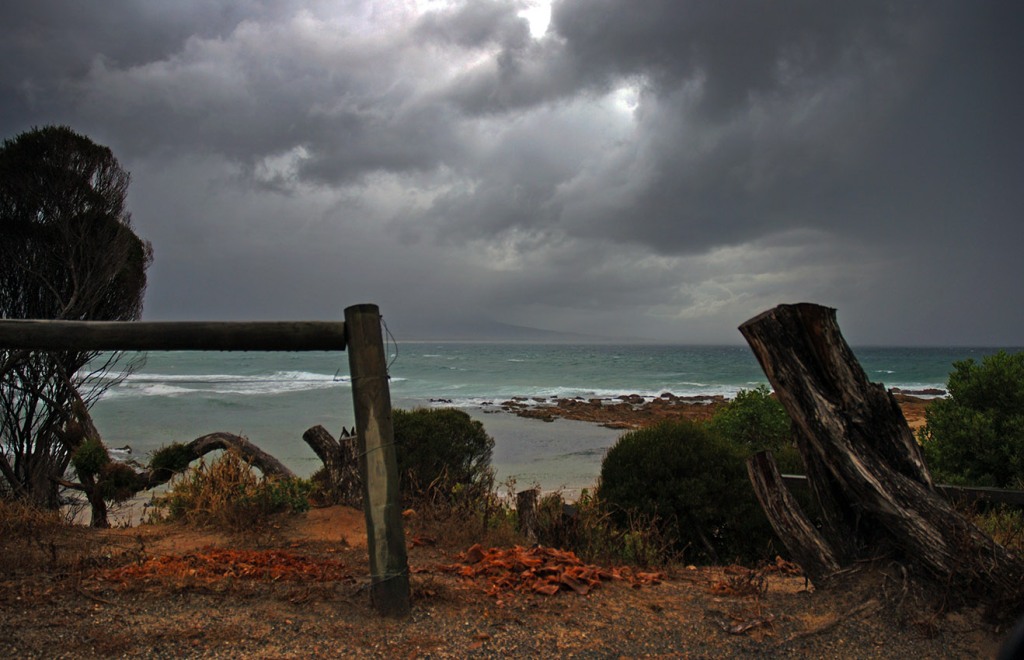
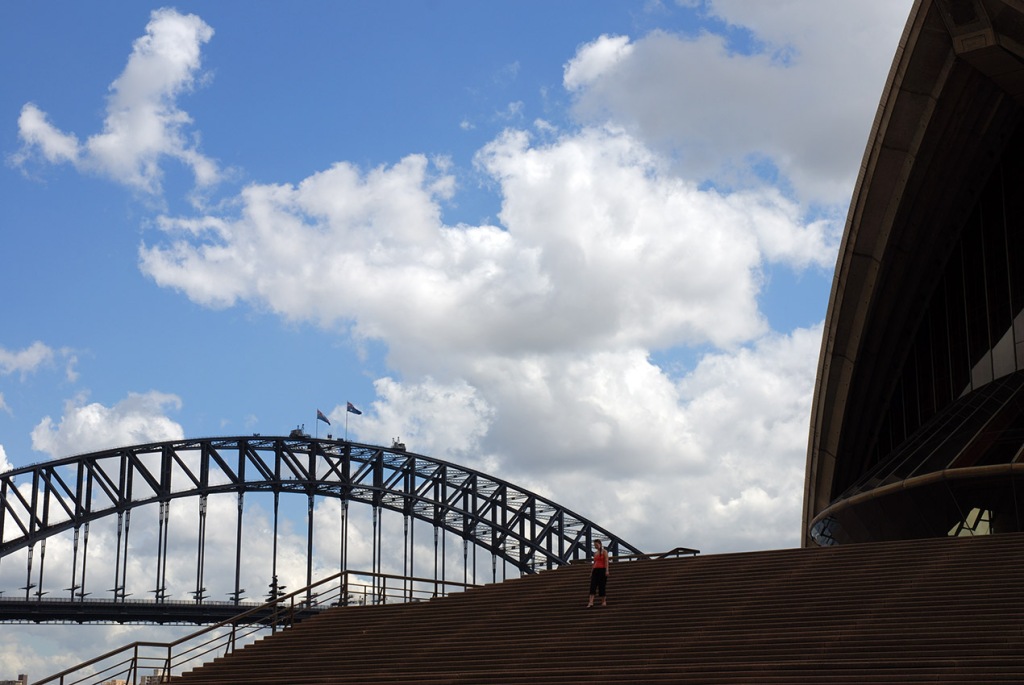
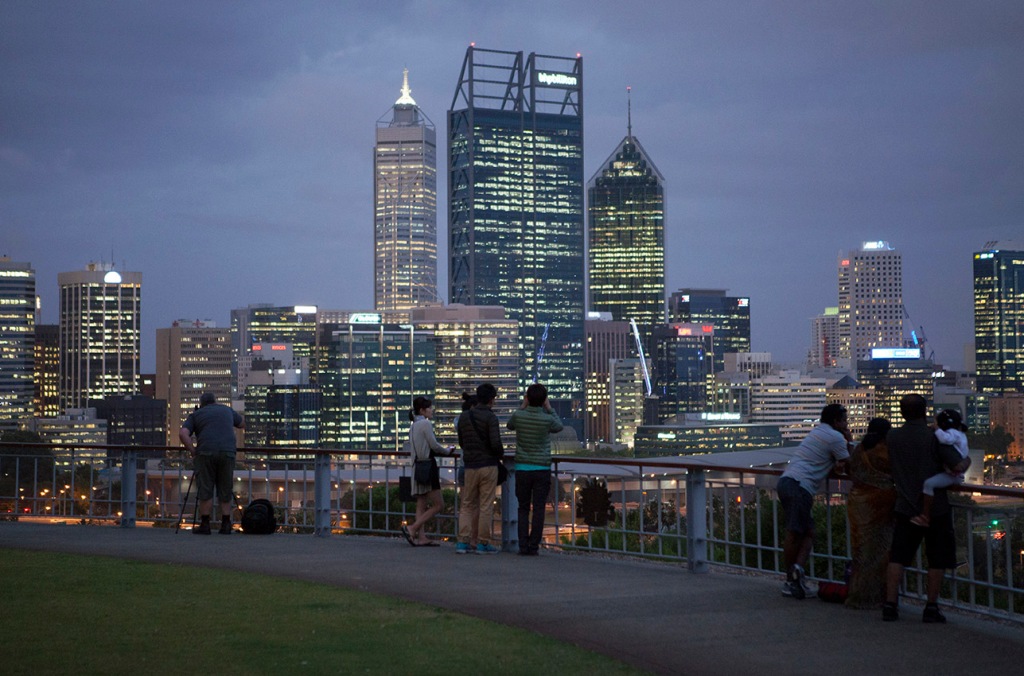
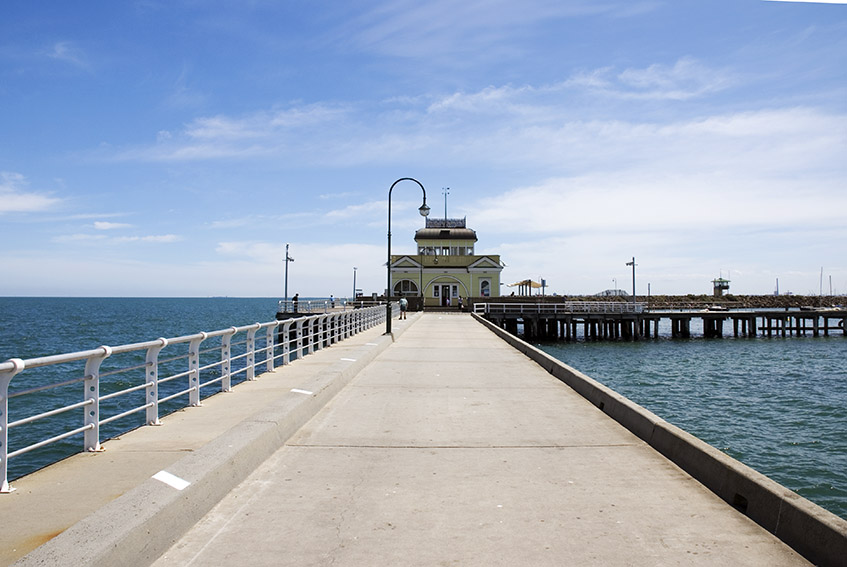
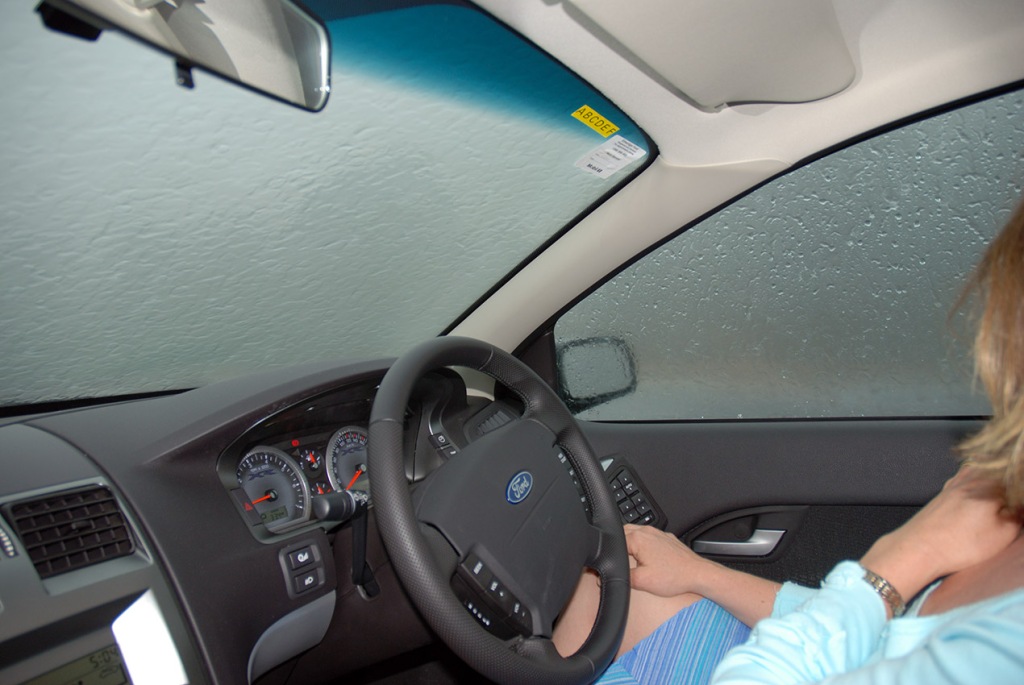
One of the things many of us can agree upon, is what a miracle of modern life long haul air travel used to be BC, especially if one was fortunate enough to travel at the front of the aircraft, when the getting to wherever, could be almost as much fun as the destinations themselves. However, nothing epitomises for me what we are missing from our lives more starkly now – from a UK perspective at least – than the current inaccessibility of the extraordinary lands of the Antipodes. Hence this offering of a series of my favourite scenes of Australia (Victoria, New South Wales and Western Australia, to be precise), which either offer longing for a return to a normal future, or images of a golden past, lost forever…who knows?

CAROB, SNAILS AND SARDINES

a postcard from a normal day in malaga…

Whenever people ask us about our commercial crops on our little Andalusian farm, we always mention olives and our almonds. Grapes were once a commercial crop for us – in the form of our Malaga-style wine – but that was many years ago. And, while it’s true we also once sold a bushel of pink grapefruit to a greengrocer in our local village, the only other crop we ever used to sell regularly was carob (algaroba in Spanish). Known as boxer in Britain, carob was best known as a chocolate substitute, especially during wartime, when supplies of the real stuff were sparse, and these days, it’s popular as candy (in the States), ground for flour, eaten as a dried fruit and made into syrups and even alcoholic drinks. But, in the 90’s it’s popularity seriously waned, and the price for the brown pods and seeds fell so low, it cost us more in diesel to get the carob to the factory than we got paid for it.

However, the emergence of veganism has seen a massive spike in the demand for carob, and a corresponding rise in its value, making it a worthwhile crop once again. And, in the event we were paid a handsome €60.00 for our modest three sacks, giving us in turn, a pleasant excuse to continue along the road, to spend our earnings – somewhat ironically – on some delicious, decidedly non-vegan Malagueño cuisine…

Adding our 50kilos (highlighted) to the mountain of carob at our local depot/factory.
Then off to Malaga to spend our not-so-hard earned pocket money – firstly on these delicious caracoles (snails) in a spicy, cumin-infused sauce (a recipe from Córdoba)...
…Then down to the beach, for a few espetos (wooden skewers) of sardines , roast against smouldering olive wood. This shot, taken through a Perspex windshield, gives the scene a slightly wobbly look!