ATACAMA – IN MAUVES AND GREENS

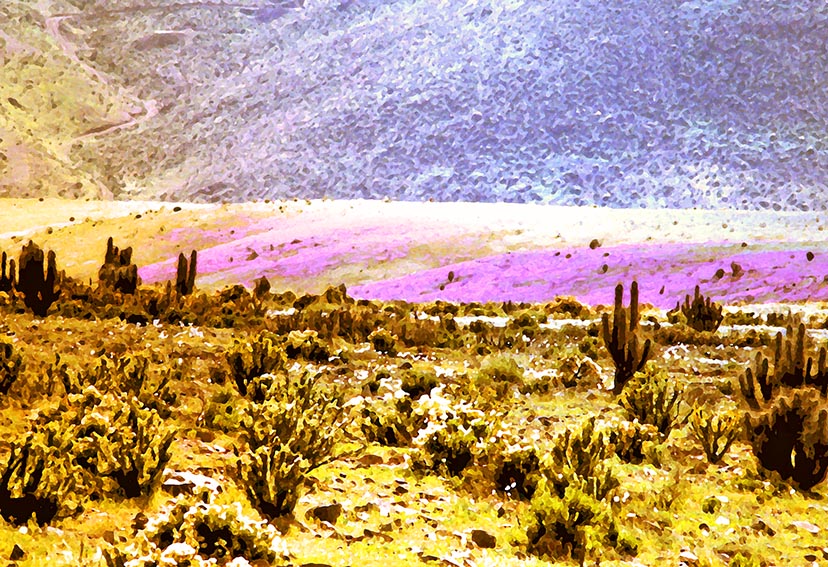
Followers of this site will already be familiar with many of the details of our remarkable trip to Chile back in 1991, just several months after the demise the Pinochet regime.

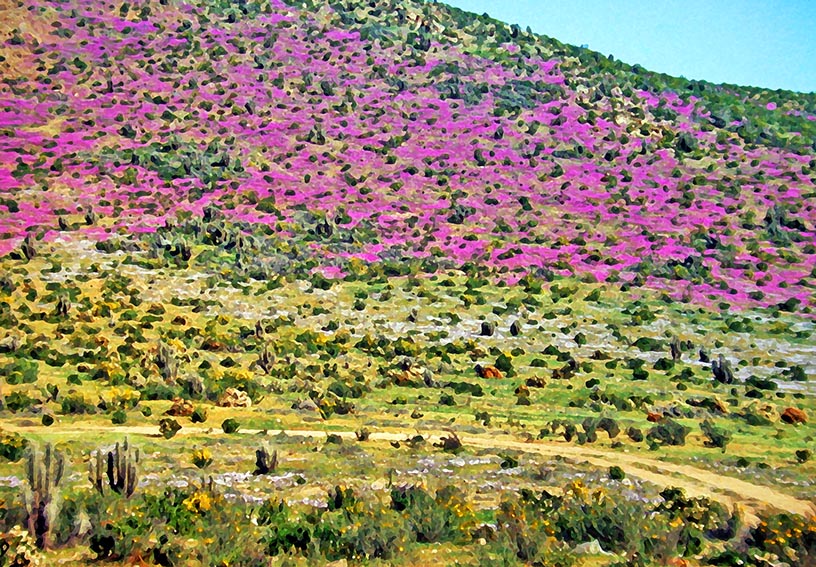
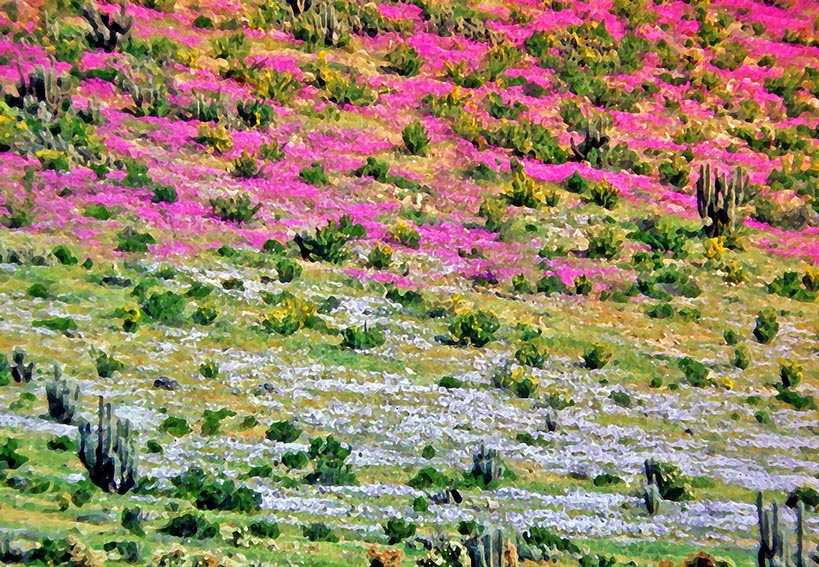
As if to mark this new era of democracy, freedom and hope, the month we arrived, the southern Atacama Desert experienced – what we were assured by the locals – were the first meaningful rains in forty years, and so, as if in celebration, exploded in a riot of colour. It was as if a vast technicolor carpet had been laid atop the normally monochromatic desert floor as every cactus, every succulent and every dormant seed erupted into vivid flower.

Even in normal circumstances Chile’s many disparate landscapes offer a  stunning smorgasbord for the visual senses, but this was simply wondrous. Rarely have we experienced, before or since, such good luck being in the right place at the right time.

The dozen or so images presented here give a taste of what we were so privileged to witness with our own eyes…

(Camera used: Nikon FE with Agfachrome film)

AN ALIEN NEW YEAR?

BELATED NEW YEAR GREETINGS…

Several eminent British space scientists have all just predicted that 2024 will be the year that the existence of extraterrestrial life is finally proved. Nothing concrete has yet been published, but murmings about distinct “biosignatures” and exoplanets detected by the Webb Telescope are apparently soon to be revealed in a British scientific paper.

I first heard these rumours the same day we picked the “alien” lemon pictured above. The tree from which the bizarre fruit comes is our oldest lemon tree (we planted it 30 years ago on the terraces of our finca in southern Spain), and while the tree has often presented us with freakish fruits – including one lemon the size of a rugby ball and weighing over a kilo (over 2lbs) – this was by far its weirdest offering to date. So weird in fact, it had me recalling the fruit bowls dotted around the sets of the (Next Generation) Enterprise, filled with wax creations of the studio props team, and how even they never dreamed up anything as odd, or indeed alien looking as our lemon.

So, with this in mind, I would like to wish all my readers – terrestrials and alien – a very happy and peaceful 2024.

YAHWEH’S ANVIL – SINAI “THE GREAT AND TERRIBLE WILDERNESS” (revisited…)

Bedu playing a form of draughts with petrified camel turds

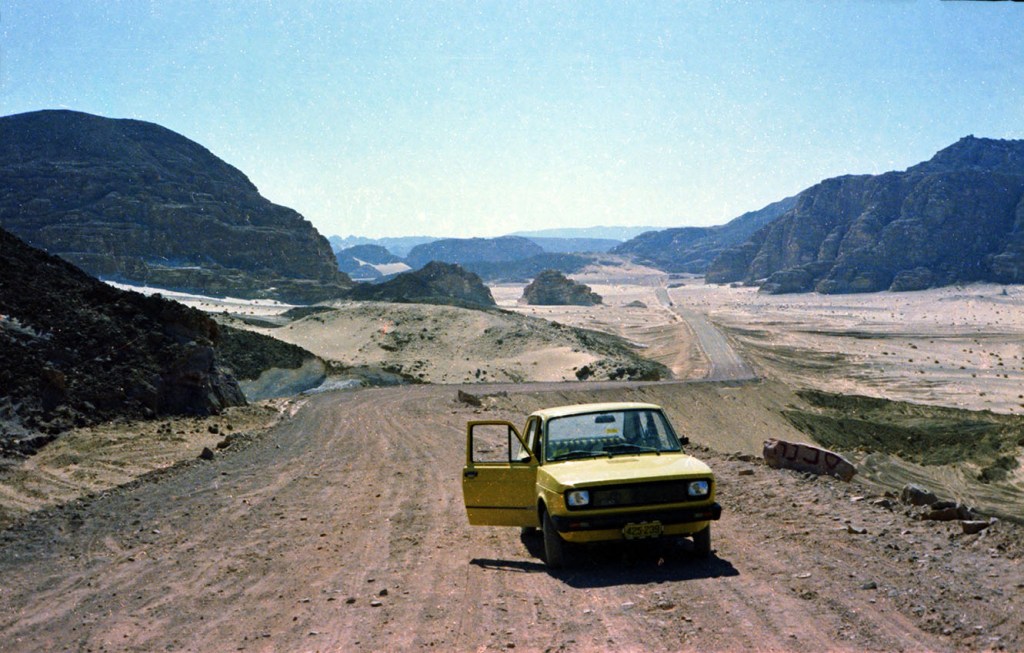
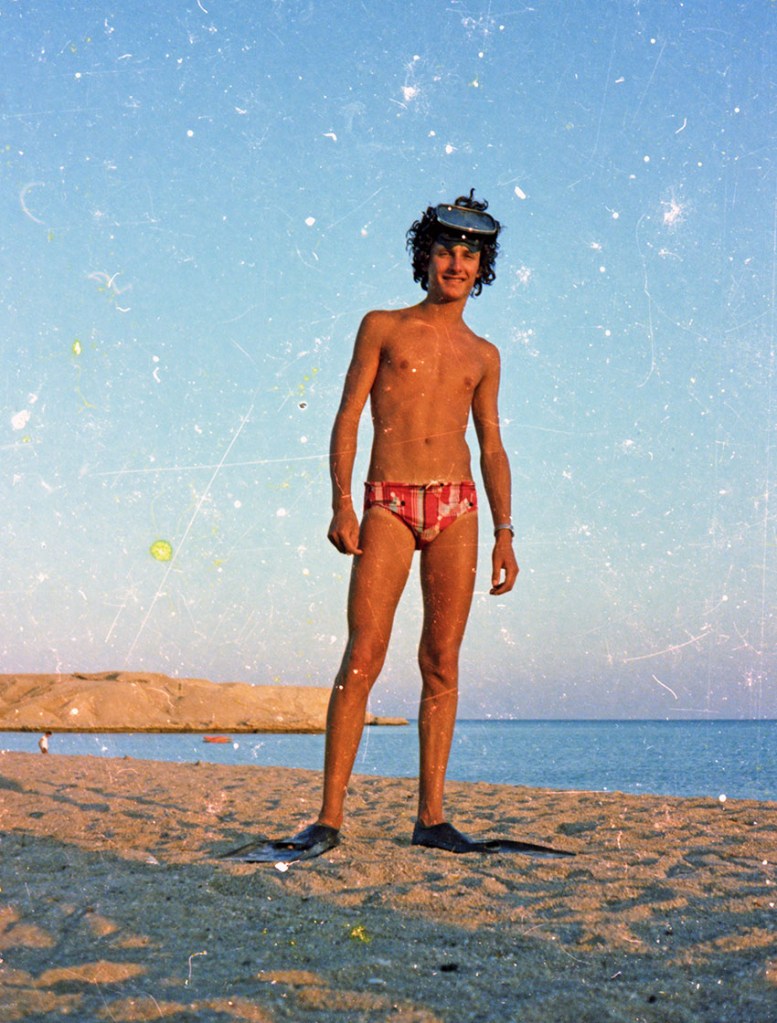
In 1978, my oldest friend Simon and I spent the summer as volunteers on a kibbutz in northern Israel. Although our labour was voluntary we were paid a weekly amount to cover basic needs such as cigarettes, booze and staples from the kibbutz general store. Fortunately, we didn’t smoke; the beer was cheap, and we were sufficiently content with the food produced in the members’ dining room that we’d spent relatively little, and by the end of the stay had a reasonable amount of money saved up. We decided to pool our savings with another couple of English guys, Tim and Ben, hire the cheapest car available (which happened to be a typical 70’s yellow Fiat 127) and drive down south to spend a week in the Sinai Desert.

Our trusty yellow “horse with no name” above the Valley of the Inscriptions

The Sinai was still under Israeli rule back then, free to roam almost all the way to the edge of the Suez Canal. Little did we appreciate then, that a uniquely peaceful era in the modern history of the Sinai was nearing its end and that we were about to enjoy privileged access to virtually the entire peninsula.

A typical scene at Nueba

These days, most travellers associate the Sinai primarily with its exotic beach resorts and scuba diving and snorkelling. And little wonder, as the peninsula is blessed with a sublime coastline both above and beneath the waves. Even now, the beach at Dahab remains the most beautiful I have ever seen, and the Sinai’s coral reef―as regards accessibility and quality―is a match for any other in the world.

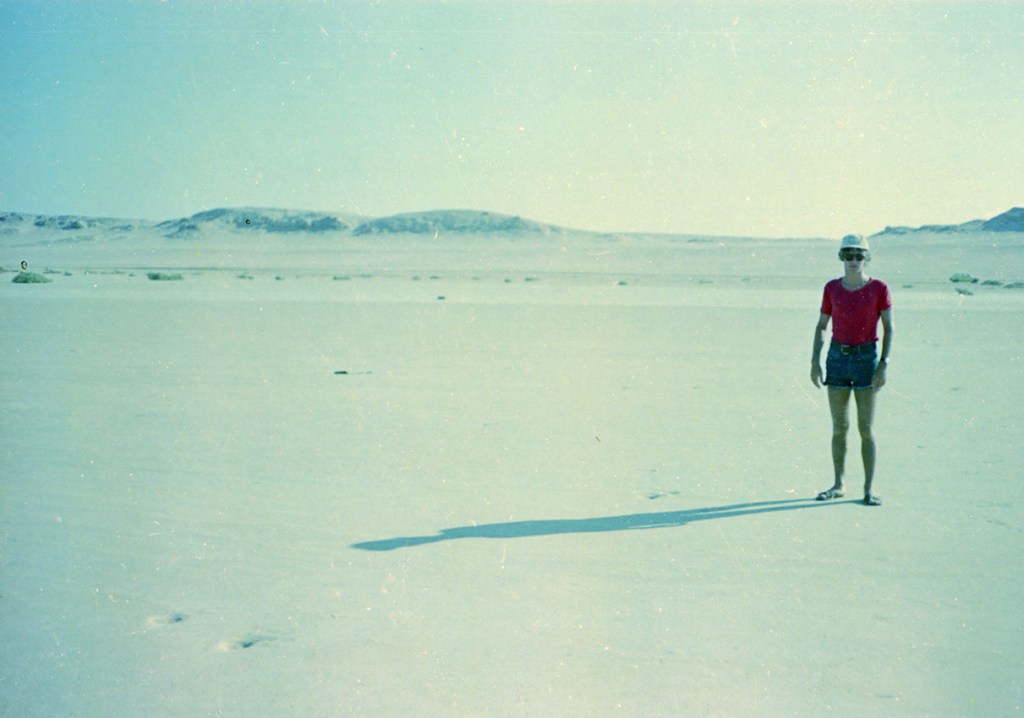
My old mate Simon, on salt flats near Ras Mohammed

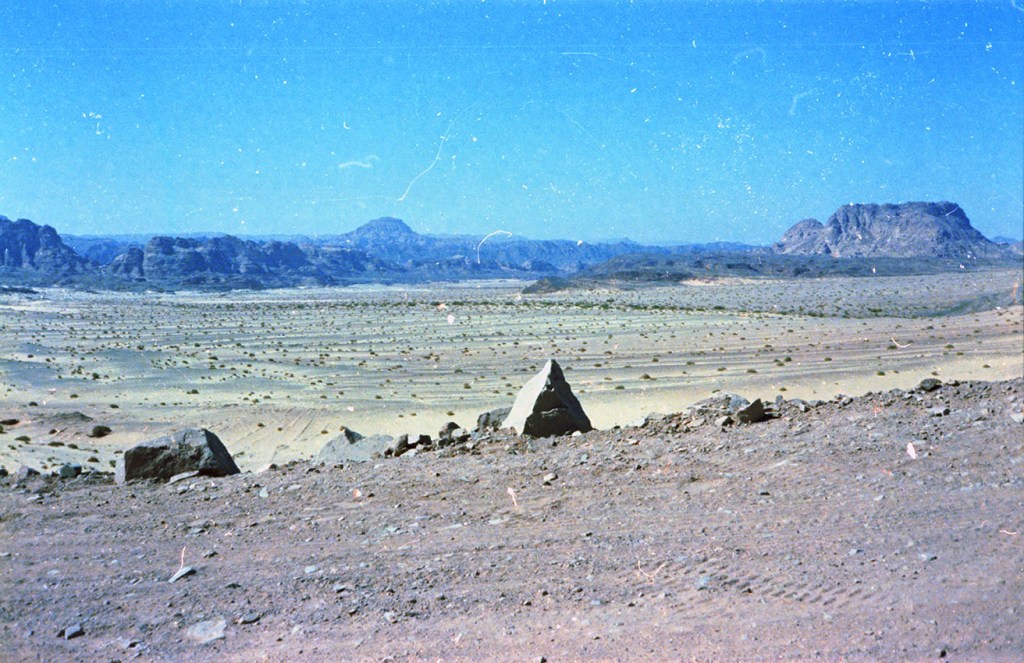
But for me, from the moment we passed through Eilat and entered the peninsula its superlative watery attractions notwithstanding, the feature which most grabbed my attention was the equally extraordinary landscape. The combination of desert plains and craggy mountains in a myriad of different colours; from white, to golden ochre through deep umbers and sienna, and culminating in blues and purples, was simply astonishing. The changing light; the chromatic sunrises; the intense sapphire of the day and the copper-tone sunsets reacted with the multi-surfaced sand and rock, presenting an optical feast of shifting tones and colouration.

The southern Sinai range erupting from the flat desert plane “like brooding granite ice bergs above a gravelly, sandy ocean…

In the south of the Sinai Peninsula in particular it was easy to see how its awesome visual dramatics gave birth to Yahweh―the eventual supreme divinity of the Israelites, and which would gradually evolve into the monotheistic Judeo-Christian concept of “God”. And funnily enough, of all the many remarkable aspects of the Sinai, the one which struck me most had an appropriately biblical reference: I recalled, even back then, the passage (Exodus 19:12) where Yahweh warns the Children of Israel not to touch the sacred mount (Mount Sinai / Horeb) “or they shall certainly die”. Until witnessing for myself the “biblical wilderness”―familiar then, only with the mountains of Europe which have nothing like defined parameters, but rather evolved from their neighbouring foothills which themselves slowly emerged from undulating plains―I had always found that to be an odd warning. I even recalled as a child in Synagogue on a Saturday morning, when first reading the relevant passage, asking my grandfather how the poor Israelites were supposed to know where the sacred mount began. But now, looking at the actual mountains of southern Sinai, thrusting forth from ironing-board-flat plains like brooding icebergs above a gravelly, sandy ocean, I could immediately attest to the voracity of the biblical author’s knowledge of the geography he was describing. And it sent a shiver down my spine.

Snorkelling off the southern Sinai coast was beautiful and awesome in equal measure…

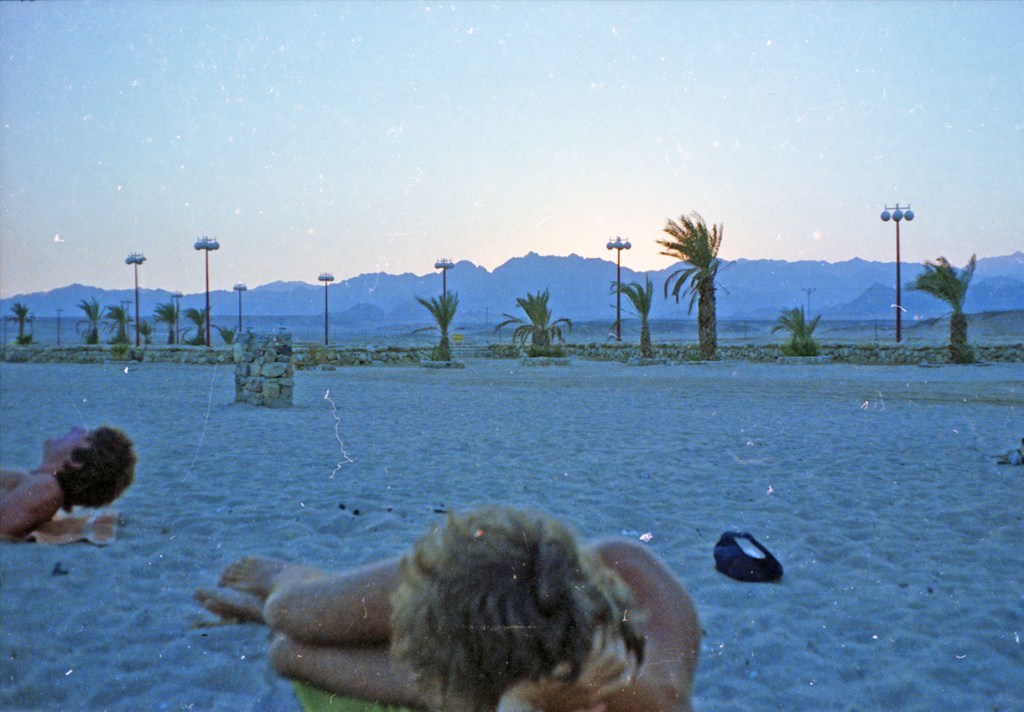
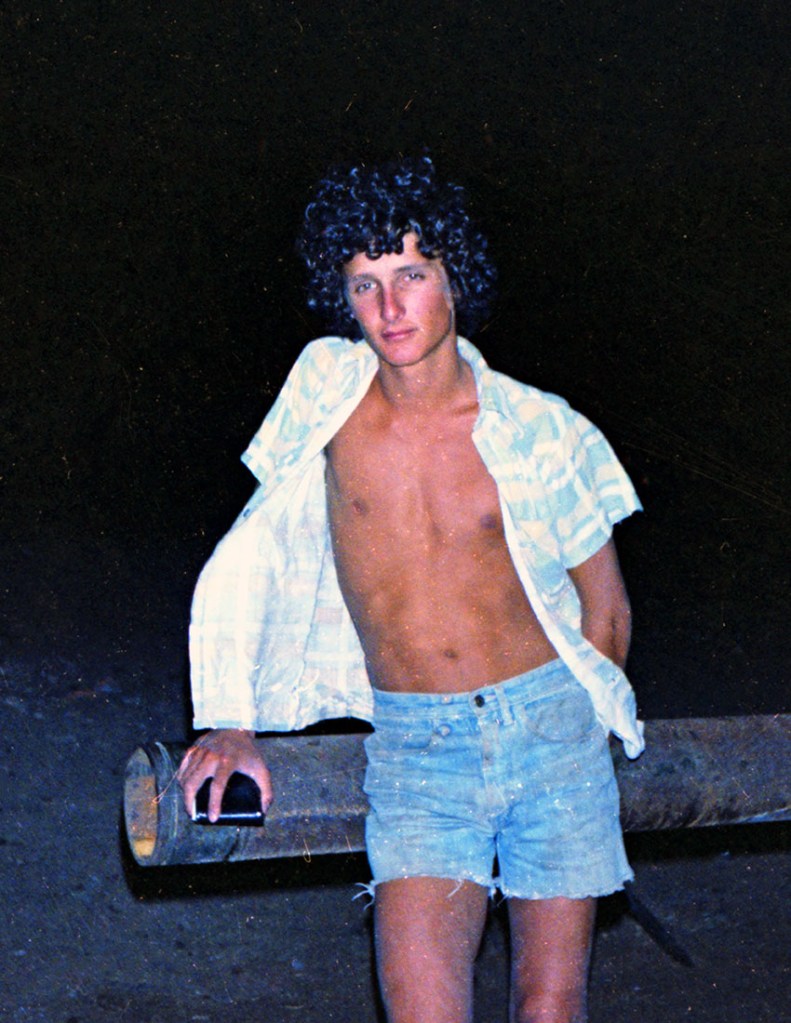
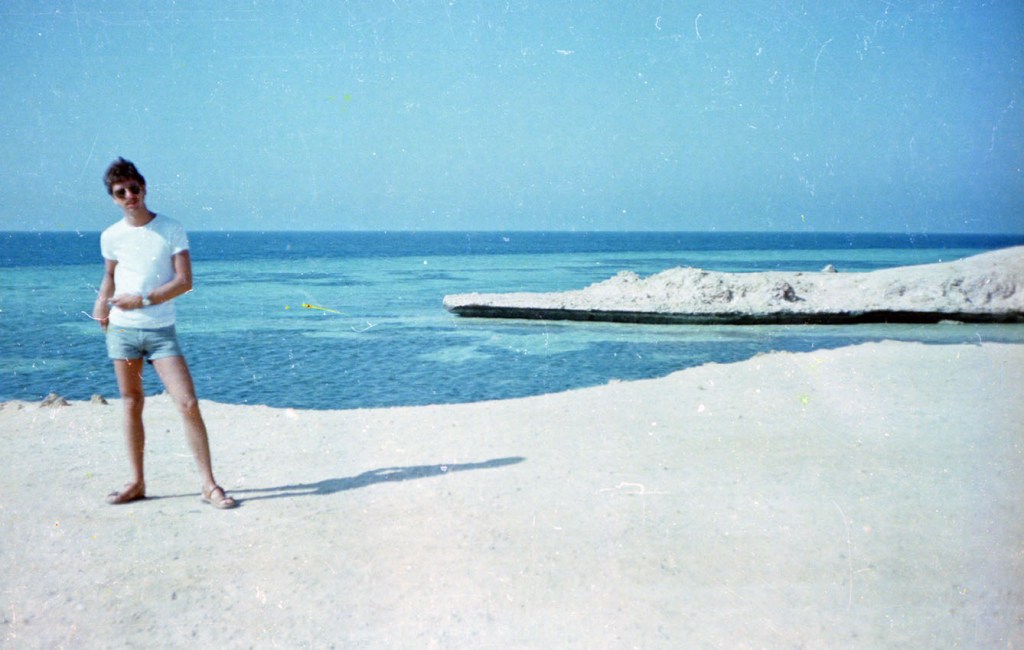
Presented here are a handful of the dozens of photos I took on that trip with my old Cannonet 28 on high-speed Ektachrome film. Sadly, most of the transparencies were too damaged to convert, but I think these few, in their raw, scratched and grainy condition, begin to convey to sheer wonder of what we saw on that wonderful trip to that “great and terrible wilderness”.

Finally, and on a lighter note, I recommend viewing these images to the sound of America and their iconic track The Horse With No Name . This song became a kind of unofficial anthem to our trip, and thus the adoptive name of our trusty little Fiat…

The exquisite beach at Dahab.

BEAUTY IN DRAB PLACES

and if vermeer had USED an iphone…

In my previous post I described several instances of discovering wonderful food in the plainest of locations, and since I published that piece, I have also discovered human beauty in an unexpected location.

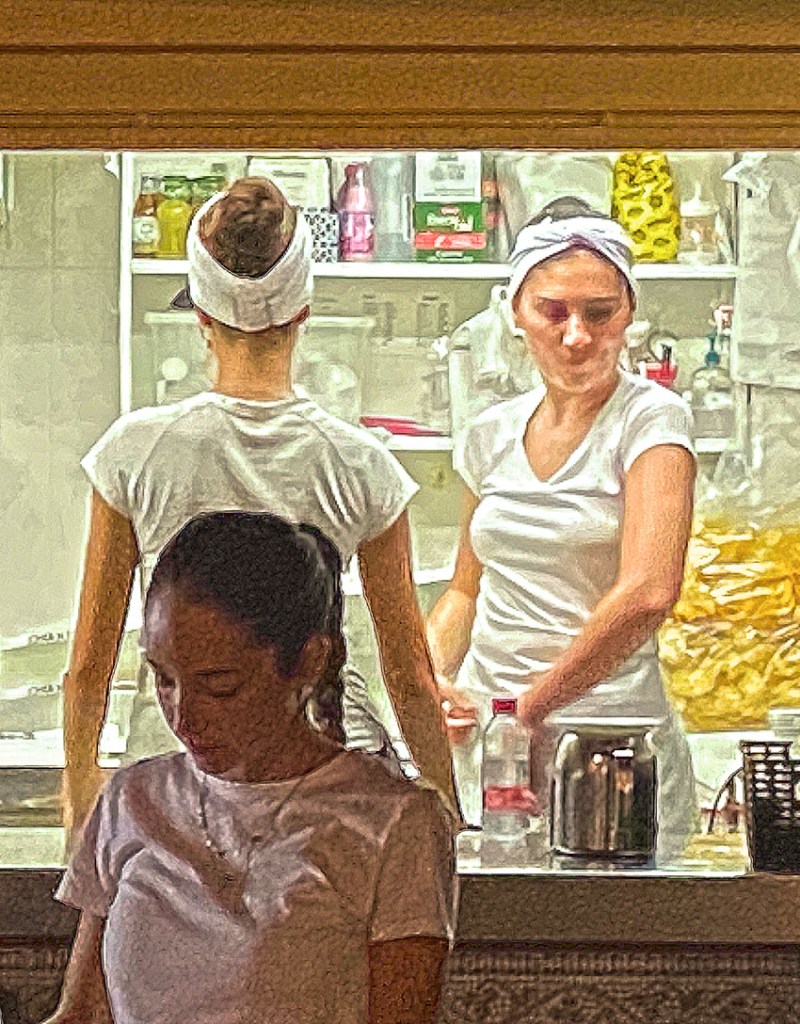
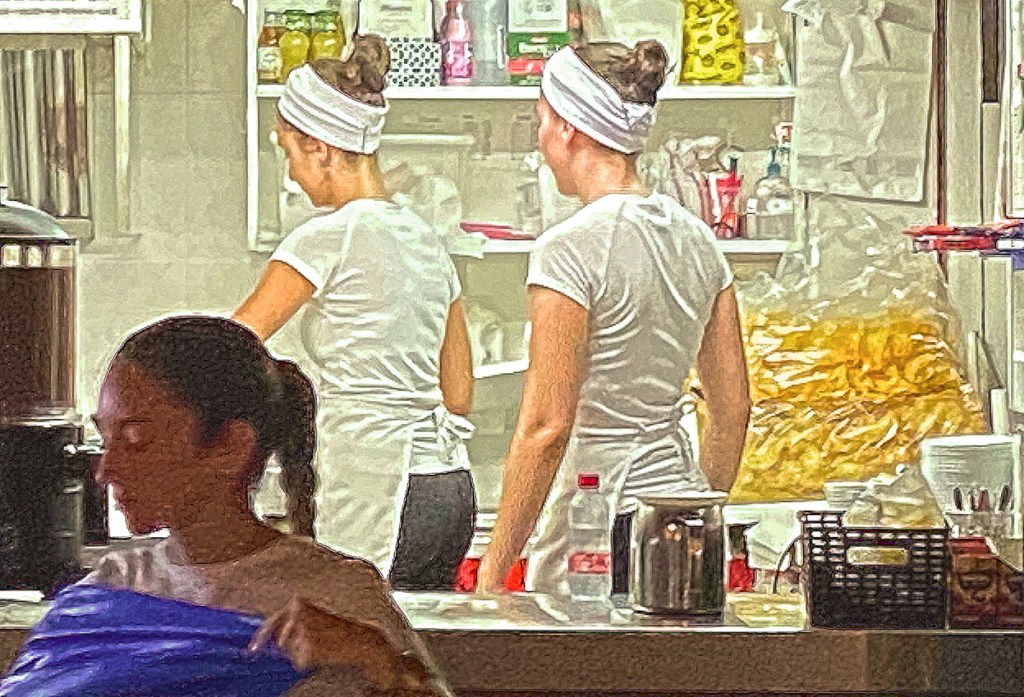
It happened in Almuñécar, a seaside town on the Granada coast. We were there for the annual “Jazz en la Costa” music festival, when we were enjoying a late post concert beer at an all-night churreria and crisp (chip) frying shack on the beach.

Dido, our friend Pepa and I were feeling a bit down having just witnessed a hugely disappointing performance by the legendary jazz pianist, Abdullah Ibrahim. Unfortunately the elder statesman of South African jazz had a very bad night indeed, constantly hitting off-notes and missing his queues. And that, compounded by the hapless attempts of his sax and double bass accompaniasts to occasionally play jazz riffs on piccolo and cello respectively! So embarrassingly awful was the performance, that we upped and left early to seek solace in some liquid refreshment, and so found ourselves at the churreria.

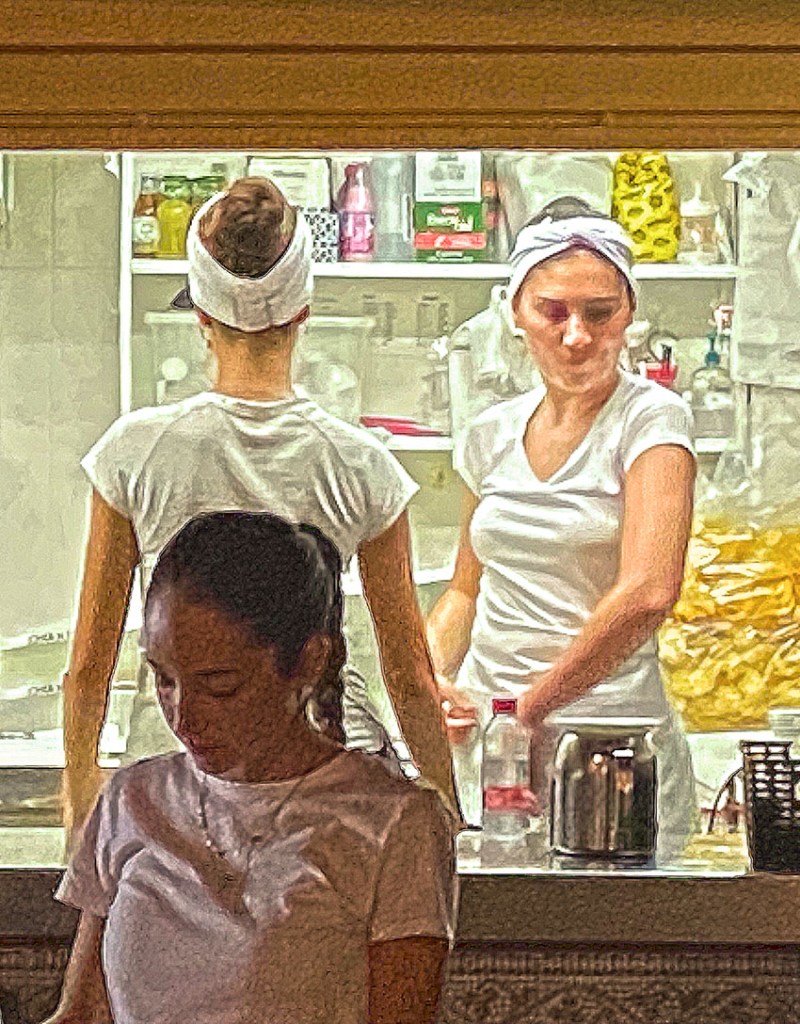
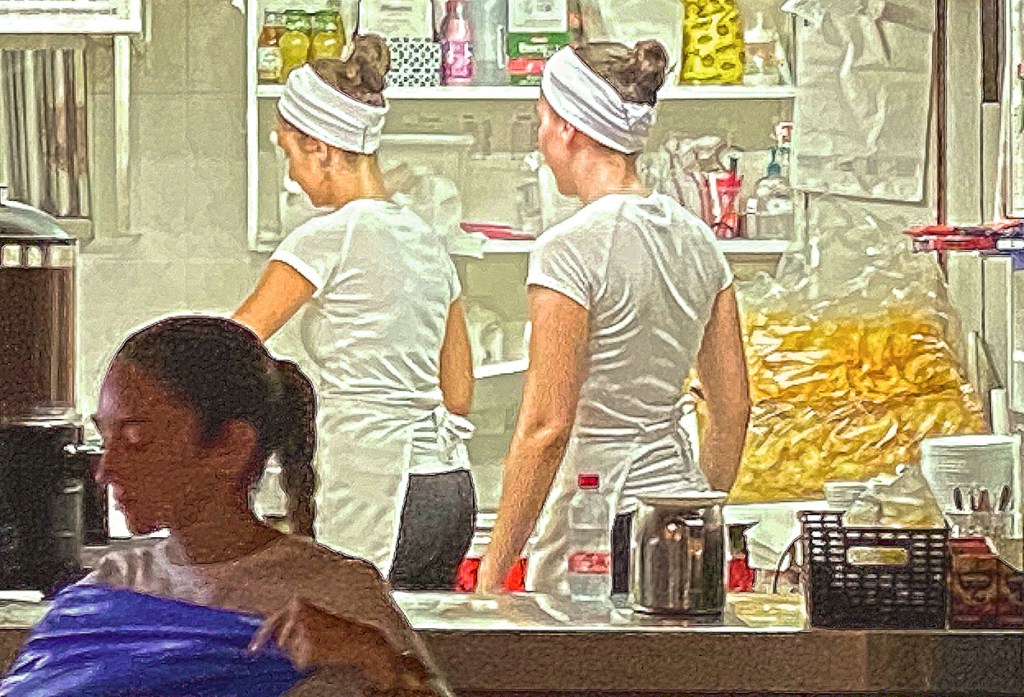
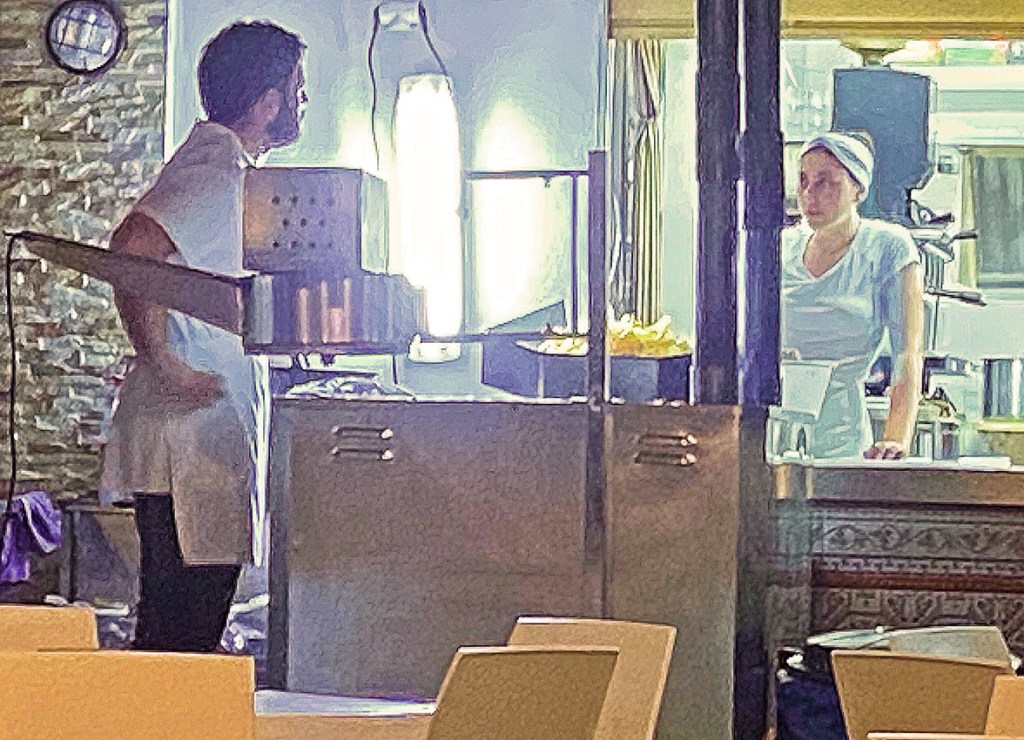
Within seconds of sitting down at the table I became captivated by a scene of such elegant industry and confident movement, the recent memory of Mr Ibrahim’s faltering piano playing drifted away on the Mediterranean night breeze.

These images are my photoshopped fun attempt to turn a few hastily snapped iPhone photos of that effortlessly stylish scene into a modern-day Vermeer-esque tableau. I hope they please…

BURGER BLISS IN BARMEDMAN*

AND OTHER MEMORABLE MEALS IN FORGETTABLE PLACES…

Francophones have long understood the difference between a hearty gourmand and a fastidious gourmet, and their two sharply distinct gastronomic philosophies – the first being a love of all good food (and all good drink), and the latter, a love of the refinement of good food (and good drink). These days, the closest Anglophone equivalent would be “foodie” versus “trencherman” or “trencherwoman”.

As someone who both used to eat regularly in Michelin starred restaurants (including many 3-star establishments), and who makes wine I am often presumed to fall into the “foodie” camp. Yet, while it’s certainly true that I found many of those fine dining experiences highly enjoyable, none of them provided me with unforgettable plates of food. Quite the opposite in the majority of cases, when the theatre of the experience, and the food’s appearance was deemed far more important than what the stuff plated up actually tasted like.

While the advent of Nouvelle Cuisine began my disillusionment with “fine dining”, the arrival of its evil twin-spawn, “molecular gastronomy” and “New Nordic” killed off any lingering affection I had for the concept of haute cuisine. Although, in fairness, the few such up-scale dining experiences I was unable to avoid were incredibly memorable – albeit, for their smug, and aloof awfulness. These days, the minute I see a self-consciously-ernest chef wielding a pair of tweezers I’m outa there quicker than spittle on a red-hot skillet. Ironic really, that the Nordics of all people, should have created the gastronomic equivalent of the emperor’s new clothes. Hans Christian Anderson, being the devout trencherman he was must be turning in his grave.

The reason I mention all of the above, is because I was asked the other day by an old friend to name the best meals from all my years of travel? Then, as I began running through the half dozen or so plates of food that immediately sprung to mind, he and I noticed that not one of them had been served up at a posh restaurant. On the contrary, each and every item was as simple and basic as the eatery in which it had been prepared. So surprised was my old mate by my list, he suggested I devote a post to it, and hence this, which if nothing else, and despite a touch of self-indulgence, might help convince one or two people, especially in these financially stretched times, to look for their culinary treats in good, honest, modest establishments, where flavour and quality is everything.

Wild rabbit stewed with prunes and red wine: Driving down from Catalonia to the south of Spain, we stopped at lunchtime at an empty and drearily decorated cafe-type place – pealing linoleum floor, steel counters and flickering fluorescent strip lights near Gerri de la Sal. Seeing only things like egg, chorizo and chips on the grease-smeared laminated menu, I asked the apparently depressed girl serving us if there was anything else to eat? She said that her father had shot a rabbit that morning and that it had been stewing all day in a “nice gravy”. It was my first ever taste of rabbit of any variety, and it, and the red wine gravy, generously populated with large, juicy prunes was simply exquisite. It remains the best lunch I have ever eaten – anywhere: Price, with a glass of local red; about €4.00 in today’s money.

Samosa chaat: During our trip to southern India, we were based in the industrial city of Coimbatore in Tamil Nadu, where Dido was helping set up an autism clinic. One day, while Dido was working, the son of our host took me shopping for “authentic tailor made” “Pierre Cardin” shirts. While the three shirts were being made up we went for lunch at a highly recommended near-by street-food cafe. It was suggested that I try the samosa chaat, which I presumed would be a typical, potato and pea filled pasty with an accompanying bowl of chickpea chhole (stew). But while I was correct about the constituent parts of my lunch, I could never have guessed that the samosa would be broken up and mashed into the chhole, and then eaten scooped up with a couple of fresh chapatis. It was a flavour/texture revelation, and easily the tastiest thing I ate in all our time in India – and boy, that’s really saying something. I washed it down with a bottle of King Fisher lager (a very different and much better beer in India than the swill brewed under license in the UK): Price, about 50 pence, in UK money.

Penne pomodoro: I can’t be the only person to have found that in general, pasta (and pizza) is always better when eaten in Italy. While there might be an element of the truism in this claim, it is certainly true that the only two memorable pasta meals I enjoyed were both eaten in that country. While one was merely the excellence expected from a tagliatelle a la Bolognaise served in a Bologna osteria, the other was something surprising as it was inexplicable. As the main dish element of a set lunch in a lorry stop outside Piacenza we were served deep bowls of penne coated in a tomato sauce (made from freshly skinned and crushed tomatoes), sprinkled with the usual parmesan and black pepper. Neither Dido nor I could tell you quite why, but this remains the single plate of food we first remember as a couple (Dido did not eat the rabbit mentioned above). All I can say, is that it exemplified why so many Italians are happy to dine on such simple food on a daily basis. It was taste and texture in perfect harmony: Total cost of menu, with as much local red sfusi as we liked about €4 each.

Fried chicken with slaw: Swap fermata del camion for truck stop gas station diner, and northern Italy for south east Missouri and imagine a plate of such perfect fried chicken that I found myself chewing on the bones themselves. And to accompany this with a freshly made, tangy and sweet, crunchy slaw, washed down with an ice cold diet Coke, was for me at least, as close to every-day American food heaven as it’s possible to achieve. Tragically, we can’t remember the name of the diner or its exact location, except that it was about an hour south of St. Louis on Route 67. If anyone reading this has an idea where we experienced this poultry perfection, I would be keen to record it: Price for one, about $12.00.

Ham sandwich: I acquired severe flying phobia in my mid-20’s and it lasted about 10 years (long story). As luck would have it, this coincided with our move down to southern Spain, which meant that from 1993 until about 1997 whenever we needed to get back to England we had to drive. The good side of this was that we got to eat lots of lunches and suppers on the roads of France and Spain, including some pretty amazing plates of food – a particular portion of sauteed calves liver in France, and grilled quail in Spain spring to mind. But, by far the most memorable thing we ate was for breakfast, at a rough and ready cafe/bar, in a small town just south of Amiens. We had caught the very early morning ferry and had eaten nothing since leaving London about five hours earlier, so it is possible that extreme hunger played its part in our response to what remains the best meat sandwich we ever ate. Our normal road trip breakfast in France was simply a plain croissant with a cafe au lait. But the large, moustachioed proprietor of this humble bar – drawn straight from the pages of Asterix – was having none of that. We did get our coffees, but with them he put on the little table two sandwiches, comprising long sections of a broad super-sized home-baked baguette, still warm from the oven, encasing thick, unctuous slathers of moist cooked ham, dressed with about half a packet of locally made Normandy butter each, and lashings of Dijon mustard. My mouth is watering even now with the memory. Our constant smiles while eating these enormous slabs of, soft, chewy, yielding, savoury heaven, were as broad as the loaves themselves. Truly, the equal of anything either of us had in all our hundreds of meals in France: Price for two, with coffee, about €6.

Hamburger: Dido and I went to Australia three times for her work in the early 2000’s, and always made sure to find time for some road travel. On one such drive we were travelling around the wine country west of Sydney in New South Wales, when the hunger pangs began, and we agreed to stop at the first place we came to. This turned out to be a another truck stop (something of a theme developing here) in a small ex-mining town (actually referred to as village by the locals) called Barmedman. The diner was almost as vast inside as the lorry park was outside, and just as bleak – all formica, steel and the ubiquitous strip lighting. So, when we saw the poster, above the grill with the boast, in huge red letters, “BEST BURGERS IN AUSTRALIA”, we remained dubious. However, Dido decided to take up the challenge and ordered the most basic beef burger on offer, while I went with that day’s special – a lasagna. We were surprised when the very friendly lady doing the cooking asked Dido how she wanted the burger cooked, and thus confirming that the patties were home made. Dido asked for it to be medium-rare. My lasagna was as acceptable as it was unremarkable, but Dido’s burger was a masterpiece of the genre. Again, as with the penne above, hard to explain in words exactly why? Perhaps the typically excellent Aussie beef (as good as any on the planet) – prime chuck, hand chopped and formed, and simply seasoned (no egg, rusk, filler or flavourings); the light charing from the grill; the quality cheddar slice, perfectly melted, and the sweet tomato, red onion and crunchy, lettuce trimmings; and also the bun itself – soft on the inside but with a just firm enough crust to retain its integrity from first to final bite. Fortunately for me, the burger was as big as it was delicious, so I got to eat that final bite, plus some more besides. Pure burger bliss: Price with fries and a soft drink, around A$ 8.00.

Close runners up to all of the above are equally uncomplicated, and would include the likes of just about any felafel I ate at the old Tel Aviv main bus station; and a grilled fillet steak accompanied by a bottle of Penfolds Grange (greatest “Rhone” made outside of France and one of the very few wines worth splashing out more than £50 on) in the Qantas First lounge restaurant at Melbourne Airport – certainly the best “free” meal I ever had.

In any event, I hope this piece finally settles my status as a trencherman, and not a foodie. Friends, please take note!

*Header photo is an old-school selfie taken at the Barmedman truck stop while waiting for our meal.

POSTCARDS FROM LJUBLJANA

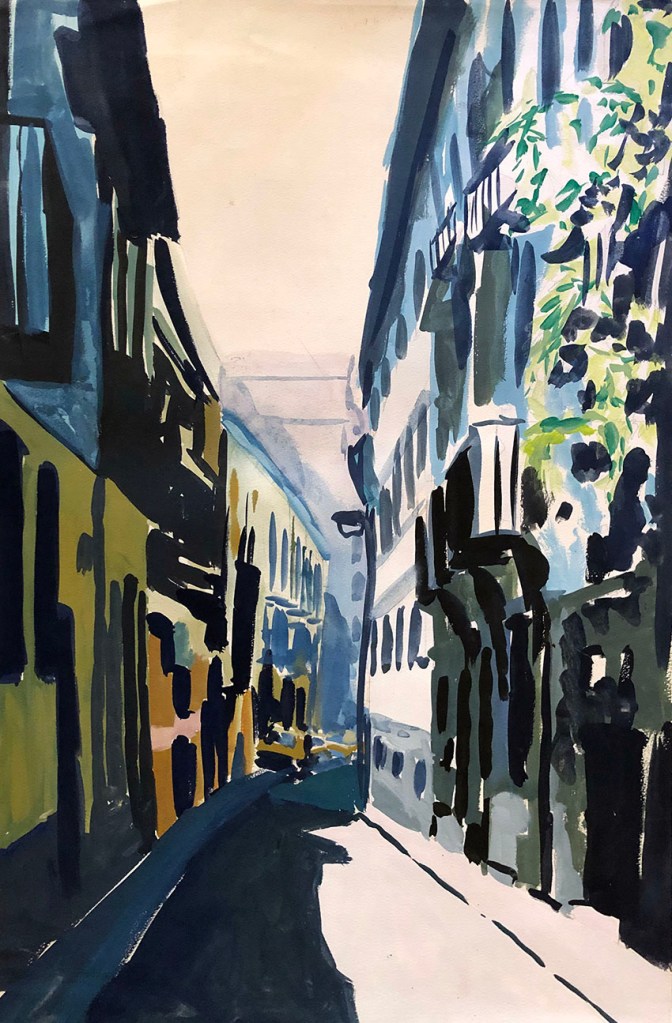
a series of virtual guaches from slovenia’s delightful capital city

It’s been a long time since I presented a simple pictorial travelogue on this site, but it seems best in this case to let the images do the talking. All I will add, is that it would be hard to find a more pleasant city break, or long weekend destination, complete with fabulous local wines and excellent cuisine (Italian-cum-Balkan-cum-Austro-Hungarian). And all at a reasonable price. Refreshing and surprising (at least to me) in equal measure…

PARALLEL TURNS AND COMIC TURNS

A long, long time ago, before all of our spare physical energy and free time became dominated by farm work, we used to spend a week or two every year skiing, normally somewhere in the Alps…

While I began going on winter sports holidays from a very young age, Dido, for contractual reasons (to avoid injury) was only able to start skiing after she retired from the ballet; which was highly ironic, seeing as she was forced to give up her professional career due to an injury she acquired dancing at Covent Garden…

Another irony was that our final skiing holiday was in the Spanish Pyrenees, at the culmination of the trip we made to find our finca in southern Spain, the very finca that would put an end to our skiing adventures…

While in the early years we missed the thrills and spills, the adrenaline rush of schussing down the pistes, the spectacular Alpine scenery, and the fun apres-ski, gradually, the process of building up our little farm offered even more feelings of pleasure and accomplishment…

However, as my seemingly never-ending trawl through my old artwork continues, I’ve recently rediscovered a pile of cartoons I did as a 12 and 13-year-old boy, on one or two of my very earliest ski-trips, and which brought amusing winter memories flooding back…

Given the timeframe, it’s obvious why ski-school seems to be the dominant theme…

Although we skiid in Switzerland, Austria, France and even Greece, we eventually fell in love with the north-Italian resort of Courmayeur and returned there numerous times…

One or two readers of this piece might even recognize my depictions of them in these cartoons, and if so, I hope their memories are as happy as my own…

“SPAIN ‘URTS”

BLOOD, SWEAT AND TOIL IN THE AXARQUIA*

Having just returned from another fortnight stint working our finca in the Axarquian mountains, sporting our latest collection of cuts, bruises and aching muscles, I was reminded of the wise words that head this post, uttered by the late lamented Fred, an early, fellow British, expatriate neighbour.

A neighbour proudly showing off the succulent fruits of his labours…Moscatel grape has been grown in the area since the time of the Phoenician settlers, and used for both raisins and sweet, strong wine. The grape constitutes the main ingredient of Malaga wine (which predates Sherry by many centuries), and was hugely popular across the Europe of the Elizabethan age.

Fred, a taciturn Yorkshireman, when he did offer his rare nuggets of wisdom, had an uncanny way of getting right to the heart of the matter under discussion, and never were his few words wiser or truer than when he coined the now famous phrase (famous in our neighbourhood at least!), “Spain ‘urts”.

What many tourists and visitors to the region might not appreciate, in awe as they are of the stunning landscape of Andalucía, is that the agricultural land itself is mostly rocky, jagged, prickly and generally unforgiving for those who have to work it. Moreover, while the soil is often fertile, it is a fecundity requiring arduous effort to extract, and if Andalucía in general, is hard country to farm, then the mountainous slopes of the Axarquia often verge on the impossible.

A man trudges back to his finca with a snack for his mule…There were few metalled roads in 1993, and most campesinos used mules and donkeys, for both transportation and ploughing their land.

This is why most of the agriculture of the region was for centuries, the exclusive domain of those both sufficiently hardy, and expediently motivated – or, in other words, the local peasant citizenry of the dozens of pueblos blancos (white villages) which dot the countryside like so many bleached apiaries. And like bees, these small, tough, resourceful workers would leave their village hives for the summer months and move into their finca homes, to tend their vines, pick their crops of grapes and nuts, dry their raisins, and finally, before returning to their pueblos, make their strong, sweet, fortifying mountain sacs.

A goatherd takes a rest…Goats and sheep, and their keepers were a mixed blessing in the campo; while providing good cheese and excellent meat they could be incredibly destructive if not guarded carefully, forcing many of us to reluctantly fence off our land.

Finca’s (privately owned small farms, or small-holdings) are dotted across the countryside in a seemingly random and chaotic, ill-fitting jigsaw of orchards and vineyards, that reflects the interminable division of parcels down the generations, from fathers to sons and mothers to daughters. In 1991, when we (and Fred) moved to the area, fincas were still a major source of self-employment and income for much of the Spanish agrarian working class, and being a “bueno campesino” (a good peasant farmer) earned one a measure of respect within the tight-knit pueblo communities.

But as Fred implied, this might have been an honourable life, but it was also painful and unforgiving. Hence, and quite understandably, as Spain softened and modernised, the attraction of the “campo life” dramatically decreased for the children of the pueblos whose gaze strayed hungrily to the newly flourishing cities and towns, with their universities, and their opportunities of well-paid work and rewarding careers.

Our neighbour “Curro” – not only a fine and proud campesino, but also a skilled ploughman.

This changing demographic is nowhere more starkly illustrated than in our own locality, where the vineyards, raisin-drying beds and almond groves are steadily disappearing, and the old finca cottages are either left to crumble back into the landscape from which they emerged, or are converted into tourist b&bs. Dido and I, together with an aging and dwindling generation of mostly 60-somethings are rapidly manifesting as living relics, as we continue to brave the constant cuts and bruises, the back-breaking tending of vines and trees, wasp stings, and extremes of weather (hot and cold, dry and wet).

What happens when we are all gone is already being mapped out, as the valleys, and easier lower slopes, are all being transformed into fashionable, low maintenance and lucrative plantations of avocado and mango. (The fact that these new “super crops” require hugely greater volumes of water to flourish than the traditional crops and that they are a disaster waiting to happen, is whole other story…)

My drawings of campesinos displayed here were done during our first summer at our new home, in 1993, and are a reminder of how things used to be, when Spain (at least our part of Spain) really ‘urt…

“Old Juan” – another neighbour, and typically long-lived. It’s interesting to note that our local village is full of noctogarians like Juan, who swear by their daily shot of brandy or anis at breakfast, and a glass or three of their own wine in the evening. Other factors, such as their active lifestyles and diets must also be taken into account. In common with all Iberians, our locals are fanatics for fresh fish, with inexpensive anchovies and squid (brought up daily to the villages by mobile fish mongers) being central to their daily diets. This, in conjunction with the fact that meat consumption was often confined to what people grew themselves – the family pig, rabbits and chickens, always accompanied by mountains of their homegrown vegetables and legumes which must also contribute to their general longevity.
  • Header photo is a panoramic view of the campo as viewed from our finca – looking south-east – in 1993.

NYE MEMORIES

32 YEARS ON…

Dido and I met on New years Day 1989, and two years later, considering my appaling memory for cellebratory dates, we decided to get married on New Year’s Eve, to ensure I would never forget our anniversary. So far, thank goodness, it’s worked, and so today, I remember fondly, that at about noon Gibraltar time we will have been wed for 32 years (our lapis lazuli wedding no less – who knew?).

This post is really by way of a Happy New Year greetings card to all our family and friends, and any other readers of these pages.

Let’s all hope that 2023 passes and ends better than 2022 and provides us all with joyous memories to rival those displayed here!

We had a small, civil wedding at Marylebone Town Hall (in the West End of London – famous for celebrity weddings) with just my mum (in turquoise), Dido’s parents (her father taking this photo) and our dog Aura in attendance. Given our two years of being together, Dido opted for a dark blue wedding!
Following a light pub lunch with the parents, Dido and I watched a video of Cassablanca (our favourite film) over a bottle of fine champaigne before heading to a half-decent nearby french restaurant for our celebratory supper with a small group of friends and family. Being New Year’s Eve, things got pretty rioutous, and this is where we learned that Beaumes de Venise is not suitable for quenching table fires…
The gorgeous bride…
Still just about compos mentis. Little if any sleep was had that night, as we had an early morning ferry to catch from Dover to drive to our two-night honneymoon at a romantic chateau hotel in northern France. A week later, and fully recovered, we gave a reception to all our friends and family at our home in London. Golden, if slightly hazy memories…

Hamilton – the Nudical…

A real-life “Carry on Camping

Regular and long-term readers of this blog might remember a post I did a few years ago about my wife Dido’s part-time career as a model, and in particular, her role as the National Savings girl. Her modeling work coincided with her then-main career as a classical ballerina – a subject I have also covered at some length on these pages.

However, there are a couple of interesting and amusing facts and anecdotes related to Dido’s modeling which I omitted to mention previously.

This shot was used for the National Savings calander

Firstly; the fact that she fell into modeling accidently, when spotted and then approached on a street in Barons Court (in west London – near the Royal ballet School) by an advertising agency scout. And secondly; the resulting story behind perhaps Dido’s most high-profile photographic shoots, also for National Savings, in the naturist colony of Cap D’Adge in the South of France.

In truth, the story of Dido’s time in the colony is as much farcical as amusing , stemming from the fact that her employers at Dorland (the agency then working for UK National Savings) were unaware of the fact that they had sent her to a nudist village for the shoot.

We believe this was the picture used for the “People Like Me” series of National Savings posters and ads…

Dido’s blissful ignorance of her impending sartorial dilemma was soon disabused when she entered the establishment by several welcoming scenes, none more surprising than being greeted by the photographer himself “déshabillé”.

One might have thought that the fact the photographer was none other than David Hamilton*, famous then for his soft-focus depictions of young, often naked girls, and for directing and photographing the hit film, Bilitis (erotic or softly-pornographic, depending upon one’s sensibilities) just a year or two earlier, might have raised some alarm bells, but apparently not.

As a confirmed non-naturist, Dido got around the compulsory nudity policy of the colony by convincing both Hamilton and the management that it was imperative for her to remain fully clothed at all times to avert the risk of tan lines on her skin.  

When the Dorland team turned up for the main shoot the next day, they were similarly discomforted as their model (an angry Dido having decided not to warn them), a circumstance that led to a whole load of hilarious situations during the course of their stay – tan lines not being an available excuse for the director and his crew!

This was not from the official shoot, and just a bit of fun, and interesting, among other things for it being a very rare – if not unique – example of Hamilton not using soft focus.

Sadly, I’m not at liberty to divulge more than these barest details (pun intended), but one can imagine the sort of crazy scenarios that arose. Fortunately, despite everything, the shoot was a sucess as the very pretty photos presented here confirm.

*Hamilton’s now infamous reputation was unknown to everyone at Dorland at the time of the shoot, and he behaved with total decorum and professionalism toward Dido, both when dressed and disrobed.