“SPAIN ‘URTS”

BLOOD, SWEAT AND TOIL IN THE AXARQUIA*

Having just returned from another fortnight stint working our finca in the Axarquian mountains, sporting our latest collection of cuts, bruises and aching muscles, I was reminded of the wise words that head this post, uttered by the late lamented Fred, an early, fellow British, expatriate neighbour.

A neighbour proudly showing off the succulent fruits of his labours…Moscatel grape has been grown in the area since the time of the Phoenician settlers, and used for both raisins and sweet, strong wine. The grape constitutes the main ingredient of Malaga wine (which predates Sherry by many centuries), and was hugely popular across the Europe of the Elizabethan age.

Fred, a taciturn Yorkshireman, when he did offer his rare nuggets of wisdom, had an uncanny way of getting right to the heart of the matter under discussion, and never were his few words wiser or truer than when he coined the now famous phrase (famous in our neighbourhood at least!), “Spain ‘urts”.

What many tourists and visitors to the region might not appreciate, in awe as they are of the stunning landscape of Andalucía, is that the agricultural land itself is mostly rocky, jagged, prickly and generally unforgiving for those who have to work it. Moreover, while the soil is often fertile, it is a fecundity requiring arduous effort to extract, and if Andalucía in general, is hard country to farm, then the mountainous slopes of the Axarquia often verge on the impossible.
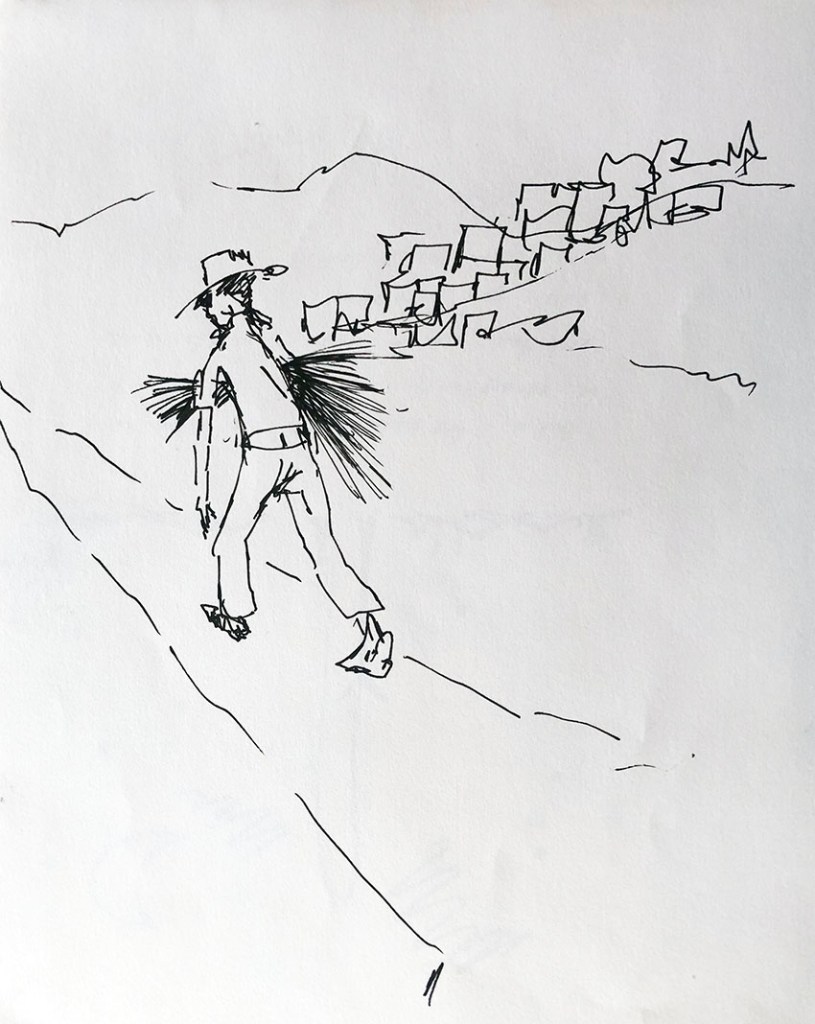
A man trudges back to his finca with a snack for his mule…There were few metalled roads in 1993, and most campesinos used mules and donkeys, for both transportation and ploughing their land.

This is why most of the agriculture of the region was for centuries, the exclusive domain of those both sufficiently hardy, and expediently motivated – or, in other words, the local peasant citizenry of the dozens of pueblos blancos (white villages) which dot the countryside like so many bleached apiaries. And like bees, these small, tough, resourceful workers would leave their village hives for the summer months and move into their finca homes, to tend their vines, pick their crops of grapes and nuts, dry their raisins, and finally, before returning to their pueblos, make their strong, sweet, fortifying mountain sacs.

A goatherd takes a rest…Goats and sheep, and their keepers were a mixed blessing in the campo; while providing good cheese and excellent meat they could be incredibly destructive if not guarded carefully, forcing many of us to reluctantly fence off our land.

Finca’s (privately owned small farms, or small-holdings) are dotted across the countryside in a seemingly random and chaotic, ill-fitting jigsaw of orchards and vineyards, that reflects the interminable division of parcels down the generations, from fathers to sons and mothers to daughters. In 1991, when we (and Fred) moved to the area, fincas were still a major source of self-employment and income for much of the Spanish agrarian working class, and being a “bueno campesino” (a good peasant farmer) earned one a measure of respect within the tight-knit pueblo communities.

But as Fred implied, this might have been an honourable life, but it was also painful and unforgiving. Hence, and quite understandably, as Spain softened and modernised, the attraction of the “campo life” dramatically decreased for the children of the pueblos whose gaze strayed hungrily to the newly flourishing cities and towns, with their universities, and their opportunities of well-paid work and rewarding careers.
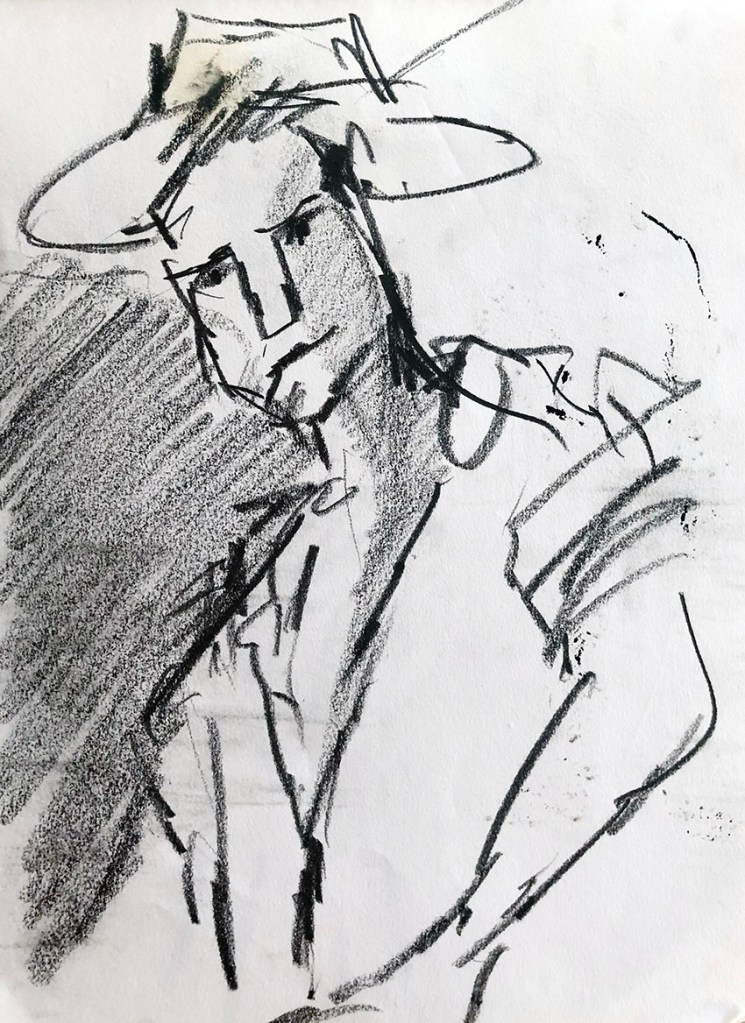
Our neighbour “Curro” – not only a fine and proud campesino, but also a skilled ploughman.

This changing demographic is nowhere more starkly illustrated than in our own locality, where the vineyards, raisin-drying beds and almond groves are steadily disappearing, and the old finca cottages are either left to crumble back into the landscape from which they emerged, or are converted into tourist b&bs. Dido and I, together with an aging and dwindling generation of mostly 60-somethings are rapidly manifesting as living relics, as we continue to brave the constant cuts and bruises, the back-breaking tending of vines and trees, wasp stings, and extremes of weather (hot and cold, dry and wet).

What happens when we are all gone is already being mapped out, as the valleys, and easier lower slopes, are all being transformed into fashionable, low maintenance and lucrative plantations of avocado and mango. (The fact that these new “super crops” require hugely greater volumes of water to flourish than the traditional crops and that they are a disaster waiting to happen, is whole other story…)

My drawings of campesinos displayed here were done during our first summer at our new home, in 1993, and are a reminder of how things used to be, when Spain (at least our part of Spain) really ‘urt…

“Old Juan” – another neighbour, and typically long-lived. It’s interesting to note that our local village is full of noctogarians like Juan, who swear by their daily shot of brandy or anis at breakfast, and a glass or three of their own wine in the evening. Other factors, such as their active lifestyles and diets must also be taken into account. In common with all Iberians, our locals are fanatics for fresh fish, with inexpensive anchovies and squid (brought up daily to the villages by mobile fish mongers) being central to their daily diets. This, in conjunction with the fact that meat consumption was often confined to what people grew themselves – the family pig, rabbits and chickens, always accompanied by mountains of their homegrown vegetables and legumes which must also contribute to their general longevity.
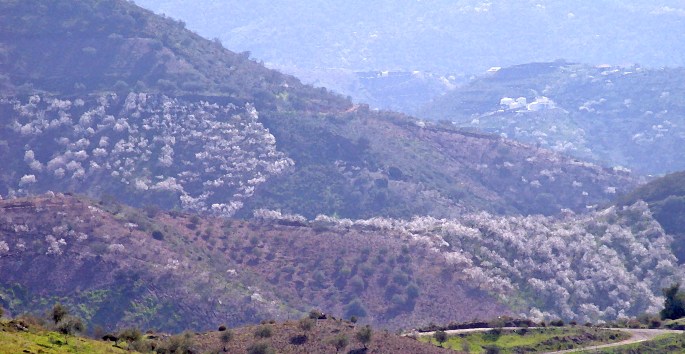
  • Header photo is a panoramic view of the campo as viewed from our finca – looking south-east – in 1993.

“PARADISE REGAINED…”

postcards from our past for the present

It took us about six years to fall in love with our Spanish home and to begin to appreciate its full value to us as both somewhere to escape, and to recharge our intellectual and emotional batteries…

Arriving at this point we had survived the physical and mental exhaustion of the eight-month build itself

Followed by the despair of being virtually penniless and then learning we had no professional future in Spain…

Then the seedy drudgery of our sojourn in Boulogne-sur-Mer

Followed by the reestablishing our lives in London (via-Tunbridge Wells) and getting ourselves back on our feet financially…

Until eventually, the resentment we had felt toward our distant Spanish home, for being the ruination of our lives, very gradually transformed into yearning, as we came to understand the sanctuary it offered us from our daily grind

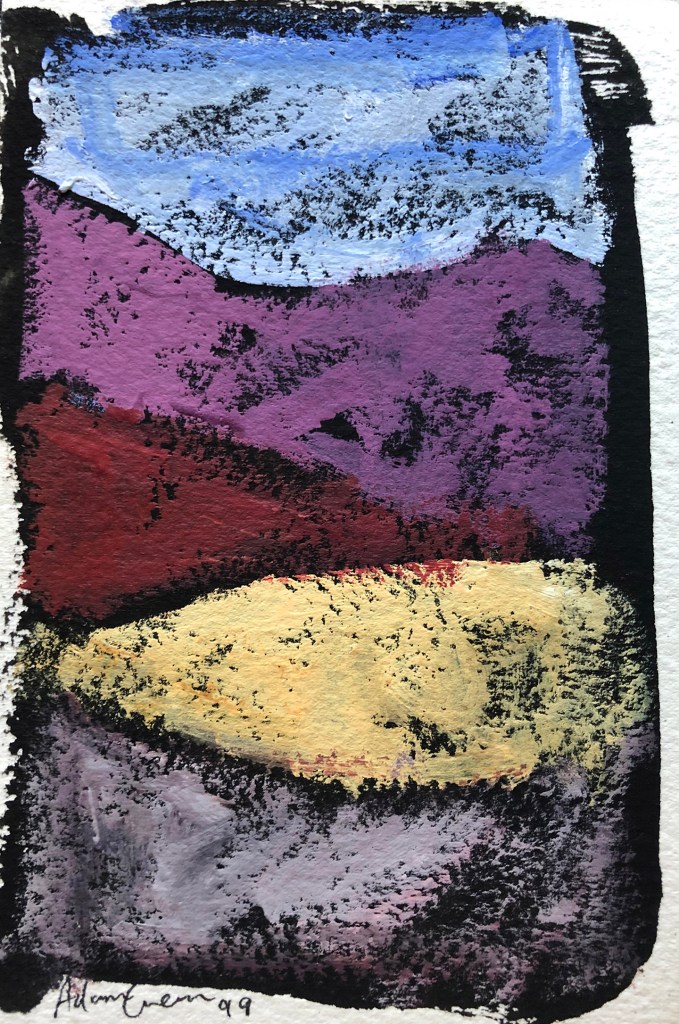
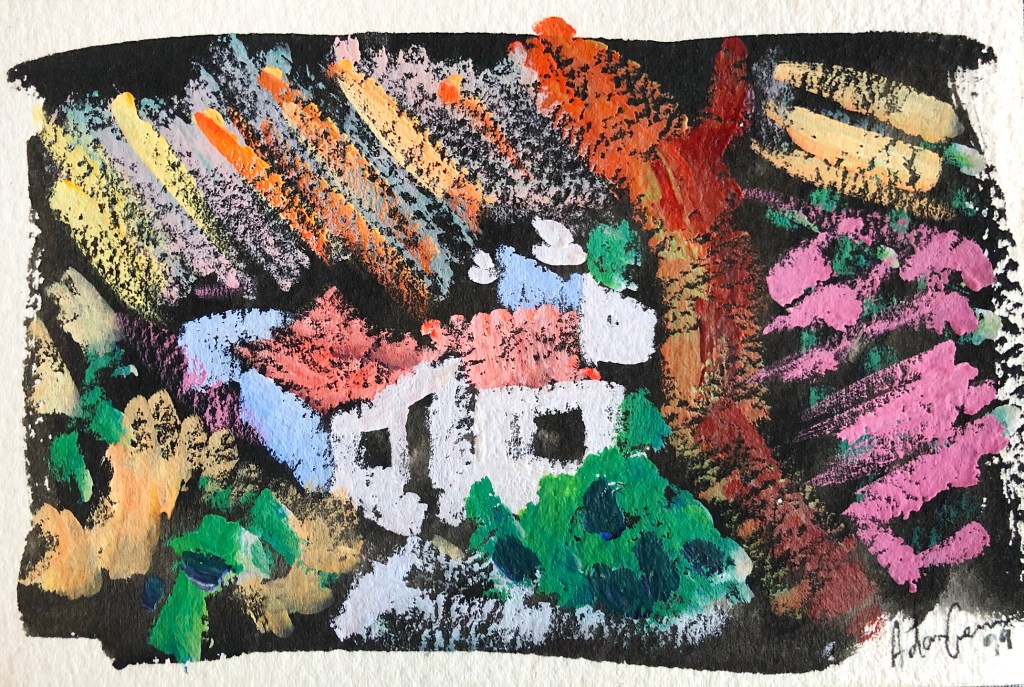
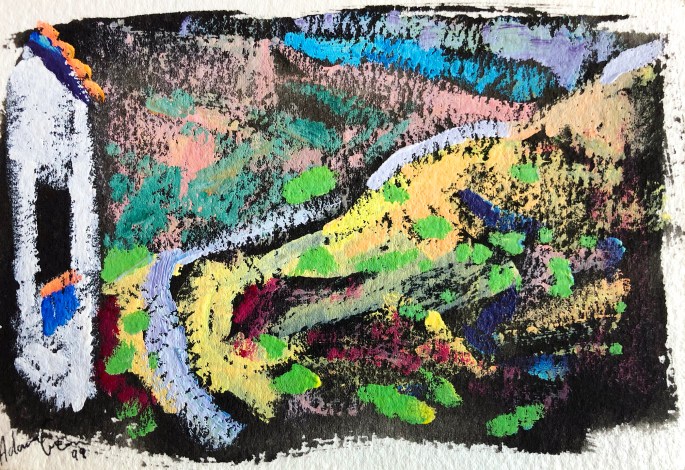
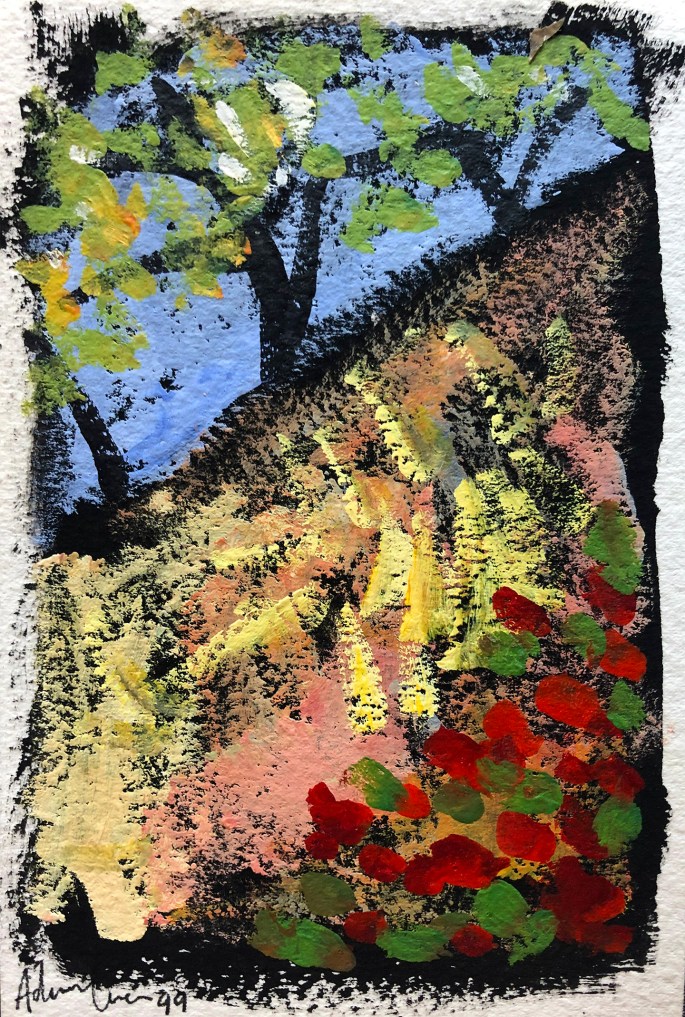
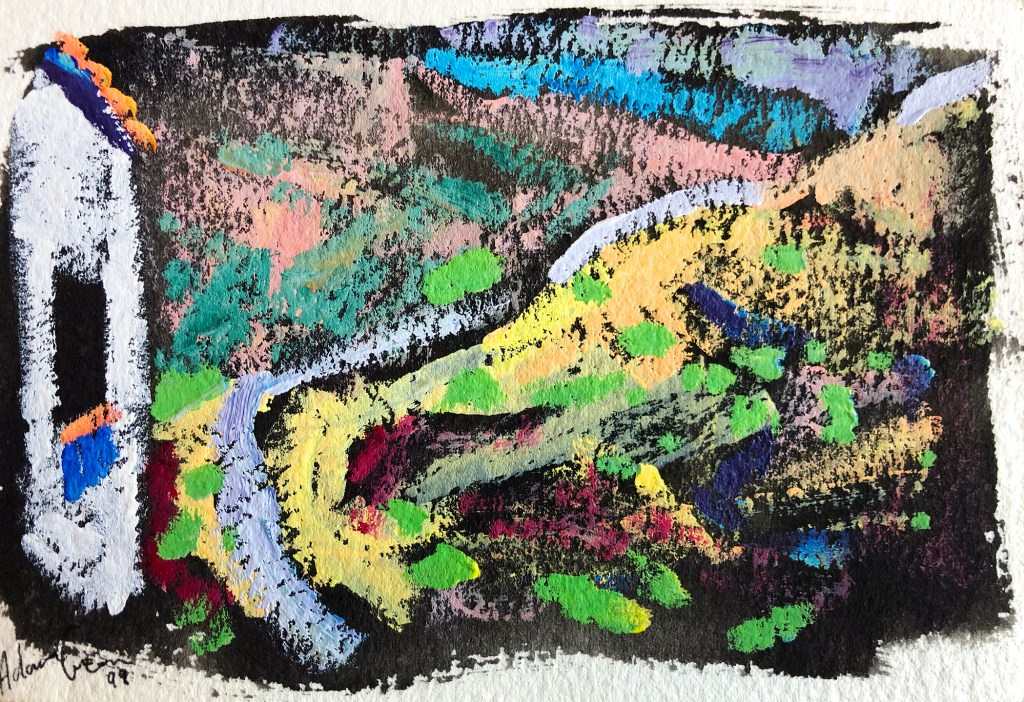
And so, in 1999, I felt the need to celebrate with this set of colourful, impasto gouache sketches, done as postcards; intended to express our sense of freedom and joy at the regaining of our lost paradise. But never in our wildest dreams could we have imagined, even in that seminal year of 1999, just quite how fortunate we really were…

Not until experiencing the madness of three months of semi-house arrest in a small Oxford apartment (I refuse to dignify the “L” word by using it), followed by the oddly, even more disturbing new “normality”, did we truly grasp how blessed we are to have our little, private, mask-less, socially intimate, sanctuary of peace and sanity.

(I should add, that I still have the entire original set of 10 postcards, signed, titled and dated, and in near-mint condition, and far brighter and more charming in real life. I had originally intended to send them to select friends and family, but for some reason never got around to it. So now, I would be happy to sell them as a set for £200 – or other currency equivalent – plus postage. If anyone is interested please contact me through the “Purchasing artwork” link at the top of this page.)

WHERE THE GRASS IS (nearly) ALWAYS BROWNER…

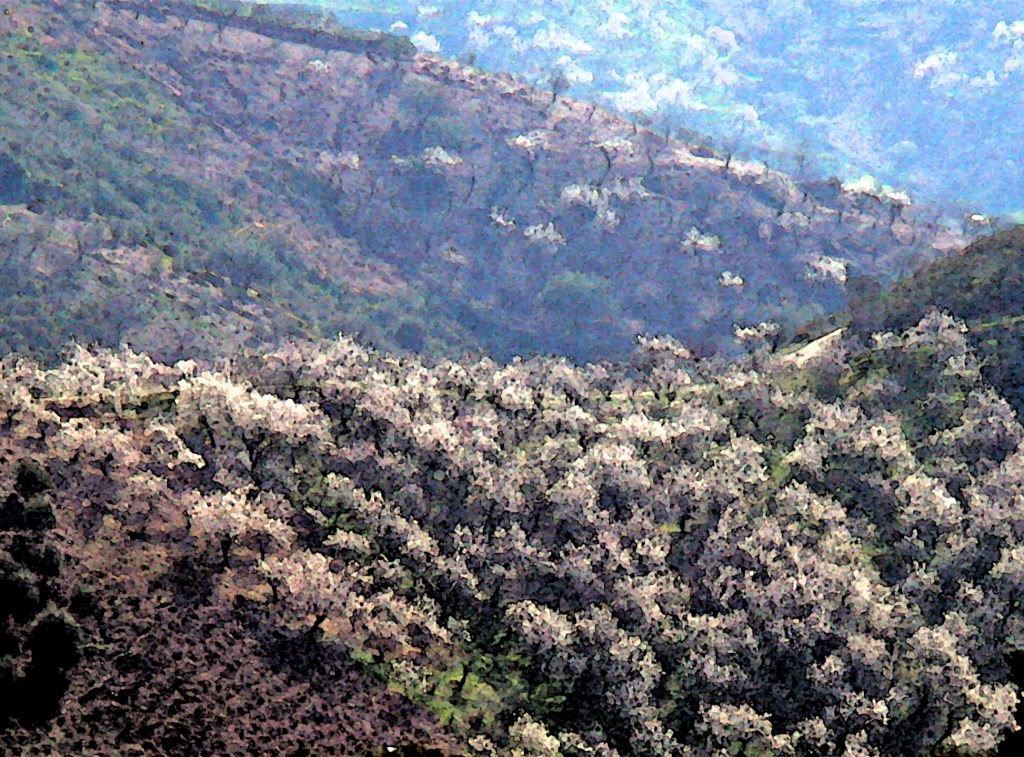
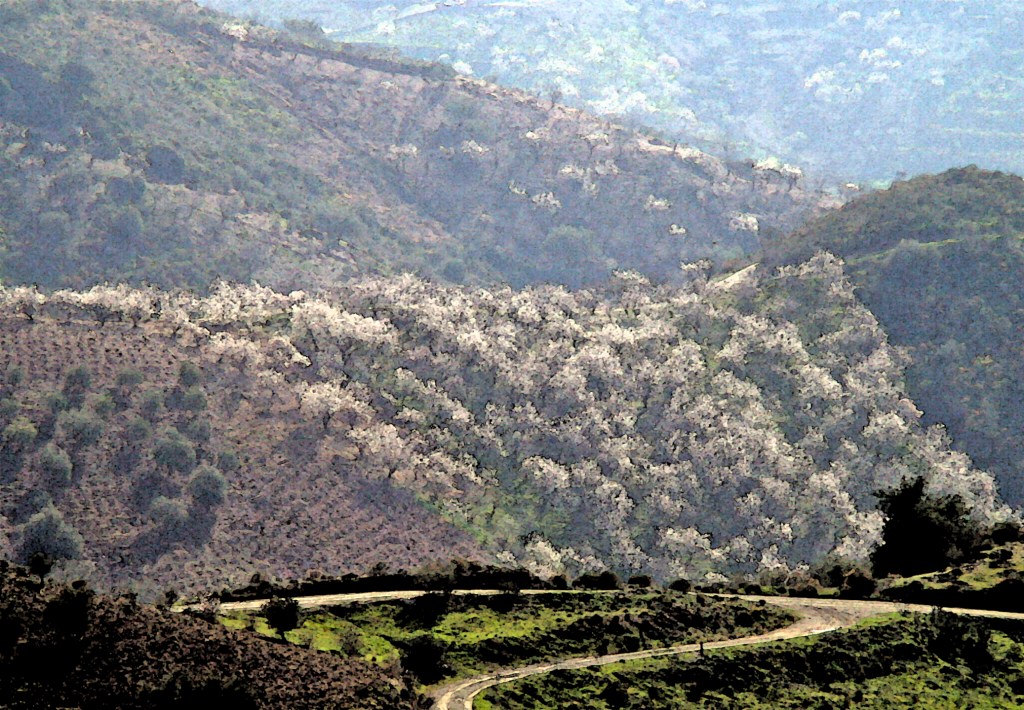
…BUT WHERE THE ALMOND blossom is ALWAYS WHITER

I nearly titled this as a third straight “yearning” post, in the sense that after three months lock-down here in Oxford we are desperate to get back to our finca in southern Spain. But seeing as we are actually returning there tomorrow I decided on a catchier and hopefully more optimistic heading.

In fairness, when we’ve been in Spain for as long as we’ve now been in England there’s plenty I miss about our other lives in London and Oxford, but the longing is rarely as intense as what we are experiencing right now for our Andalusian home.

And perhaps there’s the clue; the fact that our little farm in the foothills of the Sierra Tajeda is the nearest thing Dido and I have ever had to a settled home. We’ve certainly owned it for more than three times as long as any of our previous homes (separately or together), and then there’s all the sweat and blood we’ve dripped into the building of our house and the rocky soil upon which it stands.

But perhaps, more than all of that, it’s simply the way the setting of our finca has ingrained itself into the fabric of our being through the sheer power of its ridiculous beauty.

So, although we missed wonders like the almond blossom display this year, thanks to about thirty years of memories, and images like the ones on show here, we can never truly miss them – they live inside of us, rendering us unusually fortunate.

HEAVEN ON EARTH…

Spanish Idyl

I’m sitting on my south terrace of my house in the Sierra Tajeda foothills as I compose this piece. To the right hand side of my laptop is a Jim Beam marked glass filled to the brim with Moscow Vodka and tonic, with a thick chunk of our home grown sweet lime floating on the top.

Emanating from the open library window to my right are the divine strains of late great Victoria de los Angeles singing Chants d’Auvergne in her deliciously rounded mezzo soprano, so suited to those gently moody ancient lullabies.

Behind me, inside the main room of the house is a freshly caught sea bass patiently waiting in the fridge to form the substantial part of my imminent supper.

Before me, between the oleanders and cypresses, in the near-but-heat-hazy distance is the Mediterranean Sea, in which my bass was still swimming only this morning.

As the shadows begin to lengthen, and defined colours replace blinding monochrome, at last the excoriating heat of the day is giving way to the sensual caressing cool of the south-Spanish evening.

But for the fact I am missing my wife Dido, who is driving in heavy traffic from Oxford to London as I sit here typing these words, I really think I could almost be in heaven.

The picture above dates back to when we first moved here – with our Maremma sheepdog Aura – and the only available shade was under our old carob tree (in fact, the only mature tree we had). That was also heaven, albeit minus the laptops,  stereos and Russian Vodka, which all goes to show, that even heaven, like just about everything else, is merely a relative concept…

AN ILLUSTRATED GUIDE TO MAKING – OXTAIL CHOLENT

This is presented with the presumption that people looking in are familiar with the concept of cholent. For those of you who may not know anything about this Sabbath staple of Ashkenazi Jewish winter cuisine (not to be confused with the Sephardic chamin) I would direct you to here, for a fairly concise explanation of its history and development.

In common with most traditional “family dishes” there are as many nuances of the basic recipe as there are people who cook it. The one I present here is based on the very plain cholent recipe my booba (my grandmother) used to cook and which we all loved, but with several embellishments which I’ll explain as we go along.

By using oxtail, rather than one of the normal cuts of beef – typically from the forequarters of the animal – I am going against all tradition, even my own! My reason for using oxtail though, was purely pragmatic in that I wanted to make a cholent, and oxtail was the only thing I had in the freezer. And although not traditional, oxtail has all the basic qualities required for this long, slow cooking process, in that it is a fat and sinuous meat.

Sadly, for most observant Jewish readers of this post – unless you reside in Israel and perhaps certain parts of the States, you probably won’t be able to get your hands on kosher oxtail. If that is the case, use a cut of fat beef on the bone; a meaty piece of shin would work well or a large top rib.

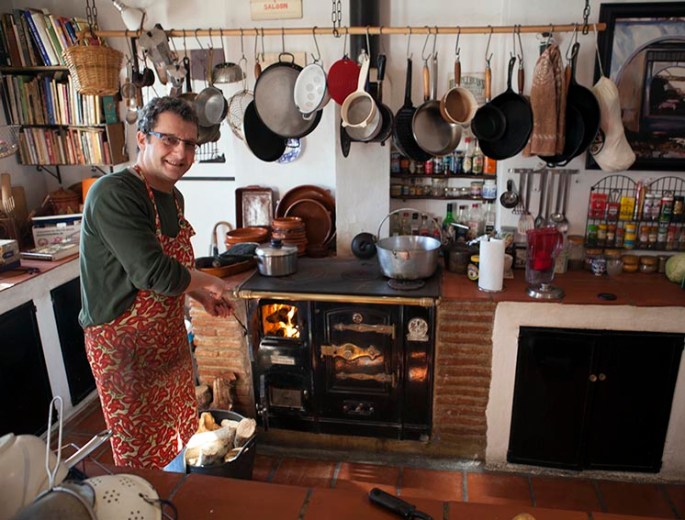
It also helps to have a wood burning stove such as I have here in Spain – perfect for slow cooking at low temperatures – but any real oven will do. Avoid however, electric slow cookers and dutch ovens (so sadly prevalent now in Israel) as you’ll end up with all the flavour escaping from the ingredients into the liquid: Fantastic if you want a brilliant soup, but not if you want a rich, unctuous hotpot where each component is packed with flavour.

Anyhow, the proof of the cholent is in the cooking, and this turned out the best cholent I have tasted in years. Whether or not my booba would have approved of my embellishments is open to question…

INGREDIENTS (serves 4)

2 cups – butter (Lima) beans – soaked overnight in several changes of spring water (or filter water – chlorinated tap water tends to toughen beans and impairs their flavour)

1 cup – pearl barley – rinsed thoroughly and soaked for 1 hour (again, in spring water)

4 – large carrots – pealed and left whole

1 – large onion – pealed and sliced thickly

1 – large oxtail – cut into 6 or 7 pieces

2 – bay leaves

12 – white and black pepper corns

4 – large waxy potatoes – pealed and cut in half

1 – large head of garlic – with the outer “paper” removed

16 – small kneidlach (matzo meal dumplings) – with their cooking stock reserved

salt to taste

(Optional additions include a large stuffed chicken neck (helzel) and / or 4 shelled hard boiled eggs)

METHOD

Preheat the oven to  200°c (220° fan / 400° f)

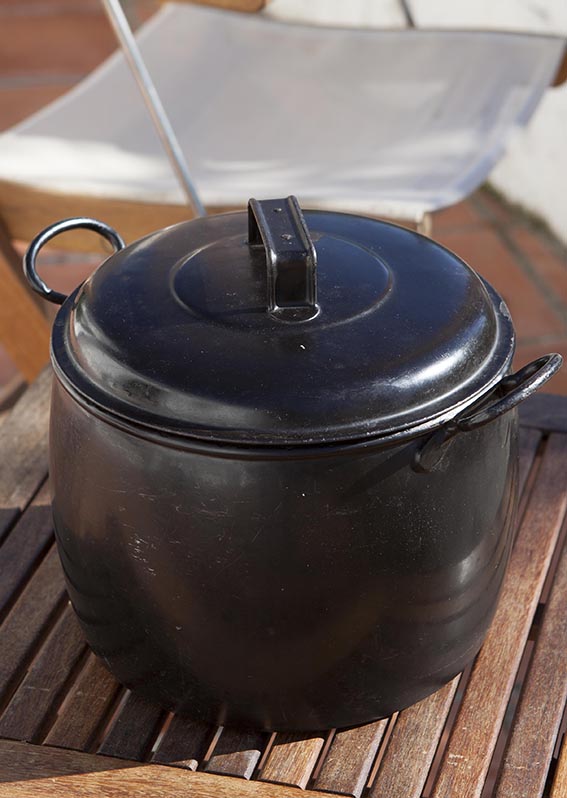
1) Choose a large deep cooking pot or casserole with a tight fitting lid (any cast-iron or heavy enamelled pot will do)…

This is my grandmother's old cholent pot - and probably her grandmother's before her -perfect for the task.
This is my grandmother’s old cholent pot – and probably her grandmother’s before her -perfect for the task.

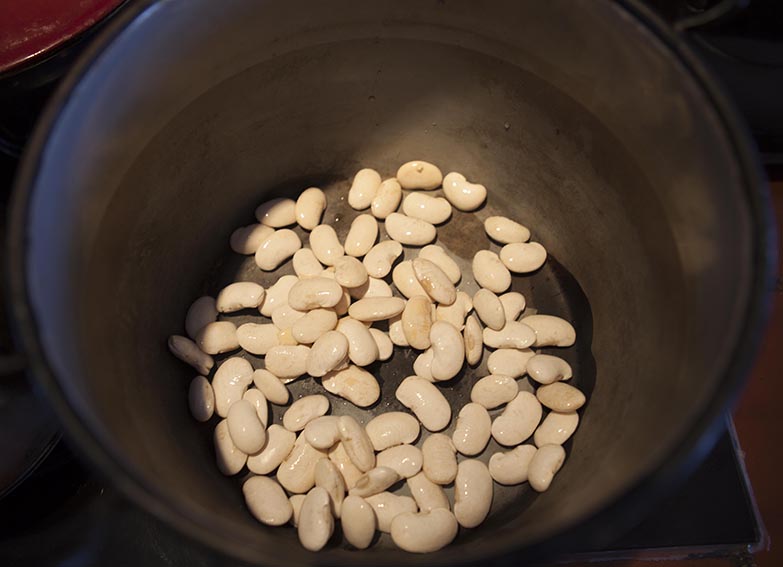
2) Place the butter (Lima) beans at the base of the pot…

Spanish butter beans are wonderful - plump and sweet
Spanish butter beans are wonderful – plump and sweet

3) Place the pearl barley on the beans (my grandmother only used the beans)…

Always rinse barley thoroughly before using it

4) Next, put in the carrots and onion…

The larger the carrots the better and whole small onions can be substituted

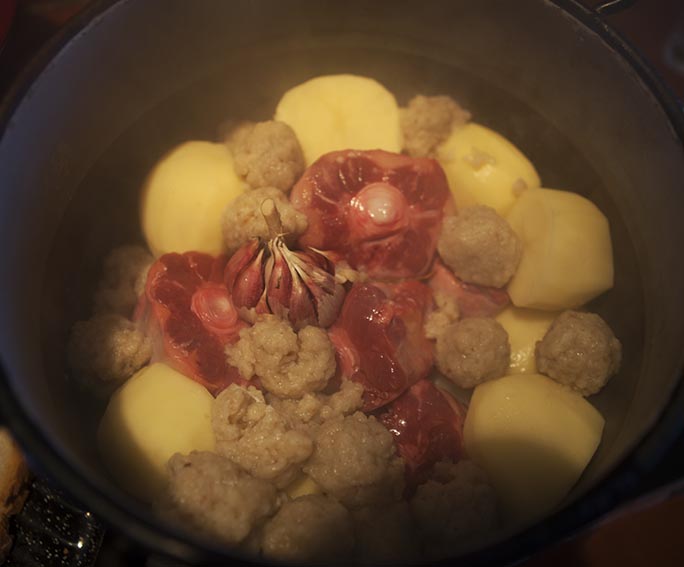
5) Place the meat on the “bed” of vegetables and pulses…

Oxtail (rabo de toro) is a big deal here in the south of Spain and is generally excellent quality. The darker and more aged the meat the better
Oxtail (rabo de toro) is a big deal here in the south of Spain and is generally of excellent quality. The darker and more aged the meat the better it will cook

6) Add the spices (Booba never used bay leaves – just salt and ground white pepper)…

IMG_2126

7) Place the potatoes around the meat (remember – large pieces)…

It's essential to use waxy spuds which won't disintegrate during the long cooking
It’s essential to use waxy spuds which won’t disintegrate during the long cooking

8) Scorch the garlic and then place it on the meat (yup! You guessed it – Booba would never have used garlic!)…

This is a trick I learnt from the local cooks - only they would drop it into a white chicken broth - it adds a subtle smokey taste to the garlic.
This is a trick I learnt from the local cooks here in Spain – only they would drop it into a white chicken broth – it adds a subtle smokey taste to the garlic
IMG_2132

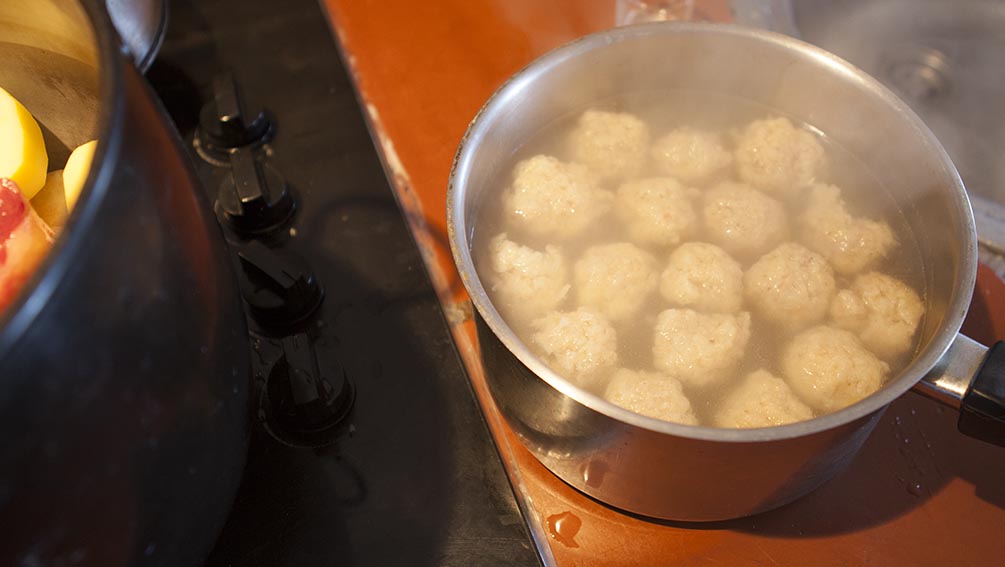
9) Remove the kneidlach from their cooking stock and place around the meat and potatoes (no – Booba didn’t put kneidlach in her cholent either)

IMG_2133
IMG_2134-1

10) Pour a pint (or more if required) of the kneidlach cooking stock over the cholent (Booba used water – but whichever liquid you use, the more you use the wetter the cholent will be. I prefer it drier with all the juices absorbed into the ingredients)…

11) Finally, seal the lid of the pot with a piece of baking parchment or tinfoil….

IMG_2135

12) Put the pot into the preheated oven and cook at 200°c (180° fan / 400°f) for two hours, then turn the heat down to about 110°c (90° fan / 230°f) and cook for a further 6 hours – or longer if preferred.

At no time during the cooking be tempted to lift off the lid.

When you do finally open the pot you want to be confronted by something like this (note how the kneidlach and edges of the potatoes have become slightly caramelised …

IMG_2136

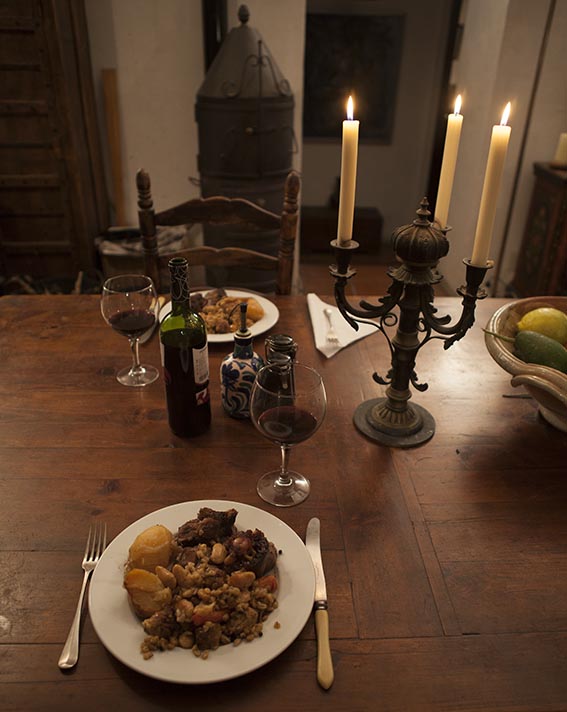
And finally you want to serve it with a good heavyweight red with plenty of complementary  “beef” of its own – betey avon!!

IMG_2138