JOHN’S SHOPPING, BUT NOT COPING…

If you ever wondered what all those dots and dashes are for on Scandinavian words then the name of the town in Sweden Dido and I are soon to move to might help.

Jönköping without its umlauts (or “umplaghs” as Dido refers to them) looks fairly straightforward to the English eye. Jonkoping instinctively, phonetically looks like it should be pronounced “John-coping”, but the presence of the umlauts immediately sets alarm bells ringing. You just know that “John-coping” is wrong with the result that you find yourself instinctively “accenting” the word. However, unless you are familiar with “Northern Germanic” languages the chances are that instinctive accenting will be wide of the mark.

In my case for instance, before I knew better, I found myself pronouncing it something like “Jern-kerping” whereas after being corrected by a helpful Swede I was told to pronounce it more like “John-shopping”. Of course, “John-shopping” is only an approximation of the correct Swedish pronunciation, but it does at least indicate the effect of the umlauts.  Moreover, since I’ve been using it, the constant stream of polite corrections from dismayed Swedes has ceased.

The one thing all our new Swedish acquaintances have told us is that our ability to pronounce Swedish words correctly, including Jönköping will improve over time.

Whether or not we have sufficient time in Sweden to master Swedish enunciation will depend upon how well Dido’s new tenure at Jönköping University works out. As things stand she’s planning on this being her professional swansong, but even at 57 this still leaves us with plenty of time – potentially…

Far more accessible than Jönköping’s correct pronunciation is its pleasant geography. The town is situated on the banks of Sweden’s second largest lake, Vättern (yes, another umlaut, and no, I haven’t been informed yet and all guidance welcome) and during our recent visit I manged to get some striking images of it, and the natives enjoying themselves along its beach.

One of the things that I’m falling in love with in Sweden, and something I already miss when I’m not there is the astonishing crystalline light and the startlingly vivid colours and tones it produces on everything it touches. These pictures illustrate this pretty well…


MASTERPIECE – or merely a collection of successful daubs?

Occasionally; very occasionally I miss painting huge canvases.

Not drawing – I really don’t miss drawing at all – nor watercolouring, or working with gouache or pen and ink, or even small and regular size oil painting. But once in a while I miss the thrill of that rarest of moments, when I almost felt like a genius, and for some reason this only happened to me when I was working on an epic scale.

I experienced the feeling just a handful of times in the thirty years of painting big canvases. It was normally sparked off by a single brushstroke when, just for a millisecond the brain achieved total control over the brush with the resulting daub a near-perfect expression of the thought behind the action.

Normally, these experiences and daubs occurred toward the completion of a painting, and were all the more satisfying for underlying the fact of conclusion – something rarely guaranteed when making any work of art.

I remember one such daub being a fleck of white light on the shoulder of a girl walking into a heat-hazed distance, and another being a splash of red, of a Coke can littering a pavement.

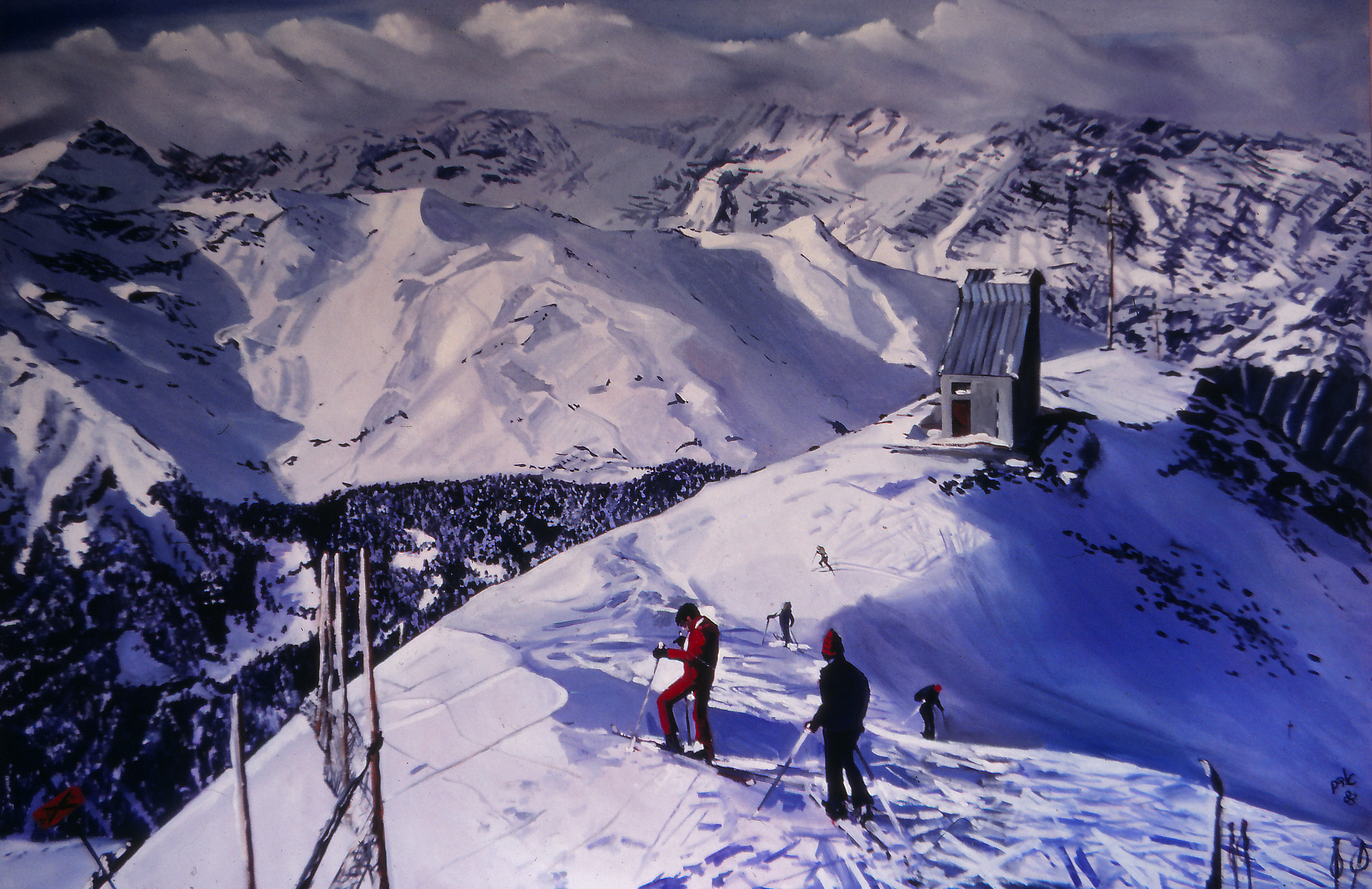
But of all the special daubs I ever applied to canvas, only one painting contained more than one, and this is that picture below, called Bormio 3000.

It’s particularly remarkable because unlike all the others which were “free works”, Bormio 3000 was a commission, and because of who it was for, and what they were paying me, it was painted under considerable pressure.

The patrons were a married couple who owned a successful commercial art gallery in London, and they wanted an extremely large skiing – themed oil painting to decorate the main room of their new chalet in Verbier. Moreover, they were paying me the largest sum of money I had ever been paid for my work – several thousands of pounds.

Somehow, and for whatever reason, the painting was a huge success, pleasing both the patrons and for once, the artist too.

Even more unusually, I like the painting as much now as I did then, when “special daub” after “special daub” seemed to flow from the brush as easily as breathing.

Bormio (unlike Swiss Alpine Verbier) is  in the Italian Alps, and “3000” refers to altitude (in meters) at the top of the run, pictured in the foreground. The painting was about 5 by 7 feet and when I look at it now, especially the portrayal of the far mountains and clouds I have not the faintest idea how I achieved it.

The term “masterpiece” is obviously a relative one and normally, highly subjective. However, based purely on Adam Green terms, so far as I am concerned, both in the summer of 1983 when I completed Bormio 3000, and now, 34 years later it remains the work of which I am most proud. It hits the mark in every department; tone and colour control; composition; light; drama; and near-perfect brush-work. All-in-all, not a bad conglomeration of “special daubs”…
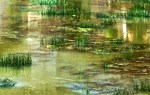
(Bormio 3000 is available as a signed limited edition print – limited to 25 prints – about 32cm x 48cm / 13″ x 19″ size – at £150 each.)

Bormio 3000

POINTS AND VIEWS

Standing a loved one or a friend, or even an animal before a fabulous vista is a cultural staple of the holiday snapper. For me, apart from the “I/we was/were there” element, the juxtaposing of a human and or animal before vastness simultaneously humanises and accentuates the majesty of the given panorama. Painters have been doing the same thing since the days of the great Dutch and British landscape painters of the 17th, 18th and 19th centuries, from Van Ruisdael to Caspar David Friedrich.

Presented here are sadly no Friedrich’s, but this set of enhanced-photos from all my years of travel do nevertheless express something of that dramatic relationship between “us” and the landscapes we move within…

Fellow Worker at Yiftach - Israel
In 1978 I was a volunteer for the summer on Kibbutz Yiftach on Israel’s northern border with Lebanon. This is the view from the north east corner of the kibbutz towards Mount Herman…

Simon at Slee Head - Kerry Coast - Ireland

This dates back to the late 70’s when my old mate Simon and I drove around Cork and Kerry in his old orange Datsun. This is Simon peering over the edge at Slea Head near Dingle on the Kerry coast (famous for being the location for the movie Ryan’s Daughter)…

On Gilboa - Israel

Taken around 1981, this is the summit of Mount Gilboa. The field of boulders could seem to bear witness to the power of David’s curse in his great lament for the fallen Saul and Jonathan that nothing should ever grow upon the mountain’s slopes again…

Friend above Ein-Kerem - Jerusalem
In 1980 I spent the summer with a friend in west Jerusalem. Every day for about a fortnight we walked into the forest above Ein Kerem to draw and paint. the scent of pine needles roasting on the ancient terraced slopes was intoxicating…

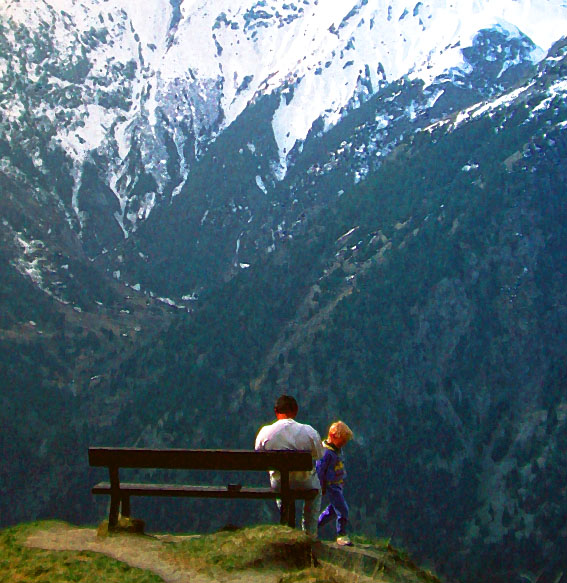
Les 2 Alps Bench
One my first trips abroad with my then-girlfriend Dido was a skiing trip to Les Deux Alpes. The skiing wasn’t up to all that much but the walk into the neighbouring valley was some compensation…

Dido by San Pedro River (Chile)
Walking back to San Pedro de Atacama after visiting the pre-Inca ruins of  Pukara de Quitor – the mighty Volcan Lincancabur stands proud in the distance…

Friend Marvelling at the Atacama in Bloom (Chile)
Later during the same 1991 trip we were privileged to witness the first serious rains over the the southern Atacama desert in 40 years. The subsequent desert blooming  was regarded by some Chileans as nature celebrating the beginning of the post-Pinochet era…

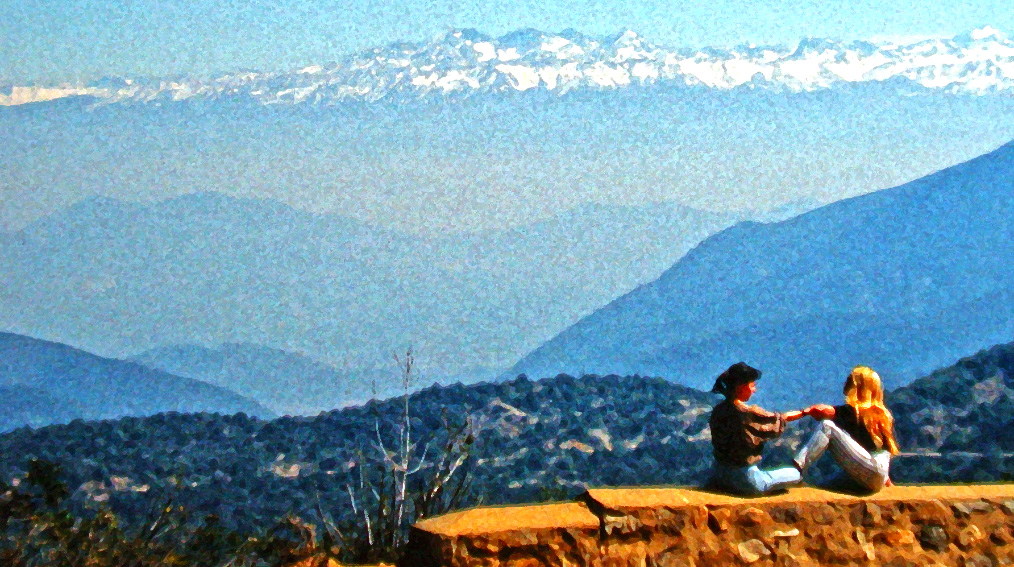
Dido and Friend on Road to Santiago (Chile).jpg
Santiago’s de Chile’s curse and glory are the walls of mountains which surround it; a pollution trap on the one hand and on the other – as can be seen from this picture taken on the road back from Valparaiso – beautiful on the eye…

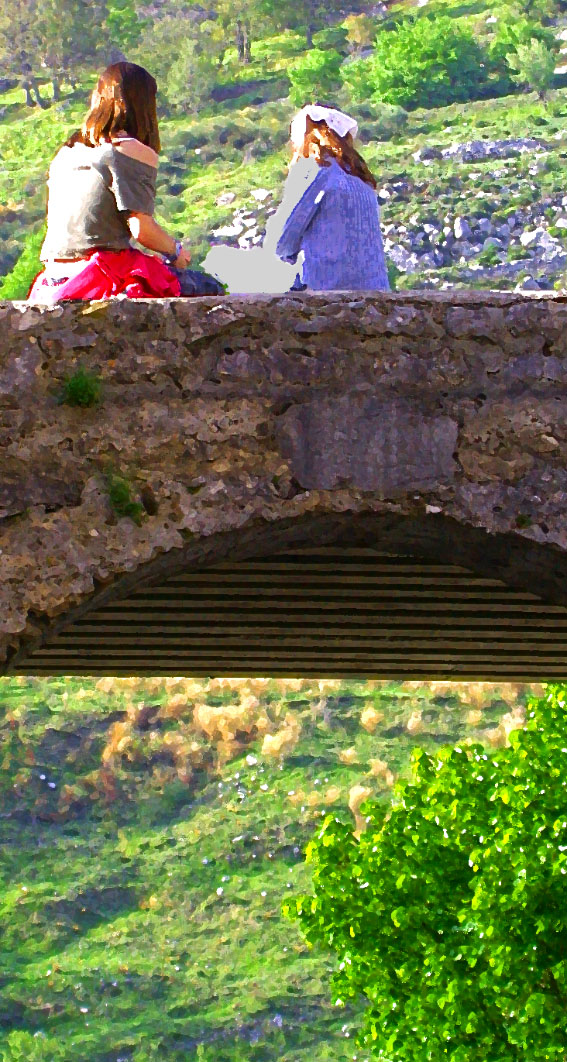
Coursegoule - South of France
Coursegoules in southern France…

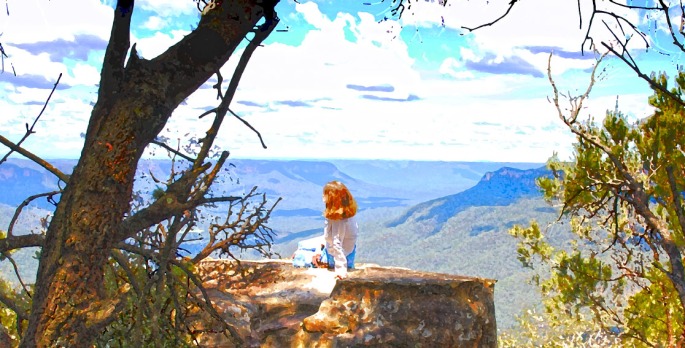
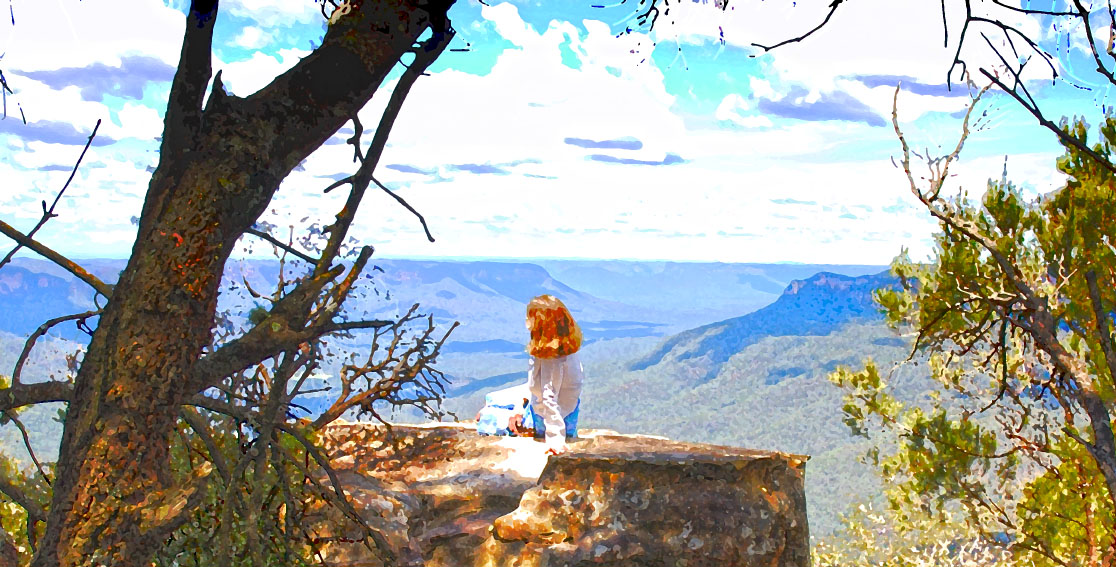
Dido at Point Sublime - Blue Mountains, NSW, Australia
We started travelling to Australia regularly from 2007 thanks to Dido’s work. Here she is at the aptly named “Point Sublime” at the edge of the Blue Mountains in New South Wales…

Dido at Cardona (Catalonia)
And here’s Dido at the castle of Cardona (now a delightful parador) in the Catalan countryside…

Dido Approaching the Small Crator
And, from some 30 years after my stay on Kibbutz Yiftach, a set of images from Israel taken in the early 2010’s. Here’s Dido again approaching the edge of one of the Negev craters…

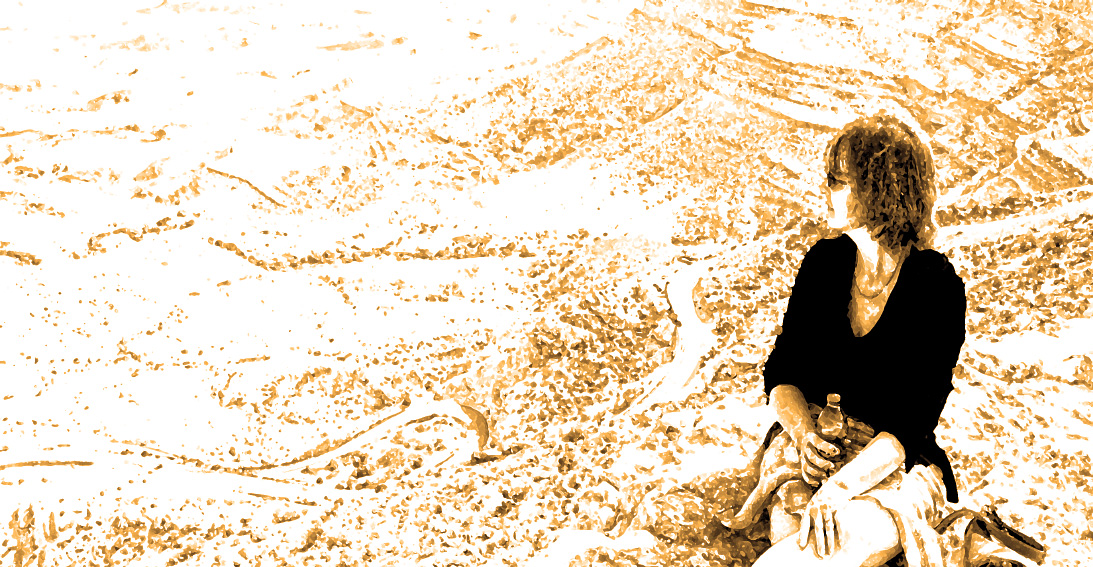
Dido at the Great Crater - Negev
And sitting at the edge of that crater…

Timna - Negev Desert
The Wilderness of Zin…

Golan - Above the Yabock Valley
And finally, from the “biblical south” to the “biblical north” – Hereford cattle notwithstanding – looking down from the Golan Heights (biblical Bashan) towards the valley of the River Jabock, of Jacob and Esau fame.

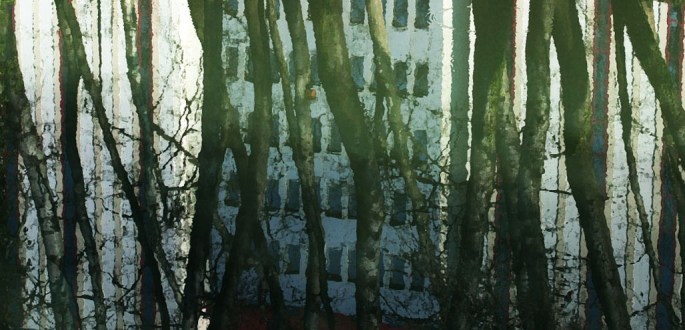
WATER – Nature’s finest sculptor, colourist and impressionist

Wherever water merges with solid objects, either through light or physical interaction, or both, visual magic usually results. Without too much further ado, here is a series of images which reflect this fact perfectly (pun intended).

“MARS ON EARTH” – Chile’s Incredible Desert

Of all the photos in my extensive archive of old camera film, there are few that still excite me as much as those I took in the Atacama Desert in 1991. Regular visitors to this site will know that I have something of a passion for deserts and wildernesses.

Rather than try explain in words what it is exactly that gets my juices going (and to be honest, I’m not even sure I fully understand myself) here are a set of images from that trip. I made a series of mostly huge canvases together with a complementary set of small gouaches from these pictures, and they were the basis of two of my last one-man shows as a fine artist – one held at the Chilean Embassy in 1992. The first picture presented here (91 Chile Atacama) was the basis of the super-large canvas that eventually found it’s way to an architect’s studio in Seattle, as payment for the designs for our house in Spain.

The original images were taken on my then-antique Nikon FE using Agfa chrome slide film, and one day I hope to have a scanner with sufficient power to faithfully reproduce the pictures digitally — or better still, pay the Atacama a return visit with my current camera. Nevertheless, I think that with these pictures I’ve managed to reproduce some of the magic of Chile’s genuinely awesome “Mars on Earth”…

BOULOGNE BLUES – The story of how we became stranded for six months in the famous French Channel port

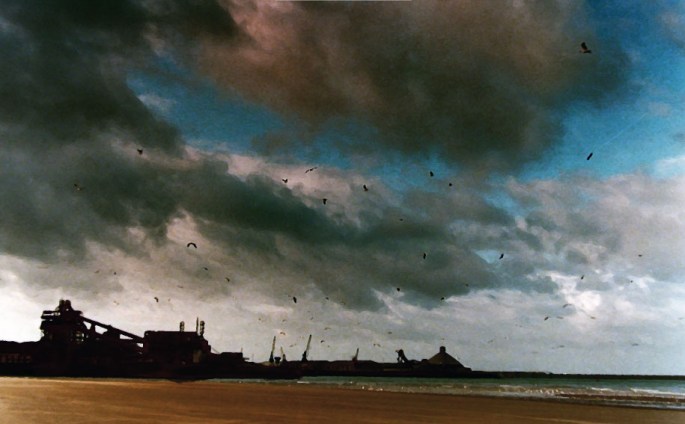
For reasons which will no doubt form the basis of a separate post, about six months after completing our house in southern Spain we found ourselves living in a shabby rented apartment in a rundown part of Boulogne sur Mer on the north eastern tip of France.

Boulogne Beach 1

Virtually penniless, we could not afford nor did we wish, to place our Maremma Sheepdog, Aura into the-then obligatory six-months of quarantine in Britain. We were in a pretty desperate situation, and if desperate situations require desperate measures, then the one we came up with was a genuine peach, although it did not seem so at the moment we conceived it.

Boulogne Beach 2

Firstly, Dido took a job managing a paediatric occupational therapy department in Folkestone on the Kent coast, just a 40 minute Seacat (hydrofoil ferry) hop across the English Channel from Boulogne. Traveling as a foot passenger was cheap, and with a health-authority car provided at the English end, the daily journey would be both inexpensive and quicker than most commutes from the London suburbs into the City. It appeared to be a totally reasonable solution to a tough problem; six months living frugally in a tatty loft then once we were more comfortably off, moving into a nicer flat in the charming old citadel above the port. Aura our dog was already 11 years old and towards the latter end of her life expectancy, and who was to know? Two or three years living in the charming quarter of an historic French town might actually be rather pleasant. The plan even seemed sufficiently foolproof that Dido need not disclose to her new bosses the fact she was living in France and risk their disapproval (the requirements for the post were that she lived within 30 miles of work… there were no stipulation as to whether the miles were measured across dry land or water).  But then, to paraphrase a famous remark of a late British prime minister, “events” intervened to devastate our plans.

Boulogne Beach 3

Having committed ourselves to the minimum six-month rental contract, we moved into our dingy lodgings the week before Dido was to start her new job. The flat was unfurnished, without even a kitchen, and so we spent the whole of the first few days madly rushing around in a rented van, using our credit cards to purchase the basic essentials to make the place habitable. Amongst other things, we got a type of sofa-bed (known as a clic-clac in France) and a tiny Baby Belling oven with a double hob. We couldn’t afford luxuries like refrigerators then, and still couldn’t afford one by the time we eventually left the flat at the end of the six months. Nevertheless, after we had scrubbed the flat half-a-dozen times and got our few pieces of furniture set up (including a table improvised from a lacquered MDF board) the place seemed habitable. That, in addition to the fact it was only a five minute walk from the Seacat dock gave us reason to think the next six months would be reasonably tolerable. However, it must have been the Thursday or the Friday when we made that walk down to the port for the first time since settling in that the bottom fell out of our world.

Boulogne Beach 4

Without notice of any kind the Seacat company had cancelled all runs to Folkestone with immediate effect. Dido had talked to the ferry people just a week earlier—days before we had signed the contract on the flat—and they had made no mention of their plans to cut back their service. It seemed like a sick joke. We were now tied into living in Boulogne for six months, and the only morning and evening transport across the Channel anywhere near practicable for Dido’s requirements was a 40 minute drive up the coast at Calais. Moreover, the only affordable foot passenger service was on the regular ferry boats, which took-one-and-a-half- hours to Dover. Suddenly, Dido’s easy two-hour daily return journey, now with the commute to Calais and the 20-minute drive from Dover to Folkestone added to the mix, had mutated horribly into a return journey taking five hours—on a good day.

Boulogne Beach 5

But, with no money, and Dido’s job  starting on Monday she had no alternative but to do the Calais crossing.

Boulogne beach 6

As it happened, the commute turned out to be just one of the many grim and farcical components of what was to prove the most miserable period of our marriage—the details of which will be the subject of another future blog. Enough to say for now, that the France most people experience as tourists has little in common with the dingy, rough, criminal-infested street we inhabited during our sojourn in Boulogne sur Mer.

Boulogne beach 7

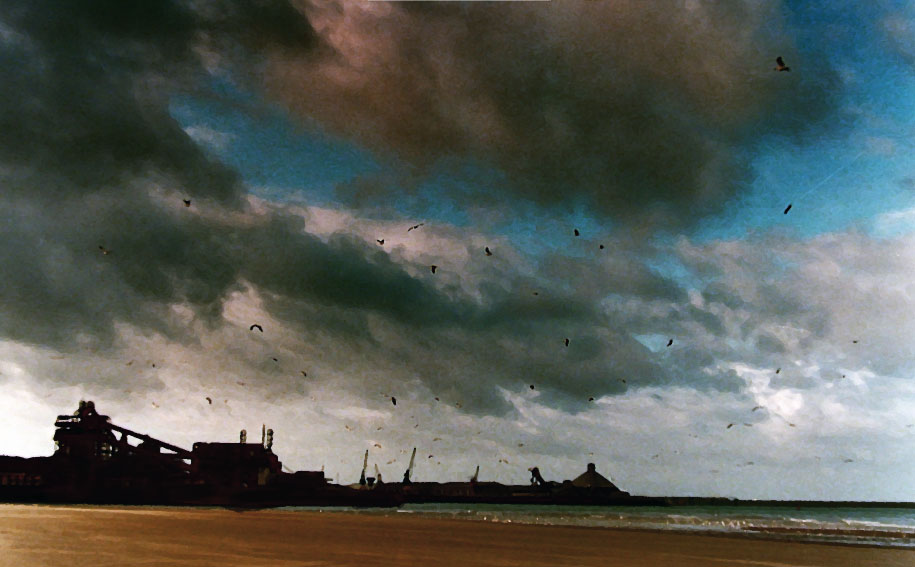
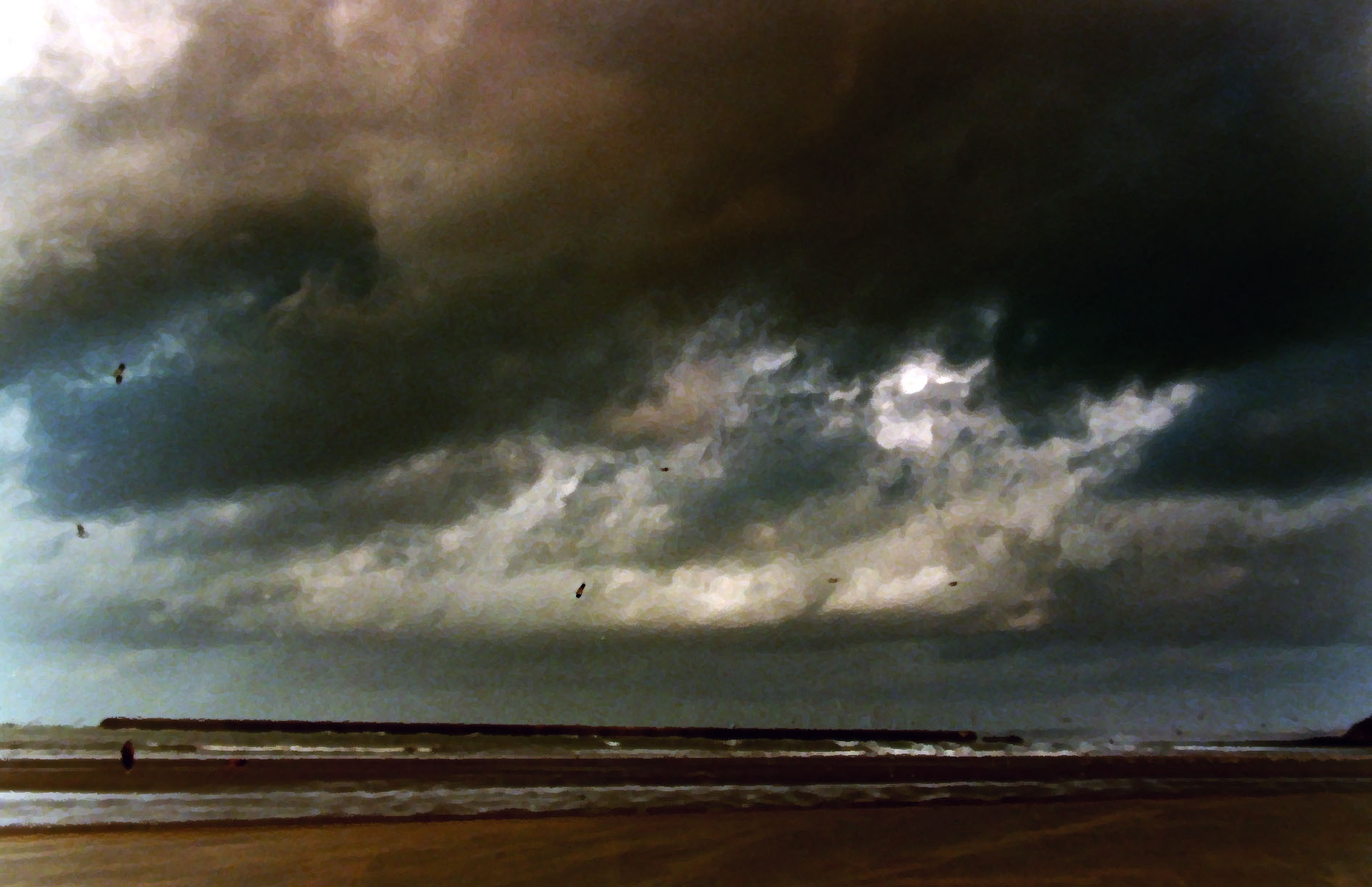
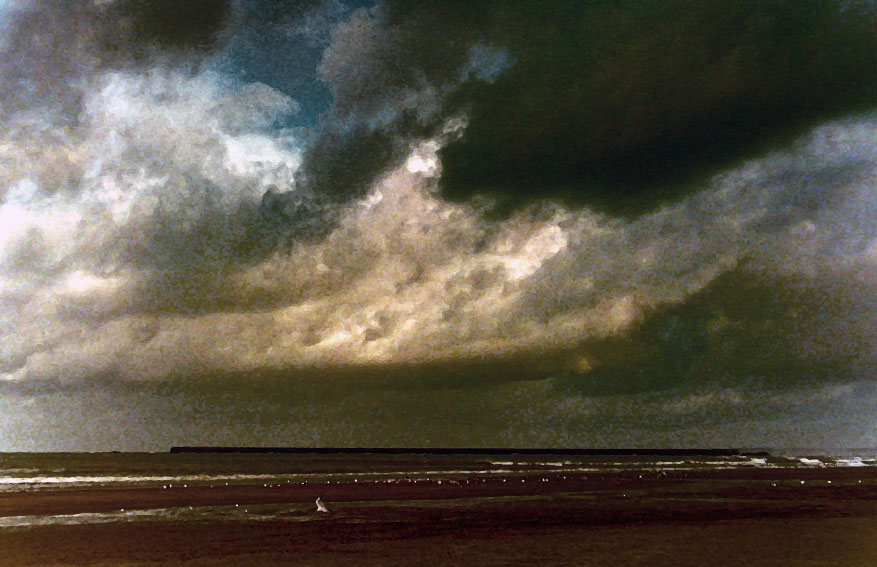
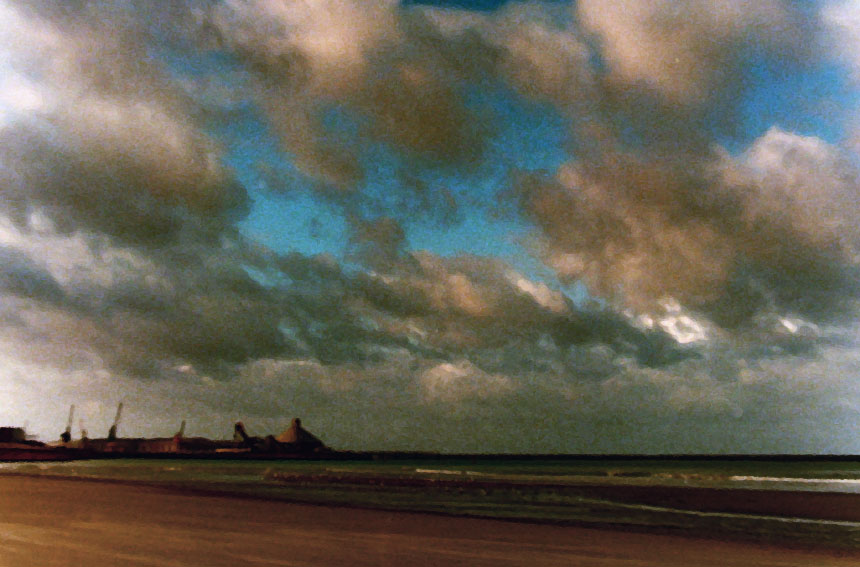
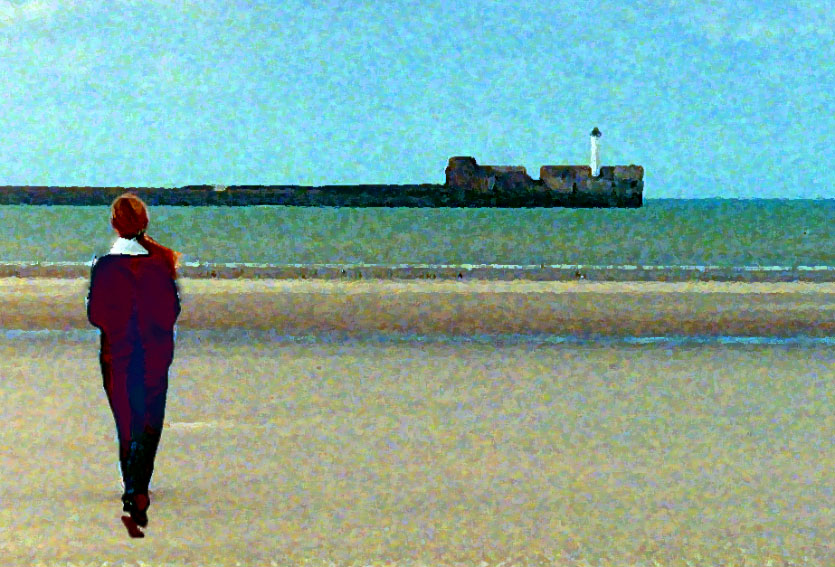
The origins of the pictures shown here, lie in my numerous walks on Boulogne beach with Aura and apart from being a modest nod to great Dutch painters like Jacob van Ruisdael, express both the blueness of my mood in Boulogne, and my ever-growing yearning to cross that 20-mile strip of water back to England…

Boulogne beach 8

No RAW mince – PLEASE! Sorting out your cottage from your shepherd’s pie and how to make the genuine article/s…

What many people beyond the shores of the British Isles may not know, is that the humble shepherd’s and cottage pies are directly linked to the British Sunday roast — roast lamb and roast beef respectively. For generations going back into the hazy past, Monday night evening meals (suppers, dinners, teas – depending upon what part of Britain one inhabited, geographically and / or socially) were typically made up of the scraps from the previous day’s lunch and more often than not the main constituent would be the leftover meat. And if this meat happened to be lamb or beef then normally it would be minced or finely chopped, mixed with cooked vegetables, roofed with a thick layer of mashed potato and ultimately emerge from the oven as either of the aforementioned pies.

Simple to make, thrifty on the wallet and tasty enough for even the fussiest eaters, shepherd’s pie has joined the English breakfast, fish and chips and bangers and mash as one of the few British dishes to gain global popularity. Over the past few decades it’s become a staple of the comfort food menu and an international culinary superstar.

But, at the risk of sounding like Sheldon Cooper pointing out what makes — and what doesn’t make — a true Texas Chilli , there’s a problem; a problem of misrepresentation:

I’ve eaten concoctions of meat and mashed potato, purporting to be shepherd’s pie everywhere from Perth in Australia, to Seattle in the USA, and at all stops in between, including places as diverse as Chennai, Stockholm and Tel Aviv. And, while several of these alleged shepherd’s pies have been very agreeable plates of food, they’ve no more been shepherd’s pie than a vegetarian sausage is an actual sausage or Greek chickpea puree is humus.

The first and most serious error that the cooks of all these dishes make is basing their recipes on raw beef mince and the second is to call the dish after the keeper of sheep. Shepherd’s pie (yes, the clue is in the name) is always made with lamb, hogget* or mutton – leftover roast lamb, hogget or mutton if possible, and raw lamb mince as a last resort. There’s nothing wrong with a minced beef and mashed potato pie, but compared to a true cottage pie (for it is in in fact cottage pie that these ingenuous cooks are making) — made with leftover roast beef — it’s a sad imitation at best. Perhaps if we renamed Cottage Pie, Cowherd Pie (or Cowboy Pie in the States and Gaucho Pie in Argentina) it would clear up some of the apparent confusion. In fact, here in Spain when I’m lucky enough to have roast kid scraps I call the resulting dish Goatherd Pie – and very delicious it is to.

Unfortunately, the error has been exacerbated by a plethora of British cookbooks, often penned by famous British chefs, who for reasons to do with things like “convenience” and the pace of “modern life” disseminate shepherd’s pie recipes based upon raw beef mince.

The point is, as I hope the recipe below for Cottage Pie will demonstrate, the superiority in flavour, texture and sheer pleasure of eating a meat and mashed potato pie made from roast meat scraps, over one made from raw mince is worth the extra 10 minutes it takes to prepare.

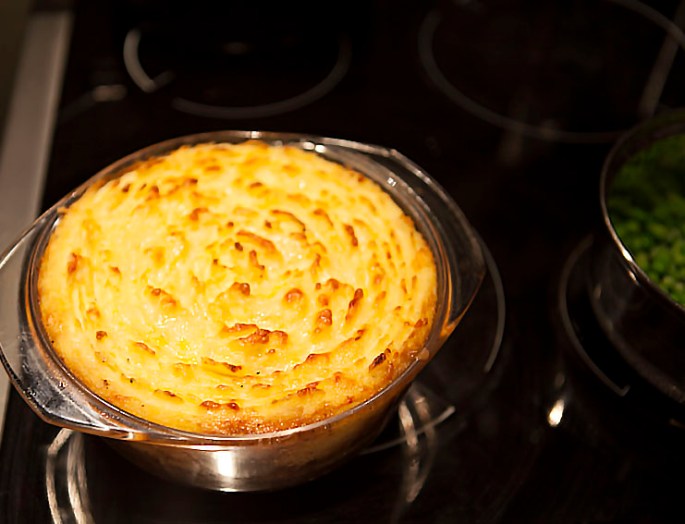
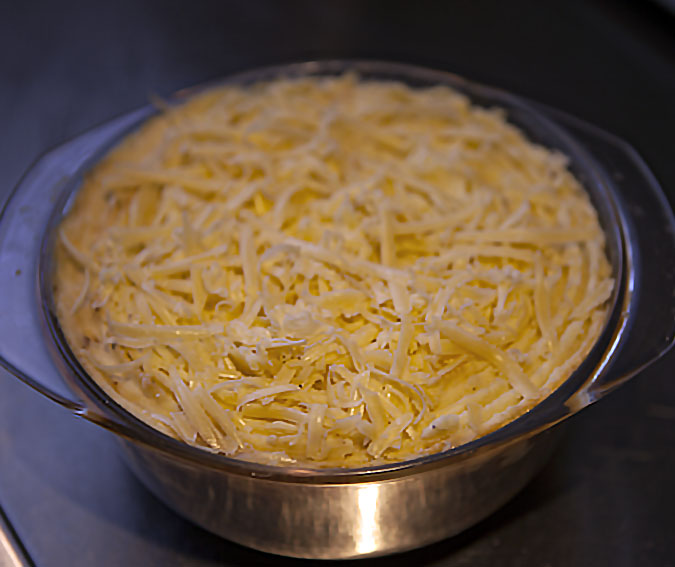
Cottage Pie 1

COTTAGE PIE

(Serves 2 as a single dish meal or 4 as part of a three course dinner  / Preparation time: 45 minutes / Cooking time 30 minutes)

Ingredients for mash

  1. 1½ lbs floury potatoes – peeled and cut up into medium dice for boiling
  2. 2 oz unsalted butter
  3. 5 fl oz single cream or full fat milk
  4. freshly ground black pepper
  5. 2 tbsp coarsely grated cheddar cheese

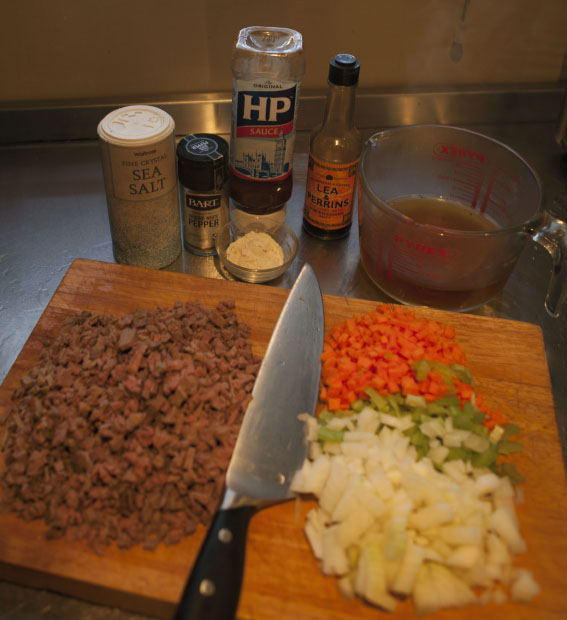
Ingredients for pie

  • 2 tbsp cooking oil (rapeseed, corn or nut but not olive or sunflower)
  • 12 – 14 oz of roast beef meat  –   finely chopped (not minced or blitzed!!)
  • 1 large carrot                            –   finely chopped
  • 1 stick of celery                        –   finely chopped
  • 1 brown onion                        –  finely chopped
  • 1 tbsp plain flour
  • 12 fl oz beef gravy or rich stock (a stock made from a cube will do)
  • 1 tbsp brown sauce (HP, OK, Daddies, etc, or A1 in the States if nothing better to hand)
  • ½ tbsp Worcester Sauce
  • salt and ground white pepper

Method

  1. Preheat oven to 190° c (170° c fan)
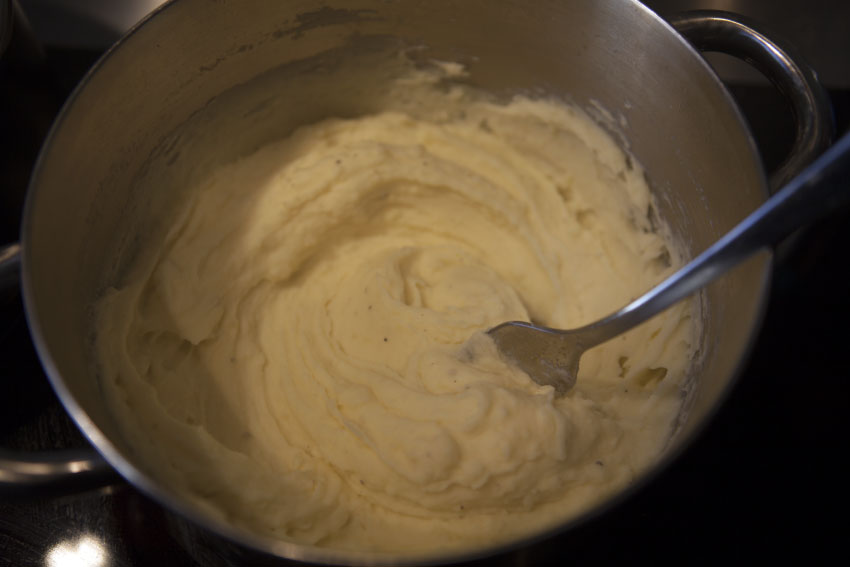
  2. Make the mash potato, being sure to end up with a light and creamy texture – season to taste. Leave to cool.
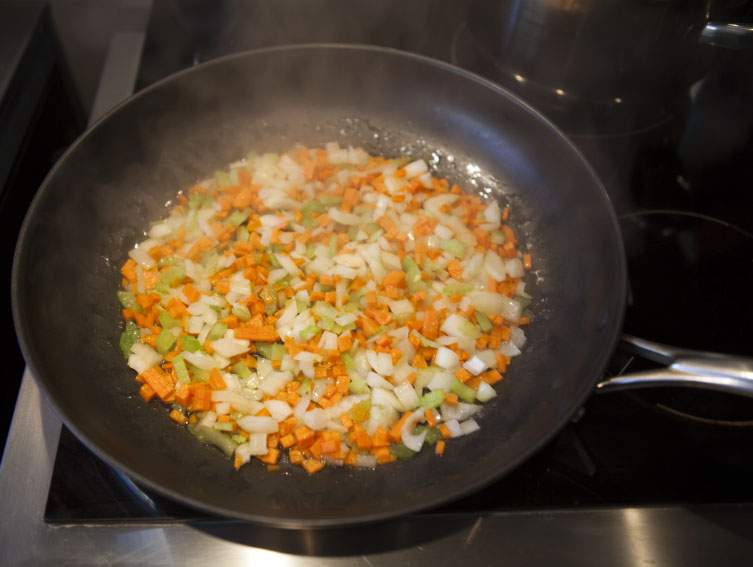
  3. Heat the oil in a large skillet or frying pan over a medium/high heat.
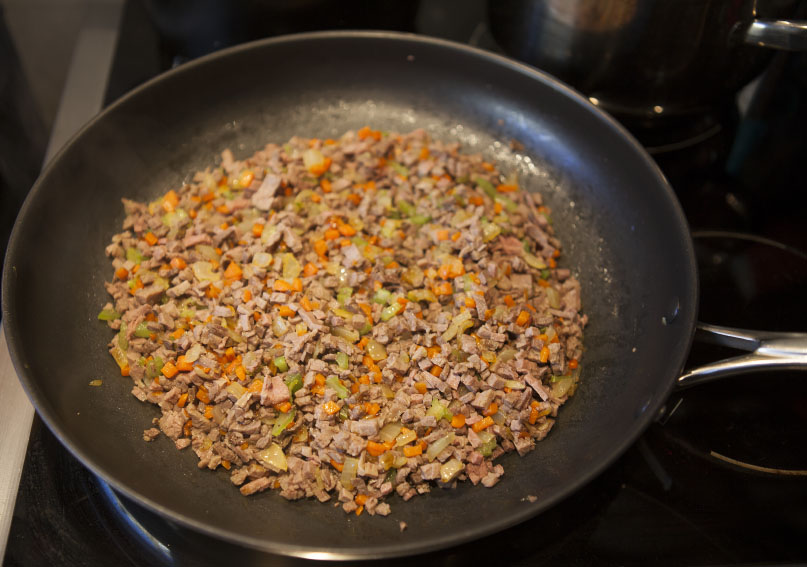
  4. Sauté the vegetables until beginning to brown – about 10 minutes.
  5. Add the meat to the pan, mix thoroughly with the veg and cook for about 2 minutes.
  6. Add the flour and mix well, cooking for a further 2 minutes.
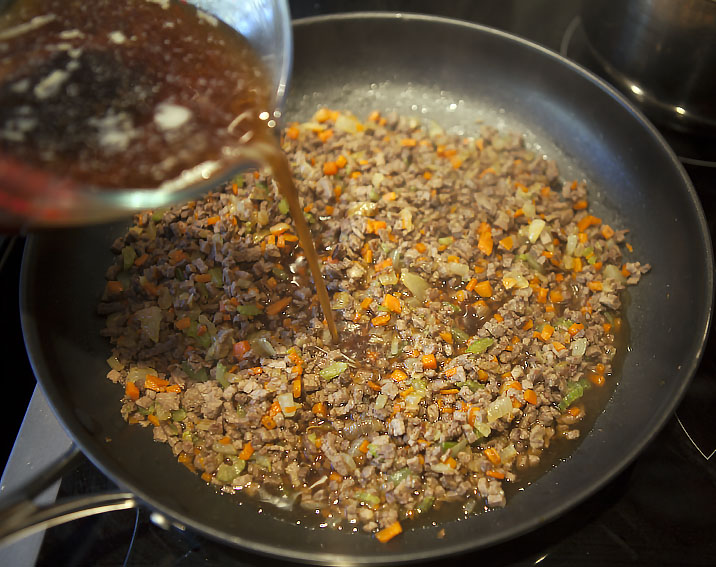
  7. Add the stock, brown sauce, Worcester Sauce and season well.
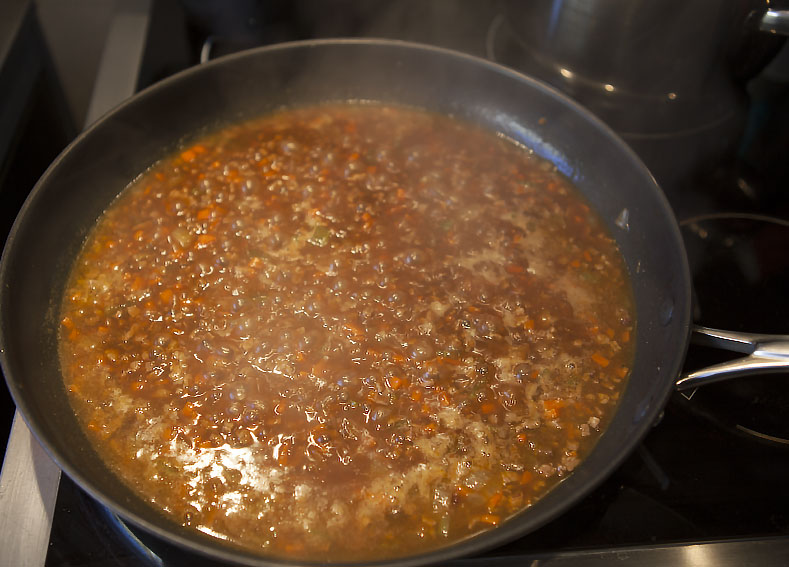
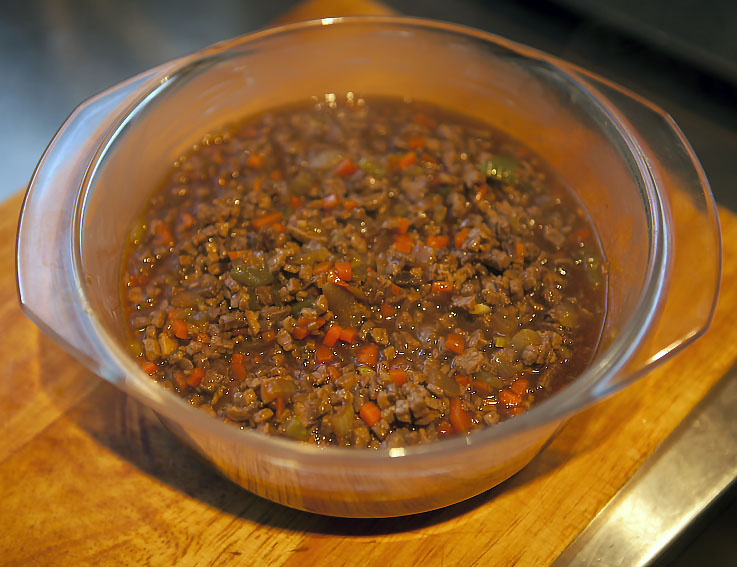
  8. Cook on a high heat until until the stock has reduced somewhat and the pan contents resemble a ragout.
  9. Check the seasoning and pour ingredients from the pan into a well buttered 2 pint oven dish.
  10. Leave to cool for about an hour, until a skin has formed on the surface of the ragout.
  11. Carefully spoon the mash onto the ragout – be careful not to push the potato into the ragout – then spread out with the back of a fork until the potato is level and neatly ridged.
  12. Sprinkle the grated cheese over the top.
  13. Place in the centre of the oven for 25 – 30 minutes until the pie is bubbling.
  14. Serve with a heap of fresh or frozen peas and wash down with a mug of strong English tea, a glass of good ale or a spicy Côtes du Rhône…

(For shepherd’s pie simply substitute the beef with lamb or mutton, use a lamb gravy or rich lamb stock, or a rich chicken stock, and omit the cheese topping.)

  • Hogget meat is from a sheep between 1 and 2 years of age; much loved by connoisseurs of the animal.

WALKING AWAY – or the ephemeral nature of being

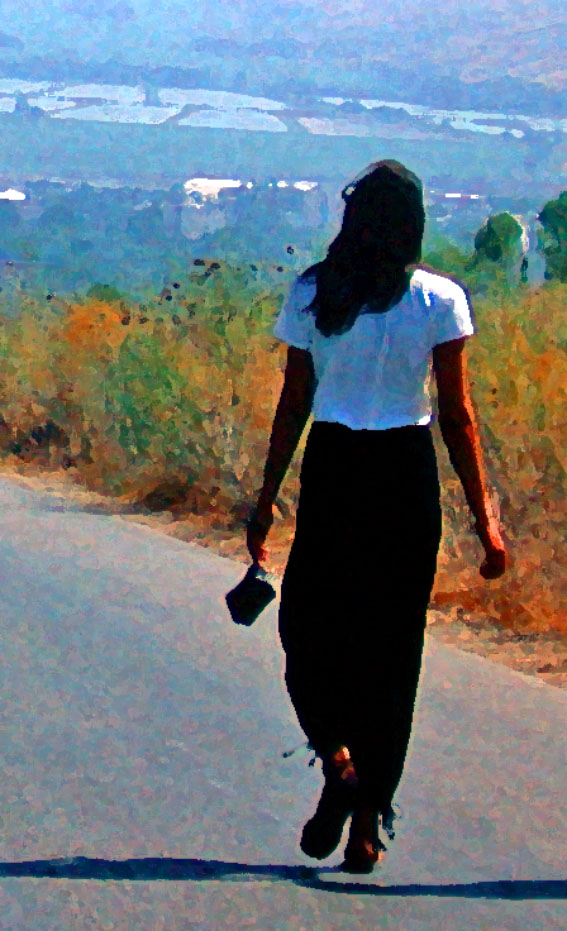
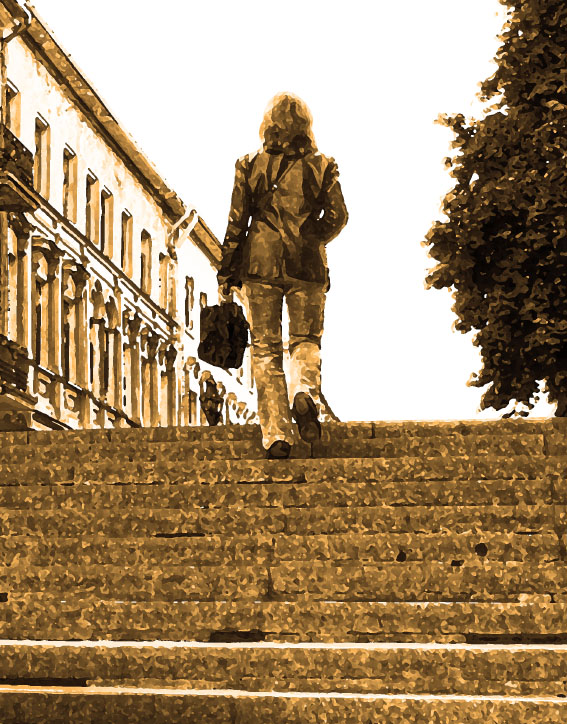
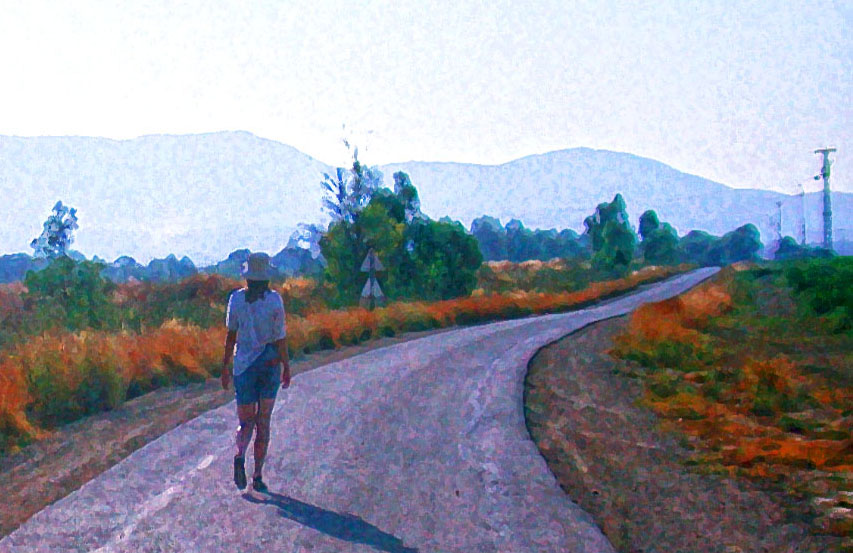
The image of someone walking away into the distance has stirred my artistic sensibilities since early adulthood. I’ve returned to the subject photographically and in paint pretty regularly since about 1979, from when the first picture presented here dates (Astrud at Tel Hai).

Several of these pictures are of loved ones, past and current, walking into a variety of landscapes, urban and open, and I guess that with them in particular, powerful feelings of vulnerability, both as partners and individuals are aroused.

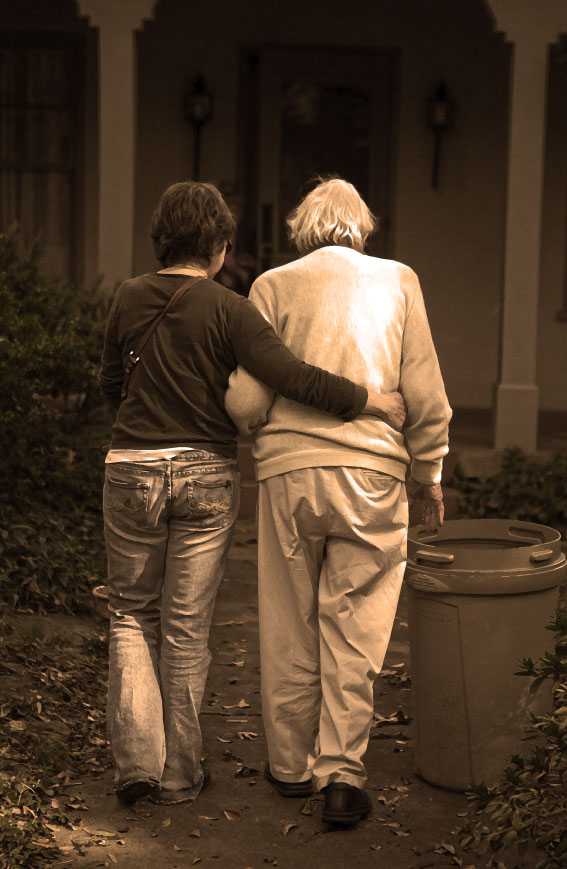
Two of the photos here have special poignancy: The one of my mother Hannah with my grandfather Harry was taken on a stroll in my home town of Edgware in the early 80’s when they both still had many years to live. I took the photo on my old Canonette camera by accident. I was meaning to line up a shot of the lake we were passing when I must have clicked the shutter too early. It was only when the film came back from the developers that I saw the photo, and even then I instantly realised that it was a happy accident in that it had somehow captured the essence of them and their relationship in a way that no face-on portrait ever could have matched. The fact they are both now dead has made this image increasingly precious to me as the years have passed. The picture of my wife Dido walking her old and frail father into his house in Little Rock is even more poignant in that it represents the last photo of them ever taken together. About an hour later we returned to the airport, never to see him again.

All the pictures here, even those of total strangers, like the chap on Hampstead Heath, have a quiet melancholia about them in that they share a sense of our human transience.

1-astrud-walking-away-tel-hai-israel-19792-p-walking-away-ein-kerem-israel-19813-zaida-hannah-edgware-19834-f-walking-away-amir-israel-19845-dido-on-boulogne-beach-19946-dido-in-oxford-20077-dido-in-kovno-lithuania-20098-dido-and-david-little-rock-usa-20129-man-on-the-heath-hampstead-2016

PORTRAITS – and my thank you to Chaim Beckman – and Kevin

I was only five years old when my first headmaster, Chaim Beckman, described me as “the complete illustrator and cartoonist”. However accurate he was in that appraisal there was no doubt that I was certainly able to capture a person’s likeness – in comic or serious form – from a precocious age. And, although I never made much money from portraits it was nevertheless a skill which served me well in some quite surprising ways.

Because I’d been living abroad for most of the previous year I missed being streamed in that first fateful year of English and Welsh comprehensive education in 1971 and so found myself “defaulted” into class “G” at my local ex-grammar school in Edgware (north London). Nearly all my friends from primary school had been streamed into classes “A” and “B”, with the few  relatively “dumb” ones ending up in “C” – so you can only imagine how isolated and strange I felt finding myself cast five rungs further down the intellectual ladder. The  fact that all of my new classmates were from the other side of the north London social and cultural tracks, and that I was the only Jewish kid in the group made for a potentially dangerous educational experiment – dangerous for me that was. But fortunately, my drawing (and my portrait skills in particular) was to prove to be my guardian angel.

On my very first day in class, the alpha male of stream”G”, a boy-mountain  called Kevin approached me menacingly. Towering over my desk – and in what was my first personal experience of antisemitism directed at me – he  said, ‘Oi you – Jew boy!’ But before I had time to feel fear or shock, he continued; ‘I ‘ear you’re-a-bit-of-a-fucking artist’ (he used that expletive or worse in every utterance he made), to which I mumbled back something like; ‘er…yes…I guess so…”

‘Well fucking are-ya-or fucking arnt-ya?’ he demanded.

‘Yes’ I replied, perplexed and intimidated in equal measure, ‘I’m quite good at drawing’

‘Fucking draw me then!’

‘What?’

‘Are ya fucking deaf? I said draw me ya little Jew bastard!’

‘Er…draw you? When?’

‘Fucking now!’

It’s never ceased to amaze me, the things we can achieve whilst in a state of abject fear.

Somehow or other, I remained composed enough to invite Kevin to take a seat at the vacant desk next to my own, remove a new pad of lined paper from my brief case, take a felt tipped pen from my inside school blazer pocket and even to ask Kevin if he wanted me to do a caricature or something more serious.

‘A carick-what?’ he asked me.

‘Like a cartoon…like in the comics’

At this he smiled for the first time and said ‘Yeh! Make me into a cartoon, and put me in an Arsenal strip!’

Fortunately Kevin didn’t yet know that I was a Spurs fan. That heinous fact on top of everything else might have pushed him into doing something rash before I got a chance to win his favours with my drawing. But, to cut a short story even shorter, and spare you all from more of his expletives, my drawing of Kevin’s head on George Graham’s body, doing amazing things with a football impressed him so much that from that moment on, apart from having the honour of being “Kevin’s Jew” I was also designated by Kevin to be stream “G”s official artist. “Working for Kevin” (that was the way he termed it) was a bit like being the court artist to Henry VIII (they even looked a bit alike), with all the pressures and stresses that particular job must have entailed – only it was more the threat of having my head “beaten to a pulp” than having it removed which kept me on my toes.

As things turned out I only had to survive two terms at that school, but by the end of my time there, Kevin had – albeit somewhat inadvertently – helped me hone my drawing skills to a whole new level.

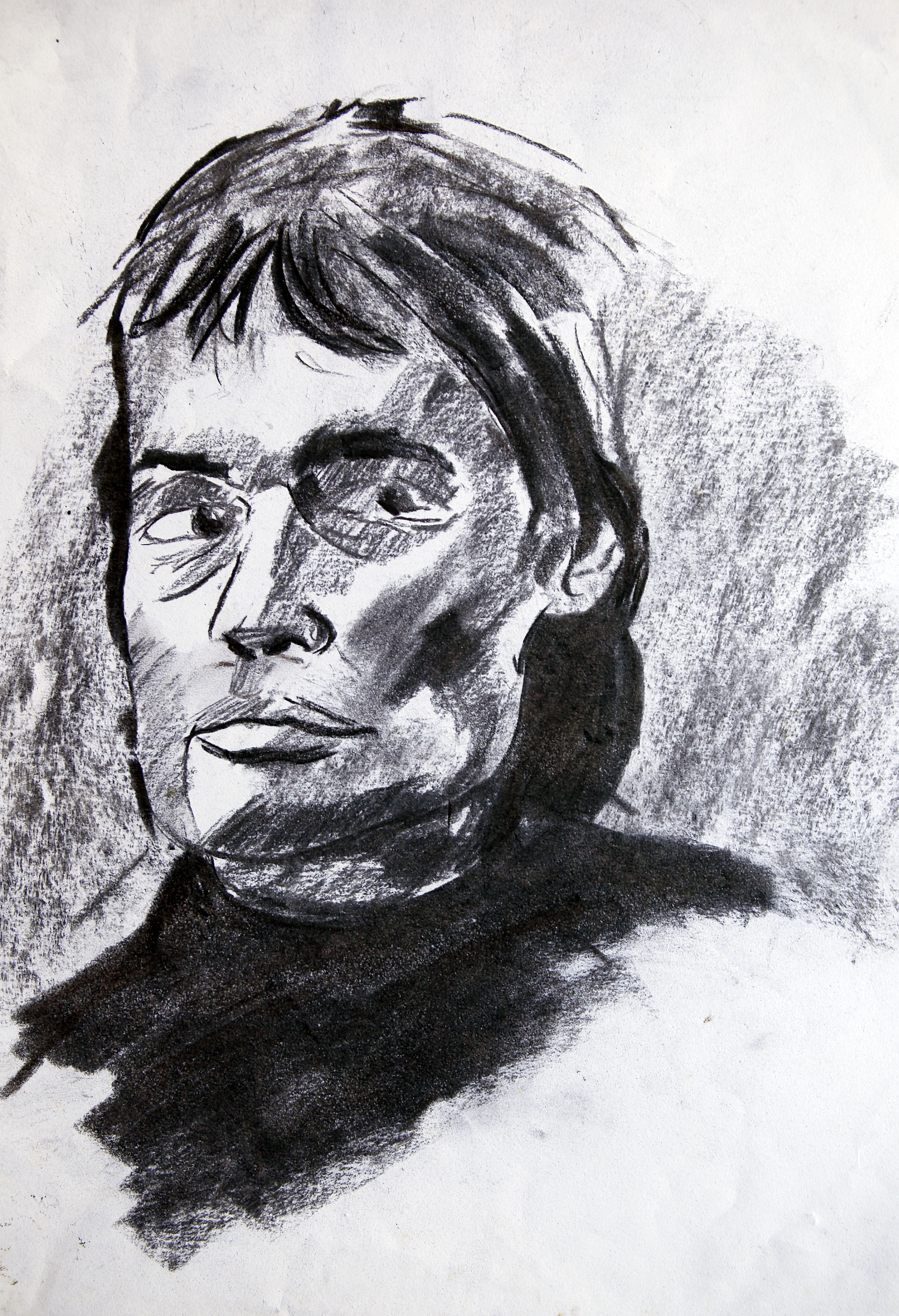
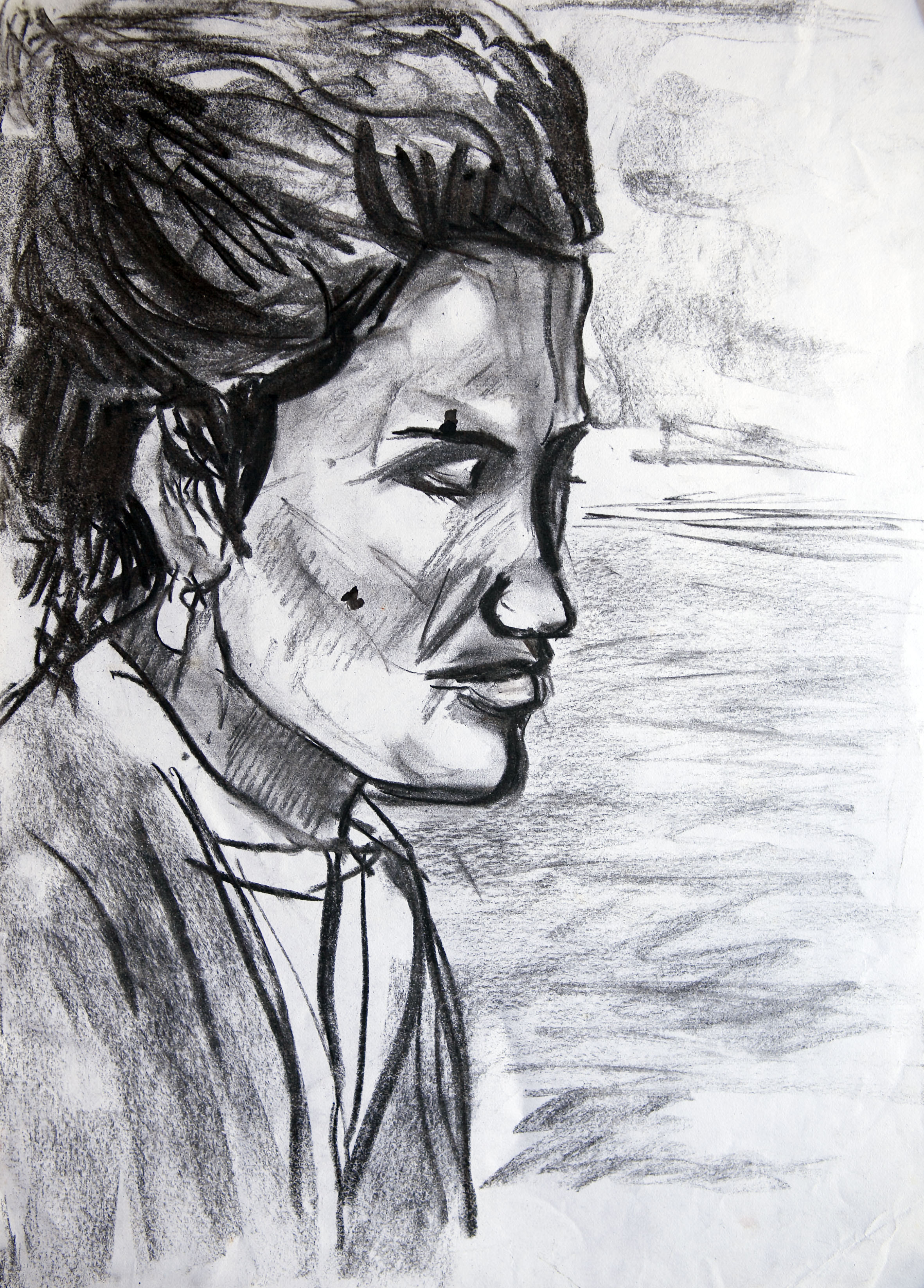
This selection of portraits (including sketches of one or two quite well-known people), covering about two decades and done in a variety of media, formal and rough, is dedicated to the late Chaim Beckman (one of the subjects presented here) for believing in me from such an early age, and also to Kevin, for teaching me to work well under pressure. Sadly, I don’t have any of the dozens of drawings I made of Kevin as he kept the “fucking” lot…

LOVE AND MARRIAGE – and a few laughs

With Valentine’s Day less than a month away and in light of the favourable response to my two recent greetings cards posts, here are some of the more successful designs I made back in the 1990’s with a romantic theme. While some were done specifically for the feast of said Valentinus, most were commissioned to cover the themes of wedding and / or non-specific anniversaries of a romantic nature.

The more conventional designs were for the UK market with the more quirky, and risqué images proving popular with Scandinavian, Dutch and German clients — although how they translated the captions, I have no idea.

My particular favourite — albeit retrospectively — is “You’re Just My Skype”, which originally bore the caption “Think of Me Always”. Given that the card was published in 1998, a full five years before Skype was launched I’m struggling to remember what influenced the design? Maybe it was just my “Jules Verne” moment…