Pain and Pleasure at the Rijksmuseum (June 2024)

obscure gems, camera-obscured vermeers and an unwatchable nightwatch…

I am a very fortunate and privileged person. In 1987 I and my then-girlfriend visited the Alhambra Palace in Granada, and had the entire place to ourselves. The stillness of the Court of the Lions in particular, with its serene Solomonic atmosphere, only disturbed by the wing flutters of doves and the chirping of swallows was a transcendental experience.

About ten years later, I had an equally powerful-yet-serene artistic moment of solitary good fortune in the Rijksmuseum in Amsterdam, when I had its famous collection of nine Vermeers all to my lonesome. This was especially lucky, as few great works of art demand peaceful contemplation more than those of the genius from Delft. It was probably no more than five minutes, but easily sufficient time to appreciate a unique opportunity for private quality time with nine of the finest paintings ever conceived.

Young Italian Woman with Puck the Dog – Thérèse Schwartze (1884/5 – oil on canvas). Ashamed to say that I had never heard of Thérèse Schwartze, but I’ll never forget her now after being thrilled by this life-size study of attitude and poise…

But that was then, and now things have changed for the worst, at both the Alhambra and the Rijksmuseum.

Both places are victims of their own massive popularity and their increased accessibility due to an exponential rise in mass-tourism. And, both places resorted to the same “remedy” for dealing with the ever larger crowds of people wanting to see their glories – the dreaded time-slots…

I have visited Amsterdam many times since 1997, but because I knew I could never repeat that incredible Vermeer encounter, I had avoided the museum – until last week.

We were in town for 48 hours and our hotel was next door. Everytime I stepped out onto the street, there was the great red-brick edifice, staring me in the face, taunting me. So, I gave in, and booked a 10 am (and first of the day) slot on my iPhone for the second day. Get there early I thought, and I might just have a chance of beating the crowds to the Vermeers, even if only by a minute or two, it would be worth the €20 for the ticket.

A Young Woman Warming her Hands Over a Brazier: Allegory of Winter – Cesar Boetius van Everdingen (1644-48 – oil on canvas)
Again (although here I was aware of the painting), I had only a vague knowledge of this exceptionally gifted Dutchman. As with the Schwartze above, the painting in the flesh (so to speak) is unbelievably compelling. These iPhone photos, don’t convey a fraction of their power in real life...

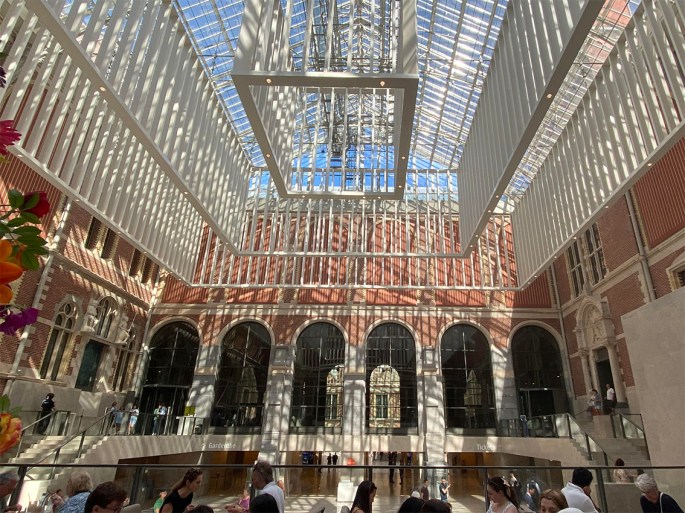
How wrong I was. I got to the entrance at 9.45 (15 minutes before the official opening time) and, much to my pleasant surprise was allowed in. However, my cheerfulness was instantly doused, the moment I entered the grand vestibule, to discover it full of people – mostly grouped in tour parties, with tour guides, whose competing, amplified voices, filled the space with a kind of strident, oddly-American-accented hiss.

On my way to the Vermeers I passed large classes of school children, many spread out, sitting on the floor spaces, surrounding their teachers, like bees around a queen, but all (teachers and children) dressed in white lab-coats. And no, I haven’t a clue either, but it all added to overall feeling of organised pandemonium.

Having navigated my way past these sizable (and voluble) obstacles I eventually made it to the gallery containing the Vermeers, but of course, I was too late. I don’t know when wouldn’t have been too late, seeing as I had entered the museum 15 minutes before the official opening time, but I’m guessing, some time around three in the morning? How/why/where all these people came from – hundreds of them – in yet more tour-guide parties, between me and getting anywhere near the paintings, is a mystery. But whatever, I wasn’t going to see the Vermeers – not that I would have wanted to given the football-crowd environment engulfing them.
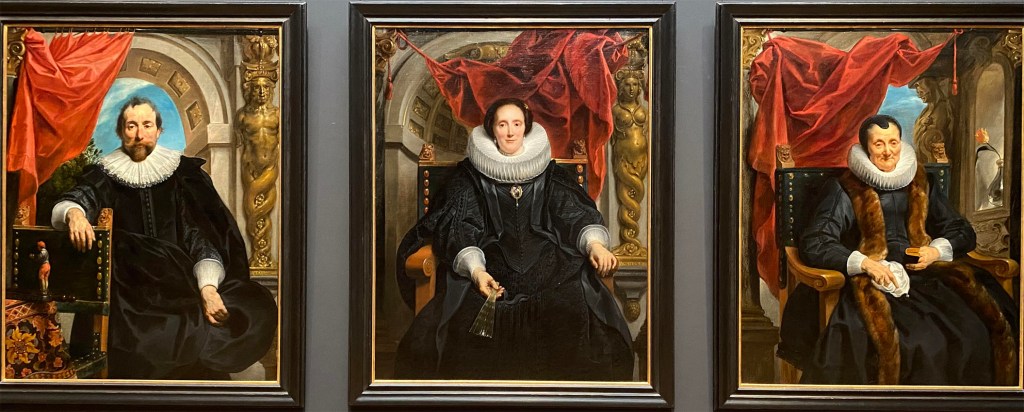
Three Portraits of Notables of Antwerp – Jacques Jordaens (1635/36 – oil on canvas)
If, like me, you’re a sucker for the wow-factor possible from supreme painting technique, then this virtual triptych of life-size portraits, by yet another artist I barely knew of (Flemish this time, not Dutch) is the exhibit for you. While it might not have the subtle deftness of The Night Watch, for example, they’re packed with empathy, presence and attitude – and most importantly of all, have no unsightly screens, and rarely any people between them and you!

So, as a second prize I tried for the Rembrandts but fared little better, and ultimately settled for distant side galleries and the often surprisingly superb consolations on offer, which comprises most of the illustrated story accompanying this post.

In short, do visit the Rijksmuseum next time you are in Amsterdam, but be prepared to make do with side galleries and supposedly “minor” exhibits. Fortunately, being one of the greatest art galleries on the planet, insures that there are plenty of allegedly “lesser” gems of outstanding and memorable value on offer, to enjoy in relative peace and harmony.
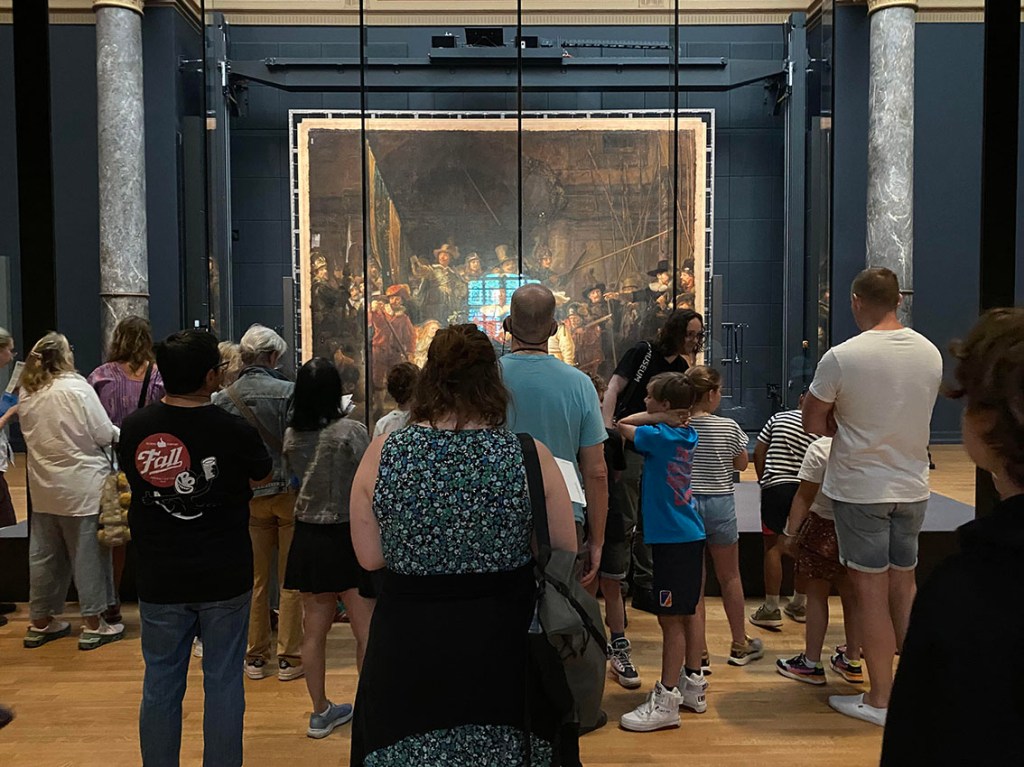
The other side of the Rijksmuseum coin. Somewhere behind all of that lurks The Night Watch. There has to be a better way…

BEAUTY IN DRAB PLACES

and if vermeer had USED an iphone…

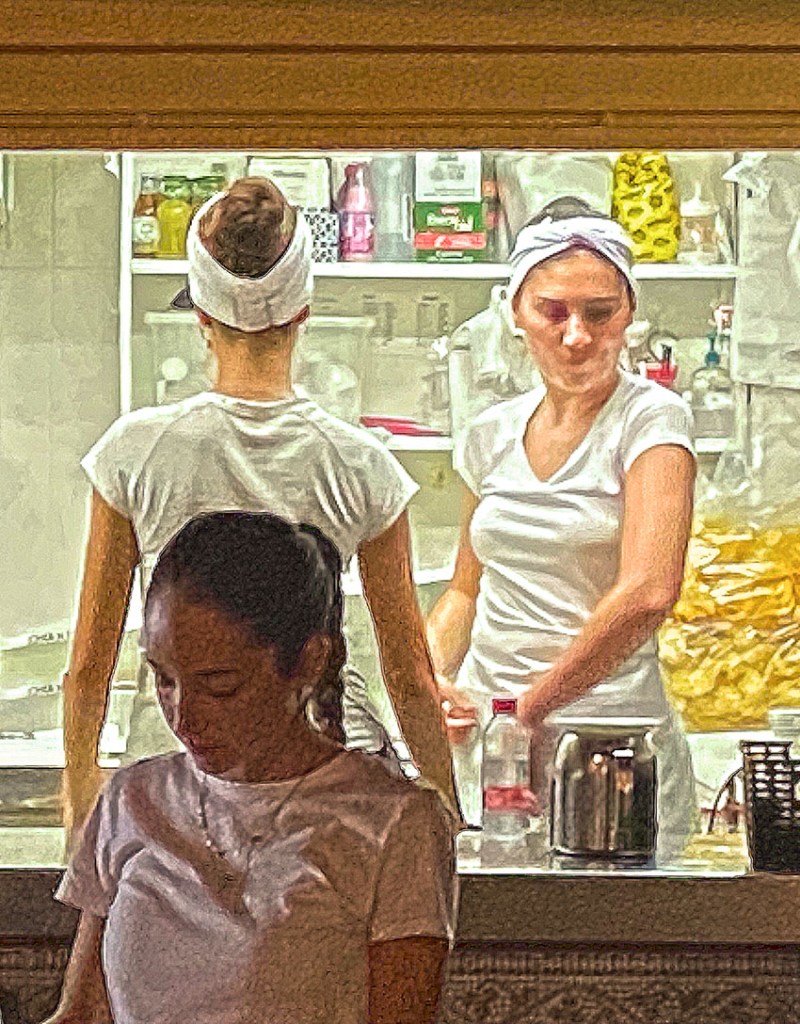
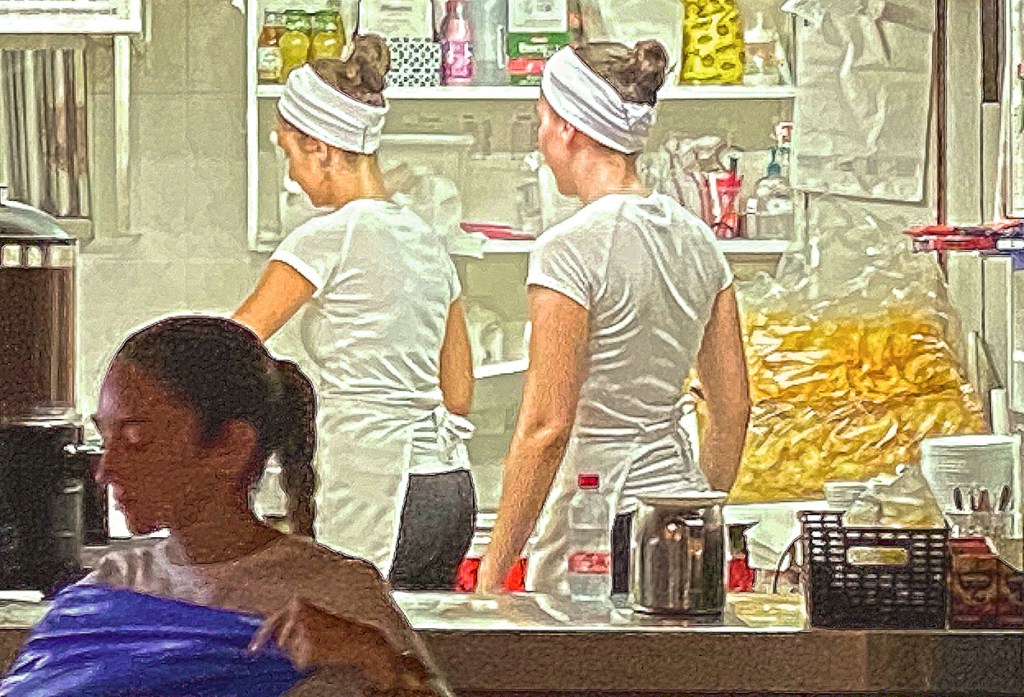
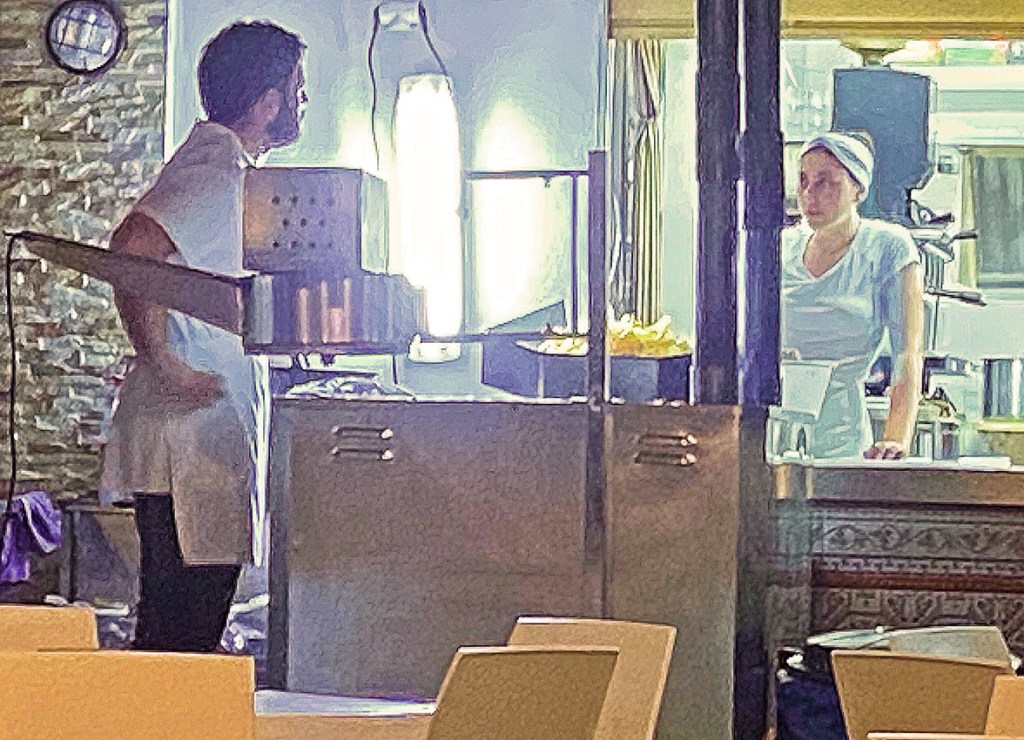
In my previous post I described several instances of discovering wonderful food in the plainest of locations, and since I published that piece, I have also discovered human beauty in an unexpected location.

It happened in Almuñécar, a seaside town on the Granada coast. We were there for the annual “Jazz en la Costa” music festival, when we were enjoying a late post concert beer at an all-night churreria and crisp (chip) frying shack on the beach.

Dido, our friend Pepa and I were feeling a bit down having just witnessed a hugely disappointing performance by the legendary jazz pianist, Abdullah Ibrahim. Unfortunately the elder statesman of South African jazz had a very bad night indeed, constantly hitting off-notes and missing his queues. And that, compounded by the hapless attempts of his sax and double bass accompaniasts to occasionally play jazz riffs on piccolo and cello respectively! So embarrassingly awful was the performance, that we upped and left early to seek solace in some liquid refreshment, and so found ourselves at the churreria.

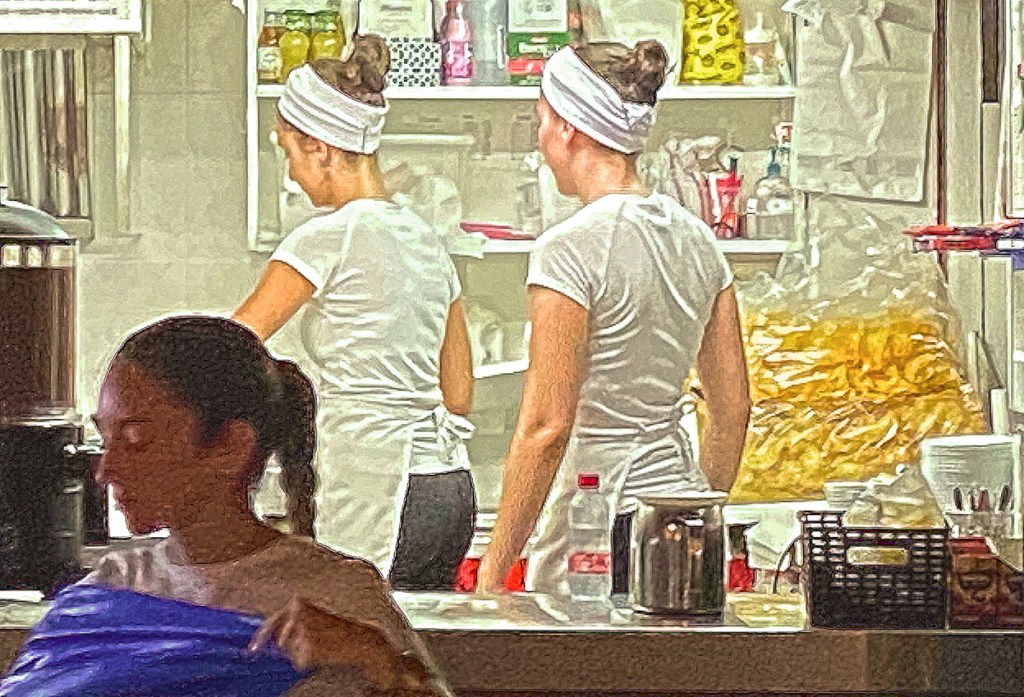
Within seconds of sitting down at the table I became captivated by a scene of such elegant industry and confident movement, the recent memory of Mr Ibrahim’s faltering piano playing drifted away on the Mediterranean night breeze.

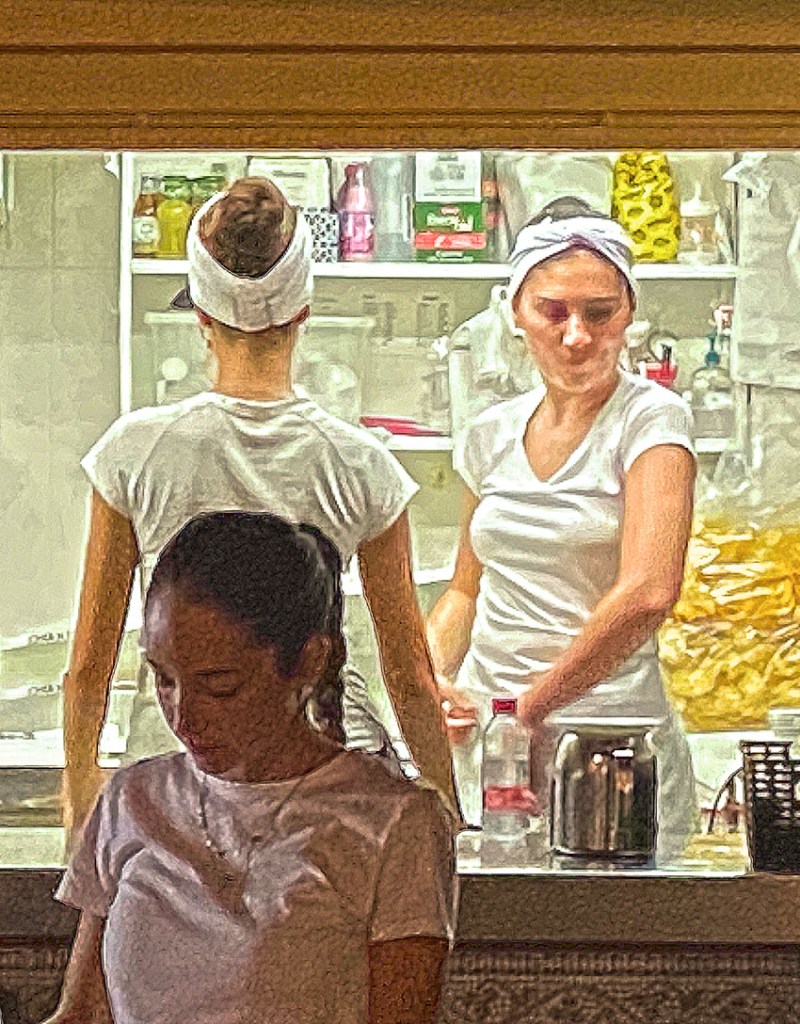
These images are my photoshopped fun attempt to turn a few hastily snapped iPhone photos of that effortlessly stylish scene into a modern-day Vermeer-esque tableau. I hope they please…

WHISPER-COLOUR

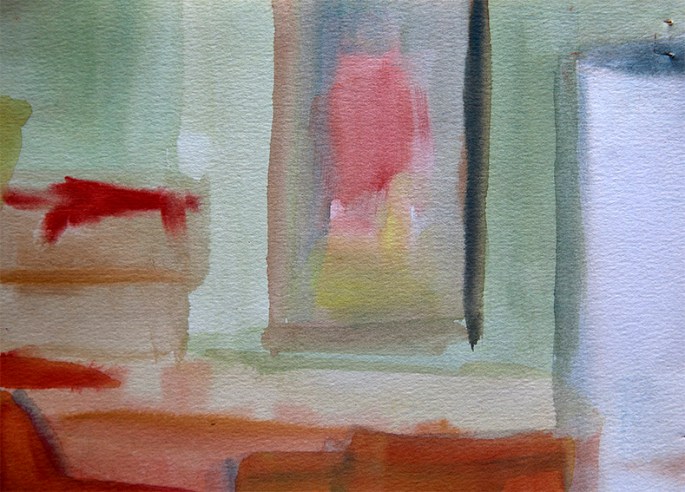
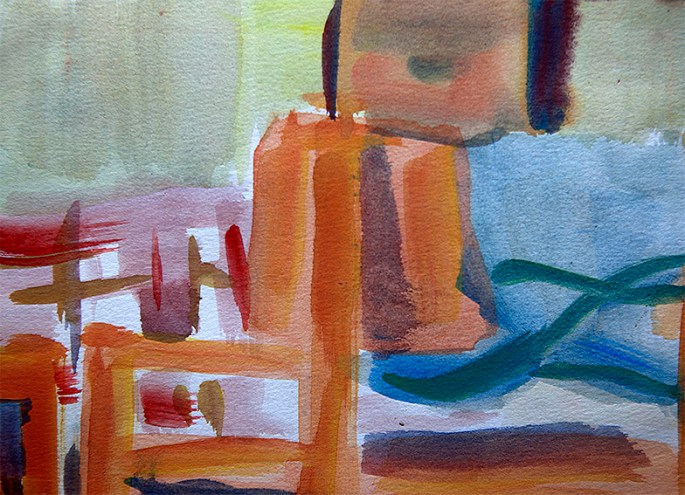
watercolour impressions of joyful mundanity

My two favourite painters, Vermeer and Hopper, shared an amazing knack for turning unremarkable moments and scenes into images packed with dramatic nuance and eternal resonance. Their most famous paintings offer graphic testimony to the enormous power of the “small still voice”, where the importance of the message belies its volume.

Lacking those two gentlemen’s genius, and in common with most regular artists, I was typically more of a megaphone artist when attempting to get my own pictorial messages across, relying on devices like huge canvases and epic subject matter.

However, even an artist of my own normal abilities could occasionally succeed in imbuing the mundane and the ordinary with a little charm and presence, especially, when I resorted to watercolour. For me, watercolour painting was an antidote to everything else I did, in oils and even gouache – a therapy almost – a sort of breathing exercise with brushes and colour, whereby I visually inhaled a scene; processed the scene in the blink of an eye; and then exhaled the scene through my water-sodden brush.

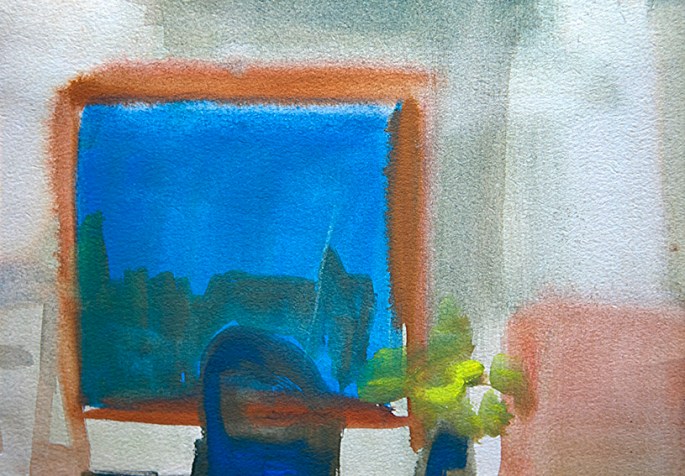
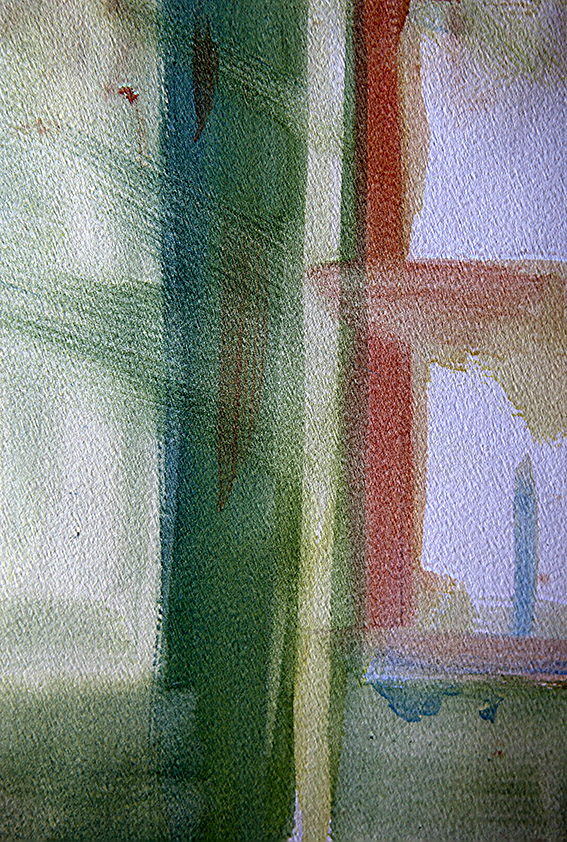
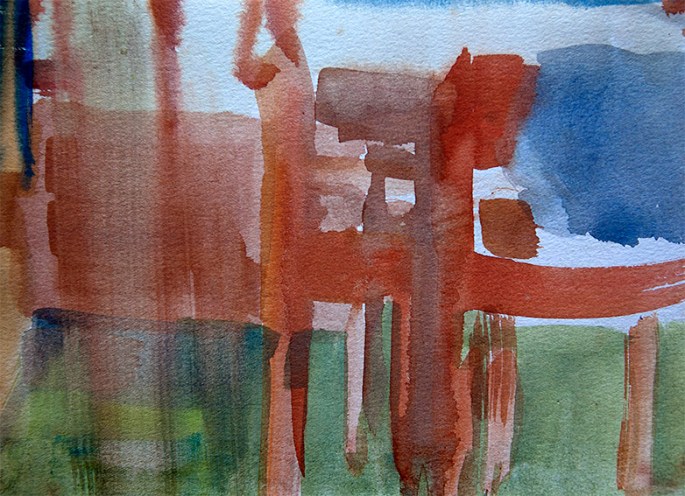
The pictures presented here are good illustrations of how a few simply applied watery daubs can raise a mundane suburban sitting room into a theatre of colour and light. No overthinking; just a touch of keen observation and easy application, and the everyday is morphed into the exotic. These watercolours are the closest I ever got to successful whispering.

(Incidentally, I should mention that I still have the originals of most of these images from my old watercolour sketchbooks and I’m happy to sell them for £400 each, plus, they reproduce beautifully as digital prints on fine papers for £100 each, plus postage and packing. All images, original and repro’ about 25 x 18 cm)

HARTLAND LOUNGE 1 (BILL’S NIGHTSCAPE DAFFODILS) – watercolour on paper – 1982
HARTLAND BEDROOM 1 (MUM’S DRESSING TABLE WITH CURTAIN) – watercolour on paper – 1982
HARTLAND DINING ROOM 1 (DINING CHAIRS AND TABLE) – watercolour on paper – 1982
HARTLAND KITCHEN 1 (THE WASHING MACHINE AND WINDOW TO FRONT GARDEN) – watercolour on paper
HARTLAND DINING ROOM 2 (TABLE WITH BILL’S WOODLAND SCENE) – watercolour on paper – 1982
HARTLAND LOUNGE 2 (REAR WINDOW) – watercolour on paper – 1982
HARTLAND DINING ROOM 3 (CHAIRS) – watercolour on paper – 1982
HARTLAND LOUNGE 3 (BOB’S NIGHTSCAPE WITH DAFFOLDILS II) – watercolour on canvas – 1982

PHOTO-REALISM v’s PHOTO PLAGIARISM

…and the stark difference between copying and INTERPRETING.

This is not the post I had planned. But that was before I had the great misfortune, not to say fright of seeing the latest portrait of Her Majesty Queen Elizabeth II. A few posts ago I discussed how I came to paint from photographs, and how and why it can work brilliantly in the right hands. What I did not discuss however (and perhaps I should have done), was the converse of this, when photographs are simply copied as a form of craft, with the art all but forgotten.

Well, this latest portrait of HRH (https://ewn.co.za/2020/07/26/queen-elizabeth-sees-new-portrait-unveiled-at-britain-s-foreign-office) not only manifests as easily the lousiest in a long line of dire images of the United Kingdom’s longest serving sovereign, but also exemplifies all the worst elements of painting from photographs.

The “artist” has succeeded in confirming every prejudice I ever had thrown at me by detractors of “photograph-method”, and arrived at a plasticised and peculiarly scary image, obsessed with technical finesse while utterly devoid of empathy and artistry. This is not so much a majestic portrait as a grotesquely kitsch, 2-dimensional waxwork. This is the produce of a copyist and not an artist at all, and says much – none of it complementary – about the judges of the BP National Portrait Award; the winning of which landed the alleged “artist” this most august of portrait commissions.

As I attempted to illustrate in a previous post, copying from photographs offers so much more than the absolute stability of the reference material (i.e. total stillness and unchanging light). IN THE RIGHT HANDS – from Vermeer (with his Photo Obscura) to Rockwell – it offers up an essence and intensity of “moment” that resulted in some of the most empathetic and compassionate pictures ever achieved.

While I would never be so hubristic as to place my own photograph-method creations on a par with those of the great masters of the past, I dare to claim, that at their best, my efforts do at least show some of the positives of the genre. Three of the pictures below were not only exciting and fun to create, they are human expressions accentuated by technique rather than masked by it. The fourth picture is an example of my own, of what happened when I allowed technique to subsume the human moment.

Jolanda – 1983 – oil on canvas:- Jolanda was the first love of my life, as I hope and believe this tender portrait betrays. Using a tiny snap from a then-recent visit to Cremona, I wanted to capture the romance of her, bathed in the Renaissance tones and light of her native Lombardy.

Frin – acrylic on board – 1996:- Frin was an ex-ballet colleague of my wife Dido and a close friend. I can’t recall if this was a commission or a gift, but it comes from a series of images of her, and her and Dido, dancing for my camera at our house in Spain. Again, I used the photo as a sketch upon which to elaborate both Frin’s graceful movement and her vibrant personality, and all drenched in the bleaching Andalusian summer light.
Marie and Juan Junior – 1998 – oil on canvas (detail):- Juan and Marie were our only full-time neighbours when we first moved to our country home in Spain. However, unlike us, who sought solitude and lived remotely by choice, they were outcasts from the local village and desperately poor. Nevertheless, they were a cheerful and extremely loving couple, always pleased to offer us the modest hospitality they could. In this picture of Marie feeding her new baby boy (and second child) I tried to express a mixture of our compassion for their kindness, and our admiration for their dignity, despite their arduous circumstances.

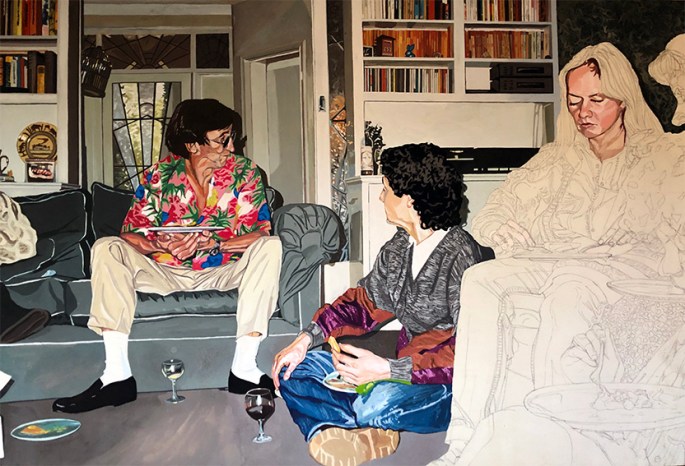
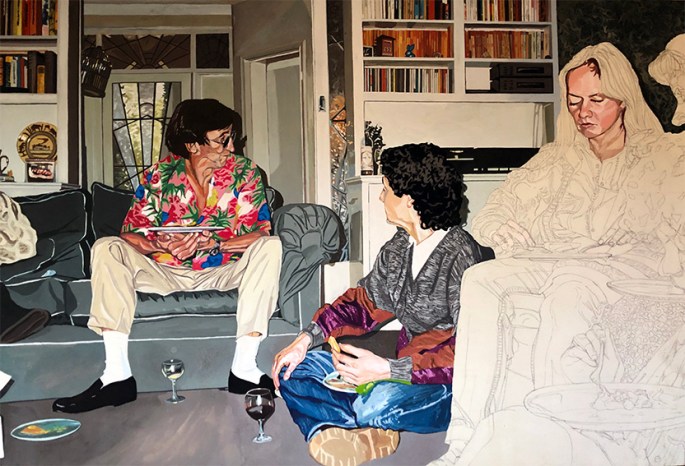
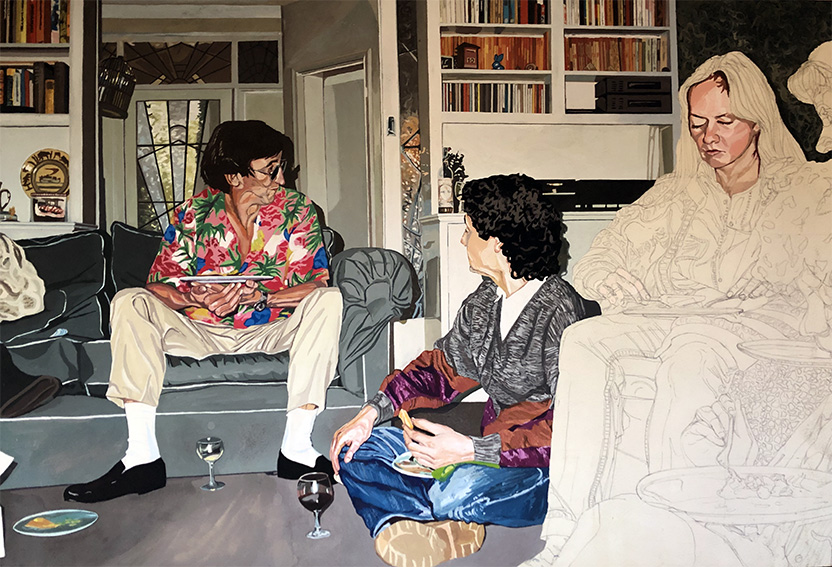
Margaret and Pete’s Party – 1994 – gouache on Daler Board:- In fairness, this was always intended as more of an exercise in technique and excruciating attention to detail, than as a work of artistic expression. The drawing alone took me the best part of a week, and I think I spent over four months on the piece altogether (it was also intended as a way to help me pass the days during the months of depressing boredom while stuck in Boulogne sur mer ). Although not quite so dire as the Queen’s new portrait, it is equally sterile, and that probably explains why I never completed it. Interesting to note, that the hands on the nearer completed figure (actually yours truly), despite being immaculately drawn/copied, have the same “banana bunch” feel as those of Her Majesty in the new portrait.