SIDNEY – A Tribute: part 2

A portrait of a family

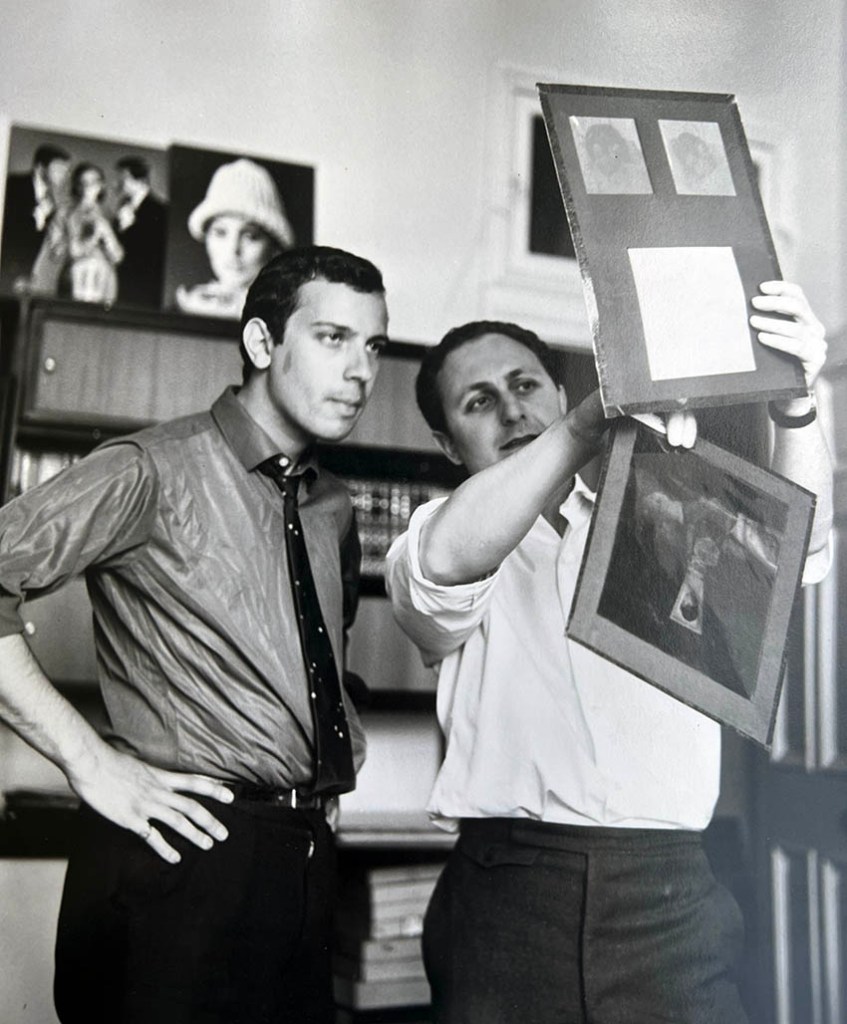
Around late 1959, early 1960, my father, Gerry Green and his business partner, Bill Young launched out on their own as an advertising partnership. They had plenty of contacts in the industry and thus plenty of work, but soon found that the price of good photographers was prohibitive to the success of their burgeoning venture.

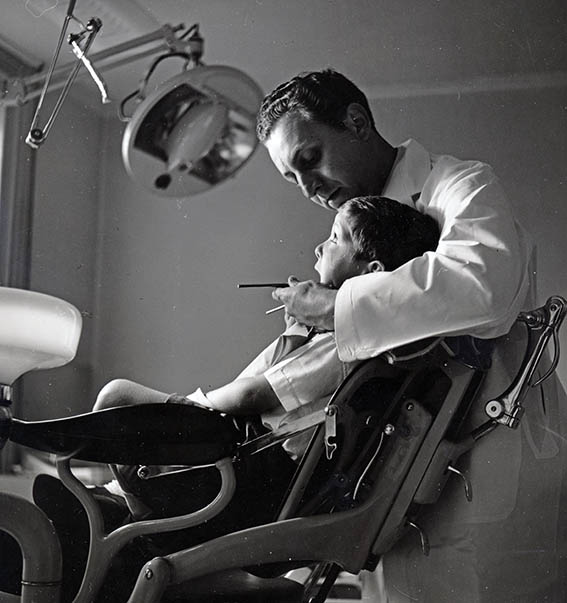
Fortunately, Gerry’s brother-in-law, Sidney Pizan, in addition to being a dentist, was a talented amateur photographer, and when approached was open to the idea of trying his hand at applying his skills commercially.

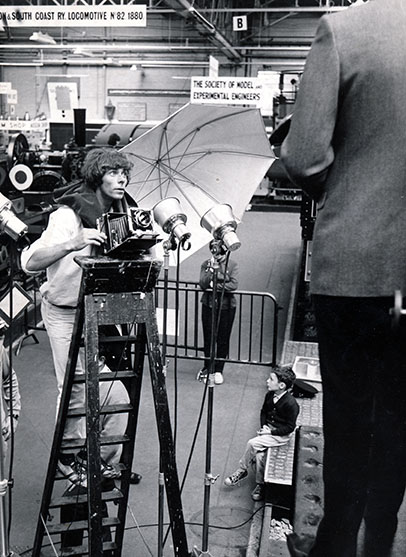
Sidney took to advertising photography like a duck to water, and within a few months, had established himself in Hampstead (in north London) as a professional photographer, getting more work – both from Gerry and Bill, and his growing string of contacts – than he could manage alone. Before long Sidney began recruiting other young aspiring photographers, apprentices and assistants to help him carry the workload and run his business. “The Studio”, as it was known, became something of a commercial photography academy, founding not only Sidney’s career, but those of a string of gifted colleagues.
In my next part of this tribute to my late uncle, I will go into more detail regarding Sidney and his team’s output of fabulous advertising images, but for Sidney himself, despite his success, his greatest creative enjoyment remained his “free” or “casual photography”.

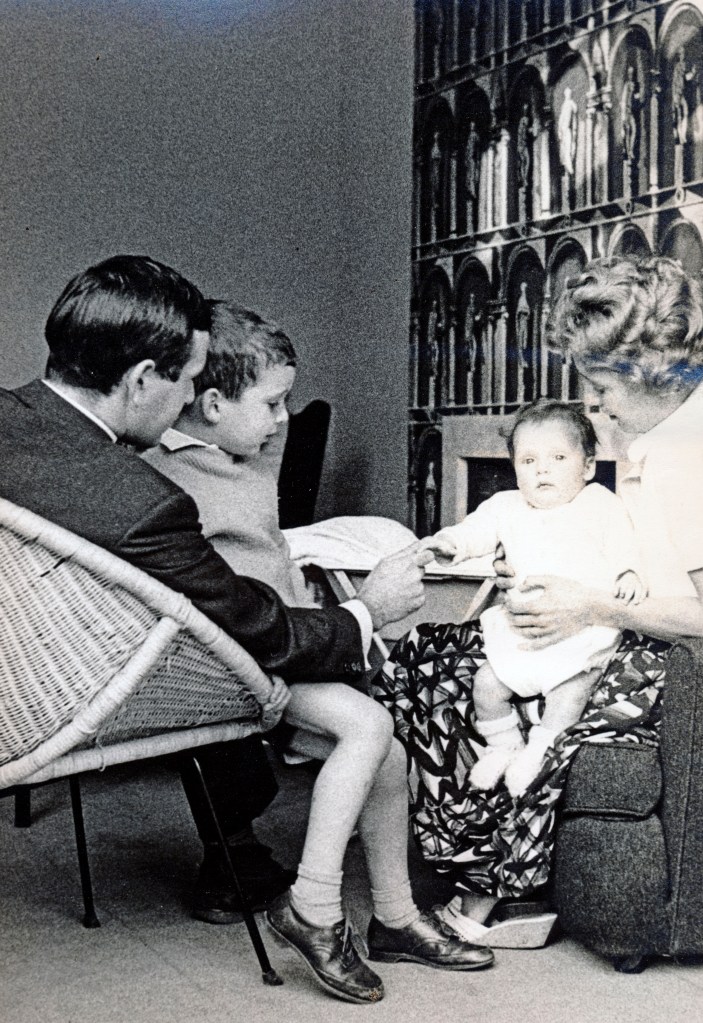
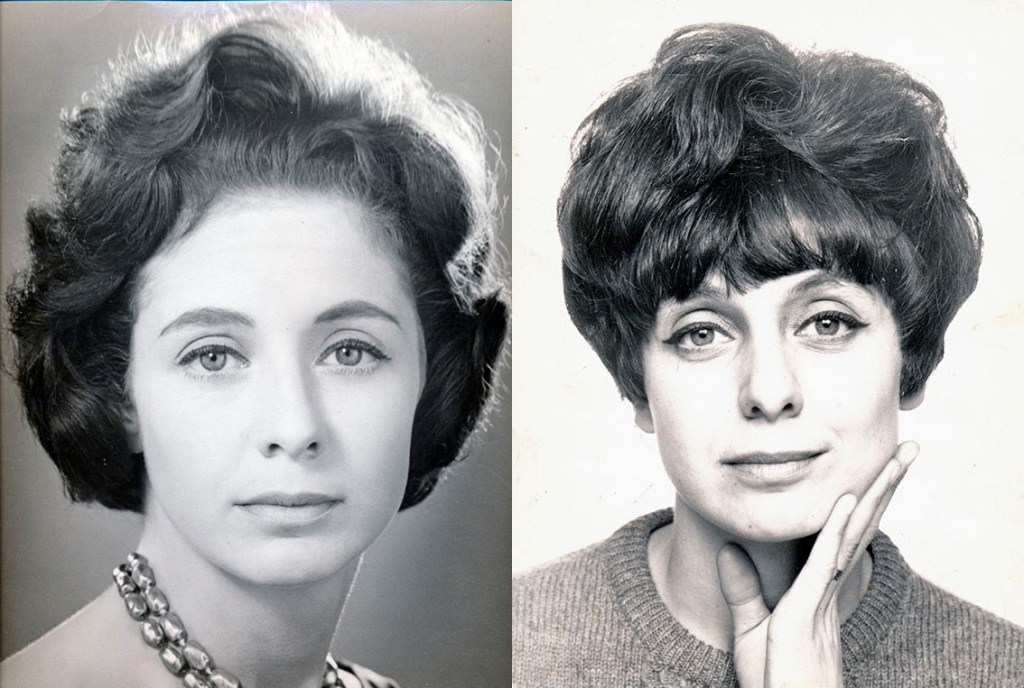
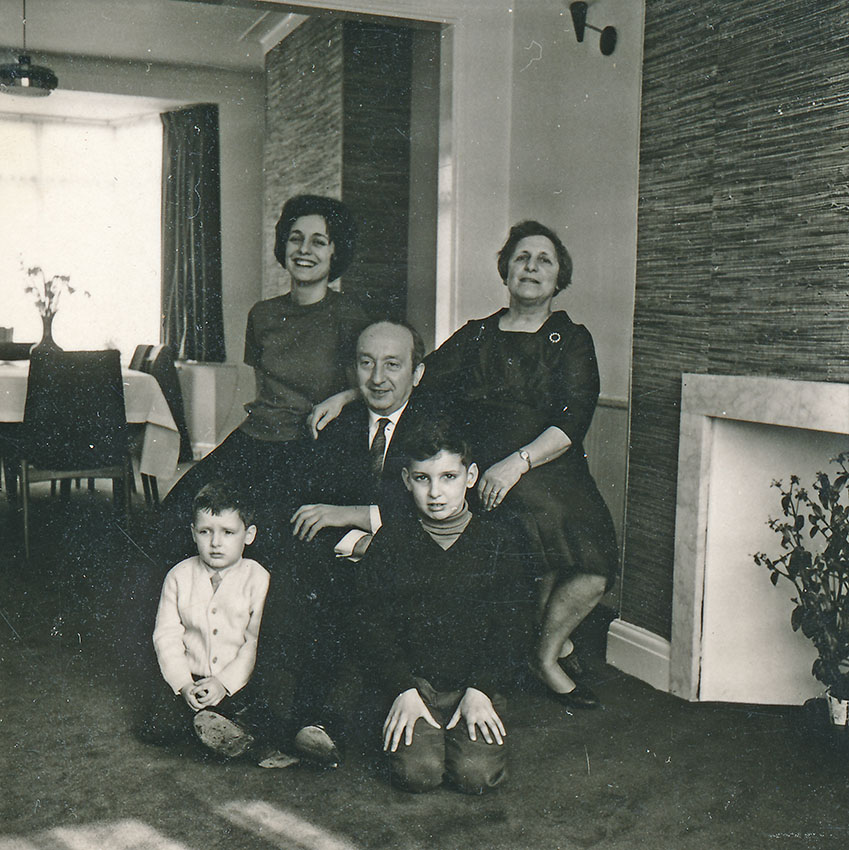
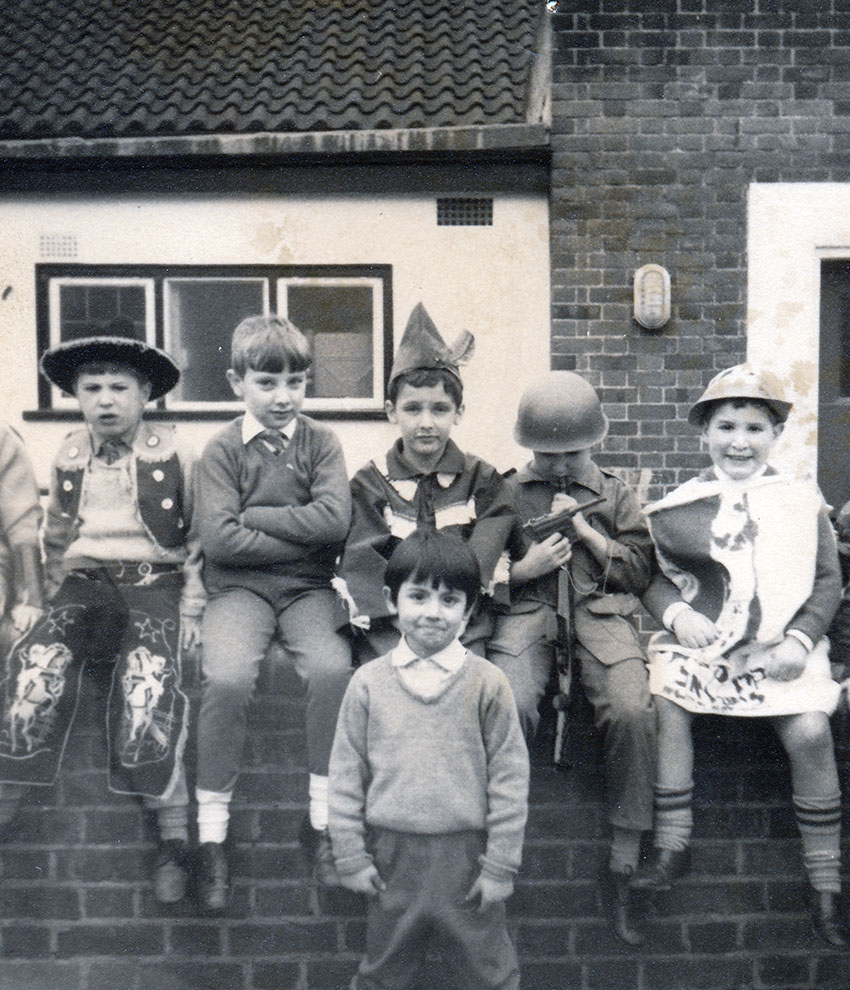
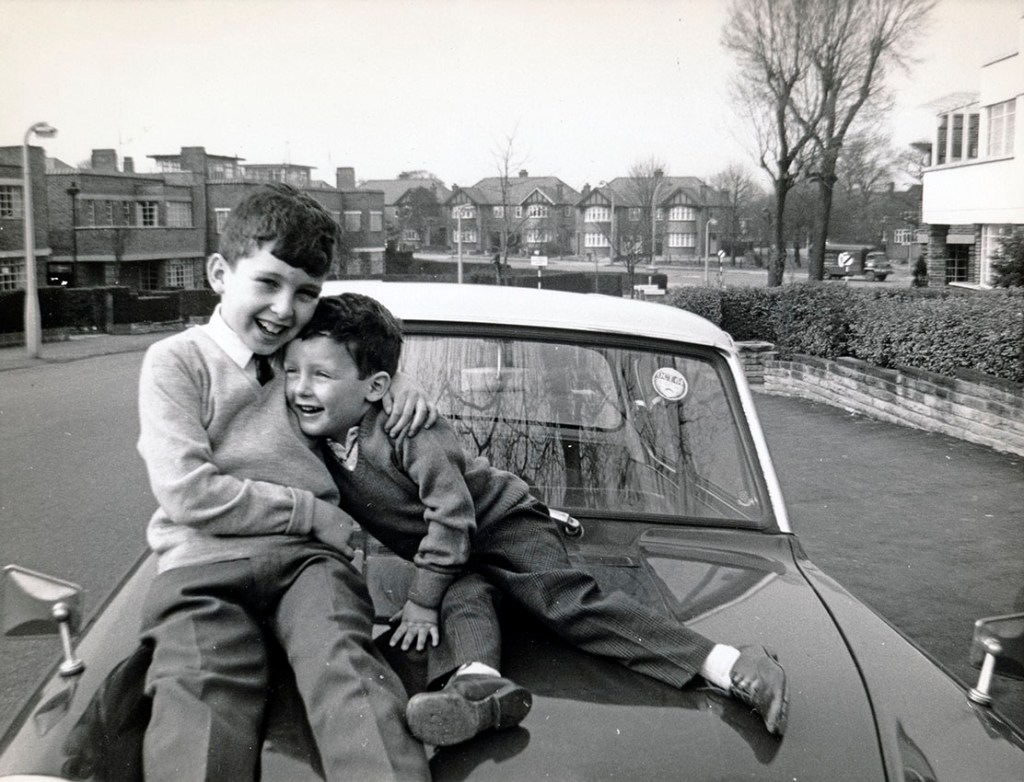
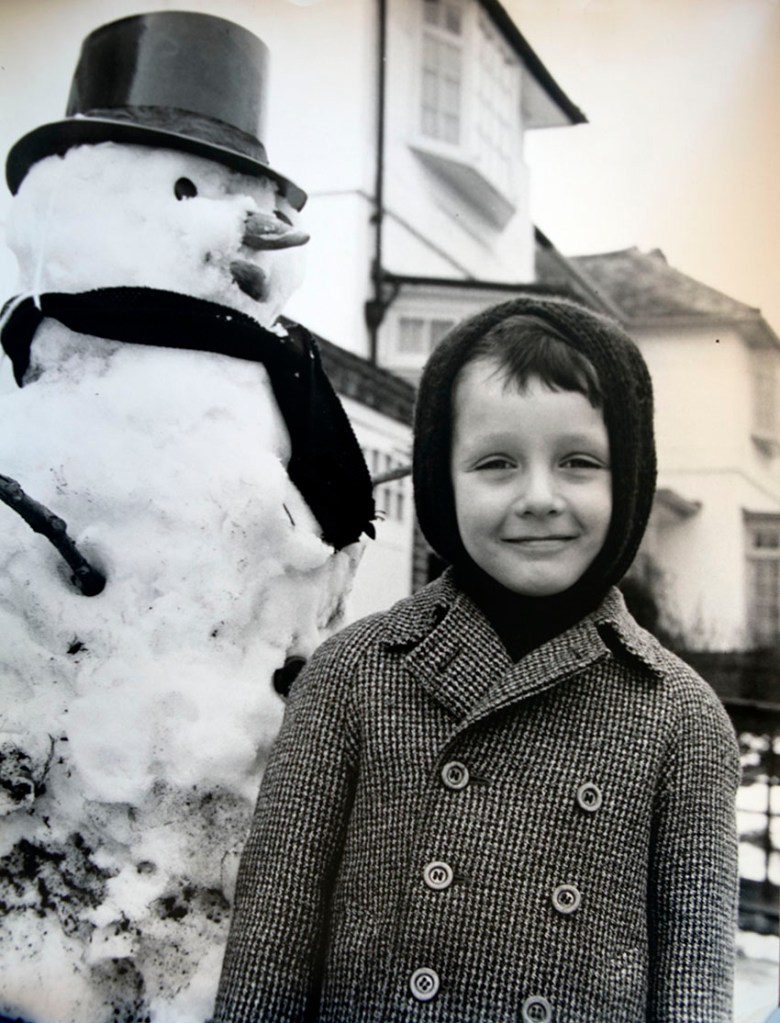
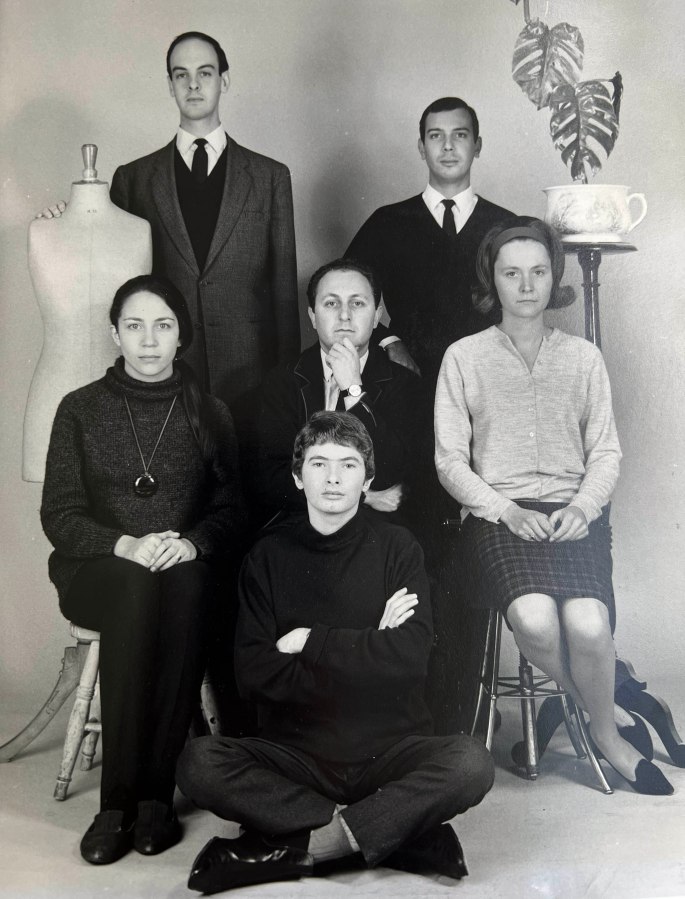
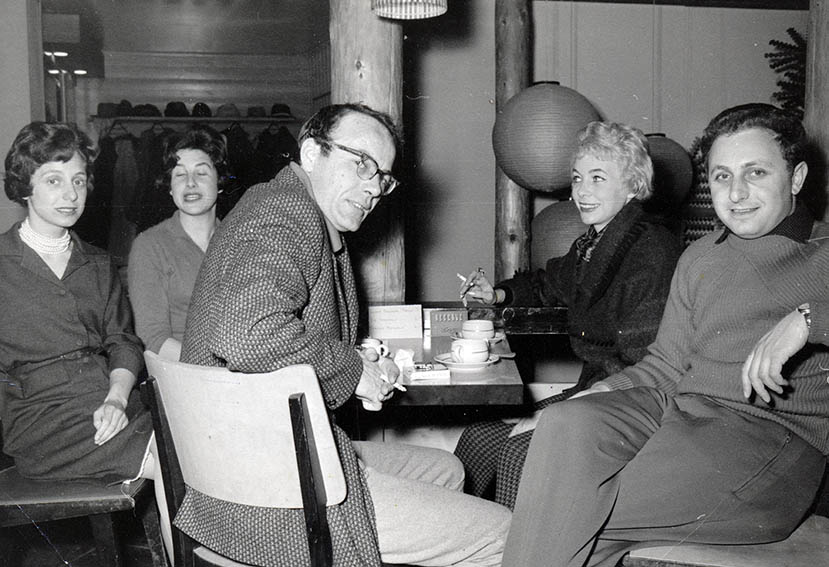
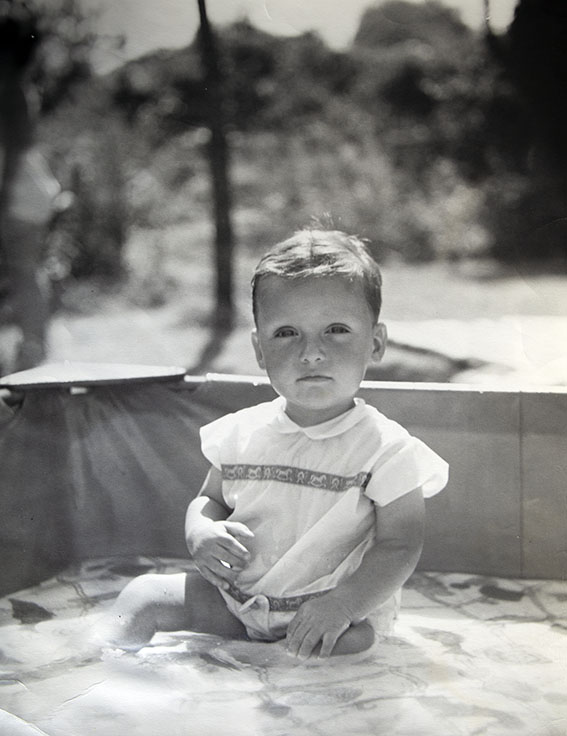
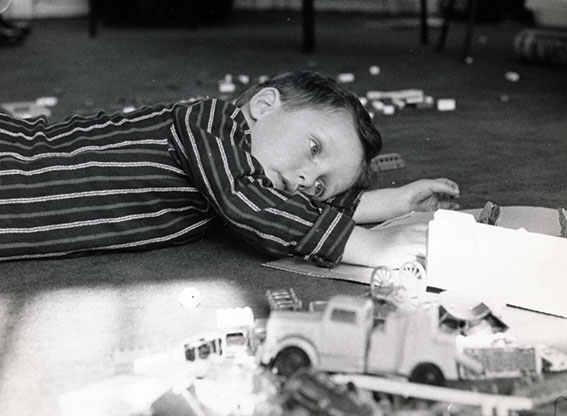
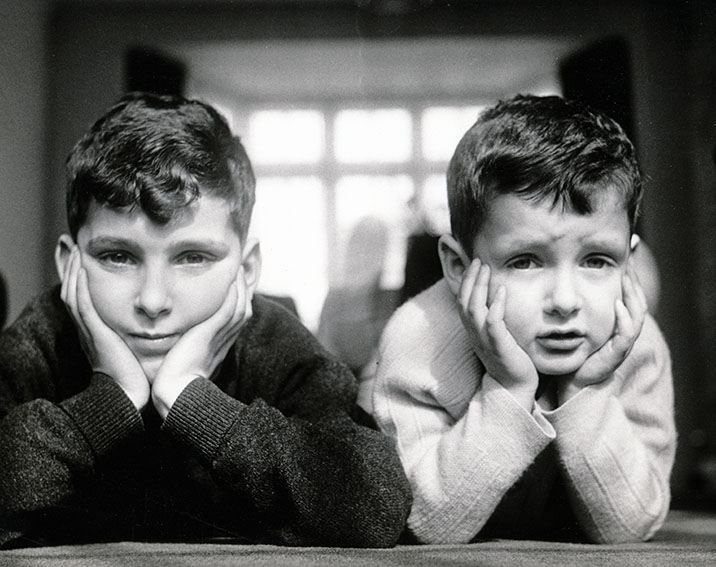
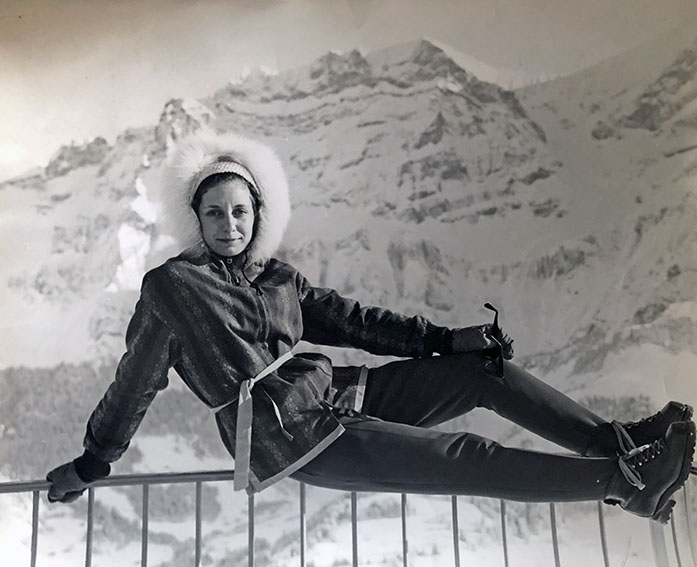
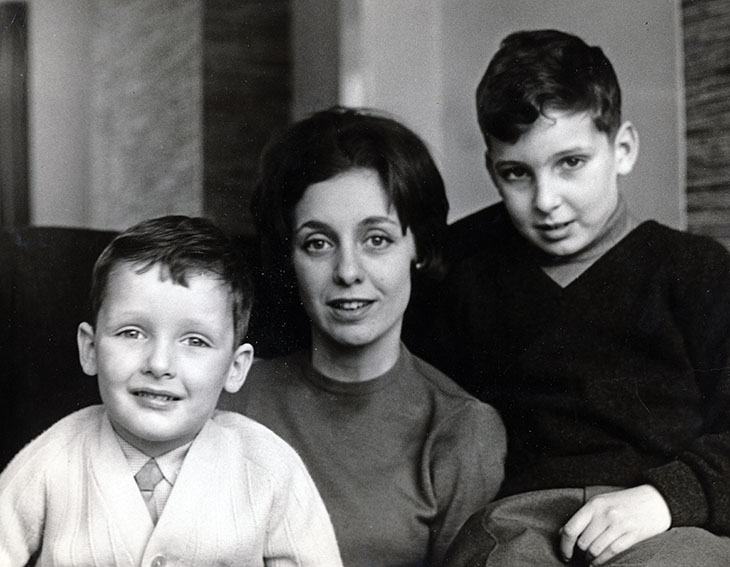
Presented below are some of his best pictures, all of his family (particularly my mother – his sister – Hannah, my older brother Michael and I). If this seems a tad narcissistic on my part, I should point out, that we – his parents, and us – were the epicentre of his life, outside of his professional lives – and were, in a very real sense, his photographic muses. In those days, when out and about or when visiting the Studio , I can’t remember a time when Sidney did not have his trusty Rolleiflex hanging from his neck and him pointing it in our direction. Narcissistic or not, these images are moody, emotive, sensitive, an intimate family portrait, and just a damn brilliant illustration of the photographic portraiture and human study at its very best…

Sidney’s sister (my mum) Hannah, taken in 1960, shortly after being deserted by my father (Gerry the advertising man). I love the way this shot captures her sad dignity…
Sidney’s nephew (my big brother), Michael, in from the garden for a snack…
Me…
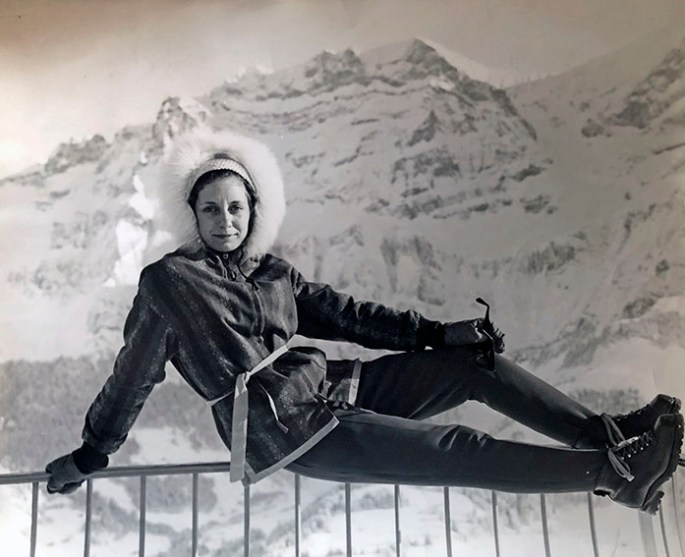
Hannah at Adelboden (Bernese Oberland, Switzerland, and much used in Bond films) – our first family holiday abroad in 1962…
Us three…
Adam, playing…
Brothers…
Hannah, happy and beautiful…
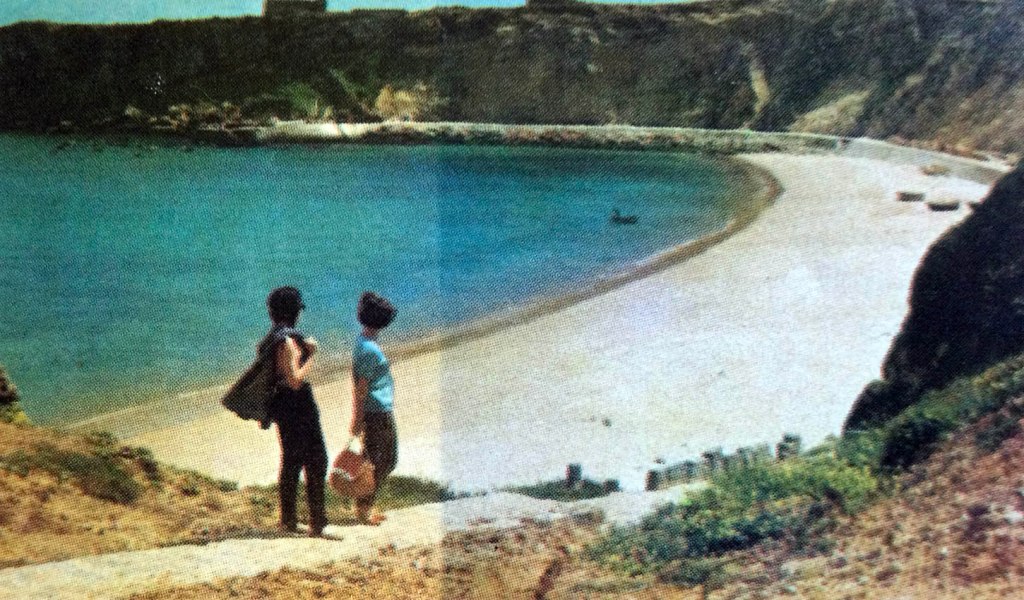
Hannah with me in the South of France…
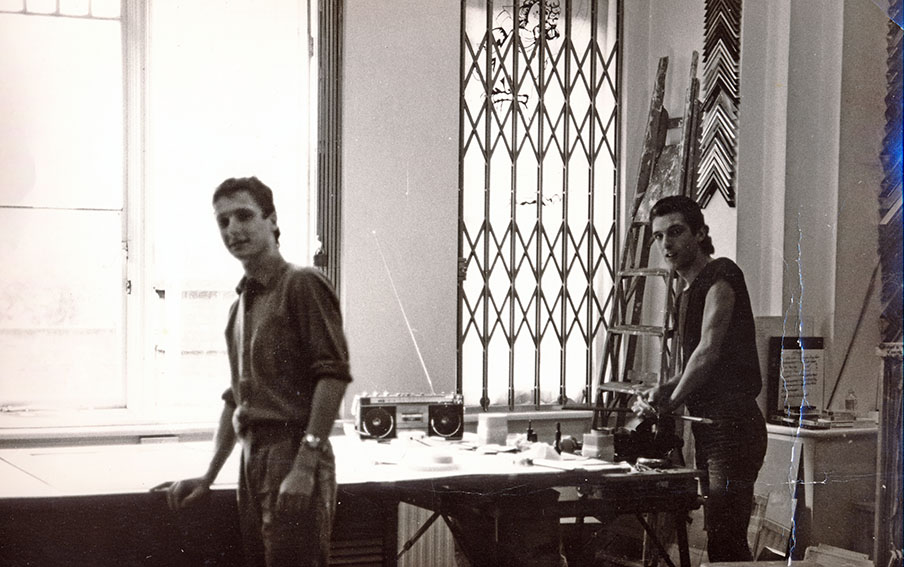
After Sidney retired from commercial photography (in 1975), he turned the studio itself into an up-market picture framery. This was the last photo he ever took of Michael (right) and I together, working in the framery – about 1985.

SIDNEY – A Tribute: part 1

The making of the man…

Of all the people I have ever encountered who should have been famous, but were not, my uncle Sidney Pizan, who passed away in December aged 94, is the greatest example I can think of.

Immensely intelligent (declared a genius upon entering grammar school aged only nine); a brain equally at home in the sciences and the arts; a star medical student at London’s University College Medical School; a gifted and highly successful commercial photographer; picture framing entrepreneur; a multi linguist fluent in six languages; plus, a discerning antiquarian bibliophile and all-round connoisseur and collector of the arts with an internationally respected knowledge of Art Nouveau, Sidney was the epitome of a renaissance man.

Moreover, hailing as he did from humble Jewish origins in London’s East End, the son of shopkeepers, Sidney lived a sort of British version of the American Dream, proving, that with a rich combination of nouse and grit, the sky was virtually the limit… I say virtually, because Sidney’s medical ambitions at least were curtailed by a shameful quota on Jewish medical students permitted to become doctors, meaning he had to settle for dentistry (chiropody and ophthalmics being alternative options). That notwithstanding, the only thing that stopped him going on to true fame and fortune was his own lack of hunger for any such things.

At least until his fifties, as regards his profession/s, his pastimes, his social and his family life, Sidney enjoyed a contentedness which perhaps, in a way, dampened any greater ambitions he might have had. Then, following his belated discovery of a partner, and then later wife, he discovered another level of contentment. Ultimately, Sidney was happy as anyone reasonably can expect to be with his lots, firstly as a bachelor and then later with a far quieter, settled existence.

The pictures presented here, show Sidney as a child, mostly together with his younger sister (my late mother, Hannah), and take us up to the time just before he became a professional photographer – a period comprising about 25 years. I hope, and think, that even for strangers looking in on this post, they offer a charming window into a lost world…

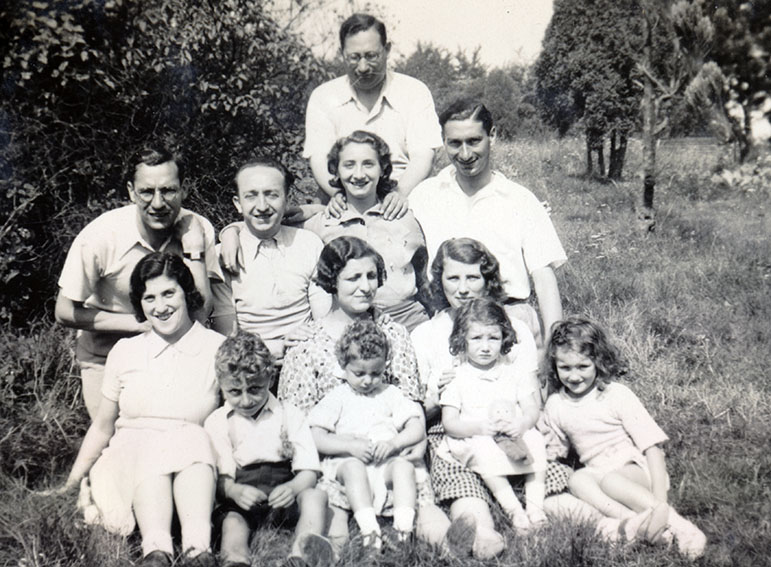
A family outing around 1935, perhaps in Epping Forrest. Sidney is the boy with the blonde curls in the front, with his little sister (my mum) next to him, on their mother’s lap (Becky). Their father, Harry is the chap kneeling, second from the left. At this time they lived in the Mile End Road in Stepney, East London. Harry was a grocer and they lived above the shop. Despite their modest means they enjoyed life and wanted for nothing, as I think the glow radiating from this happy assortment of cousins, uncles and aunts clearly reveals…
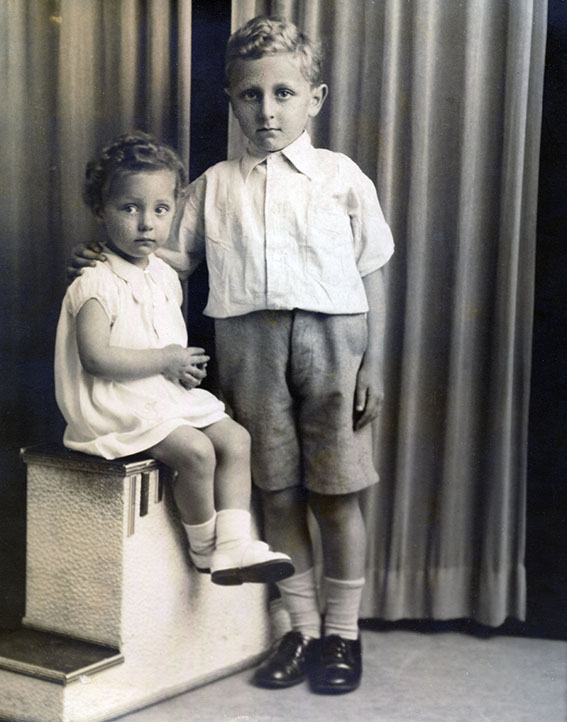
A formal studio portrait of Hannah and Sidney, circa 1936
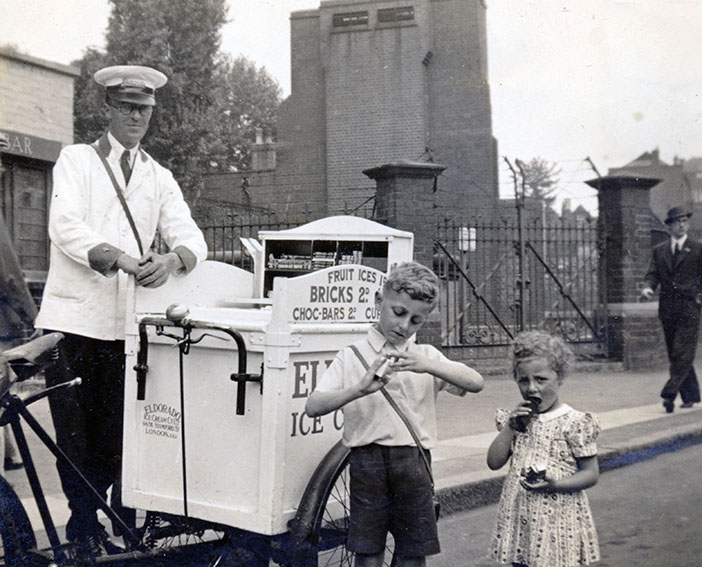
Sidney and Hannah enjoying a treat…
A school sports photo taken about 1948. At the height of the London Blitz, Harry moved the family to the north-London suburb of Hendon, to avoid the worst of the bombing. Sidney (back row, third from the right) and Hannah (front row, fifth from the left) both excelled at the local grammar school, Hendon County. The headmaster, Maynard Potts declared Sidney the second cleverest student ever to attend the school (the cleverest being Sidney’s classmate, Lionel Blue – later to become a radio celebrity Rabbi on the BBC – standing third from right with spectacles – I think).
Brother and sister around 1949, shortly before Sidney began his two years national service.
Sidney in his first dental practice in Ecclestone Street, Victoria, in central London.
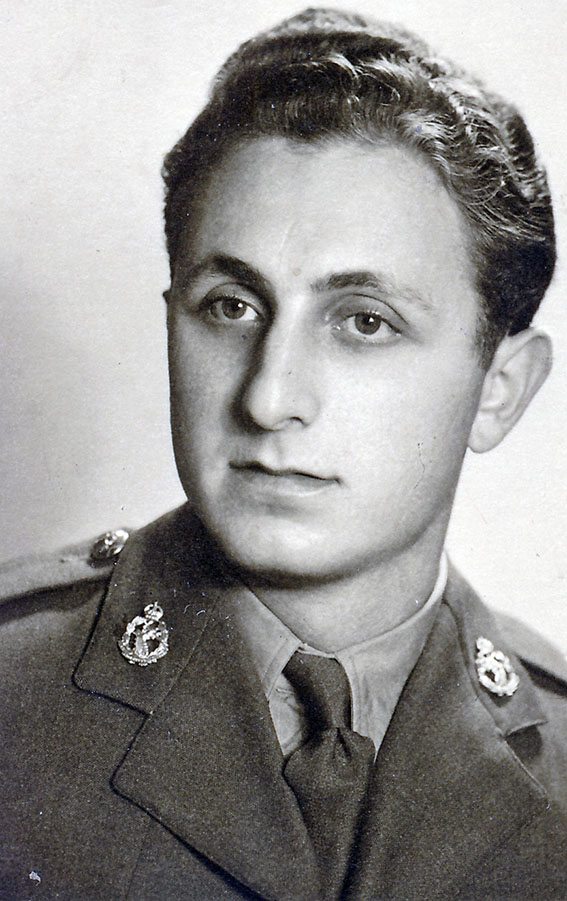
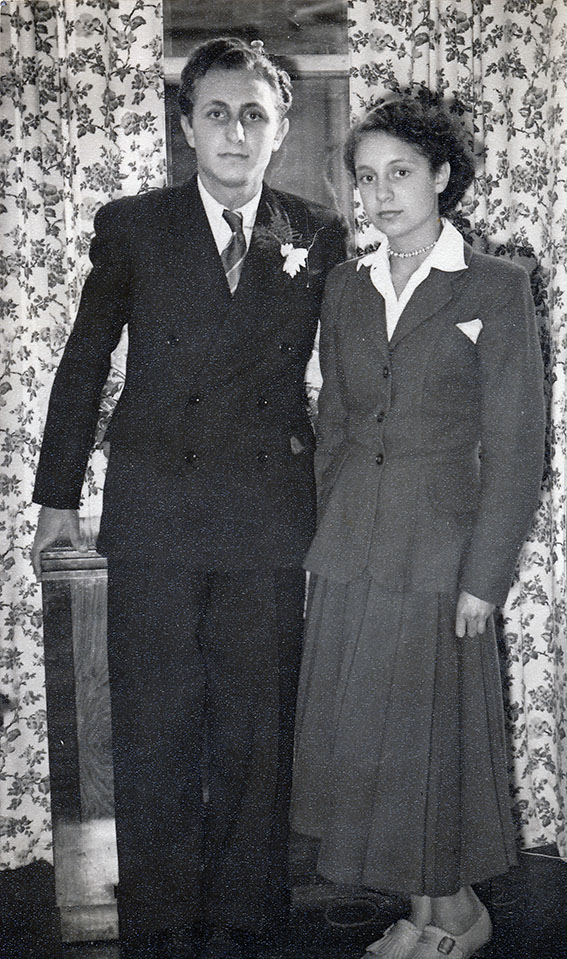
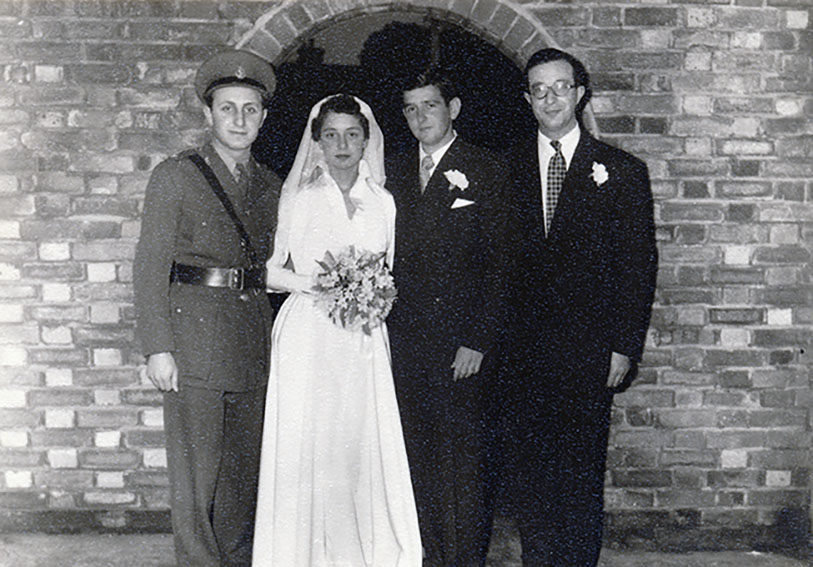
Captain Pizan (Sidney was an officer in the medical corps – stationed in a schloss in the Black Forest, Sidney spent most of his time learning to ski, drive and taking care of the castle’s substantial wine cellar – he also became fluent in German) attending Hannah’s wedding to my father, Gerald Green in 1953. Gerry, as he was known then, ended up in advertising, and it was he who persuaded Sidney to do commercial photographs for his company, thus beginning a whole new chapter in his life…
…to be continued…

The Beauty of Line…

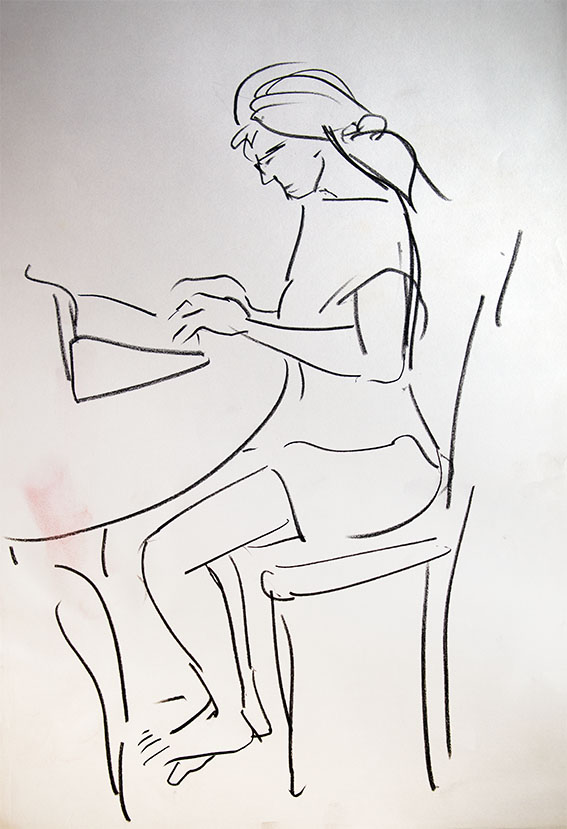
part 1 (drawings of Dido)

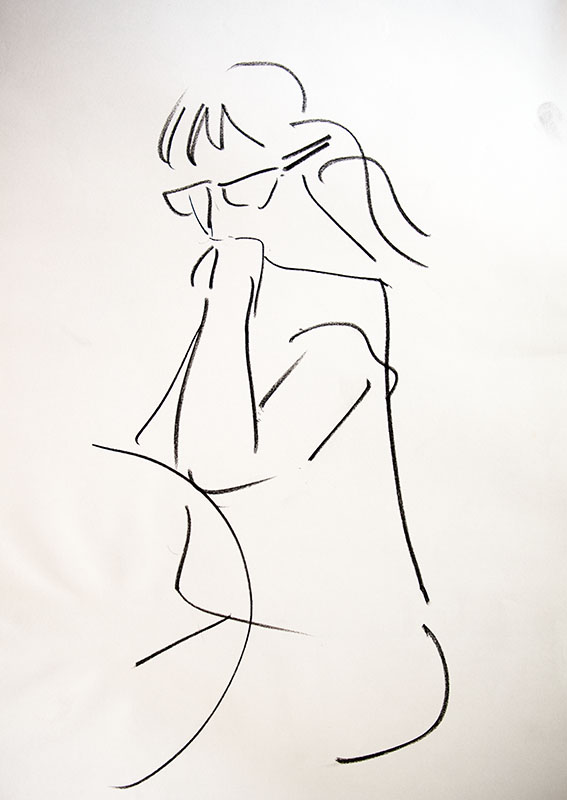
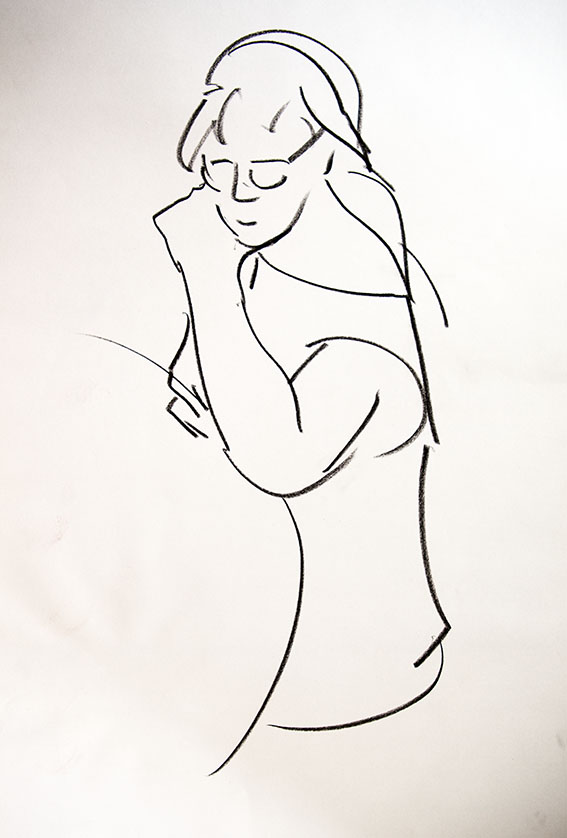
Yet more house tidying, yet more exciting discoveries of my ancient artwork. This time, of long-lost simple line figure studies, of my then-young wife Dido and of her friend and former ballet colleague, Frin.

Both, were natural and highly sketchable models as the images here attest, plus, I seem to have been in unusually relaxed with the old charcoal stick and conte crayon. My muses’ unaffected air and my good drawing form was a happy combination which I now look back upon, some 30 years later, with a deal of pride and not a little amazement.

Regular visitors to these posts will be aware of my respect for skilled drawing, and that I regard an ability to draw well as being the prime tool of any artist. Picture making without this tool is like attempting to speak without a tongue, with similar, incoherent results.

Sadly, modernism and later, abstract expressionism (admittedly with a few glorious exceptions – from Modigliani to Rothko), inadvertently gave free license for non-drawers to thrive, resulting in the often talentless gimmickry that infests so much of today’s “art world”.

Ho hum…

Fortunately, my utter disillusionment expressed above, came after I had time to make my own joyous-if-modest contribution to the corpus of half-decent picture-making, as these humble sketches bear evidence…

WHEN ADAM AND DIDO MET EVE AND AENEAS

AND OTHER INTERESTING THINGS ABOUT MY WIFE’S NAME

Many winters ago, Dido and I found ourselves sheltering from a -10°c Prague night in a cozy, smokey jazz club just off Wenceslas Square. The place was full and we had to share a table with a Viennese couple who fortunately turned out to be more interesting than the hapless wannabe Charlie Parker murdering his sax on the stage.

The fact that the couple were a similar age to ourselves, and both handsome and charming, with perfect English was pleasant enough, but it was when we exchanged names that we all almost fell off our seats. We introduced ourselves first with the customary, “I’m Dido”, “and I’m Adam”, to which they replied through wide-eyed grins, “and I’m Eve”, and after a short dramatic pause, “and I’m Aeneas…”

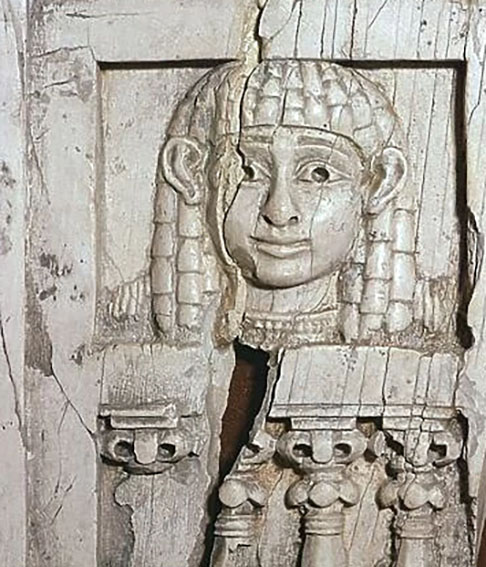
A Phoenician ivory of a noblewoman looking over a balcony from Sidon, very close in date to the historical Queen Elissa / Dido

Not only was this a delightful and highly amusing coincidence (it was the only time we ever joked with another couple about the concept of partner swapping – purely in the interests of onomastic correction of course!!) it was also the diametric opposite to the normal response of people upon first hearing Dido’s name.

For one glorious instance no explanations were required, nor any brief lessons in classical mythology and ancient history, nor having to smile away the increasingly tedious “Ah! Like the singer?” (actually born Florian Cloud de Bounevialle Armstrong eleven years after “my” Dido). Instead, just an interesting exchange about why Aeneas, and why Dido: The former, it transpired, because his father was a classics professor in Vienna who specialized in the Roman poet Virgil, and the latter; because her parents had been expecting a boy (long before the days of ultrasound), they had no girl’s name prepared. As they were listening to Henry Purcell’s opera, Dido and Aeneas when her mum’s water broke, the name seemed apposite.

I repeat this story here because it is sweet and pleasant to recollect, but also to hopefully encourage all our friends and acquaintance, past, present and future, who may be ignorant of the facts behind the name to take five minutes and click on this link to learn about Dido (mythic and historic). It’s not only informative, it’s also genuinely fascinating with contemporary resonance (like much myth and history).

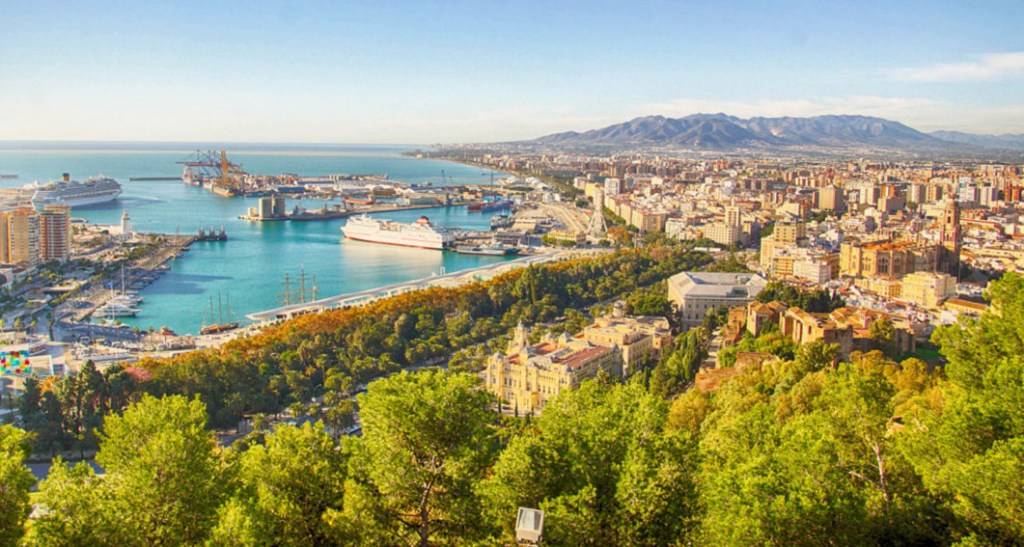
For instance, how many of the people reading this, including my Spanish readers. know that the city of Malaga was founded by Queen Dido’s Phoenician compatriots (and probable subjects) about 2,800 years ago as Málaka (the same time as the founding of Carthage itself). Phoenician was a Semitic sister language of ancient Hebrew, with many close similarities (see this earlier post). Málaka could mean a place where fish was preserved in salt , or it could have something to do with “sailors”. However, given that the Phoenician for queen, is Malgah/Malkah, a more likely meaning is the Queen’s city. And if so, the most likely queen to have a new colony dedicated to her by Phoenician settlers would be their-then queen and sponsor, Dido (more properly, Elissa in her Phoenician form).

In other words, it is quite possible, that my wife Dido, has a home in the province titled for her ancient namesake, and I at least, find that possibility pretty damn cool.

Modern day Malaga, some 2800 years after its founding by Phoenicians, who knew a good harbour when they saw one.

Another Roman Holiday…

…and more unrequited love in the eternal city and beyond…

As I’ve mentioned before on these pages, the main reason I gave up the prospect of an academic career was because I was a lazy student and had a precocious talent for drawing and painting. In other words, I took the easy, relatively effortless option. However, if one person, other than yours truly was also highly influential in pushing me towards a career in art, it was my art teacher at Carmel College, Hermann Langmuir *.

Hermann (as we were bidden to call him) was a tall, bearded, charismatic Dutchman, whose knowledge of art and art history was only matched by his infectious enthusiasm for his subject. From the moment he joined the teaching staff, the Carmel art room metamorphosed from a gloomy, educational backwater, into the most happening and vibrant teaching space on the campus. This, combined with my loathing of formal classroom study and the fact I became one of his two star pupils (a huge nod to Jeremy Gerlis – a gifted draftsman and now FRSA), ensured that I would give up the chance of an Oxbridge future (virtually guaranteed to top Carmel academic performers back then) for the presumed bright lights and glamour of a London art college.

How all that turned out is well covered in previous posts, but what I have overlooked until now, was a trip Hermann organised for all his pupils, in the March of 1976, to Rome, Florence, Siena and Pisa. The following – un-treated – ancient photos (all taken on my old Canonet 28 Automatic), tell some of the story of that magical and hugely formative experience.

* If anyone reading this post has any knowledge of the whereabouts of Hermann these days, assuming he is still with us (I guess he would be well into his eighties by now), I would be keen to catch up with him. I should point out here, that if not for Hermann’s pleading with the headmaster, Rabbi Jeremy Rosen, I would not have been on the trip. I had entered Carmel in 1971, with my estranged father paying the considerable fees. However, when he fled to America in 1973 during the oil crisis and the subsequent crash of his advertising business, the school, very kindly allowed me to stay on at half-fees. As generous as this was, with my mother working as a poorly paid secretary, it still entailed my maternal grandparents using up much of their life-savings to keep me at the school. Thus, when the Italy trip was announced, my family had no cash spare to pay for it, and hence Hermann’s interceding with Rabbi Rosen on my behalf. Once again, the school came up trumps, and completely covered the costs of my travel and half-board accomodation, leaving me with only my lunches and daily refreshments to pay for. For this purpose, my very hard-up mum gave me the grand sum of £25 spending money, which I somehow managed to make last the entire ten-day trip, by restricting myself to slabs of margarita pizza, purchased from “hole in the wall” vendors. In any event, I never once felt deprived, and had one of the adventures of a lifetime. Thank you Hermann, wherever you are…

Milan Railway Station – Designed by Ulisse Stacchini in 1931: We flew to Milan (I suppose it was cheaper than flying direct to Rome?), and then got the train to Rome. I for one was pleased, as, much to Hermann’s horror, I was in awe of the station’s “fascist architecture”…
The oddly named Vatican “Square”, from the top of Saint Peter’s: One of several times I was fortunate to see a wonder of the world with virtually no crowds to mar the experience…
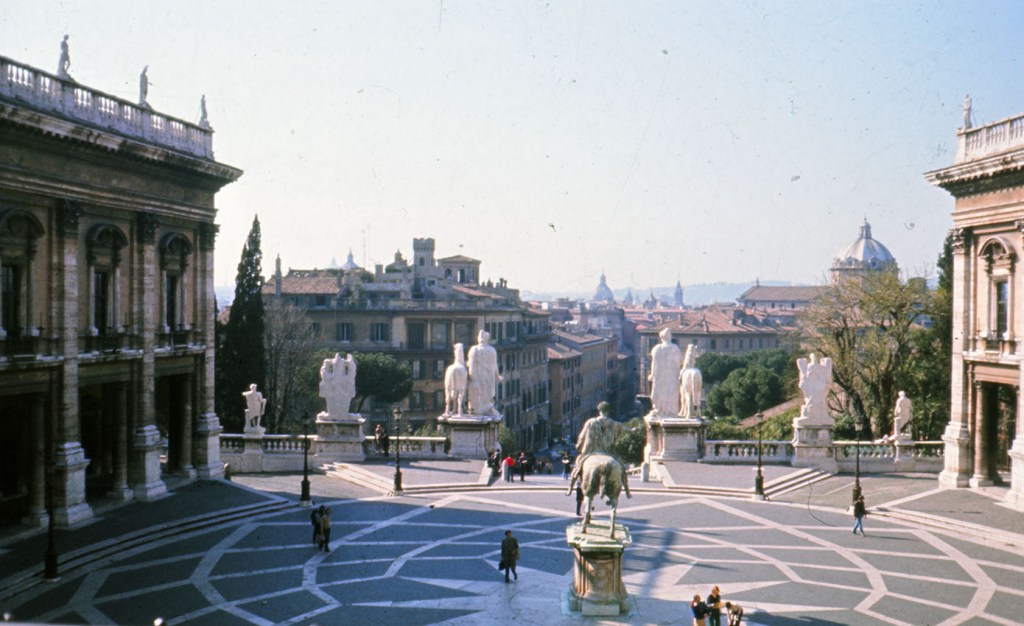
The rear view of the famous equestrian statue of emperor Marcus Aurelius – Piazza del Campidoglio: Again, despite the marvelous early Spring weather, almost no people…
Tritone Fountain – Bernini: Our very modest pensione was close to the red-light district of Rome, but also very near this fabulously and typically over-the-top masterpiece. Many a pizza slab was consumed at its feet – or should I say, its fish (yes, I know they’re idealised dolphins, but…)…
Jael on the Palatine: Jael was one of the few girls at Carmel in those days, and although I doubt she was aware, I was in love with her. She was Italian, from Fiesoli, above Florence, and the daughter of one of Italy’s foremost post-war domestic electrical manufacturers. We all visited her home on the Florence leg of the trip. It was a medieval castle, jam-packed with yet more wonderful works of art. I believe she is now a successful fine artist based in Germany …
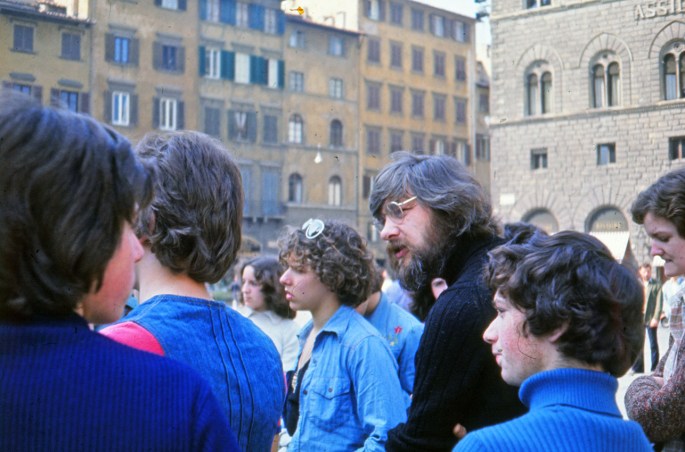
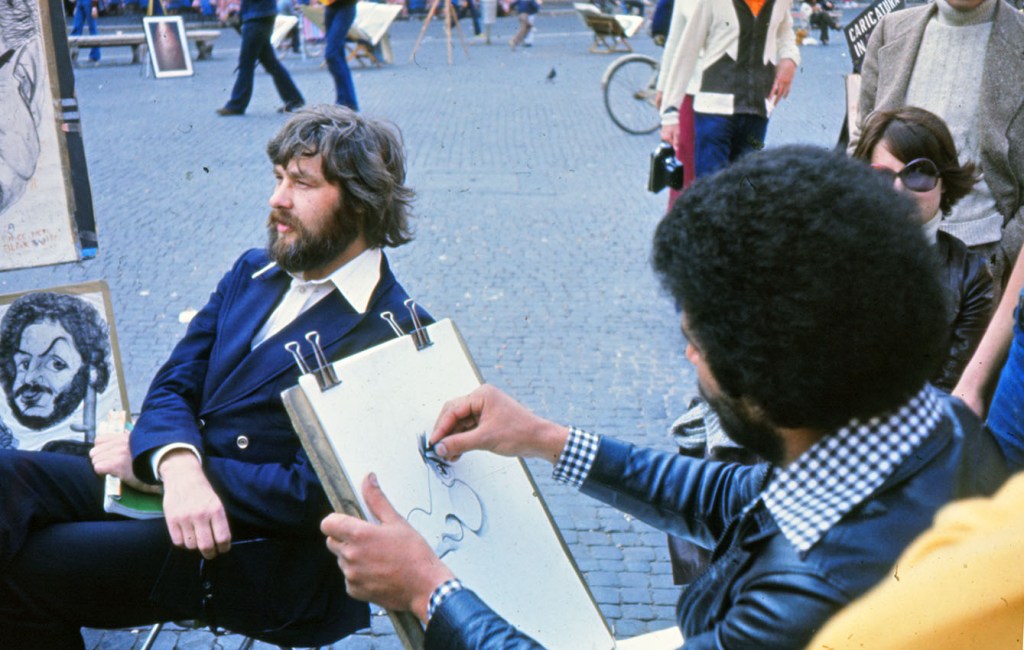
Hermann being sketched: I think this was in Florence. Hermann had been one of the many foreign student volunteers to help in the cleanup of Florence following the disastrous 1966 flood. I used much of what he told me about his work in and around the Uffizi to inform an early chapter in my novel ARK…
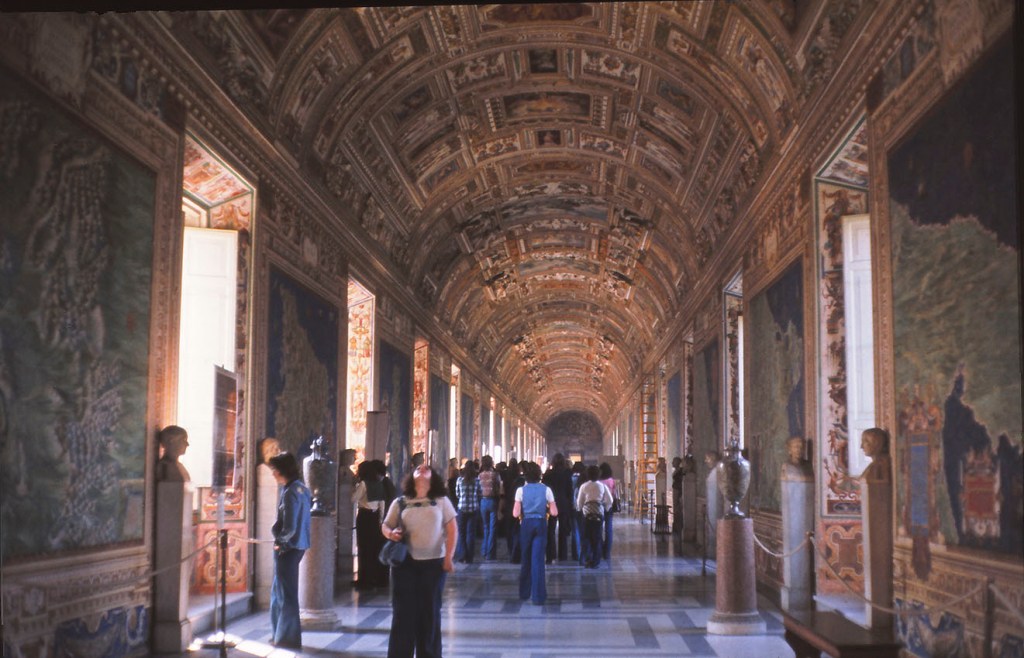
The Uffizi Gallery: As was normal for me in such places, a few of the Michelangelo sculptures notwithstanding, I was far more impressed with the gallery itself than much of the art it held. Can’t complain about this particular crowd, as it was my school group…
Florence from Giotto’s Campanile, (the cathedral bell tower), with Brunelleschi’s magnificent dome in the foreground: Florence was the star of the trip for me. Not so much the art (which was stupendous), but the city itself. I’ve been back many times since, but it never felt quite as perfect as in that March of 1976 …
Sarah, in the Boboli Gardens: I was in love with Sarah, and like Jael, she too had not the faintest idea. I was still a month away from my 16th birthday, and could barely make eye contact with a pretty girl, let alone declare my affections. Nevertheless, those ten days, in the warm Italian March sunshine, remain a mostly joyous memory. And after all, unrequited love is often a powerful muse of sorts.

A CONSTRUCTIVE TRANSITION

MY JOURNEY FROM HARROW SCHOOL OF ART TO ST. MARTINS IN GOUACHE

I’m not sure what the art education system is these days as I have totally lost touch (and interest) with the British art world and all its academies, institutions and philosophies. However, in my time, after leaving high-school for art college, one did a one or two-year foundation course, and then typically went on to do a BA.

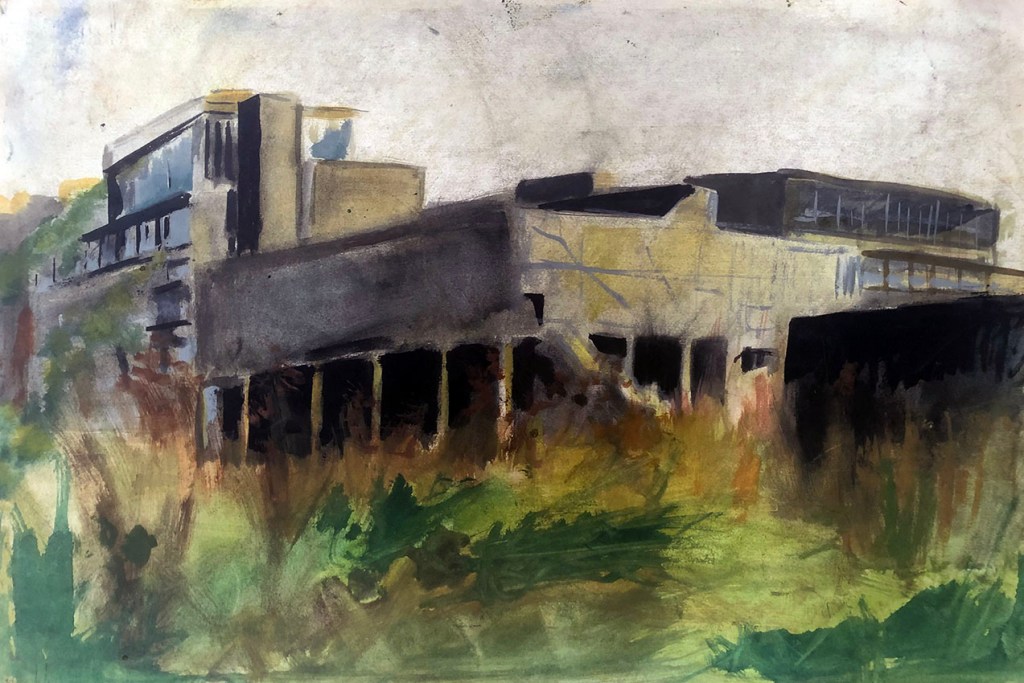
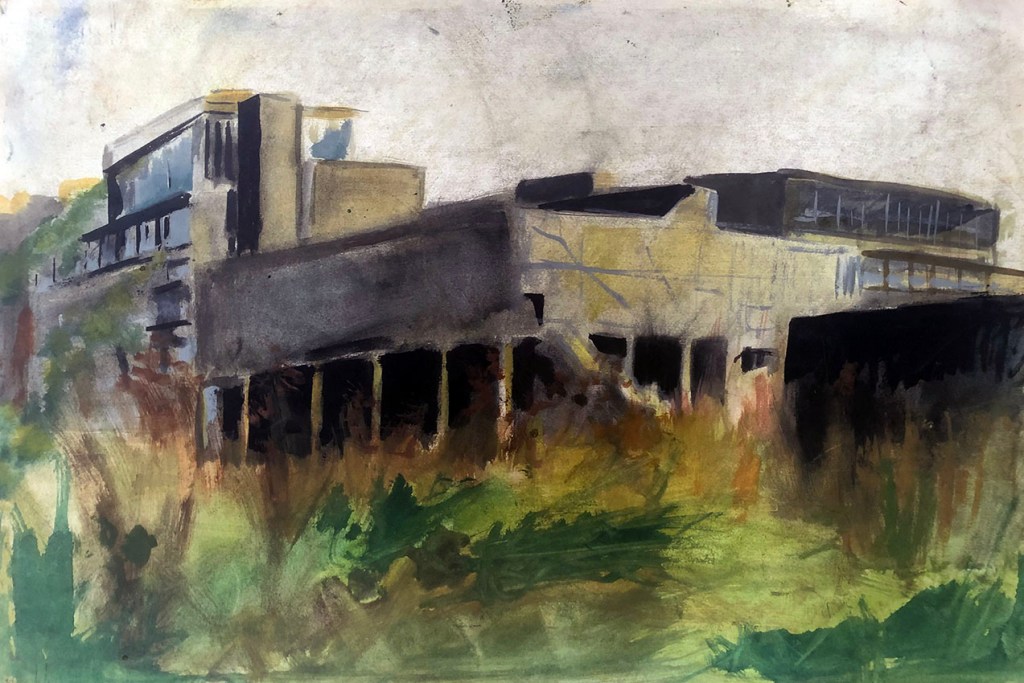
Northwick Park Hospital (Harrow) – gouache on paper – 1976

My era at art school ran from 1976 – 1981 and was something of a grand experiment, as it more-or-less coincided with the formalisation of art as an “academic” subject. Whether or not there was any merit in this move is still debated today, but from my own experience, and that of many of my art school acquaintances, the BA’s we left school with were utterly useless for furthering our careers as artists (or anything else). Ultimately, our degrees were little more than educational bling.

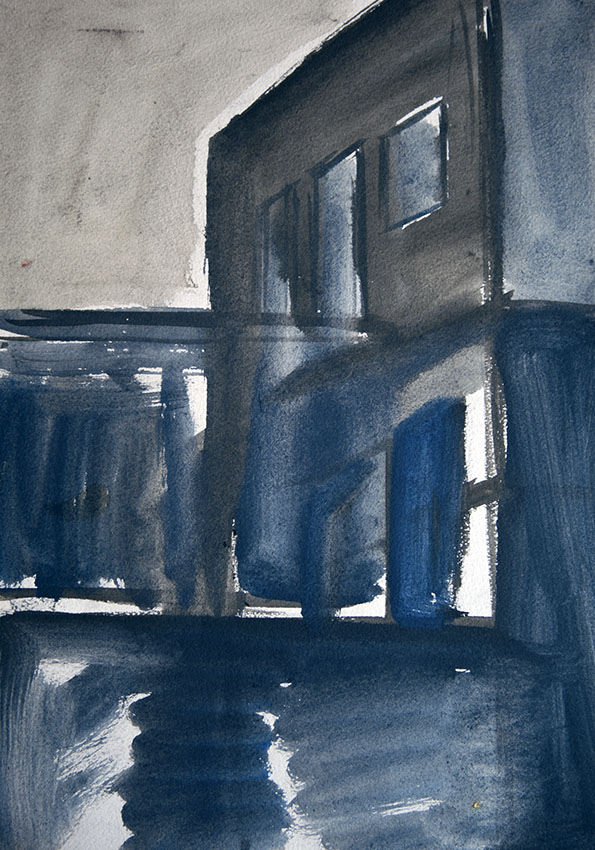
The Pottery Courtyard (Harrow School of Art) – gouache on paper – 1976

All these years later I console myself with the fact that both Harrow and St. Martins, in their very different ways offered many valuable (if often somewhat turgid) life experiences, and that the fairly successful artist I went on to become was as much in spite of those experiences, as because of them.

Northwick Park Hospital on a Winter’s Eve – gouache on paper – 1976

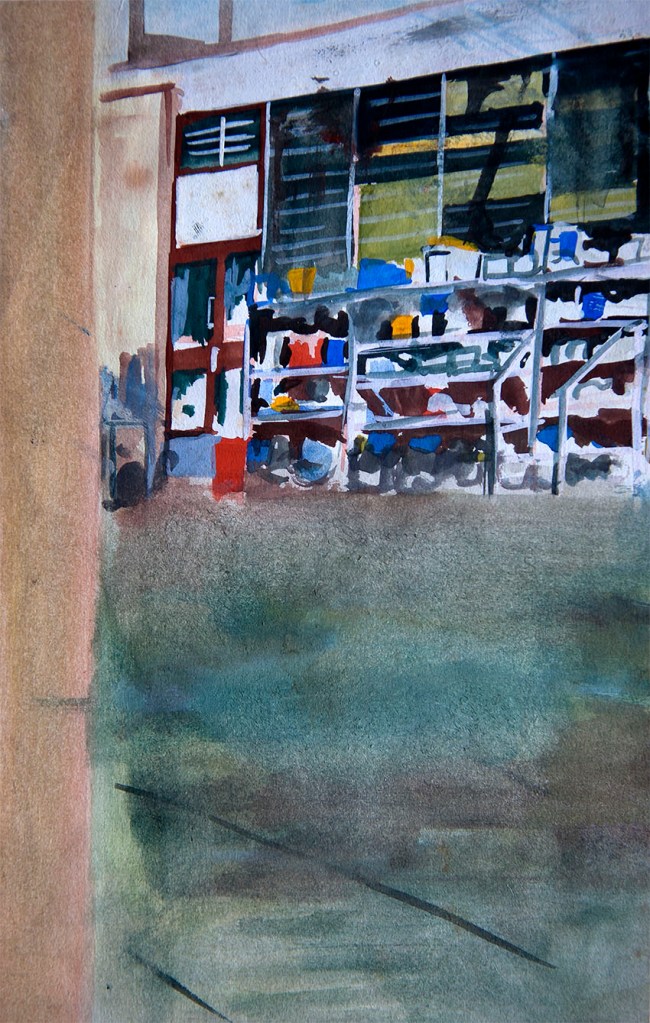
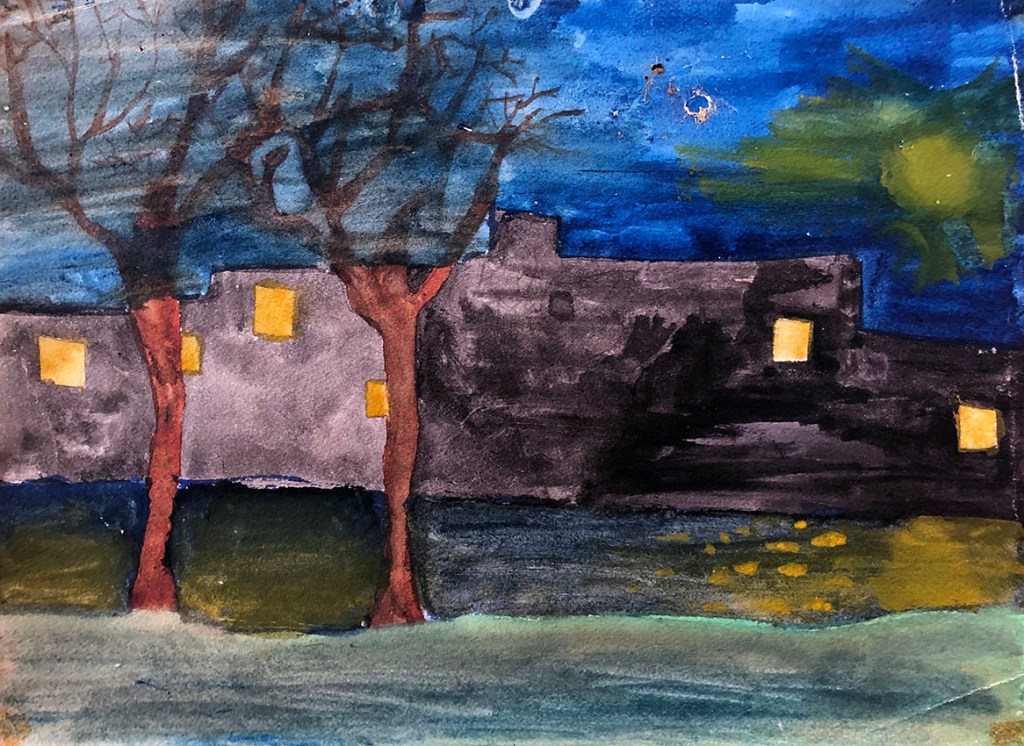
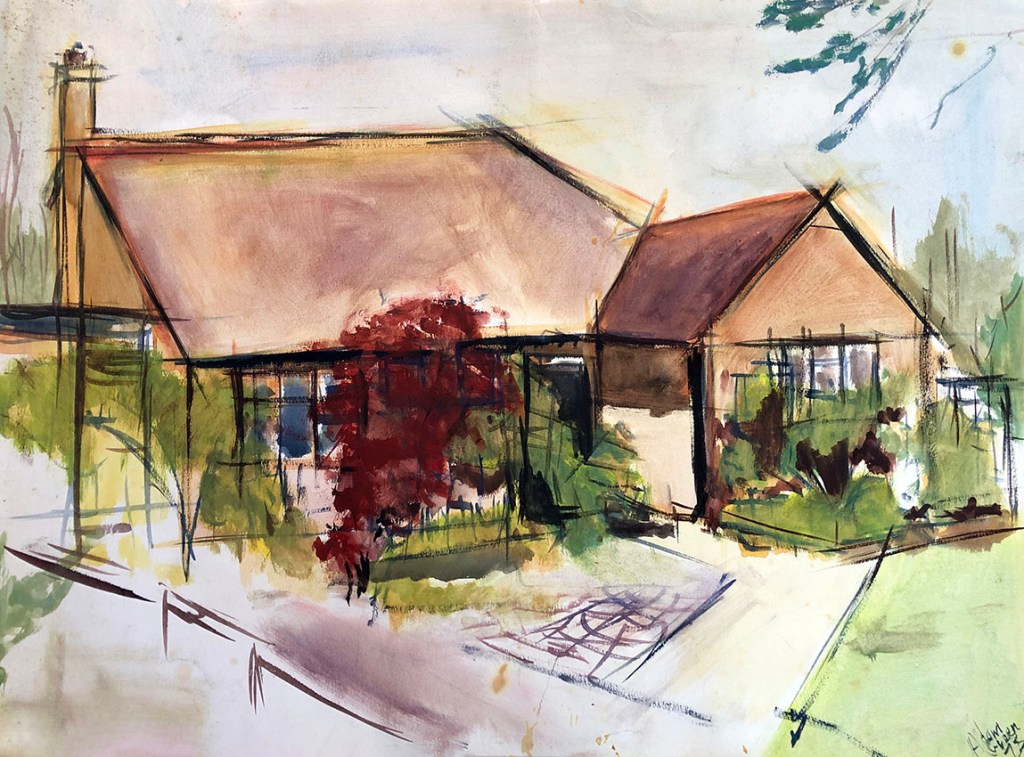
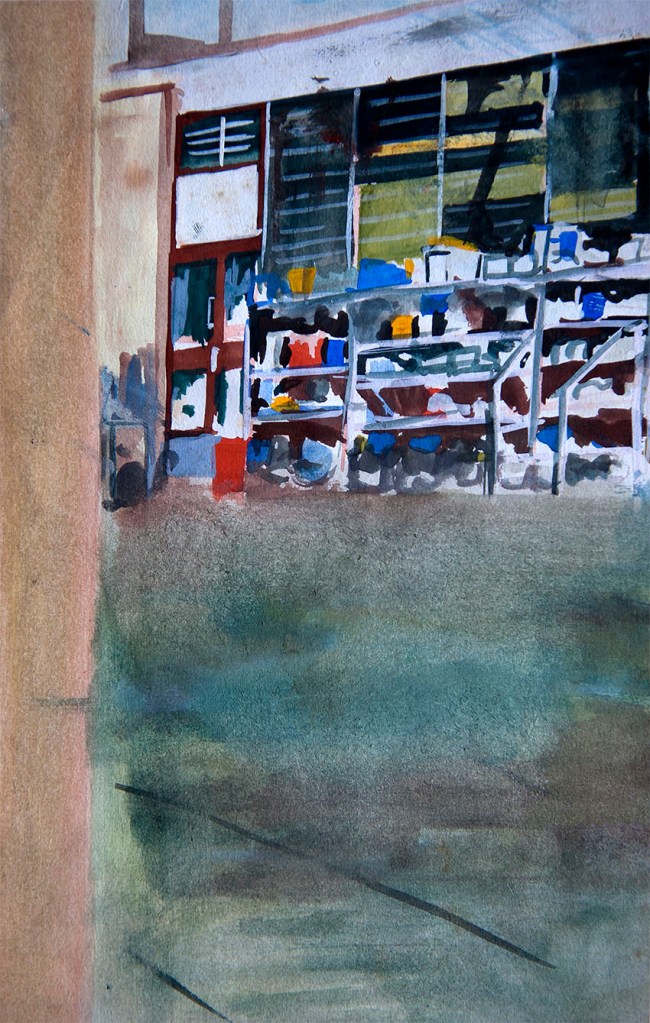
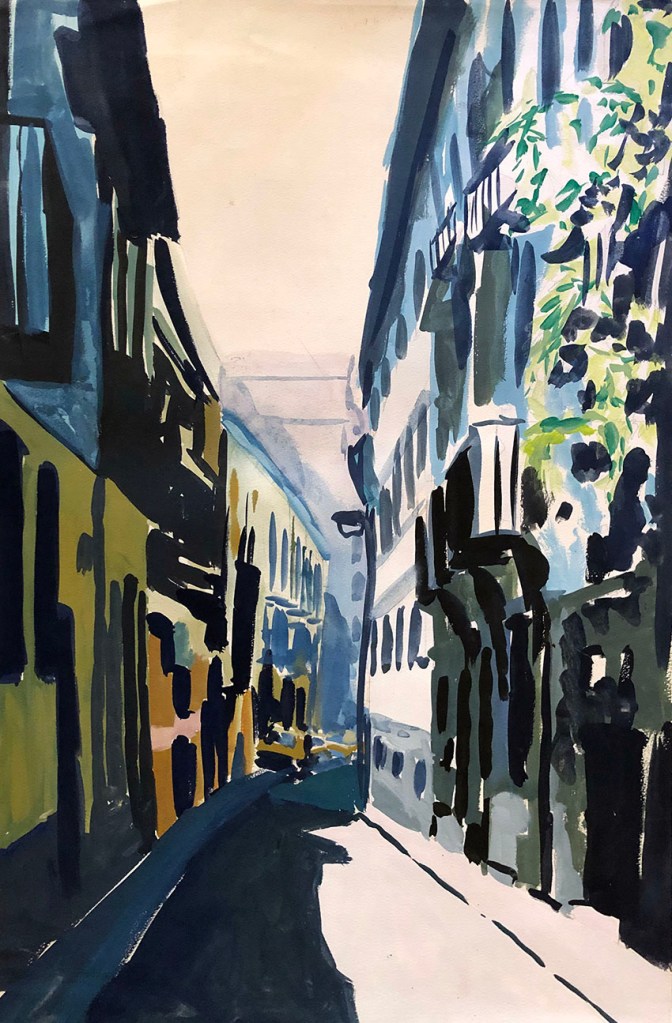
The half-dozen gouache washes here cover the end of my time at Harrow and my early days in Soho, with a visit to Spain in-between. They reveal my dabbling with a gentle form of constructivism, which was in reality a mostly contextual necessity, given the locations of my subject material. In any event, as with most of my work, in all its forms, they are ultimately all about the light – light that can lend drama and even a little beauty to most brutalist of concrete structures. There’s a deep message in there somewhere, but that’s another story…

A Street in Seville – gouache on paper – 1976

Pain and Pleasure at the Rijksmuseum (June 2024)

obscure gems, camera-obscured vermeers and an unwatchable nightwatch…

I am a very fortunate and privileged person. In 1987 I and my then-girlfriend visited the Alhambra Palace in Granada, and had the entire place to ourselves. The stillness of the Court of the Lions in particular, with its serene Solomonic atmosphere, only disturbed by the wing flutters of doves and the chirping of swallows was a transcendental experience.

About ten years later, I had an equally powerful-yet-serene artistic moment of solitary good fortune in the Rijksmuseum in Amsterdam, when I had its famous collection of nine Vermeers all to my lonesome. This was especially lucky, as few great works of art demand peaceful contemplation more than those of the genius from Delft. It was probably no more than five minutes, but easily sufficient time to appreciate a unique opportunity for private quality time with nine of the finest paintings ever conceived.

Young Italian Woman with Puck the Dog – Thérèse Schwartze (1884/5 – oil on canvas). Ashamed to say that I had never heard of Thérèse Schwartze, but I’ll never forget her now after being thrilled by this life-size study of attitude and poise…

But that was then, and now things have changed for the worst, at both the Alhambra and the Rijksmuseum.

Both places are victims of their own massive popularity and their increased accessibility due to an exponential rise in mass-tourism. And, both places resorted to the same “remedy” for dealing with the ever larger crowds of people wanting to see their glories – the dreaded time-slots…

I have visited Amsterdam many times since 1997, but because I knew I could never repeat that incredible Vermeer encounter, I had avoided the museum – until last week.

We were in town for 48 hours and our hotel was next door. Everytime I stepped out onto the street, there was the great red-brick edifice, staring me in the face, taunting me. So, I gave in, and booked a 10 am (and first of the day) slot on my iPhone for the second day. Get there early I thought, and I might just have a chance of beating the crowds to the Vermeers, even if only by a minute or two, it would be worth the €20 for the ticket.

A Young Woman Warming her Hands Over a Brazier: Allegory of Winter – Cesar Boetius van Everdingen (1644-48 – oil on canvas)
Again (although here I was aware of the painting), I had only a vague knowledge of this exceptionally gifted Dutchman. As with the Schwartze above, the painting in the flesh (so to speak) is unbelievably compelling. These iPhone photos, don’t convey a fraction of their power in real life...

How wrong I was. I got to the entrance at 9.45 (15 minutes before the official opening time) and, much to my pleasant surprise was allowed in. However, my cheerfulness was instantly doused, the moment I entered the grand vestibule, to discover it full of people – mostly grouped in tour parties, with tour guides, whose competing, amplified voices, filled the space with a kind of strident, oddly-American-accented hiss.

On my way to the Vermeers I passed large classes of school children, many spread out, sitting on the floor spaces, surrounding their teachers, like bees around a queen, but all (teachers and children) dressed in white lab-coats. And no, I haven’t a clue either, but it all added to overall feeling of organised pandemonium.

Having navigated my way past these sizable (and voluble) obstacles I eventually made it to the gallery containing the Vermeers, but of course, I was too late. I don’t know when wouldn’t have been too late, seeing as I had entered the museum 15 minutes before the official opening time, but I’m guessing, some time around three in the morning? How/why/where all these people came from – hundreds of them – in yet more tour-guide parties, between me and getting anywhere near the paintings, is a mystery. But whatever, I wasn’t going to see the Vermeers – not that I would have wanted to given the football-crowd environment engulfing them.

Three Portraits of Notables of Antwerp – Jacques Jordaens (1635/36 – oil on canvas)
If, like me, you’re a sucker for the wow-factor possible from supreme painting technique, then this virtual triptych of life-size portraits, by yet another artist I barely knew of (Flemish this time, not Dutch) is the exhibit for you. While it might not have the subtle deftness of The Night Watch, for example, they’re packed with empathy, presence and attitude – and most importantly of all, have no unsightly screens, and rarely any people between them and you!

So, as a second prize I tried for the Rembrandts but fared little better, and ultimately settled for distant side galleries and the often surprisingly superb consolations on offer, which comprises most of the illustrated story accompanying this post.

In short, do visit the Rijksmuseum next time you are in Amsterdam, but be prepared to make do with side galleries and supposedly “minor” exhibits. Fortunately, being one of the greatest art galleries on the planet, insures that there are plenty of allegedly “lesser” gems of outstanding and memorable value on offer, to enjoy in relative peace and harmony.

The other side of the Rijksmuseum coin. Somewhere behind all of that lurks The Night Watch. There has to be a better way…

REDCOATS AND BURGERS

only in gibraltar…

I remember my history teacher at secondary school explaining to me that the reason British soldiers wore red tunics in battle for over three centuries (starting during the English Civil War and ending with the Zulu War) was for two reasons; the first being to mask blood from wounds, and the second, because the sight of massed ranks of red-coated soldiers instilled awe and fear in the enemy.

Whatever the merits of either of these theories (and I think the revolutionary American armies would have had a their own distinctive opinion concerning the latter), the emergence of accurate, long-range rifles towards the end of the 19th century turned British redcoats from swaggering symbols of imperial might into haplass sitting ducks for snipers everywhere – from the Hindu Cush to the high velt.

Fortunately for the makers of the film Zulu, and little Adams throughout 1960’s UK, the red tunic was still in use by the British Army at the outset of the Zulu war of 1879. For, if the redcoat was nothing else, it was highly photogenic, especially against the majestic backdrop of the Drakensburg Mountains of Natal. Several historical inaccuracies notwithstanding (e.g. the British troops engaged belonged to the 2nd Warwickshires and not the Welsh Borderers, with most of the men hailing from Birmingham rather than South Wales, and the Zulu force being led by a young renegade prince, acting against the orders of King Cetshwayo), the film Zulu fired the imaginations of a generation of children. In my case, together with Rudolf Maté’s worthy-but-wooden 1963 offering of The 300 Spartans, Zulu began and shaped the entire course of my lifelong self-education in history, ancient and less-so.

All of which brings me to the slightly surreal photo which heads this piece – members of Gibraltar’s Reenactment Society, in uniforms of the Zulu War period, taking a lunchbreak in our local Burger King, here in Gibraltar. Every Saturday, throughout the Spring and Summer, this little band of enthusiasts, entertains (and in some cases perplexes) locals and tourists alike with a march or two up and down Main Street, to and from Casemates Square. Their uniforms cover most of the British imperial era, from the scarlet of the American and Napoleonic wars all the way to the khaki and green of WWII. And, although I’ve seen them on their well-earned breaks many times, normally with a refreshing pint in hand, and perhaps a slice of pizza, this scene struck me as particularly curious. So much so, a third practicality for the redcoat tunic occured to me that probably never occurred to men like Cornwallis and Wellington, that being a mask for ketchup stains as well as blood!

Andalucia in Winter

not all blue skies and warm weather

Our local mountain, Maroma, snow capped this April, for the first time in several years. A welcome wintery scene, guaranteeing this year’s water supply to the pueblos and springs.

We purchased our finca and moved to the Axarquia region of Andalucia in 1993. Like many people unfamiliar with the region and its seasons, we were surprised by the severity of our first winter, both with regards to its length and its chilly dampness. 93/94 was particularly harsh, with heavy rains beginning in late August and continuing off and on until mid April. The tops of the sierras were regularly blanketed in snow, and shrouded in dark cloud, and for much of the time our own hills felt more like those of Cumbria than of southern Iberia.

The Axarquian locals have a distinctly ambivalent attitude to their winters; on the one hand, many being farmers or related to farmers, they celebrate the breaking of the summer droughts and the first rains, but on the other hand; being true Andalusians they quickly tire of the cold and the damp and long for the return of the Spring sunshine.

In the winter of 2006 it wasn’t only the sierras that got a covering of snow . This was at our late friend and neighbour, Edgar’s place, and one of his two rescued Shetland ponies looking as happy as Larry in the wintery conditions.

The summer of our arrival in 1993 marked the end of about seven years of overly dry winters for much of the Mediterranean rim, with several climate scientists confidently predicting that our part of Spain “would resemble the Sahara by 2003”. Fortunately, the predictions proved wildly incorrect, both with that winter’s appropriately biblical rains, and then the following six or seven being equally long, wet and often very cold. One year, for example, about 30% of the Rio Velez Valley avocado and mango orchards were destroyed by a harsh early-winter frost. Subsequent to those first 14 years, we’ve experienced smaller runs of wet and then dryish winters, the latest such dryish run being the last four years which thankfully broke this winter, with long periods of rain, filling reservoirs and the reassuring sight of snow-peaked sierras.

However accurate or not the predictions of the climate scientists have proven, or will prove for this corner of Europe, the coming of the Sahara still feels a long way off.

Edgar’s stallion Ned however looking a little less certain with his first experience of the white stuff, even if wearing the appropriate tartan. And remember, this was three years after climate scientists had predicted that this would be a Saharan scene…

DON’T BELIEVE EVERYTHING YOU READ IN THE PRESS…

especially when the truth is more newsworthy

This must have happened to most people reading this post. You mislay a possession somewhere in your home, and while turning out various drawers, cupboards and shelves searching for it, you discover something else, long-forgotten, and often more precious than the original object.

Last week I was rummaging through a wooden chest we use for storing bits and pieces, looking for a lost drawing when instead, I turned up a small bundle, packed with old photos of my wife Dido from her time as a ballerina and a model. My curiosity at finding dozens of images that I had never seen before was heightened, when among the pictures I also found a yellowed, newspaper article from the Saturday edition of the Glasgow Evening Times, featuring Dido and another Sadlers Wells dancer, Nick Millington.

Although the article was for a Glasgow newspaper, the shoot was done in London, before a Scottish tour. The reporter, Rosemary Long, writes an entertaining piece, but she gets a couple of things slightly wrong; Dido’s “huge – doe-like” eyes are blue-grey, not “brown”, and the other issues I deal with below.

However, while I of course enjoyed the article, and got the whole forthcoming Scottish tour – Scottish interest thing, there were several details, probably due to a desire to accentuate a direct Scots connection, the journalist got slightly wrong. And, as is often the case, the more complicated truth, is also much more interesting.

While Dido’s parents regarded themselves as proud Scots, they were both born continents and oceans distant from Saltcoats and Edinburgh respectively.

Ann’s very Scottish father (who was from Saltcoats) was a high ranking doctor in the British Army of India, where she was born in Murree (now Kashmiri Pakistan). Following the war, Ann was educated at the famous Quaker private school, The Mount in York where she met Judy Dench, a fellow pupil. So, while some of Ann’s family did indeed hail from Saltcoats (others also hailed from Pitlochry), she herself, was not a native.

Ann’s family lived on a houseboat during her childhood in Murree, probably similar to this, from the 1930’s

Dido’s father, David, was born in Long Island (New York) during the journey to the UK from Chile where the family had interests in copper mines. He was later educated in Scotland where he attended Loretto School outside Edinburgh (Scotland’s oldest boarding school)) before leaving Scotland for London, where he studied medicine at Guy’s (teaching) Hospital (NOT “Edinburgh University”). David eventually became a general practitioner, later specialising in pulmonary medicine.

David’s family moved from Chile to the slightly less exotic west London suburb of Northolt, where he spent his childhood.

David met Ann in London where she was an opera student at LAMDA (London school of Music and Dramatic Art) and working as an usherette at Covent Garden. Soon after they married, they immigrated to Canada in the early 1960’s, and then on to Dallas (Texas). Together with their two children, Dido and her older brother Niall, they then moved around the United States according to David’s latest medical posting, including spells in Kentucky and Ohio before finally settling in Little Rock (Arkansas). There, David worked at the UAMS (University of Arkansas Medical School) and the VA (Veterans’) Hospital as professor of pulmonary medicine until his retirement, while Ann became something of an Arkansas celebrity, broadcasting a weekly culture “magazine” show (“Arts Scene“) for the state university radio station (KLRE-KUAR). In all that time, they never took up US citizenship – preferring the status of resident aliens, and “proud Scots”.

Thus, as I said, while Saltcoats and Edinburgh did feature in Dido’s immediate ancestry, it wasn’t in quite the way the journalist reported it. As for her “attractive Stateside drawl…”, these days it’s still attractive, but more mid-Atlantic.

Dido, with her parents, David and Ann, in Dallas.