I PRESENT HERE THE THIRD IN A SERIES OF SIX EXCERPTS FROM MY NEW NOVEL
(Paperback available from Amazon and on Kindle and to order online from selected bookstores)
ARK
Tragedy, Travesty, Tapas and the Ark of God
23
La Gamba was situated in the aptly named Via Frontera, on the border of the theatre and financial districts. It was a lively informal bar with an authentic Andalucian feel, inside and out.
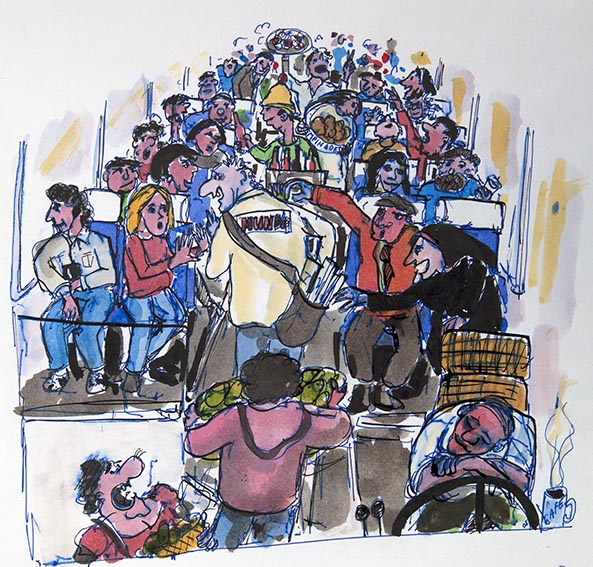
Black wrought-iron window grills festooned with obscenely healthy geraniums screamed scarlet against glossy viridian window frames and whitewashed walls. Just beneath the foliage on the narrow pavement along the front wall a row of small tile-topped tables were perched precariously on the edge of the high curb. Regulars at La Gamba knew to keep their hands and elbows well tucked in when sitting at these tables to avoid constant jostling from pedestrians on one side or more serious knocks from passing motor traffic on the other. They also needed to be impervious to the acrid exhaust fumes belching out from the frequent 50cc Puch motorcycles and Vespas—the vehicles of choice for most working class “Madrineros”.
Inside, La Gamba’s walls were swathed in cheaply framed bullfighting and flamenco show posters. Ornamental pinewood beams stained dark with thick treacly varnish posed as unconvincing supports for the nicotine stained ceiling. The linoleum floor was littered with used “tapas tissues”, cigarette butts, mussel shells and prawn skins. The long bar was harshly illuminated by a double row of eerily yellow fluorescent strip lights bolted precariously to the fake beams.
In addition to the assault on the visual senses, it was the smoke you noticed mostly when you entered; a sweet pungent grey-blue mist bearing strong hints of alcohol, coffee and garlic frying in olive oil. And all the time this murky soup churned around and upwards and regurgitated into spirals by a dozen sluggish ceiling fans.
But then, in defiance of this lurid environment, emerging from the monochrome mist like a glorious Technicolor oil painting there was the tapas itself:
Tapas on an epic scale reflecting the collective culinary glory of Seville, of Granada, of Cordoba, of Cadiz, of Malaga, of Huelva and even humble Almeria. Tapas of such high quality it compelled people to brave the kitsch, the fug and the noise in vast numbers from all over the city and beyond.
The bar was all of forty foot long, starting at the entrance and continuing two thirds of the way down the narrow room.
Along the bar’s entire length were glass and steel chilling and warming cabinets. Within the cabinets were scores of hot and cold raw and cooked meats: Pork, rabbit, tripe, chicken, game and veal; stewed, baked, fried and grilled ‘a la plancha’ and then the fish and the sea food; starting at one end with the braised salt cod and culminating at the other end with piles of alive gently pulsing clams and mussels and in between; all the edible booty of the sea from gilt-head bream and baby whiting to spider crab, squid, razor clams, octopus and prawn and shrimp in heaps and then; a row of earthenware platters resting above the cabinets, laden with steamed wild snails, deep fried baby green peppers, black pudding stewed with chick peas, tripe with potatoes in saffron sauce, four inch thick egg tortillas, mini wooden skewers of cubed pork loin marinated in paprika saffron and cumin, cured ham fried with broad beans and on and on.
Directly above, hanging from a straining iron rod were dozens of precious Jabugo black hams. And behind the bar, on the back counter; more plates and carving boards, piled high with “Iberico” sausage, cured meats, chorizo and black puddings of all shapes and sizes.
And finally, above the sausage, a phalanx of dark oak barrels stacked up to the ceiling: Full sized 256 litre (give or take) casks of dark sweet viscous Malagas, dry clean yellow Montillas and yeasty nutty Sherries and Manzanillas.
And manning this visual-cum-olfactory sensory battering ram; a cohort of waiters and barmen (all men), attired in black trousers, tieless white shirts and green fronted waist coats and armed only with sticks of white chalk jammed behind their ears. No note pads here, just chalk marks scratched onto tables and bar alike.
It was central Madrid on a Thursday night and La Gamba was heaving with a mixture of pre-theatre crowd and office workers lingering far too long on their way home from work. It occurred to Alex that perhaps it was not the ideal spot after all for what he anticipated would be a long and discreet conversation. Fortunately though Carlos Garcia had been good to his word and secured a booth at the rear beyond the bar and well away from the main crowd which tended to gravitate around the ranks of tapas like moths to a flame.
The booths were surprisingly insulated from the noisy crush beyond but on the down-side there was a mild odour of urine and cheap soap emanating from the toilets over in the far corner. This was partially compensated for however by the fact that above, on the far wall was a row of open narrow windows which drew the worst of the smoke.
At the first instant, when Carlos saw that Alex had not come alone a look of barely disguised annoyance started to cross his high deeply furrowed brow. But then, within an instant, he took in Elena as she glided toward him ahead of Alex, smiling, eyes gleaming, hair gently swaying and a crisply tailored charcoal two piece work skirt and jacket adding to the effect, his lower lip fell.
24
As she approached radiating confidence and self-assurance, right arm outstretched Carlos suddenly realised that he should stand up. While he clumsily clambered to his feet Elena announced herself; ‘Doctor Elena Ortiz Martinez.’
Carlos took her hand, barely holding it, unsure whether to shake it or kiss it. He felt foolish. He had never been approached in this way by a Spanish woman and the fact that she was so attractive totally unnerved him. Fortunately though, Elena took the initiative for him, firmly grasping his limp fingers and giving a vigorous couple of shakes. ‘It’s a great thrill to meet you Professor Garcia. I simply had to come along once I realised it was you Alex was meeting. I’m a fan of yours. I even read your book. The one you wrote for human beings. That was the way you termed it if I remember correctly? Blood and History wasn’t it called?’
‘The History of Blood, Doctor Martinez’ Carlos gently corrected her as they all sat down.
‘Elena, please just call me Elena Professor. But I do remember the main theme of the book. Your incredible idea—how one day soon we will be able to map all of humanity through our genetic codes and how it will be possible to determine exactly where we came from. Our own personal genetic histories going back thousands of years.’
‘Well, that’s oversimplifying it somewhat but yes, you got the gist. And it’s just Carlos if you please… Elena. And may I ask? What is your doctorate in?’
‘I’m a lecturer in modern history at the university. I guess we’re colleagues come to think of it.’
‘Only half colleagues now regretfully. I semi-retired last year and am emeritus these days. In truth I really miss the stimulation of being a full time researcher.’ Carlos felt emboldened by Elena’s spirit of forwardness and added; ‘I also miss rubbing shoulders with some of the fabulous young female lecturers emerging these days.’
Alex smiled. He was impressed with Carlos’ speedy powers of recovery, not to mention his obvious talents as a schmoozer.
‘I can’t claim to be either fabulous or all that young these days’ she replied, ‘although I do my best to flow with the years in most other respects.’
Carlos smiled back, his eyes twinkling, ‘You’re far too modest if I may be so bold Elena, and flowing certainly becomes you.’
‘Ahem!’ uttered Alex, beginning to find the exchange tedious.
Carlos turned towards Alex and said; ‘My apologies Alex, but my goodness, you really are a most fortunate man.’
‘I suppose I must be, as I’m told so often’ Alex said a touch sardonically.
‘You are quite right. Please forgive the pathetic stirrings of an old man’ Carlos responded apologetically having noticed Alex’s tone.
Elena leaned across the table and gently squeezed Carlos’ hand. ‘Don’t apologise Carlos. He’ll get over it. It’s just that all this Transito business has made him grouchy lately.’
He smiled at Elena, patted her hand before returning it across the table. ‘No, but Alex is right. I have much to tell you and we don’t want to be here all night do we?’ Carlos’ face immediately took on the same serious, almost business like expression Alex remembered from their encounter at the hospital. ‘And to save us some time I took the liberty of ordering a selection of tapas before you arrived.’
‘Good idea’ said Alex relieved by the change in subject. ‘Miguel and I normally propped up the bar when we met here. The couple of times we took a table outside the service was slow.’
‘Miguel was always raving to me about this place’ Carlos continued, ‘but somehow we never met here. He was funny about doing anything with me in public. It was a shame, because I always liked his company and we got on well.’
‘Maybe he had a bit of an inferiority complex when it came to you?’ Alex suggested a little disingenuously, recalling what Loli had told him earlier that day.
‘Yes, but it was so irrational. After all, he had no problem being seen in your company, and you’re a professor too.’
‘But Carlos, you’re his brother’ Elena said. ‘That’s different from a mere work associate like Alex. I never met Miguel unfortunately but from what Alex tells me I think he enjoyed rubbing shoulders with people like Alex for the same reason that he didn’t want to be seen out with you. Whereas your eminence perhaps would have highlighted to the outside world Miguel’s self-perception of his own underachievement being seen out with Alex actually built up his self-esteem. Made him feel a sort of eminence by association, if that makes any sense?’
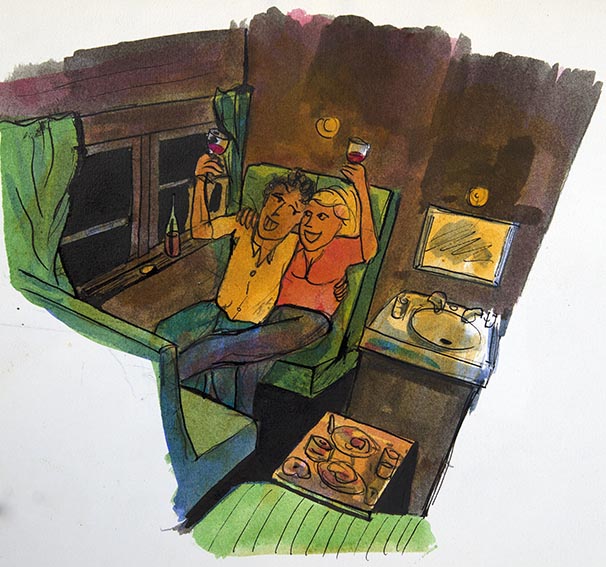
At that point a waiter arrived with a large steel tray expertly balanced on his shoulder laden with plates of food.
As he deftly began placing the dishes on the table Carlos told them; ‘I actually ordered half raciones not tapas. I can’t stand a table covered in dozens of little plates, half of which one never gets to taste. In any case, I hope you find I covered all the bases food wise?’
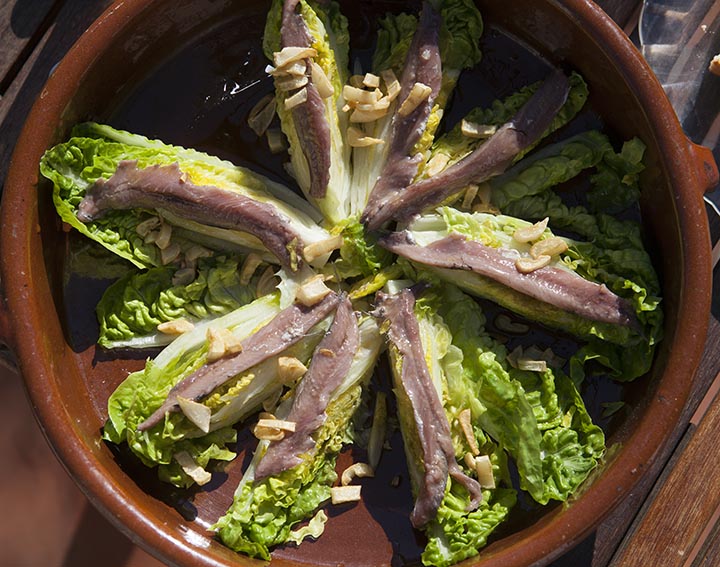
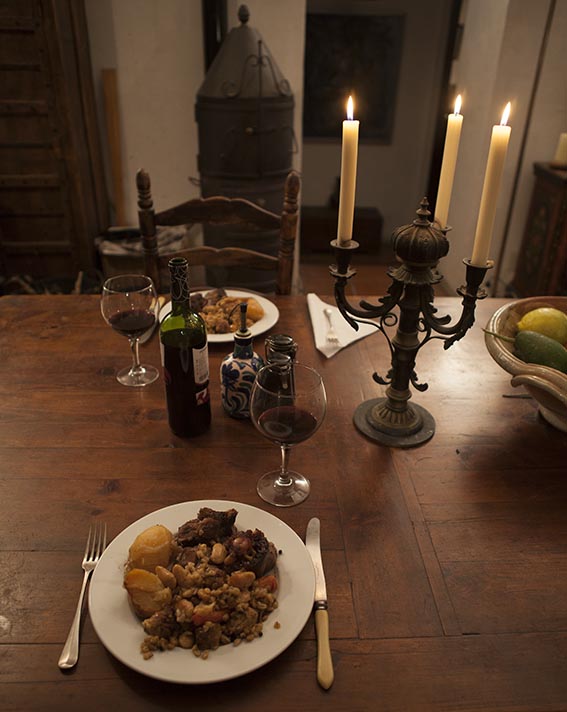
Elena and Alex eagerly nodded their assent. Despite the fact it was not as adventurous a selection as Alex and Elena would have ordered, it was all so well prepared and they were so hungry they did not care. In fact, Carlos had chosen a virtual beginners introduction to Andalucian dishes. There were the ubiquitous large boiled prawns in their shells with sea salt, lightly battered deep fried baby squid, pickled sprat fillets in olive oil garnished with parsley and garlic, grilled goujon of garlicky rosada, a plate of thinly sliced ham and a ceramic platter of piping hot meat balls in a bread-thickened almond and saffron sauce.
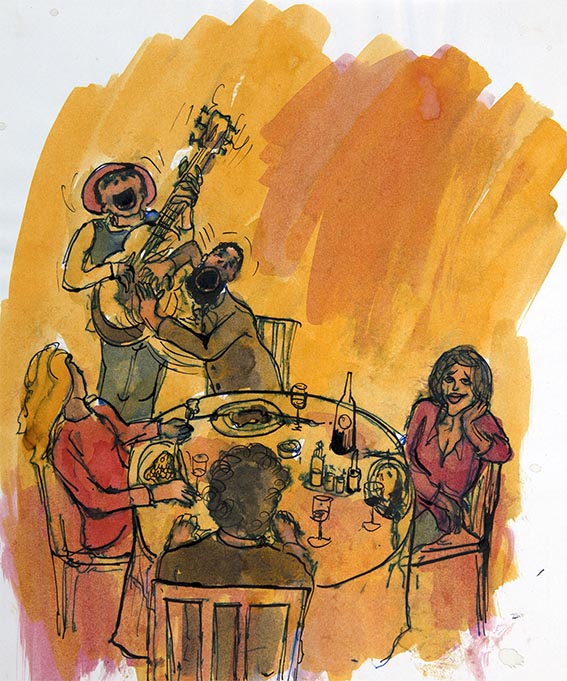
The waiter also brought a half bottle of ice cold Manzanilla and three chilled tulip shaped glasses. As he poured the palest of pale wines Carlos said; ‘I also took the liberty of ordering drink. I hope fino is to your liking?’
‘We both love it’ answered Alex, ‘but I think I’ll get a beer to start with if that’s okay. I’m dying of thirst. Anyone else fancy one?’
Elena and Carlos both shook their heads.
‘A large glass of Victoria for me and bring another half of Manzanilla with an ice bucket’ Alex said to the waiter. Then, as the waiter disappeared back into the melee beyond he continued to Elena and Carlos; ‘Might as well get set up for the evening.’
‘Not a Malaga drinker Carlos?’ Elena asked.
‘No, I’m ashamed to say. Every year when we were boys in late August we were taken up into the Axarquia mountains near Canillas de Aceituno. Our uncle—our father’s older brother—had a finca and grew prize Moscatel grapes. He sold most of them to Scholtz Hermanos in Malaga but he also made a bit of wine for himself—and raisins too. We got roped in with all the associated chores. And goodness were they chores, picking the grape and making the wine. I don’t know what was more mind-numbing—de-stemming the grape by hand for pressing or later on snipping the raisins. At any rate, by the end of the month we’d been up there just the smell of the Moscatel, either in liquid or dried form, made me feel so nauseated that till this day I can’t go near the stuff.’
‘It’s funny’ Elena remarked, ‘how townies like us tend to think of winemaking as such a romantic thing to do, especially the harvesting and the treading. Did you tread by foot?’
‘Yes. Everybody makes the wine the same way, even now. The de-stemmed berries get chucked into a kind of large outdoor trough. Then the treading is done by the men mostly, wearing flat soled rubber shoes nowadays—esparto back then—a bit like flip-flops. The must flows out of a sluice in the trough and gets collected in buckets and then chucked straight into clean empty casks. The residual grape mush from the trough then gets pressed in a hand ratcheted basket press. The pressing can take days and our uncle would leave the filled press to weep overnight. All the tears—as the locals referred to the liquid—were then added to the cask. The Moscatel are so rich in sugar that they start fermenting well before the treading. The smell was incredible. Most people love it but I found it sickly. And even worse than the smell, were the wasps—nests of wasps in the vineyards which we always inadvertently disturbed. And then swarms of the bastards around the treading and the pressing attracted by the sugary moisture. One year poor Miguel was stung in the eye.’
‘Ouch!’ Elena said wincing.
‘Yes, it was appalling. He couldn’t have been more than six and his distress was awful. He had to be held down writhing and screaming while our uncle’s wife pressed a poultice of earth and water onto his eye.’
‘I don’t suppose they had any antihistamines back then?’ asked Alex.
‘No! But it wouldn’t be much different now. The peasants down there are still suspicious of modern medicine. With Miguel, they physically bound him to a chair so that he wouldn’t touch his eye. It took nearly two days before he could see again from that eye and more than a week for the swelling to go down and he had sensitivity in it for the rest of his life. So no Elena—wine making in the Axarquia at least is a dirty, sweaty and smelly—not to mention hazardous business and not the slightest bit romantic. And that’s why I never go near my native drink. Our once-famous ‘Mountain Sac’ might have been the favourite tipple of Queen Elizabeth I of England and even the magnificent Falstaff but neither of them ever had to make the accursed stuff!’
Alex continued the theme; ‘Did you know it’s probable that vines were first brought to the Axarquia by Phoenician colonists? Perhaps more than 3000 years ago? And certainly the Carthaginians and the Romans practised viticulture in that area.’
‘And what about the Moors?’ asked Elena; ‘I’ve always meant to ask you about that. They didn’t drink did they?’
‘Not officially at least’ answered Alex, ‘but they loved their raisins.’
‘Yes’ Carlos interjected, ‘and supposedly, the Moslem landlords employed primarily Jewish vine keepers.’
‘The Jews have always had a knack with wine, going all the way back to First Temple period when they produced most of the fine wines drunk across the ancient Middle East’ continued Alex.
‘And now two of Bordeaux’s five premier cru clarets are made by Jewish growers’ Elena chipped in, showing off her wine knowledge. ‘Not that I’ve ever had the good fortune to taste either of them.’
‘Anyway’ said Alex towards Carlos, ‘talking of things Jewish?’
‘Ah yes!’ Carlos responded to Alex’s change of topic. ‘Things Jewish, and much else besides, and which reminds me, don’t let me forget to give you this before we part tonight’ he said picking up a large heavy looking carrier bag from the empty chair to his right. ‘This is copies of all my notes from the last ten years or so about El Transito, The Sons of Kohath and everything. My research, my theories‒‒what my sister-in-law Loli calls my Grand Hypothesis.’
The waiter then reappeared with Alex’s beer and the sherry in an ice bucket which after a reconfiguration of the plates of food he was able to deposit on the table.
‘Perhaps we should eat before all this lovely food spoils and then I’ll tell you a story’ Carlos suggested.
‘Good food and wine followed by a ripping yarn—my idea of the perfect evening.’ Elena said.
25
In the event, it took them barely twenty minutes to polish off all their food. Alex and Elena, always voracious eaters, ate even faster than usual in their eagerness to hear Carlos’ story. As for Carlos, although not the trencherman that his late brother was he nevertheless ate with the gusto typical of a Malagueño.
Alex never ceased to marvel at the way eating bonded all Spanish of all backgrounds and of all cultures. ‘If you ever wanted to achieve successful peace talks between ETA and government officials’ he would occasionally say to Elena when reading the morning paper or watching the evening news, ‘just get them around a table in a good restaurant and ply them with food and wine.’ He guessed it was another mostly unacknowledged cultural reminder from their Moorish past, when food and hospitality were synonymous and often played a role in diplomacy. There was something about eating with total strangers which seemed to break down the barriers of traditional Spanish reserve. The act of sharing tapas in particular, whereby one took food from the same plate as one’s fellow diners seemed somehow intimate and socially levelling.
Tradition had it that the origins of tapas lay in the fact that people used to place little bits of bread on their wine glasses to prevent flies landing in their drink. Hence the word “tapas”, derived from “tapón”, meaning top or lid. Supposedly, over the years it gradually became the custom to adorn the bits of bread with morsels of food such as ham or cheese. Eventually the morsels became more and more elaborate until the humble fly stopper evolved into modern tapas. Alex though had never been convinced of this theory. Rather, he saw in tapas yet another link back to southern Spain’s long years under the Moors and to the tradition of the Arab mezze.
As an accomplished historian he knew the danger of basing historical theories on the apparent similarity of words and sounds. While no one could dispute the tremendous value of the disciplines of etymology and philology as tools for the study of history, used in non-contextual isolation they could lead to incredible conclusions. They were also in some ways the most intellectually accessible of the various historical study tools and were thus extremely popular with many enthusiastic amateur “scholars” or worse still, self-proclaimed so-called “interdisciplinary scholars” whose works populated the history bookshelves in ever growing quantities.
Alex knew though that it wasn’t merely these often dubiously intentioned “inter-disciplinarians” who were guilty of allowing their preconceptions and ideologies to cloud their historical judgement. More and more he was having to contend with a small but ever growing band of revisionist historians who at best misrepresented historical context and at worst ignored it altogether to make history “fit” their own modern prejudices. While this had always been the practice of historians writing under the patronage of the Church or totalitarian regimes the fact that groups of mostly young, mostly left-leaning historians were now emerging in pockets all over Western Europe—and especially in Italy and West Germany—engaged in a virtual campaign of wilful “historical vandalism”, was worrying to the likes of Alex and Elena.
Although the situation was not yet quite so bad in Spain, Elena knew that once Franco was gone the Spanish academic environment would prove a particularly fertile breeding ground for historical revisionism. She would always explain to her new students that ‘history is not a plaything to be bent and adjusted to suit one’s own whims. Approaching history with fixed preconceptions is a recipe for learning nothing. Rather, treat history like science. Presume nothing. Be surprised. Be disappointed. Make discoveries, or discover nothing. Always strive for the truth but if you can’t get to the truth, never be dishonest. Just accept it and move on. Never replace an undiscovered truth with a presupposition. Good historians, like good scientists are sparing with their certainties and generous with their ideas. Bad historians are generous with their certainties and their certainties taint all their ideas…’
Fortunately for Elena and Alex it seemed from what little Carlos had told them while they ate that he shared their scholastic doctrine. He explained how he had approached the subject of Samuel Halevi and the Transito in the same way he would a subject of scientific research, ‘…with a mixture of scepticism and an open mind’ he then added; ‘In fact I can tell you now that after ten years of spending practically every moment of my free time researching Samuel, the Ark and all the related material I am thousand per cent more confident about my genetic mapping code hypothesis than I am about how the Ark of the Covenant ended up in Toledo. I’m sorry to have to admit it but if you were coming here tonight thinking I was about to share with you a great revelation about the Ark, you will be sorely disappointed.’
‘I can tell you Carlos, that we had no such expectations’ said Alex. ‘We left home tonight expecting to hear wisdom from one of the great academics of our time, not a load of esoteric bullshit.’
‘Good, because what I am about to tell you, despite Loli’s hyperbole is merely an attempt at a reconstruction of the events that could plausibly explain how the Ark ended up here. In the end that’s the only absolute I had to work with—the fact that the Ark is here—now. It’s similar in a way to a scientific problem—like the discovery of DNA for example. If you think about it, DNA is like the Ark. We believed it was there for years, but had no proof. It was only when Rosalind Franklin obtained her amazing x-ray images that we were able to glimpse beneath the canopy so to speak for the first time. And what we are doing now, in all the years since is trying to explain the how and the why. And I have tried to come up with an answer to explain how and why the Ark, which we now know is an actual object, ended up in the hands of the one man in the 14th century world best placed to appreciate it and care for it.’
There was a sudden change in Carlos’ speaking style. An abrupt switch from relaxed conversational speech to a formal lecturing tone, as if his professorial self was separate from regular, social Carlos.
This was a phenomenon which Elena had first noticed in her late paternal uncle whose personality transformed the instant he put on his white dentist’s jacket. One moment he was an easy-going jovial boisterous larger-than-life character; the next he was a serious almost sombre medical professional and whose considerable bulk altered from merely fat, to imposing. She also observed (what she termed) the “shift” in Alex. The couple of times she had sat in on one of his lectures or brought him in coffee when he was with a student at home she barely recognised him.
The degree of “shift” in Carlos was exactly what she would have expected from one of the greatest living academics in Spain. The tone of his voice and the delivery of his speech altered markedly and he ceased totally from abbreviating his words. Even his normal gentle Malagueño pronunciation subtly modified into a refined Castellano and he seemed to physically grow larger in his seat. Elena guessed that his students must have held him in awe, and when she caught a glance of Alex’s raised eyebrow she knew that he was equally impressed.
‘Tonight I will restrict myself to as brief an outline as possible of my reconstruction of the Ark’s journey to Toledo. It would take me all night to give you the unabridged version which is anyway written down here in full for you to read at your leisure.’ Carlos patted his bag of notes on the chair next to him.
‘As I said, what you must constantly bear in mind is that this is just a theory. It might be completely wrong and there are other plausible possibilities. However, having started out on this investigation with a completely open mind and with a completely blank page I am as convinced as I dare permit myself to be that the story I am about to tell you describes more or less the way the Ark arrived in Toledo in the fourteenth century.’
Carlos took a long sip of fino from his glass before continuing.
‘What do you two know about the tradition of the Ark and Ethiopia?’
Elena and Alex looked at each other and shrugged. Alex said; ‘To be perfectly honest until last April most of what little I knew about the Ark was from Bible studies back at primary school.’
‘But you are an archaeologist’ stated Carlos almost as an accusation.
‘That’s true. But in the first place I’m a medievalist and secondly, even among biblical archaeologists the subject of the Ark verges on taboo—at least officially. Similar to the way the subject of the Holy Grail is treated in my own field. I’m certain that even biblical positivists like my friend Ron Smith in the States wouldn’t go near the subject of the Ark in a serious way—at least not openly—for fear of losing face with his peers.’
‘I can take it therefore that you have not told him about any of this?’ Carlos asked sounding mildly anxious.
‘Yes and no. I did consult with him and two other old friends of mine who are also Near Eastern specialists back in April.’
‘I see. And what did they have to say?’
‘Frankly, they were amazed. Like poor Vella, they too thought I’d stumbled on something more important than Tutankhamen’s tomb. They wanted to come here and see it for themselves.’
‘Oh. So what did you tell them?’ asked Carlos, his tone of concern rising slightly.
‘Well obviously I deterred them and explained how important it was for them to keep schtum.’
‘Did you tell them about the Ark?’ Carlos was now leaning across the table staring intently at Alex.
‘No not yet. But you must understand that these three guys are the world’s leading experts on this stuff and they realised as soon as they had analysed the samples and the field notes I sent them that the canopy had been constructed to house something of exceptional importance.’
‘But would they suspect that it was the Ark of the Covenant? Carlos demanded.
‘They wouldn’t state it overtly but they will be thinking it privately, I’m sure.’ Alex instinctively leaned back into his seat away from Carlos.
‘But you are confident they will be discreet for fear of making themselves look stupid among their peers.’
‘Yes!’ Alex said irritated by the interrogation; ‘That, and the much more important fact that they promised me their absolute discretion. Look Carlos, I trust these guys with my life!’ He slapped the table with his open hand to emphasise the point.
‘That’s exactly what you may be doing by having consulted with them about the structure. Don’t get annoyed with me Alex. I am only thinking of our safety.’ Carlos slowly leaned back into his own chair.
‘I know that, but you…we…have nothing to worry about from that quarter. Now, you were saying about Ethiopia…’
Carlos took a deep breath and poured himself another glass of wine, ‘Yes, Ethiopia…’





























































 ARKS, ADAM AND AXARQUIA