It’s been quite a while since I published a “live” postcard-type piece, but this current trip to Coimbra, Portugal’s oldest (and Europe’s third-oldest) university city has drawn me to the keyboard.
Incredible to think, that we have been living on the Iberian Peninsula (on our finca in southern Andalusia and in Gibraltar) for well over thirty years and had never set foot in (mainland) Portugal. It was not for want of coming, but somehow the necessary stars never quite aligned, until now. It’s even more extraordinary, when one realises that our very first trip abroad together – our belated unofficial honeymoon, in effect, back in 1990, was to the island of Madeira, which we loved.
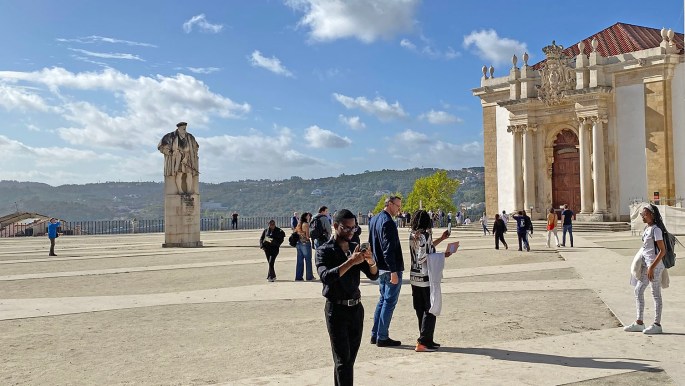
Anyway, we’re here now, and in the spirit of past “postcard” posts, without any more ado, here is a selection of captioned photos from a town that combines elegant charm and faded shabbiness with nonchalant ease – one might even say, with Portug-ease…
The “Tricana” statue, depicts a working-class girl with her water pitcher. Back in the day, before the advent of running water, this was how the poor collected their water from the town wells. The streets of the old town are narrow and steep, and presumably the girl is taking a well-earned rest…
The old Cathedral of the town, set in a small square, about two-thirds up the hill upon which most of the central old town is perched…
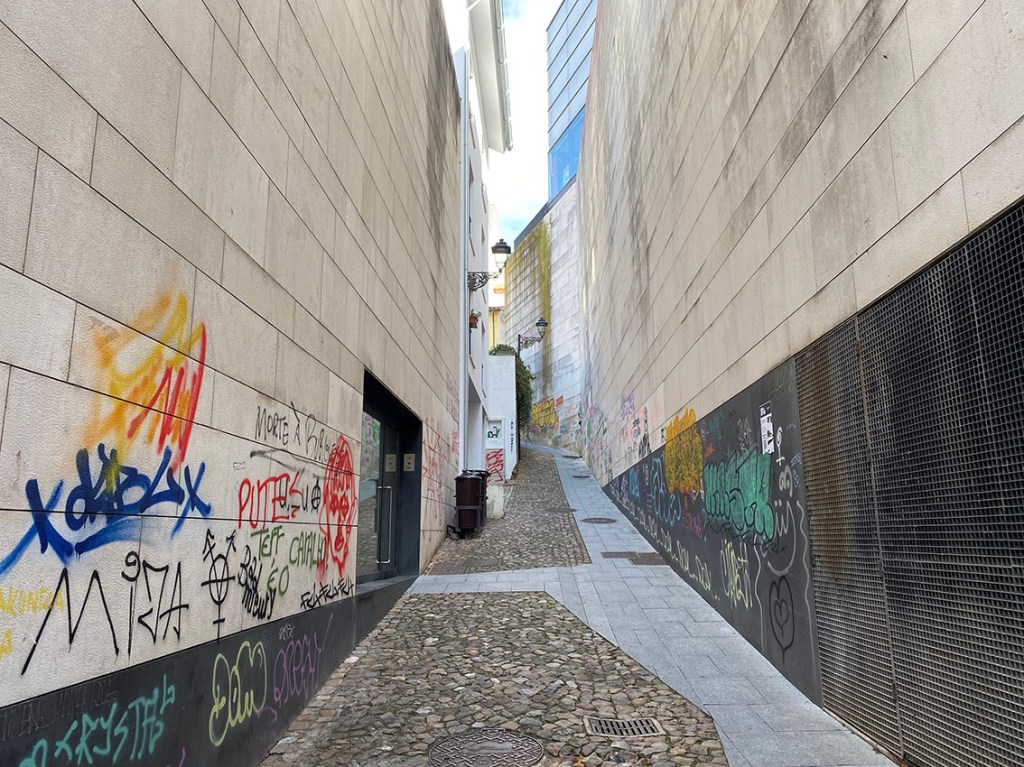
Most of the upper hill, and virtually all of the top plateau comprises the large university campus, old and new. Fortunately, the not very artistic graffiti was restricted to the new…
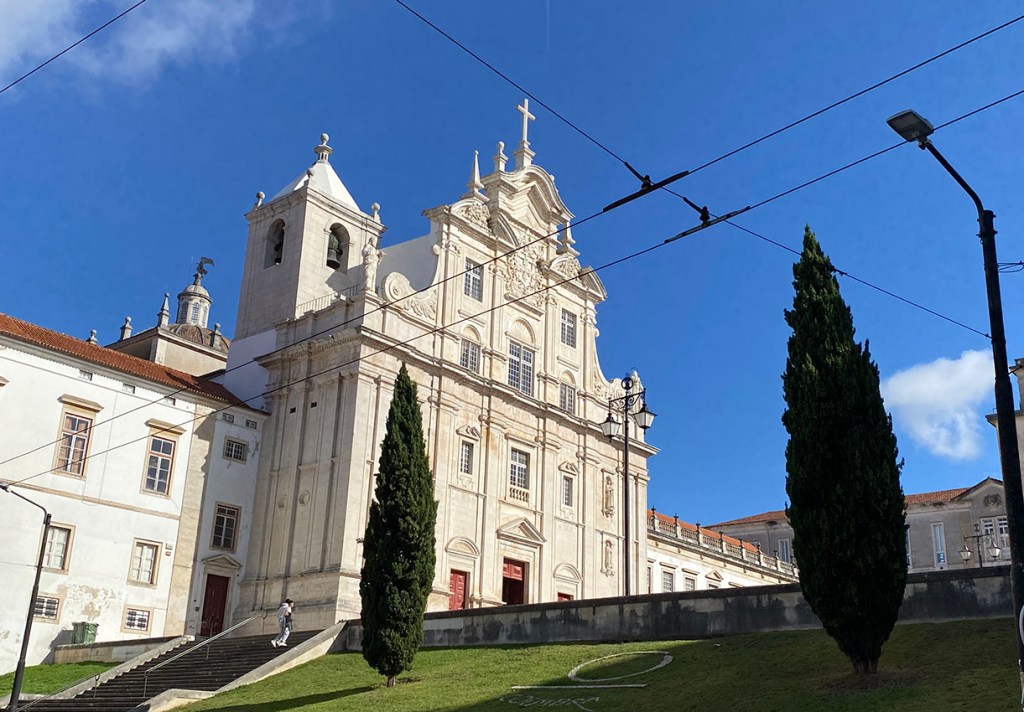
The new cathedral, integrated into the university campus on top of the hill…
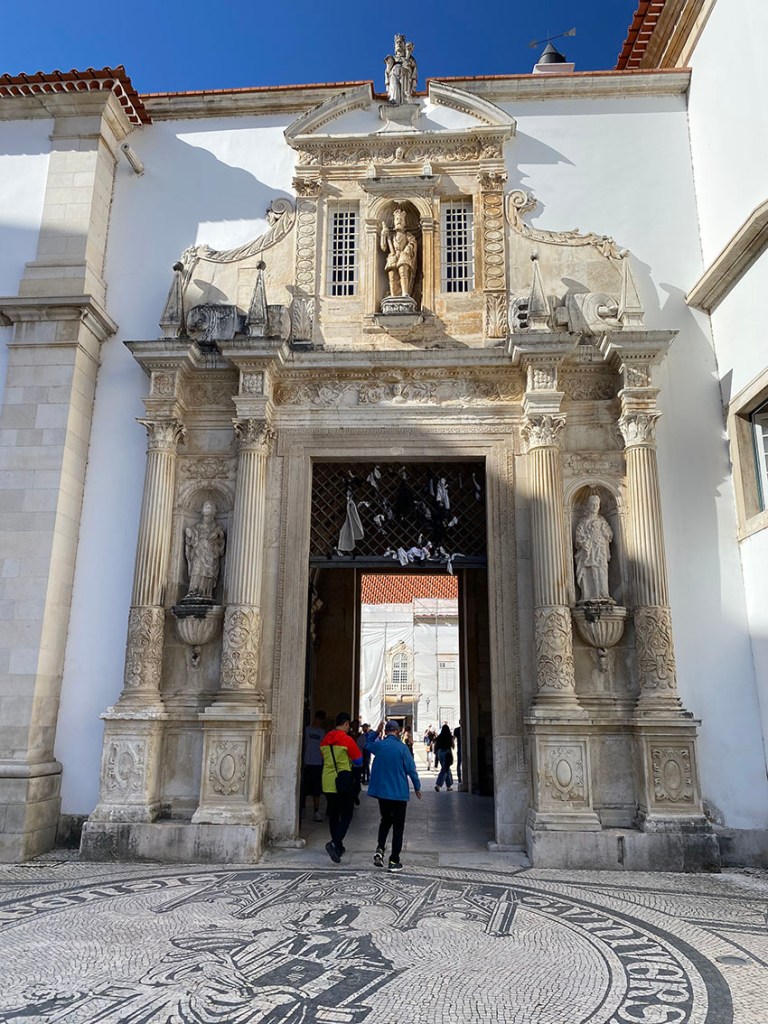
One of the several highly ornate gateways spread across the campus…
Undoubtedly, one the most elaborate campuses I have ever visited and this is its Royal Palace – presumably for regal students?
Coimbra University’s Academic Prison, for badly behaved students –The way things are going these days, most of our elite academic institutions could do with one of these…
An impressive view of the Mondego River (the largest / longest river contained within Portugal’s border), from the university plateau…
Leaving the main campus on the plateau, one passes the charming Capela de Santo António…
The old cathedral, from a different angle…
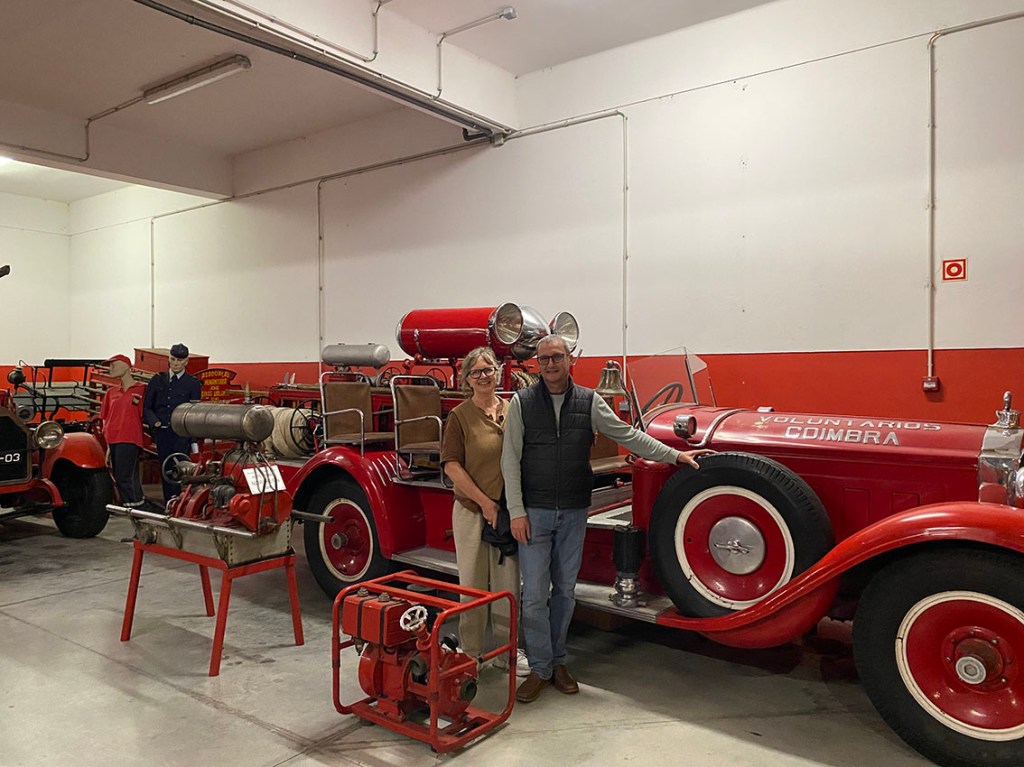
On a different note completely, on our last evening in Coimbra, we passed the volunteer fire station (there are three levels of firefighter in Portugal). The old engines were so enticing we sneaked in for a closer peak, only to be met by an amiable young fireman who gave us a guided tour of the station and the engines. This one, an old Mercedes, dated from the 1920’s and was our favourite. If Keystone Firemen had existed, this would have been the perfect vehicle for them. Dido even got to ring the bell! Coimbra was full of pleasant surprises.
When I began this series of posts on Sidney, I had originally planned to do just three, but since then I have had the privilege and the joy of reconnecting with several of his old colleagues, assistants and models, from the days when he ran one of London’s top advertising photography studios. Subsequently, I now have far more material – anecdotal and pictorial, than when I started out on this mission, and so this will now be number 3 of 5 posts in total.
The most striking – not to mention moving element of this process has been how each and every person I have been in contact with has had nothing but warm memories and kind words about Sidney and their time working at “The Studio”.
This post offers a small, illustrated, behind-the-scenes record of those exciting and pioneering times…
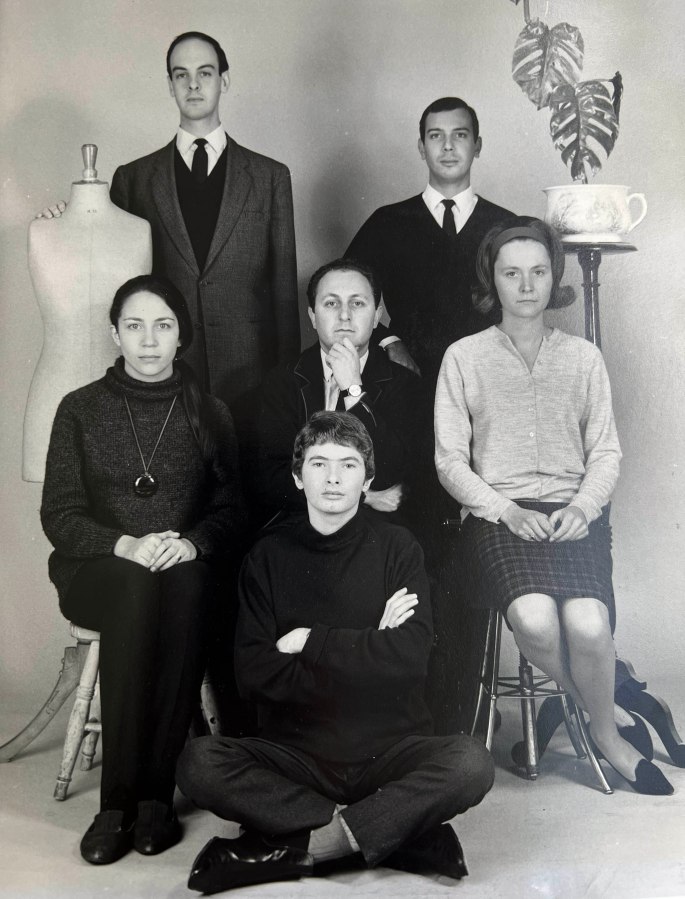
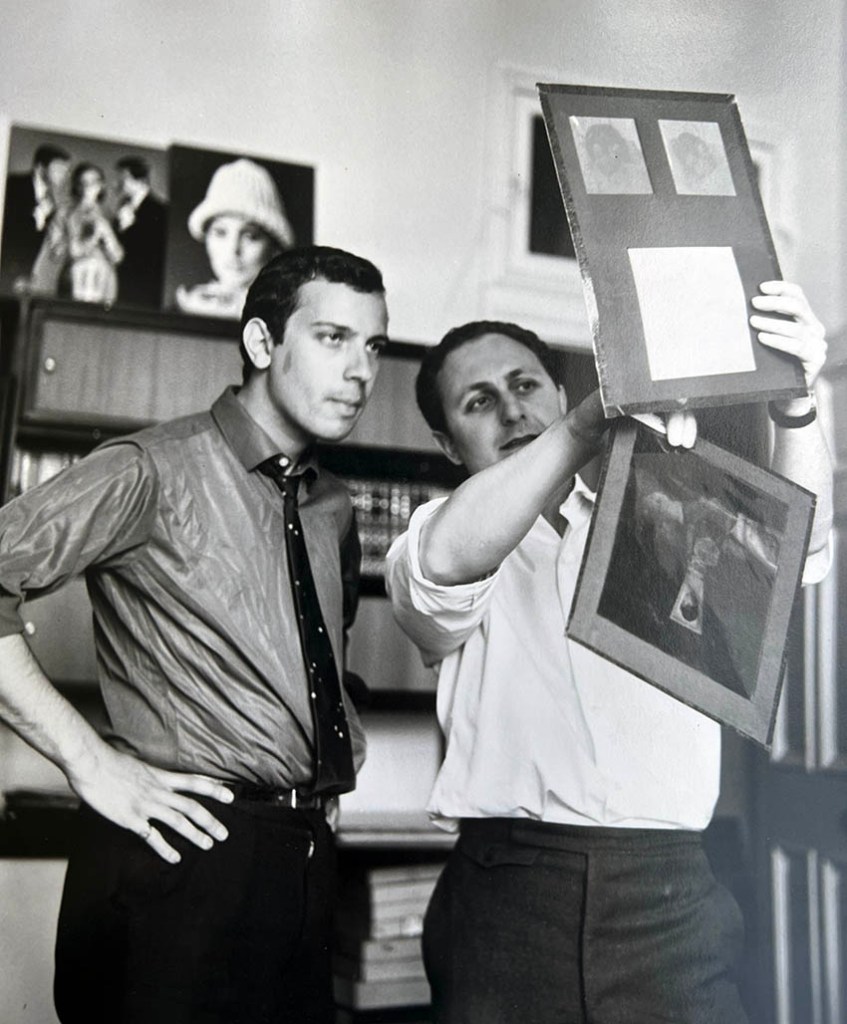
An early publicity shot of Sidney and his team (1964 – taken using a timer): Edgar Asher (TL), Henry Sudwarts (TR), Doreen Dahl (CL), Sidney (C), Faith Hollings (CR), Lawrence Sackman (F). Edgar was extremely tall and thin, and is the only person I know to break their leg playing the violin. He was a fine photographer in his own right and went on to work for the Israel Press and Photo Agency. Lawrence – the youngest of the group – learnt his craft well, and went on to a successful career in art and erotic photography, working with Guy Bourdin and Helmut Newton. More on the others below…
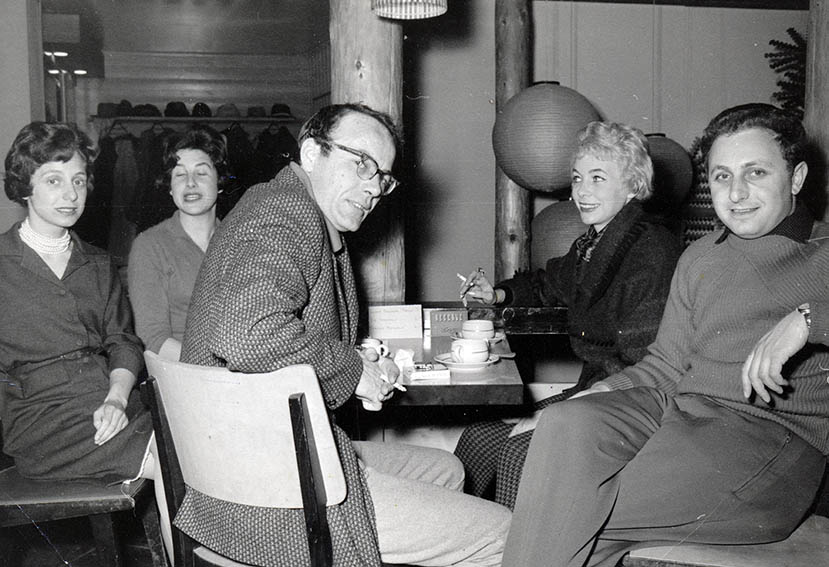
Probably taken by my father, Gerald Green (1960), this shows Sidney with Bill Young and my mother Hannah (far left – Sidney’s sister – and I’m presuming that the two other ladies were accompanying Sidney and Bill). Bill was my father’s partner and became good friends with Sidney. In addition to being an add-man he was also a darn good artist. Two of his gorgeous large oil landscapes adorned my childhood home and strongly influenced my own painting style…
Sidney with Henry Sudwarts, who contributed this and several others of the photos shown here and has some interesting recollections from his time at the Studio. Not only did he get to drive Sidney’s prized Alvis motor car, he also remembers a “Dell Boy”* -like handyman who used Sidney’s basement to stash away contraband cigarettes and radios off the back of a lorry! Henry too branched out on his own in fashion photography before moving into TV in Israel. Having married a South African in 1980 he then moved to Cape Town, where after 30 years working in things as diverse as jewelry and tourism, he picked up a camera again and became an acclaimed wildlife photographer . .
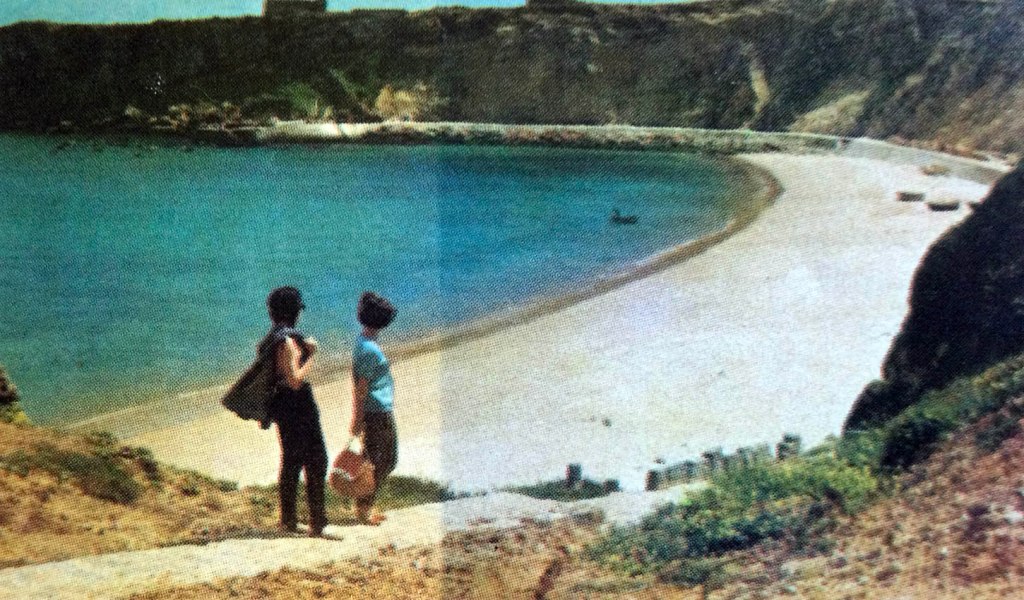
Doreen (left) and Faith from a mid-1960’s shot for BEA (British European Airlines) taken at Sagres on the southern Algarve of Portugal. The main purpose of the trip was a job for Women’s Own Magazine, and the girls were both assisting with the shoot. Faith, whose memories and information have been invaluable to me in compiling these posts, was one of Sidney’s photographic assistants. She has something interesting to say that “to his credit Sidney employed me as a photographic assistant even though I am a woman. Women of my age had to fight to earn a place in a male dominated profession and I had spent three years learning my craft at Guildford School of Art under the the wonderful Ifor Thomas, who was head of the Photographic Department.” Faith now lives in Portugal where she works for an animal charity…
Henry with Doreen . Doreen was Sidney’s secretary (or PA in today’s terminology), and also an aspiring classical timpanist. Faith and Doreen became friends, and she would sometimes help Faith with photographic duties, including setting up a darkroom on travelling shoots, such as the one above in Sagres. My mother, who did additional secretarial work for Sidney, also became very fond of Doreen. Sadly, I haven’t yet discovered what has become of her or her timpani playing?
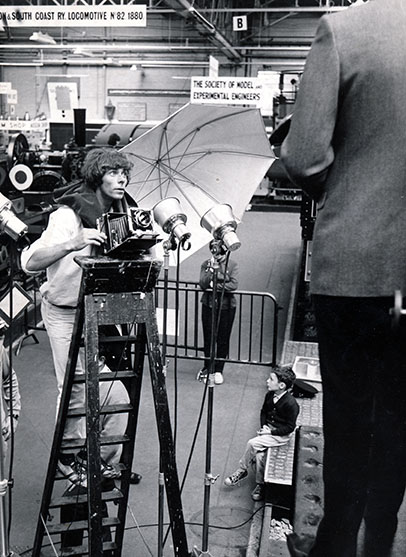
One of Sidney’s later assistant photographers was Peter Watkins, pictured here on a shoot at the London Transport Museum in London’s Covent Garden. Peter also went on to have a successful career as a fashion photographer. The young chap seated is yours truly. During school holidays I often got to watch shoots, but this one stood out for the fact Peter drove me there in his open topped MGB GT – my first time in a convertible sportscar. Other notable photographers and set technicians who worked for and/or with Sidney from 1960-1975 and who also helped me with my research, included Brian Jaquest, Derek Berg and David Hendry.
*For those reading this not acquainted with the long-running British sitcom, “Only Fools and Horses”, Del Boy was a spiv (someone who deals in dodgy and black-market goods), and the program’s main protagonist.
Many winters ago, Dido and I found ourselves sheltering from a -10°c Prague night in a cozy, smokey jazz club just off Wenceslas Square. The place was full and we had to share a table with a Viennese couple who fortunately turned out to be more interesting than the hapless wannabe Charlie Parker murdering his sax on the stage.
The fact that the couple were a similar age to ourselves, and both handsome and charming, with perfect English was pleasant enough, but it was when we exchanged names that we all almost fell off our seats. We introduced ourselves first with the customary, “I’m Dido”, “and I’m Adam”, to which they replied through wide-eyed grins, “and I’m Eve”, and after a short dramatic pause, “and I’m Aeneas…”
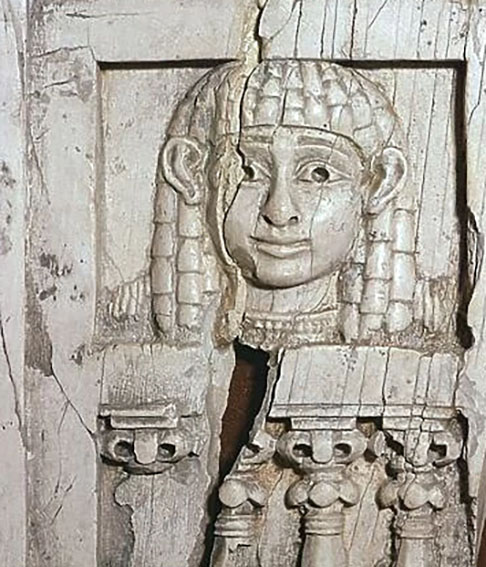
A Phoenician ivory of a noblewoman looking over a balcony from Sidon, very close in date to the historical Queen Elissa / Dido
Not only was this a delightful and highly amusing coincidence (it was the only time we ever joked with another couple about the concept of partner swapping – purely in the interests of onomastic correction of course!!) it was also the diametric opposite to the normal response of people upon first hearing Dido’s name.
For one glorious instance no explanations were required, nor any brief lessons in classical mythology and ancient history, nor having to smile away the increasingly tedious “Ah! Like the singer?” (actually born Florian Cloud de Bounevialle Armstrong eleven years after “my” Dido). Instead, just an interesting exchange about why Aeneas, and why Dido: The former, it transpired, because his father was a classics professor in Vienna who specialized in the Roman poet Virgil, and the latter; because her parents had been expecting a boy (long before the days of ultrasound), they had no girl’s name prepared. As they were listening to Henry Purcell’s opera, Dido and Aeneas when her mum’s water broke, the name seemed apposite.
I repeat this story here because it is sweet and pleasant to recollect, but also to hopefully encourage all our friends and acquaintance, past, present and future, who may be ignorant of the facts behind the name to take five minutes and click on this link to learn about Dido (mythic and historic). It’s not only informative, it’s also genuinely fascinating with contemporary resonance (like much myth and history).
For instance, how many of the people reading this, including my Spanish readers. know that the city of Malaga was founded by Queen Dido’s Phoenician compatriots (and probable subjects) about 2,800 years ago as Málaka (the same time as the founding of Carthage itself). Phoenician was a Semitic sister language of ancient Hebrew, with many close similarities (see this earlier post). Málaka could mean a place where fish was preserved in salt , or it could have something to do with “sailors”. However, given that the Phoenician for queen, is Malgah/Malkah, a more likely meaning is the Queen’s city. And if so, the most likely queen to have a new colony dedicated to her by Phoenician settlers would be their-then queen and sponsor, Dido (more properly, Elissa in her Phoenician form).
In other words, it is quite possible, that my wife Dido, has a home in the province titled for her ancient namesake, and I at least, find that possibility pretty damn cool.
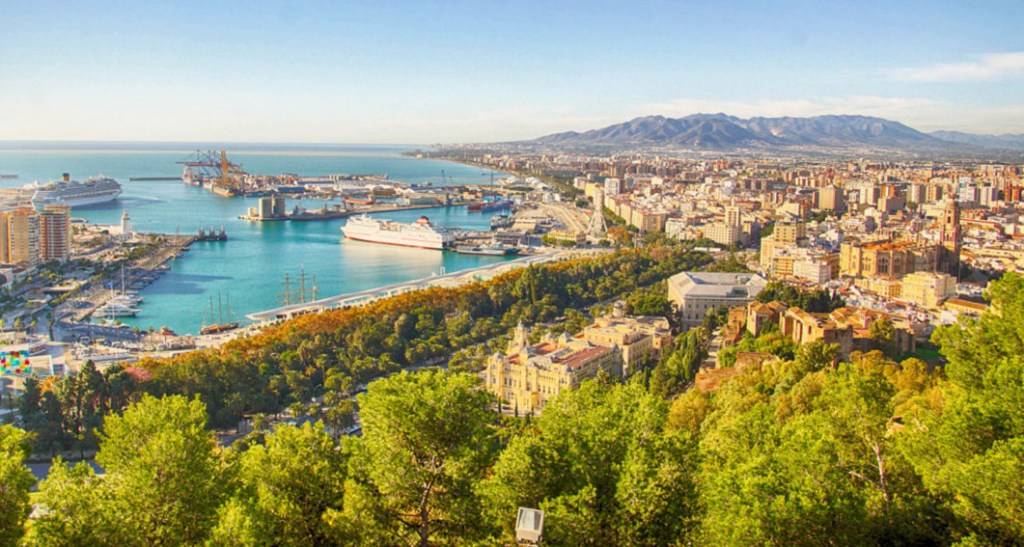
Modern day Malaga, some 2800 years after its founding by Phoenicians, who knew a good harbour when they saw one.
Bedu playing a form of draughts with petrified camel turds…
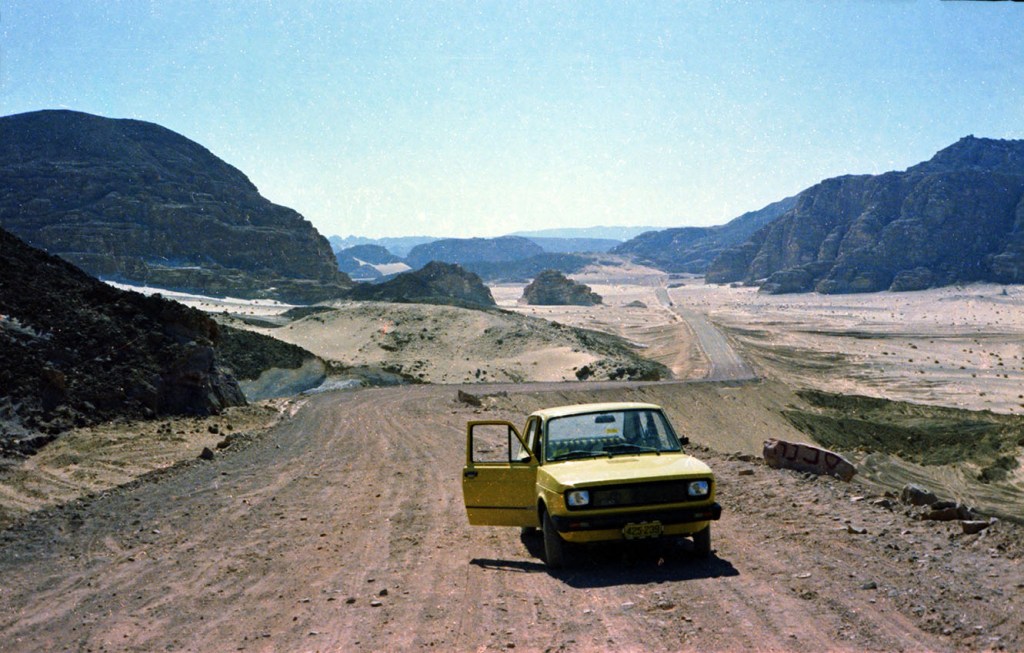
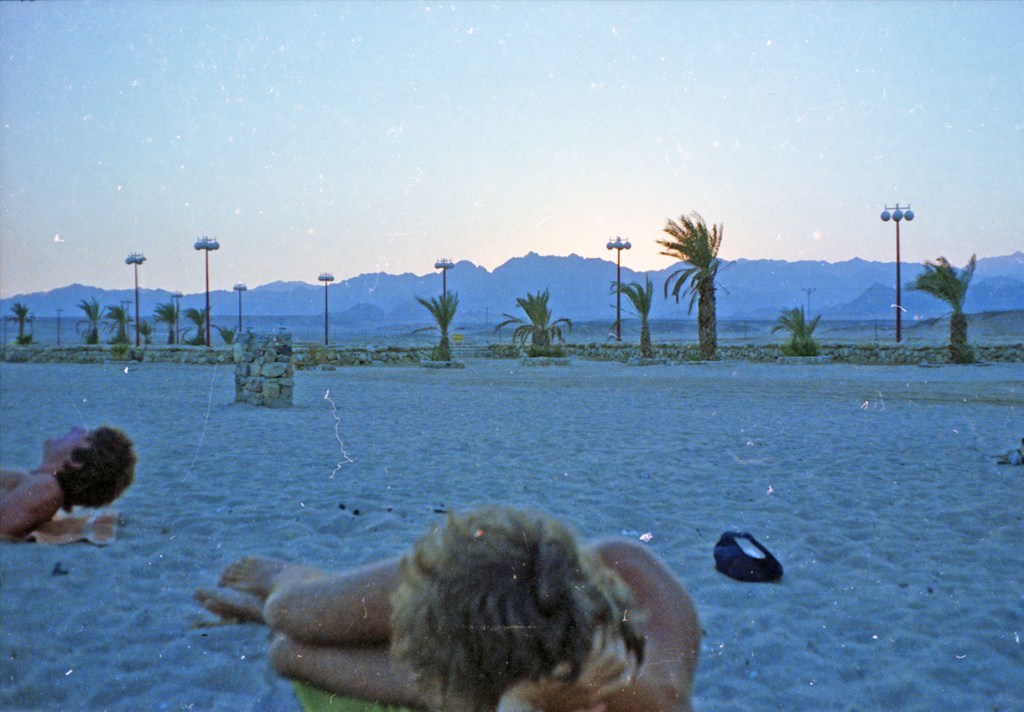
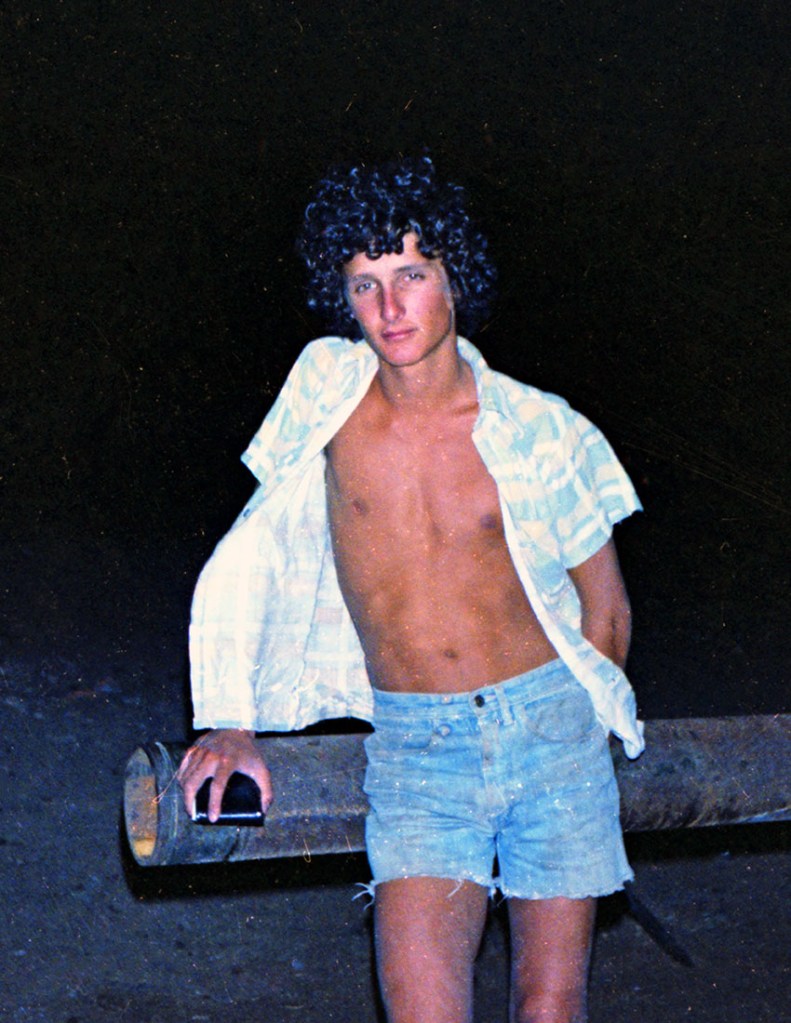
In 1978, my oldest friend Simon and I spent the summer as volunteers on a kibbutz in northern Israel. Although our labour was voluntary we were paid a weekly amount to cover basic needs such as cigarettes, booze and staples from the kibbutz general store. Fortunately, we didn’t smoke; the beer was cheap, and we were sufficiently content with the food produced in the members’ dining room that we’d spent relatively little, and by the end of the stay had a reasonable amount of money saved up. We decided to pool our savings with another couple of English guys, Tim and Ben, hire the cheapest car available (which happened to be a typical 70’s yellow Fiat 127) and drive down south to spend a week in the Sinai Desert.
Our trusty yellow “horse with no name” above the Valley of the Inscriptions…
The Sinai was still under Israeli rule back then, free to roam almost all the way to the edge of the Suez Canal. Little did we appreciate then, that a uniquely peaceful era in the modern history of the Sinai was nearing its end and that we were about to enjoy privileged access to virtually the entire peninsula.
A typical scene at Nueba…
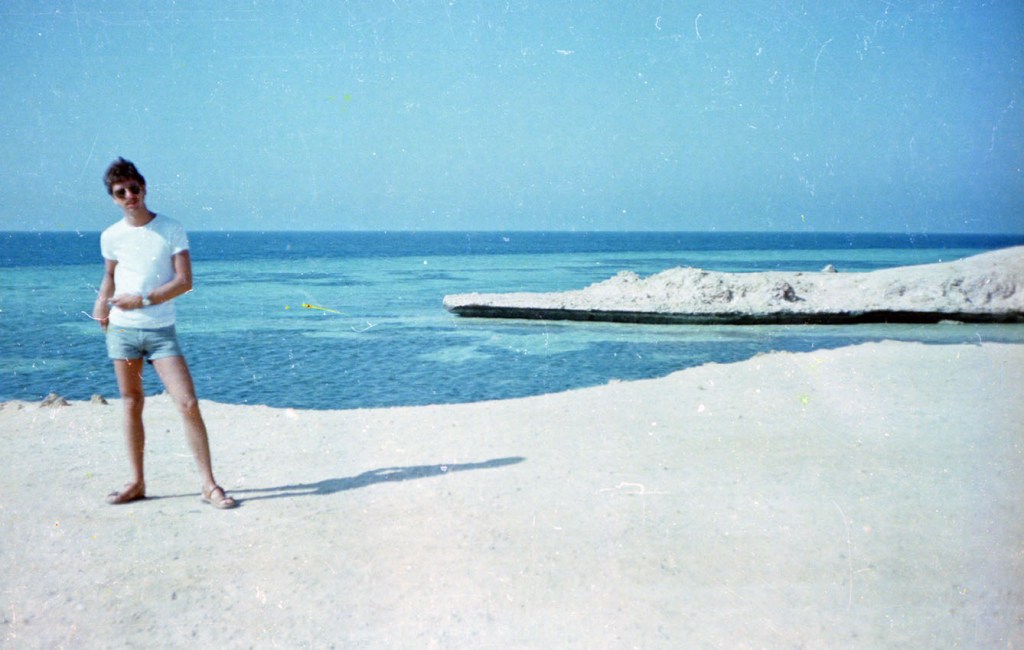
These days, most travellers associate the Sinai primarily with its exotic beach resorts and scuba diving and snorkelling. And little wonder, as the peninsula is blessed with a sublime coastline both above and beneath the waves. Even now, the beach at Dahab remains the most beautiful I have ever seen, and the Sinai’s coral reef―as regards accessibility and quality―is a match for any other in the world.
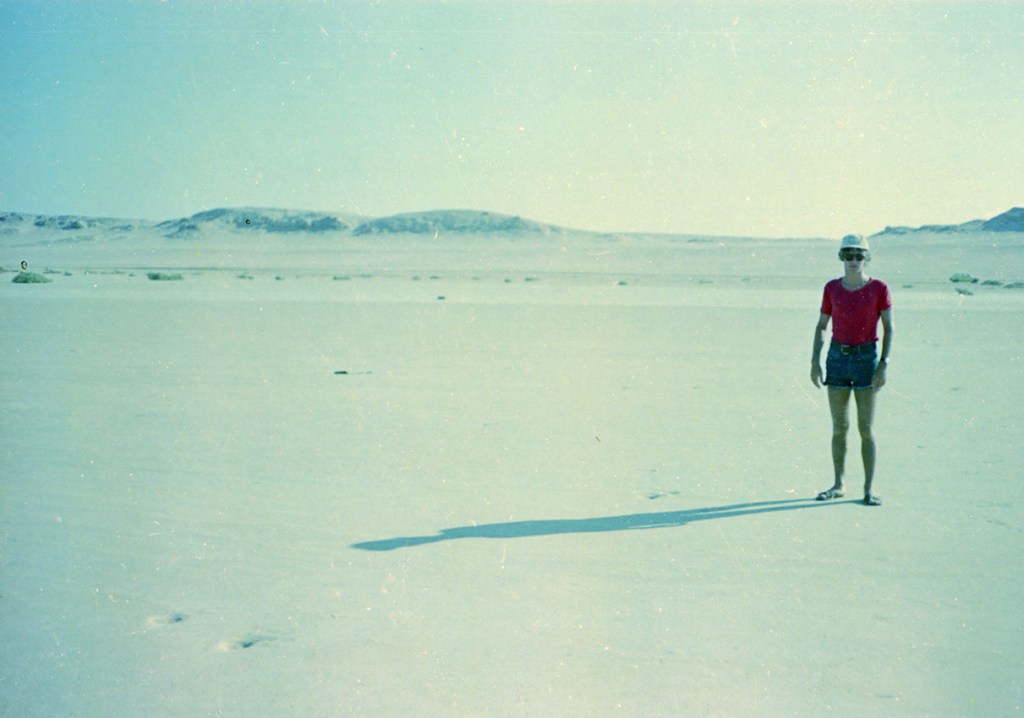
My old mate Simon, on salt flats near Ras Mohammed
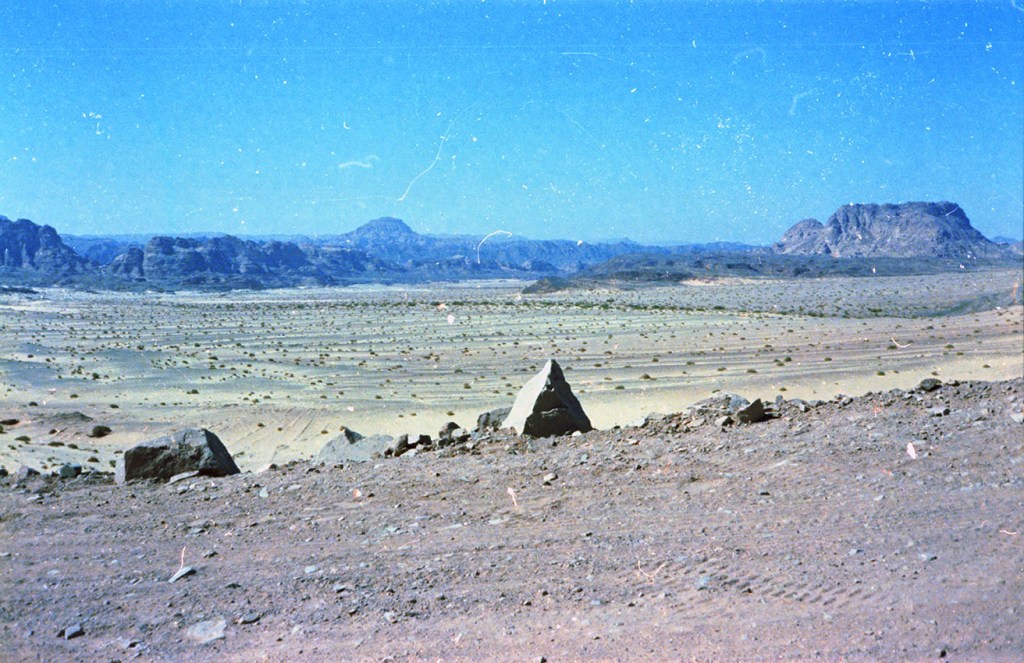
But for me, from the moment we passed through Eilat and entered the peninsula its superlative watery attractions notwithstanding, the feature which most grabbed my attention was the equally extraordinary landscape. The combination of desert plains and craggy mountains in a myriad of different colours; from white, to golden ochre through deep umbers and sienna, and culminating in blues and purples, was simply astonishing. The changing light; the chromatic sunrises; the intense sapphire of the day and the copper-tone sunsets reacted with the multi-surfaced sand and rock, presenting an optical feast of shifting tones and colouration.
The southern Sinai range erupting from the flat desert plane “like brooding granite ice bergs above a gravelly, sandy ocean…“
In the south of the Sinai Peninsula in particular it was easy to see how its awesome visual dramatics gave birth to Yahweh―the eventual supreme divinity of the Israelites, and which would gradually evolve into the monotheistic Judeo-Christian concept of “God”. And funnily enough, of all the many remarkable aspects of the Sinai, the one which struck me most had an appropriately biblical reference: I recalled, even back then, the passage (Exodus 19:12) where Yahweh warns the Children of Israel not to touch the sacred mount (Mount Sinai / Horeb) “or they shall certainly die”. Until witnessing for myself the “biblical wilderness”―familiar then, only with the mountains of Europe which have nothing like defined parameters, but rather evolved from their neighbouring foothills which themselves slowly emerged from undulating plains―I had always found that to be an odd warning. I even recalled as a child in Synagogue on a Saturday morning, when first reading the relevant passage, asking my grandfather how the poor Israelites were supposed to know where the sacred mount began. But now, looking at the actual mountains of southern Sinai, thrusting forth from ironing-board-flat plains like brooding icebergs above a gravelly, sandy ocean, I could immediately attest to the voracity of the biblical author’s knowledge of the geography he was describing. And it sent a shiver down my spine.
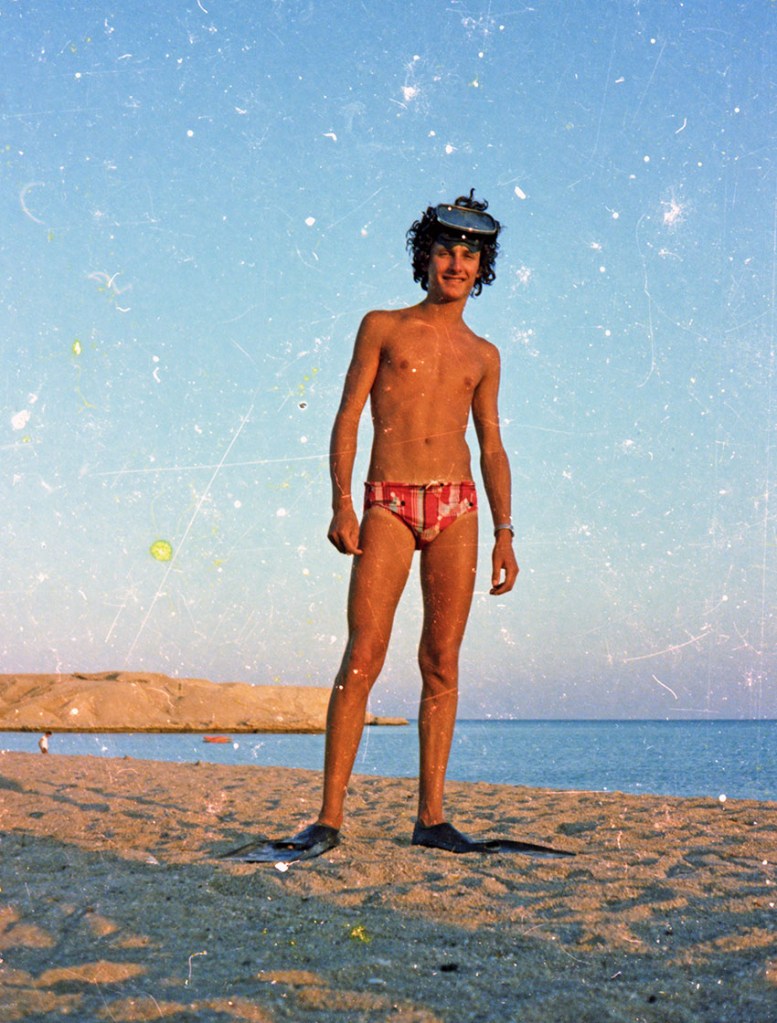
Snorkelling off the southern Sinai coast was beautiful and awesome in equal measure…
Presented here are a handful of the dozens of photos I took on that trip with my old Cannonet 28 on high-speed Ektachrome film. Sadly, most of the transparencies were too damaged to convert, but I think these few, in their raw, scratched and grainy condition, begin to convey to sheer wonder of what we saw on that wonderful trip to that “great and terrible wilderness”.
Finally, and on a lighter note, I recommend viewing these images to the sound of America and their iconic track The Horse With No Name . This song became a kind of unofficial anthem to our trip, and thus the adoptive name of our trusty little Fiat…
Francophones have long understood the difference between a hearty gourmand and a fastidious gourmet, and their two sharply distinct gastronomic philosophies – the first being a love of all good food (and all good drink), and the latter, a love of the refinement of good food (and good drink). These days, the closest Anglophone equivalent would be “foodie” versus “trencherman” or “trencherwoman”.
As someone who both used to eat regularly in Michelin starred restaurants (including many 3-star establishments), and who makes wine I am often presumed to fall into the “foodie” camp. Yet, while it’s certainly true that I found many of those fine dining experiences highly enjoyable, none of them provided me with unforgettable plates of food. Quite the opposite in the majority of cases, when the theatre of the experience, and the food’s appearance was deemed far more important than what the stuff plated up actually tasted like.
While the advent of Nouvelle Cuisine began my disillusionment with “fine dining”, the arrival of its evil twin-spawn, “molecular gastronomy” and “New Nordic” killed off any lingering affection I had for the concept of haute cuisine. Although, in fairness, the few such up-scale dining experiences I was unable to avoid were incredibly memorable – albeit, for their smug, and aloof awfulness. These days, the minute I see a self-consciously-ernest chef wielding a pair of tweezers I’m outa there quicker than spittle on a red-hot skillet. Ironic really, that the Nordics of all people, should have created the gastronomic equivalent of the emperor’s new clothes. Hans Christian Anderson, being the devout trencherman he was must be turning in his grave.
The reason I mention all of the above, is because I was asked the other day by an old friend to name the best meals from all my years of travel? Then, as I began running through the half dozen or so plates of food that immediately sprung to mind, he and I noticed that not one of them had been served up at a posh restaurant. On the contrary, each and every item was as simple and basic as the eatery in which it had been prepared. So surprised was my old mate by my list, he suggested I devote a post to it, and hence this, which if nothing else, and despite a touch of self-indulgence, might help convince one or two people, especially in these financially stretched times, to look for their culinary treats in good, honest, modest establishments, where flavour and quality is everything.
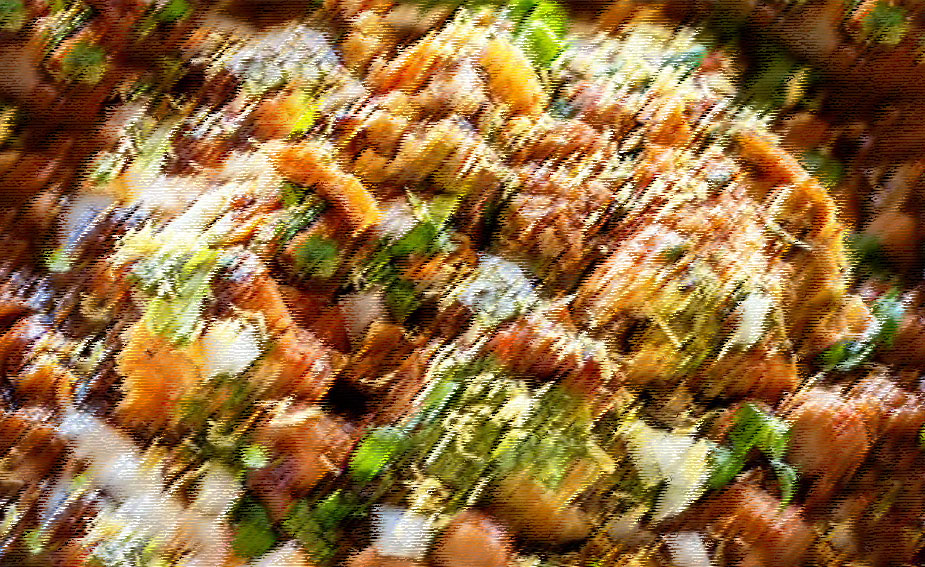
Wild rabbit stewed with prunes and red wine: Driving down from Catalonia to the south of Spain, we stopped at lunchtime at an empty and drearily decorated cafe-type place – pealing linoleum floor, steel counters and flickering fluorescent strip lights near Gerri de la Sal. Seeing only things like egg, chorizo and chips on the grease-smeared laminated menu, I asked the apparently depressed girl serving us if there was anything else to eat? She said that her father had shot a rabbit that morning and that it had been stewing all day in a “nice gravy”. It was my first ever taste of rabbit of any variety, and it, and the red wine gravy, generously populated with large, juicy prunes was simply exquisite. It remains the best lunch I have ever eaten – anywhere: Price, with a glass of local red; about €4.00 in today’s money.
Samosa chaat: During our trip to southern India, we were based in the industrial city of Coimbatore in Tamil Nadu, where Dido was helping set up an autism clinic. One day, while Dido was working, the son of our host took me shopping for “authentic tailor made” “Pierre Cardin” shirts. While the three shirts were being made up we went for lunch at a highly recommended near-by street-food cafe. It was suggested that I try the samosa chaat, which I presumed would be a typical, potato and pea filled pasty with an accompanying bowl of chickpea chhole (stew). But while I was correct about the constituent parts of my lunch, I could never have guessed that the samosa would be broken up and mashed into the chhole, and then eaten scooped up with a couple of fresh chapatis. It was a flavour/texture revelation, and easily the tastiest thing I ate in all our time in India – and boy, that’s really saying something. I washed it down with a bottle of King Fisher lager (a very different and much better beer in India than the swill brewed under license in the UK): Price, about 50 pence, in UK money.
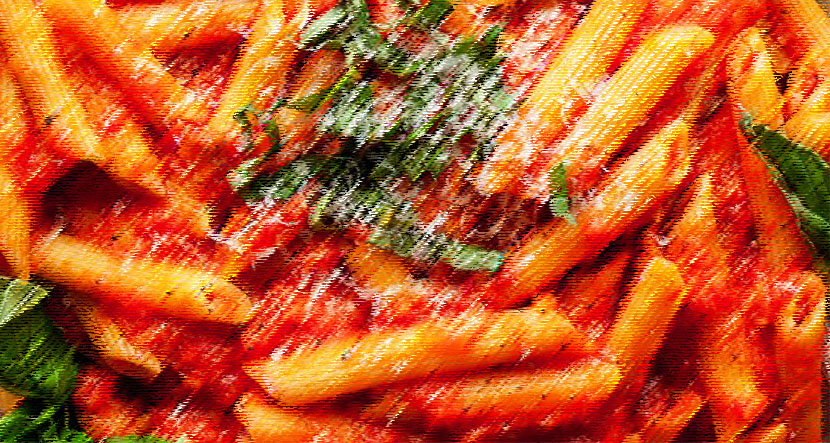
Penne pomodoro: I can’t be the only person to have found that in general, pasta (and pizza) is always better when eaten in Italy. While there might be an element of the truism in this claim, it is certainly true that the only two memorable pasta meals I enjoyed were both eaten in that country. While one was merely the excellence expected from a tagliatelle a la Bolognaise served in a Bologna osteria, the other was something surprising as it was inexplicable. As the main dish element of a set lunch in a lorry stop outside Piacenza we were served deep bowls of penne coated in a tomato sauce (made from freshly skinned and crushed tomatoes), sprinkled with the usual parmesan and black pepper. Neither Dido nor I could tell you quite why, but this remains the single plate of food we first remember as a couple (Dido did not eat the rabbit mentioned above). All I can say, is that it exemplified why so many Italians are happy to dine on such simple food on a daily basis. It was taste and texture in perfect harmony: Total cost of menu, with as much local red sfusi as we liked about €4 each.
Fried chicken with slaw: Swap fermata del camion for truck stop gas station diner, and northern Italy for south east Missouri and imagine a plate of such perfect fried chicken that I found myself chewing on the bones themselves. And to accompany this with a freshly made, tangy and sweet, crunchy slaw, washed down with an ice cold diet Coke, was for me at least, as close to every-day American food heaven as it’s possible to achieve. Tragically, we can’t remember the name of the diner or its exact location, except that it was about an hour south of St. Louis on Route 67. If anyone reading this has an idea where we experienced this poultry perfection, I would be keen to record it: Price for one, about $12.00.
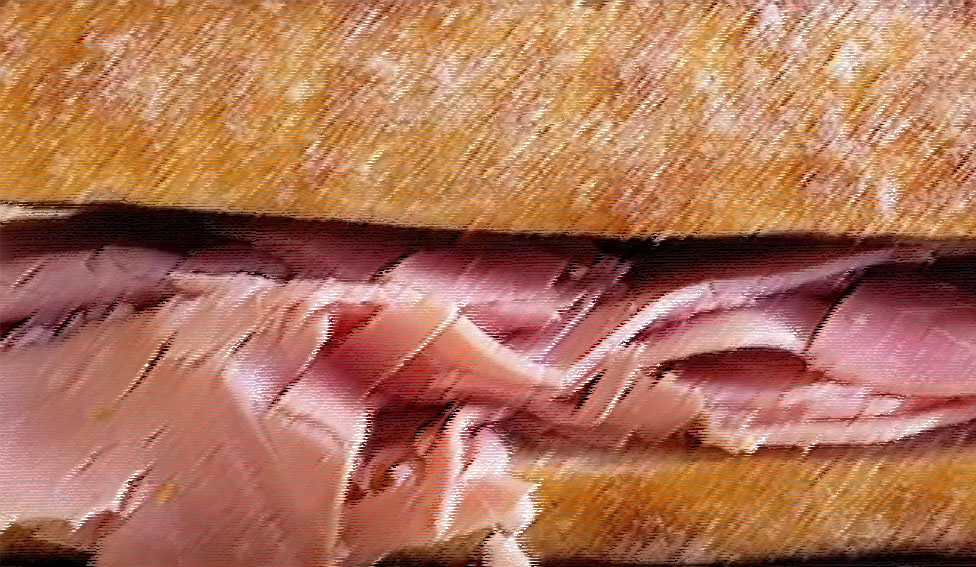
Ham sandwich: I acquired severe flying phobia in my mid-20’s and it lasted about 10 years (long story). As luck would have it, this coincided with our move down to southern Spain, which meant that from 1993 until about 1997 whenever we needed to get back to England we had to drive. The good side of this was that we got to eat lots of lunches and suppers on the roads of France and Spain, including some pretty amazing plates of food – a particular portion of sauteed calves liver in France, and grilled quail in Spain spring to mind. But, by far the most memorable thing we ate was for breakfast, at a rough and ready cafe/bar, in a small town just south of Amiens. We had caught the very early morning ferry and had eaten nothing since leaving London about five hours earlier, so it is possible that extreme hunger played its part in our response to what remains the best meat sandwich we ever ate. Our normal road trip breakfast in France was simply a plain croissant with a cafe au lait. But the large, moustachioed proprietor of this humble bar – drawn straight from the pages of Asterix – was having none of that. We did get our coffees, but with them he put on the little table two sandwiches, comprising long sections of a broad super-sized home-baked baguette, still warm from the oven, encasing thick, unctuous slathers of moist cooked ham, dressed with about half a packet of locally made Normandy butter each, and lashings of Dijon mustard. My mouth is watering even now with the memory. Our constant smiles while eating these enormous slabs of, soft, chewy, yielding, savoury heaven, were as broad as the loaves themselves. Truly, the equal of anything either of us had in all our hundreds of meals in France: Price for two, with coffee, about €6.
Hamburger: Dido and I went to Australia three times for her work in the early 2000’s, and always made sure to find time for some road travel. On one such drive we were travelling around the wine country west of Sydney in New South Wales, when the hunger pangs began, and we agreed to stop at the first place we came to. This turned out to be a another truck stop (something of a theme developing here) in a small ex-mining town (actually referred to as village by the locals) called Barmedman. The diner was almost as vast inside as the lorry park was outside, and just as bleak – all formica, steel and the ubiquitous strip lighting. So, when we saw the poster, above the grill with the boast, in huge red letters, “BEST BURGERS IN AUSTRALIA”, we remained dubious. However, Dido decided to take up the challenge and ordered the most basic beef burger on offer, while I went with that day’s special – a lasagna. We were surprised when the very friendly lady doing the cooking asked Dido how she wanted the burger cooked, and thus confirming that the patties were home made. Dido asked for it to be medium-rare. My lasagna was as acceptable as it was unremarkable, but Dido’s burger was a masterpiece of the genre. Again, as with the penne above, hard to explain in words exactly why? Perhaps the typically excellent Aussie beef (as good as any on the planet) – prime chuck, hand chopped and formed, and simply seasoned (no egg, rusk, filler or flavourings); the light charing from the grill; the quality cheddar slice, perfectly melted, and the sweet tomato, red onion and crunchy, lettuce trimmings; and also the bun itself – soft on the inside but with a just firm enough crust to retain its integrity from first to final bite. Fortunately for me, the burger was as big as it was delicious, so I got to eat that final bite, plus some more besides. Pure burger bliss: Price with fries and a soft drink, around A$ 8.00.
Close runners up to all of the above are equally uncomplicated, and would include the likes of just about any felafel I ate at the old Tel Aviv main bus station; and a grilled fillet steak accompanied by a bottle of Penfolds Grange (greatest “Rhone” made outside of France and one of the very few wines worth splashing out more than £50 on) in the Qantas First lounge restaurant at Melbourne Airport – certainly the best “free” meal I ever had.
In any event, I hope this piece finally settles my status as a trencherman, and not a foodie. Friends, please take note!
*Header photo is an old-school selfie taken at the Barmedman truck stop while waiting for our meal.
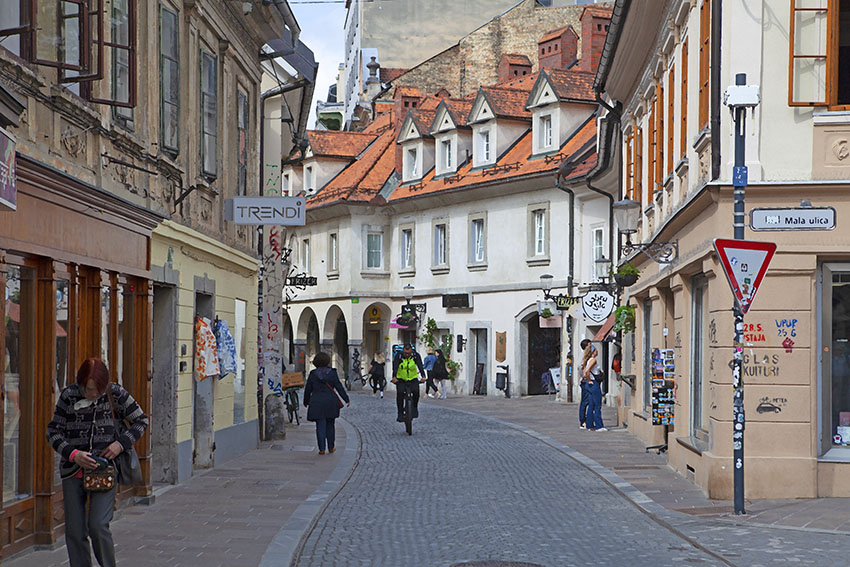
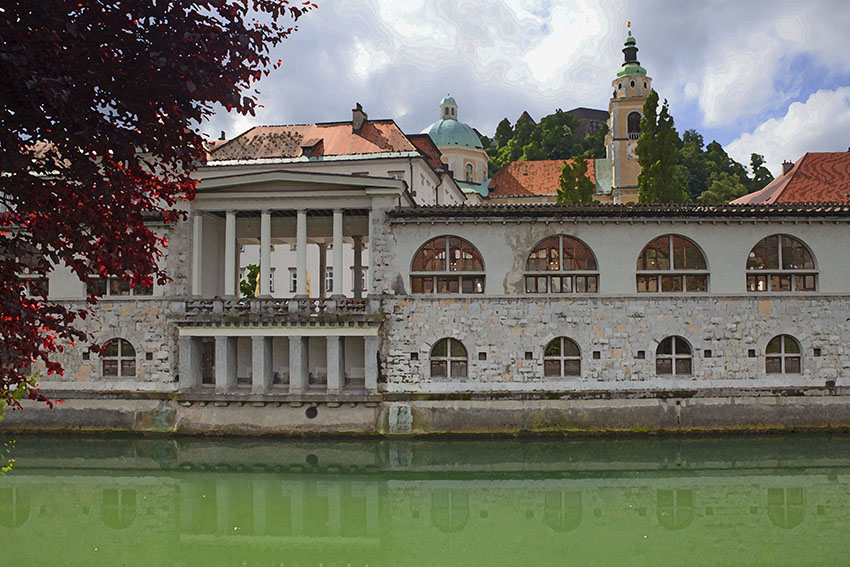
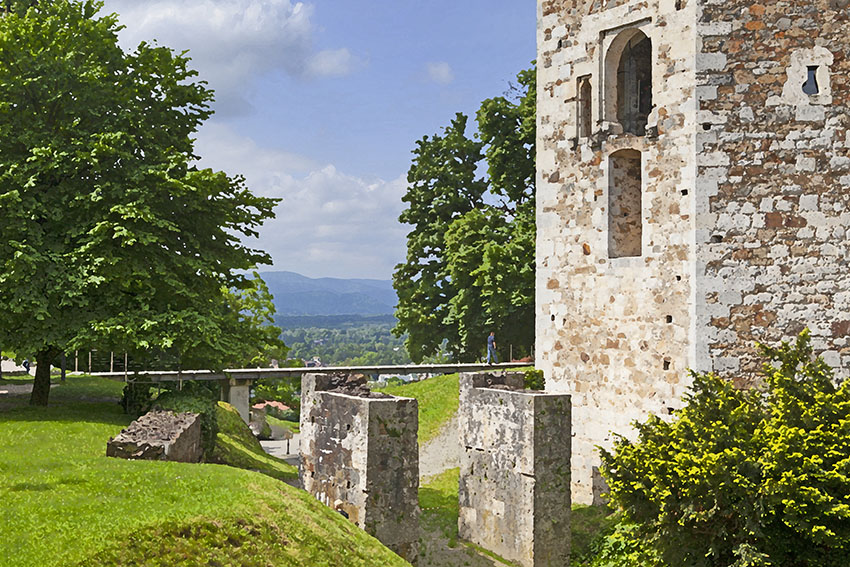
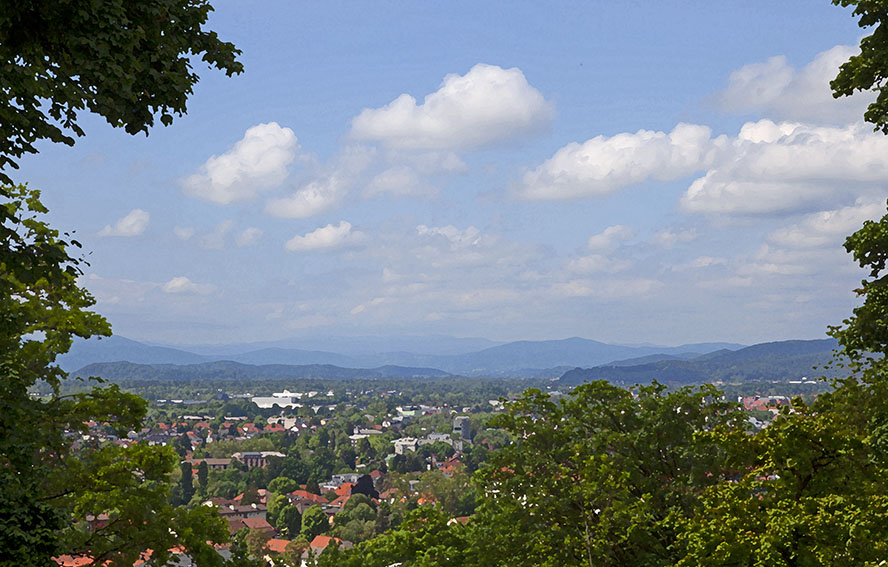
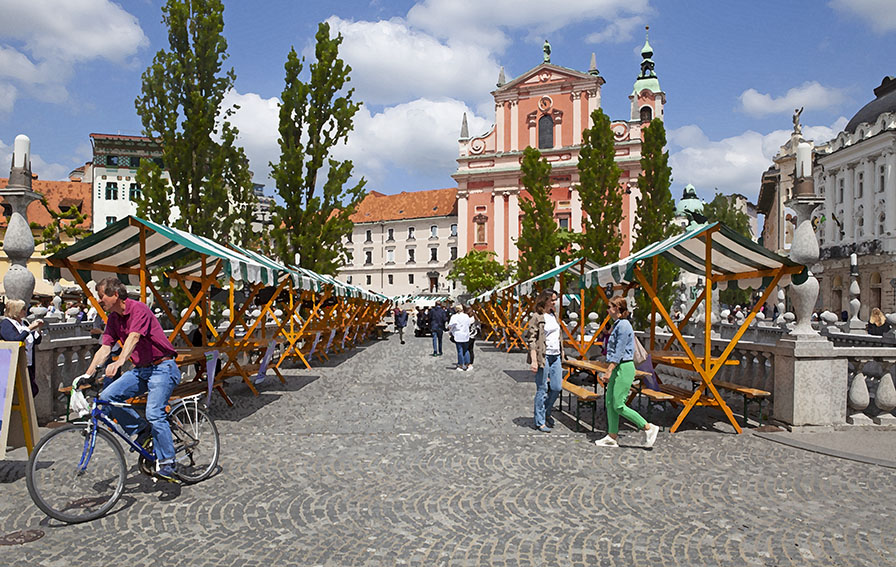
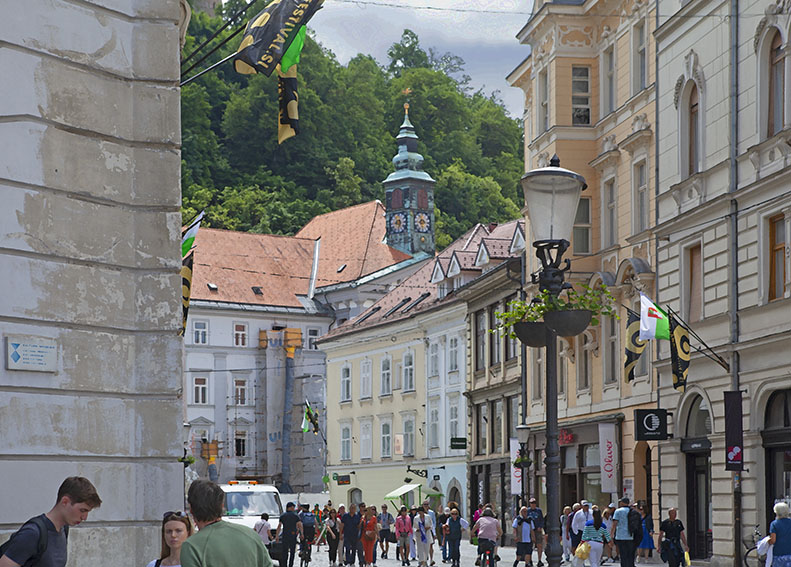
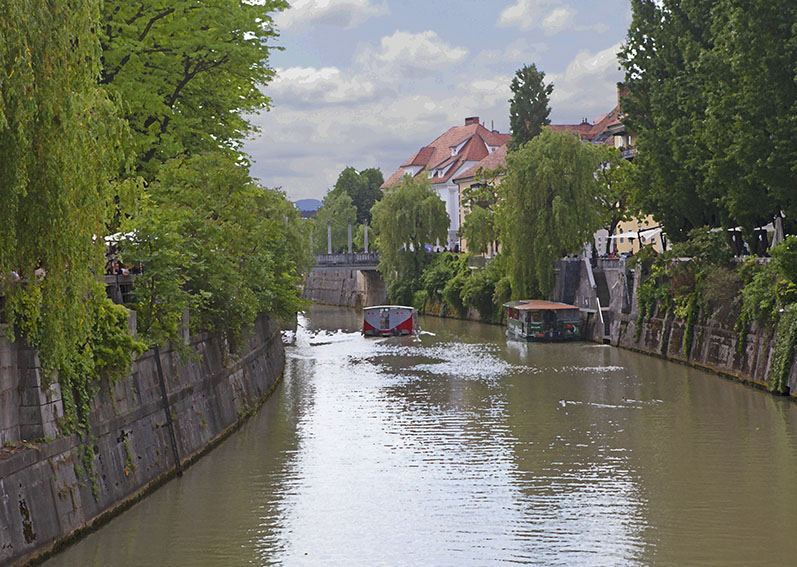
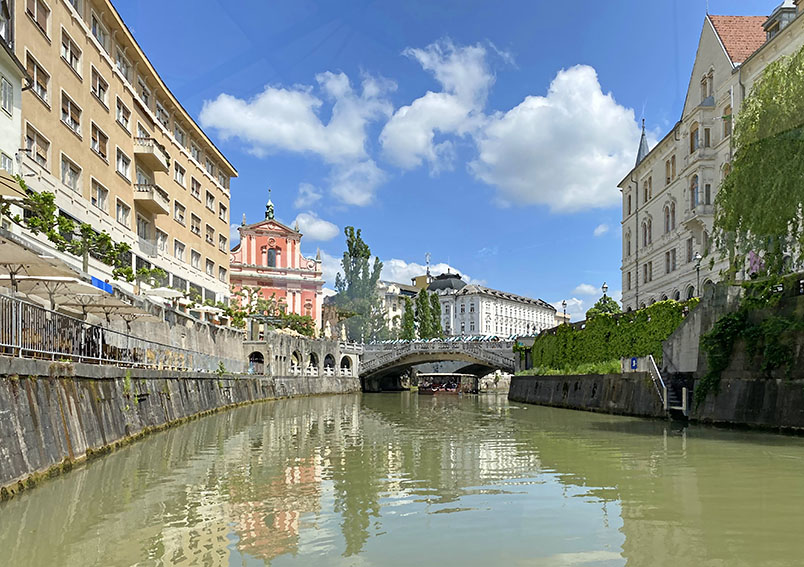
a series of virtual guaches from slovenia’s delightful capital city
It’s been a long time since I presented a simple pictorial travelogue on this site, but it seems best in this case to let the images do the talking. All I will add, is that it would be hard to find a more pleasant city break, or long weekend destination, complete with fabulous local wines and excellent cuisine (Italian-cum-Balkan-cum-Austro-Hungarian). And all at a reasonable price. Refreshing and surprising (at least to me) in equal measure…
In November of 1991 my wife Dido won a Winston Churchill Traveling Fellowship to Chile to study the role of folk dance as a therapeutic tool for children with learning problems. Because it was going to be a long trip – about three months in all – and we had been married less than a year we decided that I would go along too. As it happened, Dido required her work to be visually recorded and so she appointed me her video cameraman.
When we arrived, Chile had been a democracy about the same length of time that we had been married, so this was a dramatic voyage of discovery in more ways than one. In fact, looking back on that trip now, over 30 years later, Dido and I agree that it remains one of our two or three most remarkable joint experiences.
We decided to keep a written journal of the trip even before we left England, but within a few days of our arrival so many weird and wonderful – not to mention hysterical – things had happened to us that I decided to record the most amusing and surreal in a series of cartoons. Presented here are a selection of those pictures – made literally on the hoof; on trains, on buses and even on planes as we traveled the length (there is relatively little breadth) of one the world’s most spectacular, most beautiful and most crazy countries. These pictures are a humorous and affectionate record of all aspects of the-then new democratic Chile, through the eyes of two wide-eyed newly-weds.
In the words of Inti Illimani – “VIVA CHILE”!!
When we arrived at Santiago Airport we were virtually kidnapped by a trolley porter who then took us through the red channel. When we were then searched by fearsome looking Carabineros and I couldn’t find the paperwork for the large video camera in my possession. My explanation that the camera was not new and the property of the Ealing Educational Authority failed to impress the policemen who then separated me from Dido and escorted me – with the camera – to a small room by the side of the customs hall. Once in the room they told me to sit down on a low wooden chair in the corner and to keep the camera on my lap. There was a glass window in the middle of the opposite wall through which I could see a very worried Dido still standing among all our ransacked baggage and suitcases. For about twenty minutes I was left alone with one Carabinero, who stood leaning against the door just staring at me expressionlessly. Then two more policemen entered the room and – ignoring me completely – turned on a TV fixed to a bracket suspended from the low ceiling. There was a football match on and soon all three men were totally engrossed, occasionally shouting at the screen. At first I’d been too frightened by my predicament to take much notice of the game, but as the minutes passed I realised it was an international game and one of the teams was Chile. And then, as fear turned to boredom I began to watch the match too, until I finally recognised one of the Chilean players. Without thinking, at the moment I recalled his name I blurted it out, “Ivan Zamorano!” The three jackbooted Carabineros all instantly turned to look at me with looks of amazement on their faces. Then, one of them who spoke English asked me, “Zamorano! You know him?” “Of course! He plays in Italy for Internazionale” I replied, then added, lying through my teeth, “He’s one of my favourite players. I’m a big fan!” And with that it was as if I had turned on a switch. Next thing I knew, the three men were all smiles and charm personified and I was being escorted back to Dido, with our camera and sent on our way. Who says football is just a game…
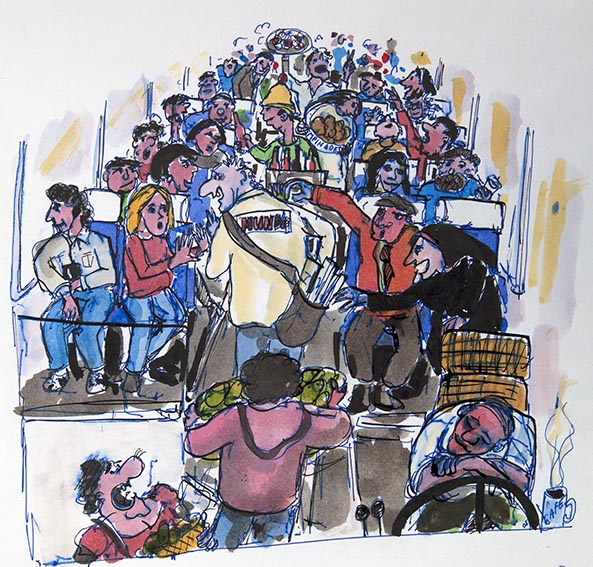
Dido’s first port of call was the small Atacama Desert town of San Pedro – just over 1000 miles north of Santiago. We decided to use the same mode of transport that most Chileans used then for such long journeys – the famous Tramaca coach. Being only the start of the trip we were as-yet uncertain of how our funds would hold out, so rather than travel in the relative luxury of the cama bus with their lauded 1st class aircraft seats and cocktails, and airline-style meals served by attentive stewards, we opted for the regular-seated bus. We would be traveling to San Pedro in three stages, stopping first for a day at the port of Antofagasta – a journey of twenty-five hours. Initially, apart from the stunningly beautiful landscapes we motored through, there was nothing remarkable about the coach journey itself. But then we stopped for a driver’s rest break and it was like no driver’s rest break on any coach journey we had ever encountered before. As the doors of the coach opened a virtual caravan of peddlers and food sellers streamed onto the vehicle, offering assorted newspapers and magazines, all sorts of drinks, from fresh juices to beer and tasty things to eat. Most delicious of all were the empanadas, fried and baked – reminiscent of Cornish pasties – filled with either cheese, tuna or meat. And there were also huge, green, sweet ripe palta – known to just about everyone else in the world beyond the borders of Chile and Peru as avocado…
One of the most exciting aspects for me in particular regarding our adventure was that it was my first time across the Atlantic Ocean – in fact, it was my first journey into a significantly different time-zone. So, when by our second evening in Chile I still hadn’t suffered any apparent symptoms of jet-lag it made me sceptical about the whole concept. That evening, following our long bus journey from Santiago, we were spending the night in the coastal city of Antofagasta before catching our next ride to Calama the following afternoon. Dido was still quasi vegetarian in those days (she ate some fish) and often got a craving for pasta, and as luck would have it, our Lonely Planet guide recommended an Italian restaurant as being the best place in town. After almost a day on a coach eating nothing but snacks, we were both ravenous and ordered extra large portions of pasta and we must have been about half-way through our respective plates of spaghetti when I was struck by an acute attack of something known as “delayed jet-lag”. The last thing I remember was feeling as if I’d been given a sudden heavy dose of anesthetic gas. Then, the next thing I knew, I was staggering into the street with my arm over Dido’s shoulder with Bolognese sauce all over my face. According to my mortified wife, I had fainted head-first into my pasta, and the maitre d, assuming I was drunk demanded that we leave – immediately…
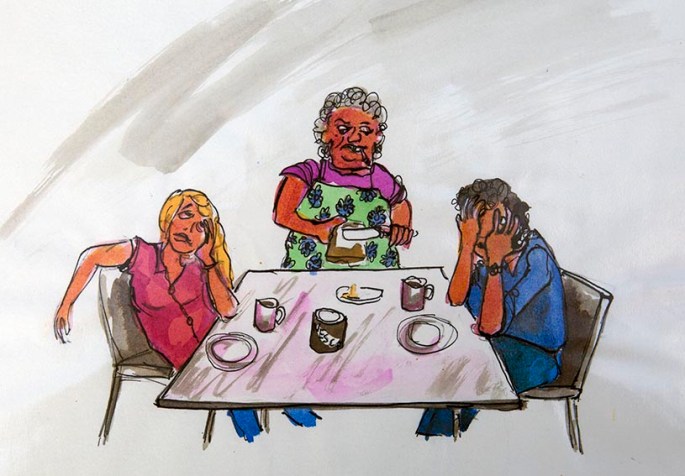
The breakfast at the Hotel Splendid in Calama turned out to be as “charming” as the sleeping arrangements. As we took our table in the dingy breakfast room we were confronted with a pot of hot water, a jar of instant coffee and two slices of dry toast. When I asked the lady of the establishment – a stocky little woman with unkempt greasy grey hair, a cigarette stub apparently glued to her lower lip, and wearing a food-stained pinny – if there was any butter, she grunted in the affirmative. Then, to my amazement and horror, she went over to the neighbouring table where an elderly man in a dressing-gown was eating his breakfast and took the piece of toast from his hand, picked up his knife and scraped all the butter she could from it. She then came back to us and spread his butter scrapings onto my toast…
Back in the early 90’s the place to stay in San Pedro de Atacama, at least if one considered oneself a real traveller, was “Bobby’s Place”. From what I can recall Bobby herself (Bobby was a she not a he) was an Australian lady in late middle-age. She was the epitome – almost to the point of being a walking-talking cliché – of the intrepid travelling adventuress, finally settling down in the evening of her years. Long silver hair tied back in a ponytail; sun-stained leathery skin; bright eyes glistening with weary knowledge and intelligence, she could have been Karen Blixen’s antipodean younger sister. And her eponymous establishment was as laid-back, affable and welcoming-yet-world-weary as she was herself. We loved almost everything about our stay at Bobby’s – the faded Hemingway-esque hunting-lodge atmosphere, chilly evenings, sat around the vast open fireplace sipping her delicious pisco sours and the clean, comfortable quiet rooms. The only feature of Bobby’s place which failed to please was the shower. Not so much a shower actually as a gravity defying twin trickle/dribble of water which miraculously descended in a form of arc, so that if one stood beneath the shower-head it missed one altogether. Getting clean meant opting for one of the two dribbles and having the patience of a saint…
Bobby had a large dog of mixed parentage and as with his owner, the dog was hugely affable towards all the guests staying at his mistress’s establishment. But on occasion, with guests who reciprocated his friendliness, he would take a special liking and become virtually inseparable. During our stay the dog took just such a liking to another couple. His affection towards them was understandable as they were particularly charming and charismatic. A little older than us, she was German and ran a travel business in Santiago, while he was a junior English diplomat on secondment at the British Embassy. They’d come to San Pedro for a romantic long-weekend and their favourite pastime (when not in their bedroom) was going for ambles alongside the local river. On the third afternoon of our stay we were sitting on the stoop outside our room when we were confronted with the scene portrayed in the drawing above. But it was only later that night that we found out the story behind the picture: Our couple had gone off on their usual riverside walk accompanied by the dog, which was fine, until they passed by a woman grazing her two sheep. Without warning the dog jumped one of the sheep and killed it. The woman, naturally distraught and angry began screaming and shouting at our couple for failing to control their dog – at which point, as if on cue, the local mounted policeman appeared. After listening to the woman he told our couple that they would have to compensate the woman for her dead sheep. When they then explained the situation and their relationship to the dog, the dubious policeman told them to take him to the actual owner of the dog, which they did, with him – bearing the woolly carcass on his mount – the bloodied dog, the woman and her remaining sheep in tow. Of course Bobby sorted out the situation, and even cooked the sheep a couple of days later for her guests. It was the best mutton stew I ever tasted!
During our stay in Iquique we took a day trip to see one of Chile’s ancient man-made wonders, The Giant of the Atacama. We anticipated that getting to see the “largest anthropomorphic geoglyph in the world” with our own eyes would be a highlight of our visit to Chile, and so it would have been, if we hadn’t vastly overestimated the number of fellow travelers to the same site. We presumed The Giant would be a mecca for a whole host of visitors, including everyone from the millions of credulous believers in Von Daniken to the thousands of people with an interest in pre-Columbian civilization – and all those in between. Obviously, aware of the remoteness of the site we didn’t expect everyone to be there at the same moment, but we took it for granted that there would be dozens of people there at any one time. Thus, it never entered our minds that we would have any trouble getting to and from The Giant without our own car. Even worse, we had misread the distance on our – by now very worn – map, from the Highway 5 bus stop to The Giant as being only 2 kilometers (easily walkable, even under the desert sun) when it was in fact 12! Nevertheless, when a car stopped and we were given a ride to The Giant almost before we had even begun to raise our thumbs, our original presumption seemed to have been correct. However, we had been at the site barely ten minutes when our kindly lift-givers got bored and decided to leave. So, when they offered to take us back to the highway bus stop (which we now realised was 12 k’s and not 2) we had a decision to make. Ignore the significant fact that we and our ride buddies were the only people there, and stay on a while longer at this amazing site, or do the sensible – “been there / seen it” – thing and accept the lift. Like the classic “Darwin Award” idiots we all read about everyday in the newspapers (who go fell walking in sneakers, or swimming in pools known to be infested with salt-water crocodiles, or who light up a cigarette while standing over a cesspit) we decided to stay on “a while longer”… Needless to say, an hour passed and nobody came. So, we decided to walk the actual 2 kilometers back to the dirt track (marked as “minor-road 15) and see if we could at least get a lift from there. Problem was, by this time we were already down to the last few sips of water in our single 1/2 liter bottle and beginning to roast as the sun reached its highest point in the vast desert sky. By the time we made it onto the track we knew that we might be in serious trouble. There was no shelter of any kind, our water was gone, and our exposed arms were beginning to burn. At this point we didn’t know whether we should stay put or attempt the 10 k walk to the main road. After a ten minute rest we began to walk – or rather, stagger along the track, and then almost immediately we heard a vehicle approaching from behind, going in our direction. But our elation was only momentary, as the car sped past without even slowing down, it’s exhaust and dust adding mocking insult to injury. But then, after about another hour, a second vehicle – a small truck – emerged from the east, heading west and its driver , this time, took pity on us and dropped us at the bus stop. Now whenever we think of The Giant, or just about any other South American geoglyph our first reflex is to reach for a water bottle…
No stay in Chile’s northernmost city of Arica is complete without an excursion to the Lauca National Park – with its fabled lakes and volcanoes. Only problem was, the park sat at 4500 meters above sea-level, and altitude sickness was likely to be a serious issue. One of the ways of militating against the worst effects of this however was to make sure one traveled up to the park in the hands of expert guides with state-of-the-art oxygen and resuscitation equipment. But sadly, our limited budget made us forget the lessons of our near-disastrous trip the previous week to Atacama Giant and we opted for the cheapest guided tour we could find. We sensed the worst when we boarded the clapped-out minibus with hard wooden benches for seats and two broken windows. However, there was a big oxygen canister on a shelf above the driver, and it was only a day-trip for goodness sake, we reassured ourselves – what could go wrong on such a short trip? There were about ten of us on the bus, and by the time our vehicle had crawled up past 3.500 meters the more elderly passengers were already beginning to feel the effects of the thinning air. Dido and I at least, felt fine during the entire drive up and it was only when we disembarked at Lake Chungara that the “puna” (the colloquial term for altitude sickness) hit us both – like a brick. The only way I can explain the sensation was that when I tried to walk it felt like one of those bad dreams, when one is trying to flee from some horror or other and one’s legs won’t move. And it wasn’t just the sluggishness; it was actually quite hard to think straight. To this day, I have barely any recollection of how I managed to fill an entire roll of film with some the most spectacular shots of the entire trip – of the lake itself, the surrounding volcanoes, the herds of grazing guanaco and the incredible candlestick cacti. Even Dido, who was super fit in those days, had to lie down after a few minutes of walking around, while I found the only way I could be comfortable at all was to adopt a kind of Muslim prayer position on the ground. Meanwhile, I recall seeing people chucking-up all over the place and one other poor old American guy pass out altogether. It was then that the guide told us that the oxygen canister was empty, resulting in another member of our party – a retired GP as it turned out – having to resuscitate the American gentleman in the manner illustrated in the picture above. Eventually, we all managed to clamber back onto the bus where the guide had brewed up a kettle of coca tea. Whether or not the tea had any effect, somehow we were all still alive by the time we got back to Arica…
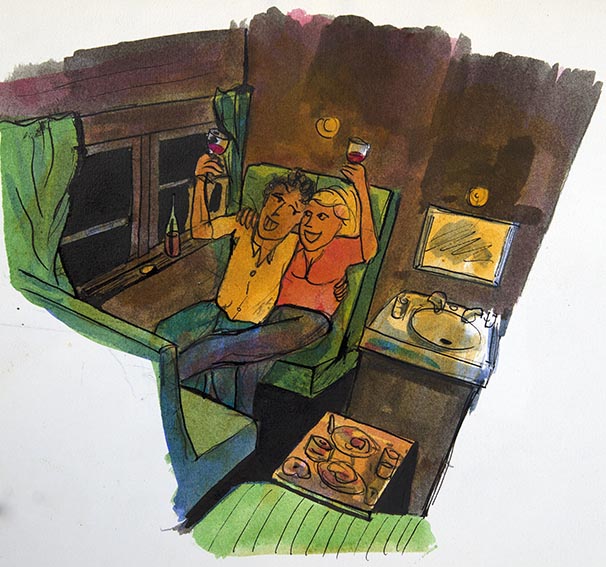
About halfway through our stay in Chile we decided to take a few days off and visit the lake district. We booked the train for the overnight journey from Santiago to Puerto Varas, believing we had reserved a compartment. However, we were disappointed to discover on boarding that we were in a couchette with half-dozen other people. A short time out of Santiago Dido went looking for the loo. She returned in an animated state saying that the next carriage comprised only compartments, and that they were all empty. When the porter then came to clip our tickets I asked him if it was possible to upgrade to a compartment to which he shrugged, smiled and muttered under his breath ‘perhaps’… Without thinking I reached into my pocket, and pulled out about $40.00 worth of Chilean Pesos from my wallet . Then, checking his expression and seeing that he was receptive I discreetly slipped the money into his hand. ‘Twenty minutes’ he said gesturing with his head back towards the next carriage; ‘I will prepare the first compartment for you’. And good to his word, the compartment was prepared. It was beautiful: Old British rolling stock from the age of steam, like a scene from From Russia with Love or Murder on Orient Express; only slightly faded, deep green velvet drapes and furniture and shimmering mahogany paneling. The porter had immaculately turned down the crisp Egyptian cotton sheets on the two broad bunk beds, in addition to his final touch – two expertly prepared pisco sours in old-style crystal cocktail glasses placed on the little pull-out table. We were in romantic heaven, and needless to say we enjoyed one of the best nights of our trip…
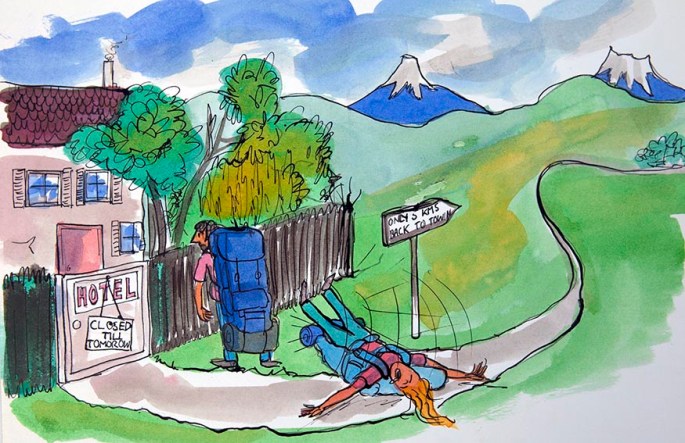
The Chile trip was our first and last experiment with Lonely Planet travel guides. While most of our gripes with the book could be regarded as somewhat subjective – e.g. our constant disagreement with the guide’s descriptive terminology, such as “basic”, when they really meant “squalid”; “faded” when they really meant “decrepit” and; “comfortable” when they really meant “incredibly uncomfortable” – the several times they got essential facts wrong were far more serious. The worst example was when we decided to hike the five miles from our old hotel on Lake Villarica to another hotel out in the country. We knew it would be a long hard yomp, carrying our rucksacks and that was fine, because we wanted the exercise and most importantly, because we also “knew” – from our Lonely Planet Guide – that the hotel was open and that because this was the beginning of the season there was absolutely no need to phone first to reserve a room. Sadly for us, the hotel didn’t in fact open until the following day. The picture tells only half the story as we had to walk all the way back too!
Before we began what would be an intense five days of work with the kids in Santiago, we hired a car and drove up north to the small coastal town of Tongoy. Set on broad sands at the south tip of a spectacular bay it seemed like an excellent place for enjoying a few days by the South Pacific. But as with just about every feature of our Chilean adventure whatever our preconceptions or expectations had been before we arrived at a given location, the reality had surprises in store for us. In Tongoy, as with so many of our previous destinations, it was our hotel which offered the biggest shock to the system. But in this case at least, it wasn’t a detrimental shock – no squalor, no shared butter and no gravity defying showers – but rather a jolt to our visual senses: For our hotel was decorated to such a degree it was like walking into a dazzling palace of kitsch. Each and every surface was coated, draped, carpeted or covered in garish, luridly decorated flower motifs – every façade clashing dramatically with its neighbour; Every chair, table and bed, painted, lacquered or otherwise coated in every colour, shade and tone of the spectrum and beyond; Each and every shelf and windowsill densely “adorned” with myriad pieces of chintz and fake ivory, such that if “ivorine” came from “real” plastic elephants, then plastic elephants would surely have been as an endangered a species as their actual living-breathing inspirations. And to cap it all there was the landlady: A movable temple of kitsch in her own right, who, as she strolled proudly through her establishment: with her stiffly set blue-rinse; down through her heavily painted, rouged and lipsticked face; to her violent-pink, be-flowered, polyester dress to her spangle-encrusted, patent turquoise stilettos, resembled a chameleon in a psychedelic forest…
We met several wonderful people during our stay in Chile, and made some enduring friendships. Perhaps the most exotic and exciting person we met was Georgina Gubbins, an English-born woman with a truly international upbringing, who had ended up with Chile as her’s and her family’s primary home. Craftswoman, artist, author and beautiful mother of three equally beautiful daughters Georgina was one of those energetic people whose bristling enthusiasm is so infectious she had the knack of getting her friends to do things they wouldn’t normally consider in a month of Sundays. I can’t quite recall what prompted Georgina to suggest we try going up in a glider over Santiago – bizarrely it might have had something to do with me telling her about the acute flying phobia I was suffering from at the time – but I can honestly say it was an activity which neither of us had ever before contemplated. Anyhow, one afternoon towards the end our trip, before we knew what was going on, she had driven us to a Santiago gliding club and convinced us both to “have a go” in a powerless aircraft. I should point out at this point, before readers get too alarmed that these were two-seater gliders, and that we were in the hands of experienced pilots. Nevertheless, as we were towed thousands of feet up into the sky by a single-engine biplane I’ve rarely felt a greater thrill. Like most people who had only ever viewed them from terra firma I had always had two firm conceptions about gliders and gliding, both of which were dispelled the moment we were released from the towrope. Gliding is neither silent nor smooth; quite the opposite in fact! The air whistles and howls around the cockpit canopy, and the wind buffets and jolts the wings and fuselage with each and every movement of the aircraft for the entirety of the flight . So much so, that my pilot was forced to yelling at me when he wanted to point out all the gob-smacking sights and vistas beneath and around us. Most of the flight was over Santiago’s sprawling eastern suburbs, but we also skimmed past the western edge of the neighboring Andean wall of snow-capped mountains, the tallest of which in the far Argentinian distance was the mighty Aconcagua. Towards the end of the mini-voyage we flew over a large compound that comprised the dwelling of the retired dictator, Augosto Pinochet, and shortly after that the pilot gave me control of the glider. The picture above describes what happened next – or at least how it seemed to me at the time, when in my over-excited state I put the glider into a virtual role. Thankfully, my pilot was unfazed by my surprise maneuver and instantly regained control to land us safely back at the gliding club. My amateur aerobatics notwithstanding, the brief glide over the outskirts of Santiago remains a vivid and treasured memory from a trip already rich in awe-inspiring memories. Thank you Georgina!
As a fitting finale to our trip, on our very last day in Chile, Dido had somehow arranged for a meeting with Chile’s top academic in the field of South American folk music and dance. Among other things she was keen to learn more from him about the native dances of Chile, especially the history of the national dance of Chile, the famous Cueca. The good professor – who shall remain nameless – manifested as a human whirlwind. A cross between the Looney Tunes’ Tasmanian Devil and a classical ballet dancer, from the instant he welcomed us into his small office at the University of Santiago until the time it came for us to leave he was in perpetual motion. We never sat down during the hour or so we were with him and neither did he – in fact I don’t recall seeing a single chair in the room. Thinking about it now, I don’t think that the professor was physically capable of sitting down, any more than a goldfish can stop swimming. Occasionally, as he considered one of Dido’s many queries, he would momentarily hover on one leg balancing himself by making elegant conductor-like movements with his outstretched arms. Then, as an answer came to him he would pirouette back into spinning mode, all the time grabbing papers and pamphlets from the top of shelves and filing cabinets – before seemingly in one motion, depositing them in an ever-growing pile in Dido’s grateful arms. Like his beloved Chile, the professor was quirky and rewarding in equal measure, and we will never forget him or his equally weird and wonderful country.
We’ve been to Gibraltar several times over the past two years and each time we seem to discover something new. For such a small territory it’s surprising how many little secrets it manages to keep from the general tourist and day tripper, who’s itinerary seems restricted to a cable car ride to the top of the Rock, finished off with a pint at the pub and a plate of fish and chips. Not that there’s anything wrong with these activities, which do at least ensure the preservation of hidden gems like Rosia and Catalan Bay for the lucky few.
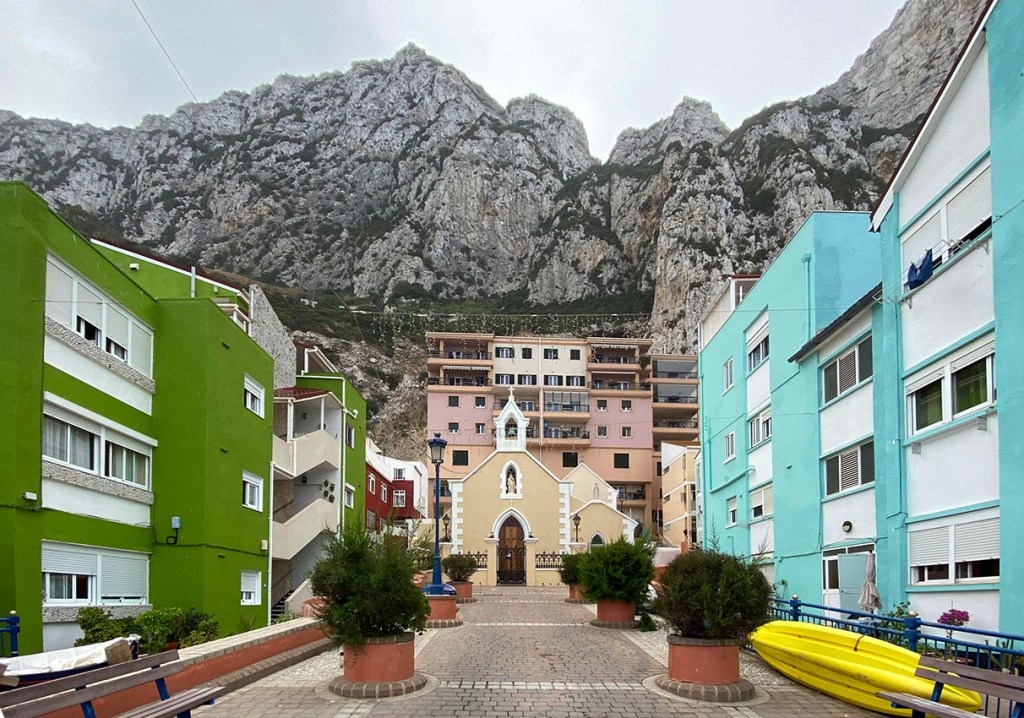
Our discovery of Catalan Bay was particularly accidental, as we had to arrange a last minute trip to Gibraltar, and the only room available was at the Caleta Hotel, on the relatively remote (remote only in a Gibraltarian sense), sparsely populated, eastern side of the Rock. But while the bay on which the hotel sits may be named for Catalonia, the seaside hamlet along which it resides is far more reminiscent of a Sorento on the Italian Riviera – albeit, in microcosm.
Moreover, with the Caleta Hotel being Italian owned, with an Italian head chef, this tiny enclave has a feel and an atmosphere all of its own.
I would recommend the hotel as a decent place to stay (comfortable rooms and a bar and restaurant with a stunning, maritime outlook), but it’s to be torn down in January, with a Hilton rising up in its place. Nevertheless, for those visiting Gibraltar for more than a day or so, Catalan Bay is a charming place to visit.
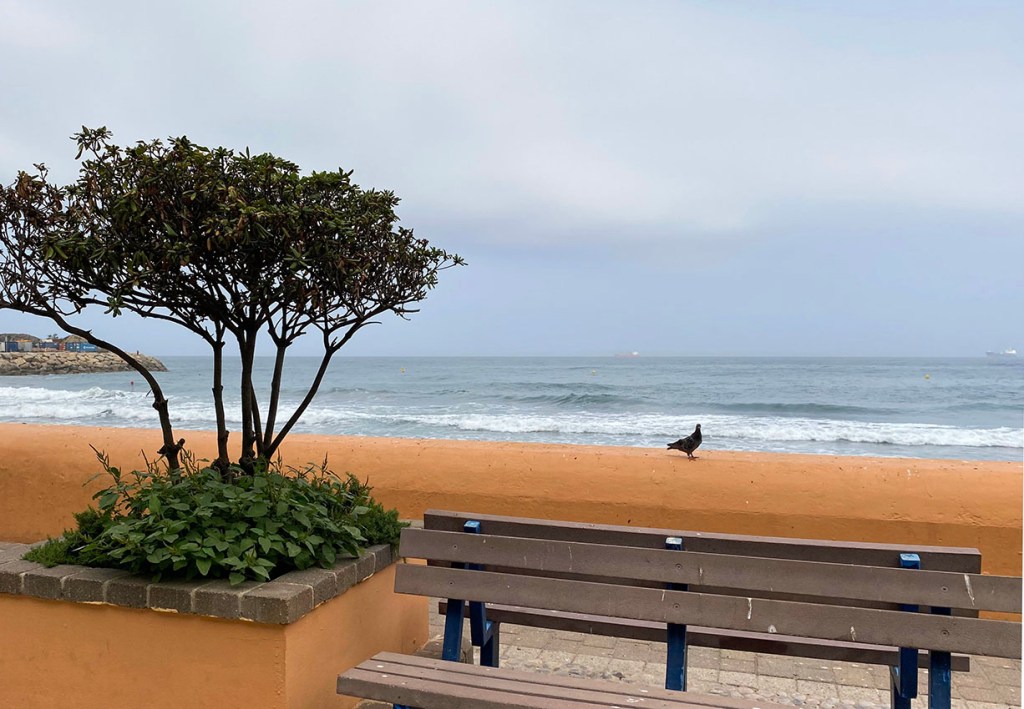
Despite the overcast skies, I think these photos offer something of the peaceful, secluded atmosphere of the place.
Following on from my earlier post on our initial return to Gibraltar after a gap of over twenty years, we have managed to visit several more times, and on each occasion, we have become increasingly impressed with life on the Rock. There’s no doubting that the drab and dreary Gibraltar of last century has been consigned firmly to the past and that a new, confident and energetic modern little city is rising in its place. Moreover, the once-faded and shabby old town centre has been sensitively spruced up and now stands above its modern surrounds like a proud grandparent watching over its thriving progeny.
“Unique” has become a much overused and abused term, but in the case of today’s Gibraltar it really is just about the only adjective that does the place justice. From its airport runway pedestrian crossing to Rosia Bay, where one swims alongside giant container ships, not to mention it being Europe’s only truly harmonious “multiculture”, Gibraltar is a total one-off.
The iPhone snaps below hopefully transmit some of that uniqueness, and a sense of its intoxicating optimism…
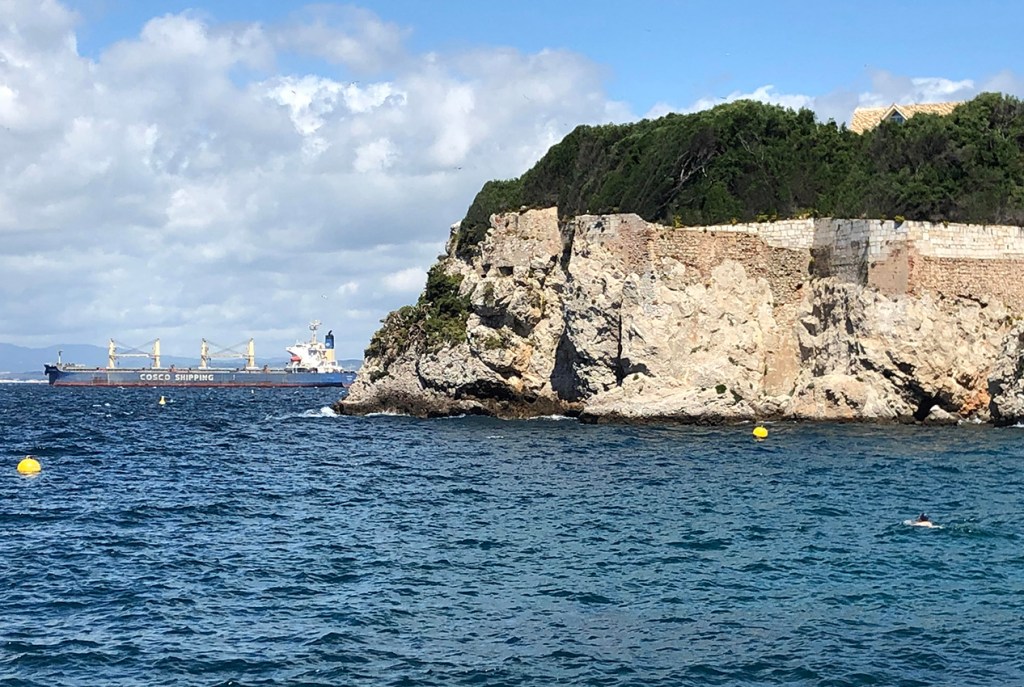
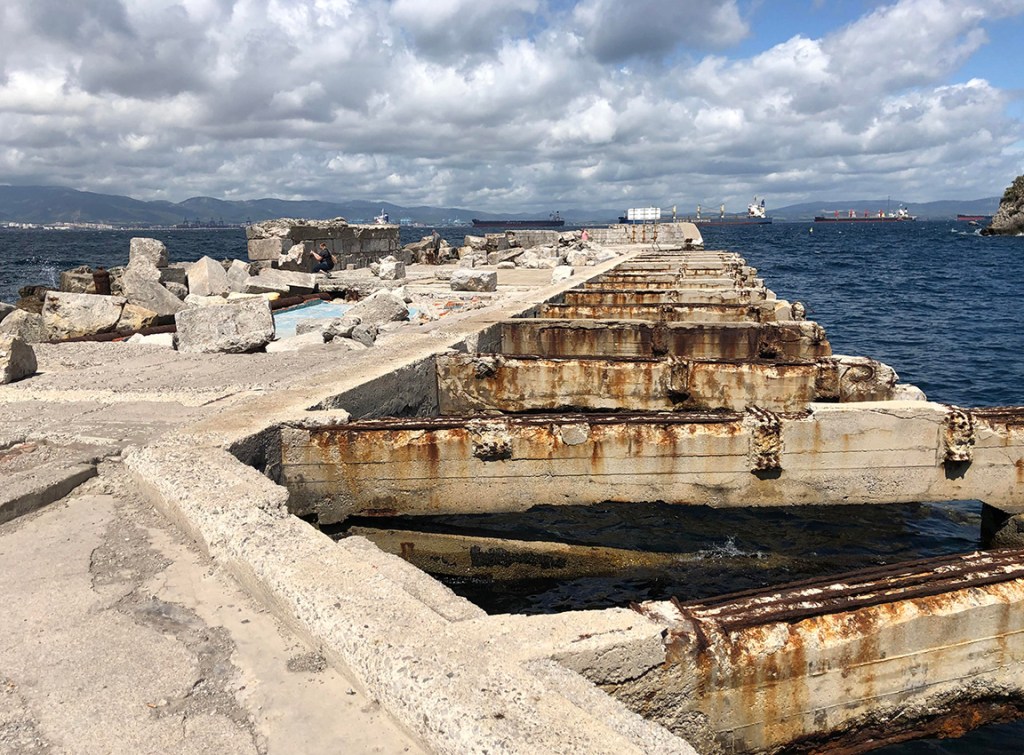
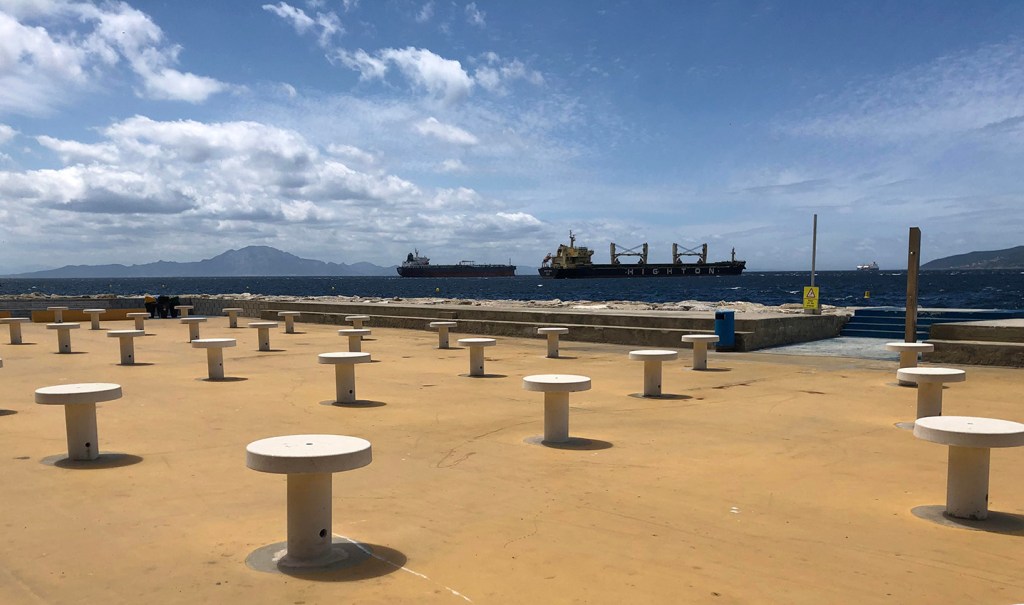
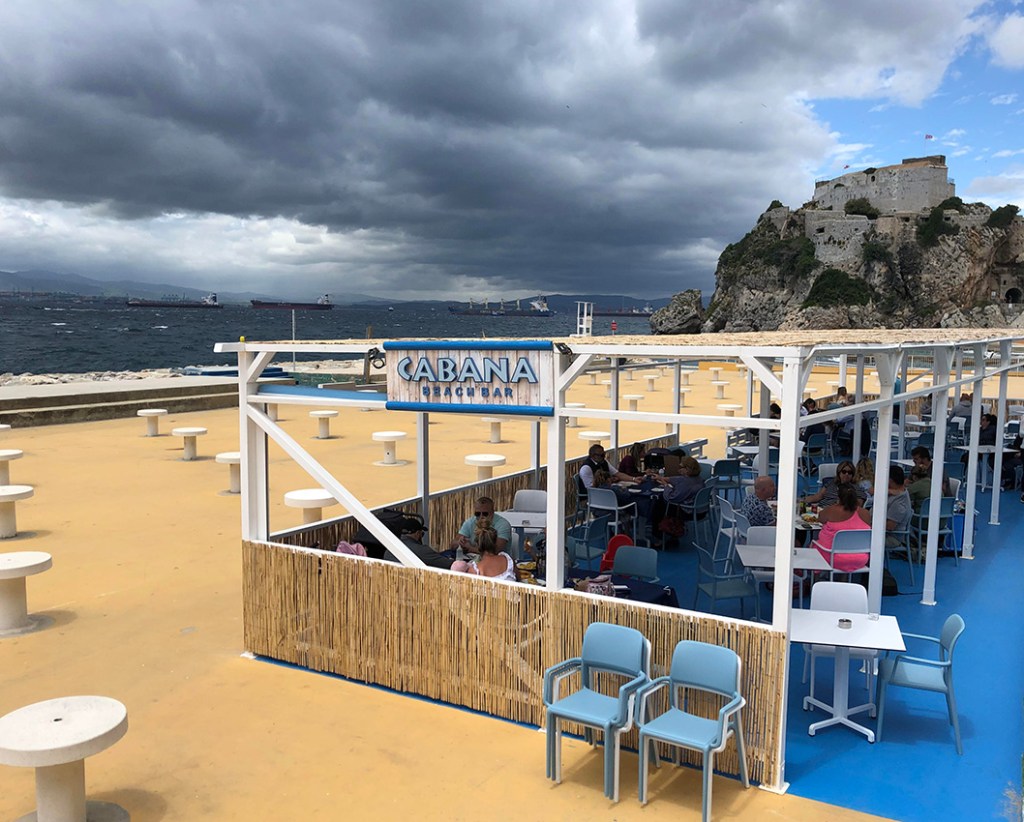
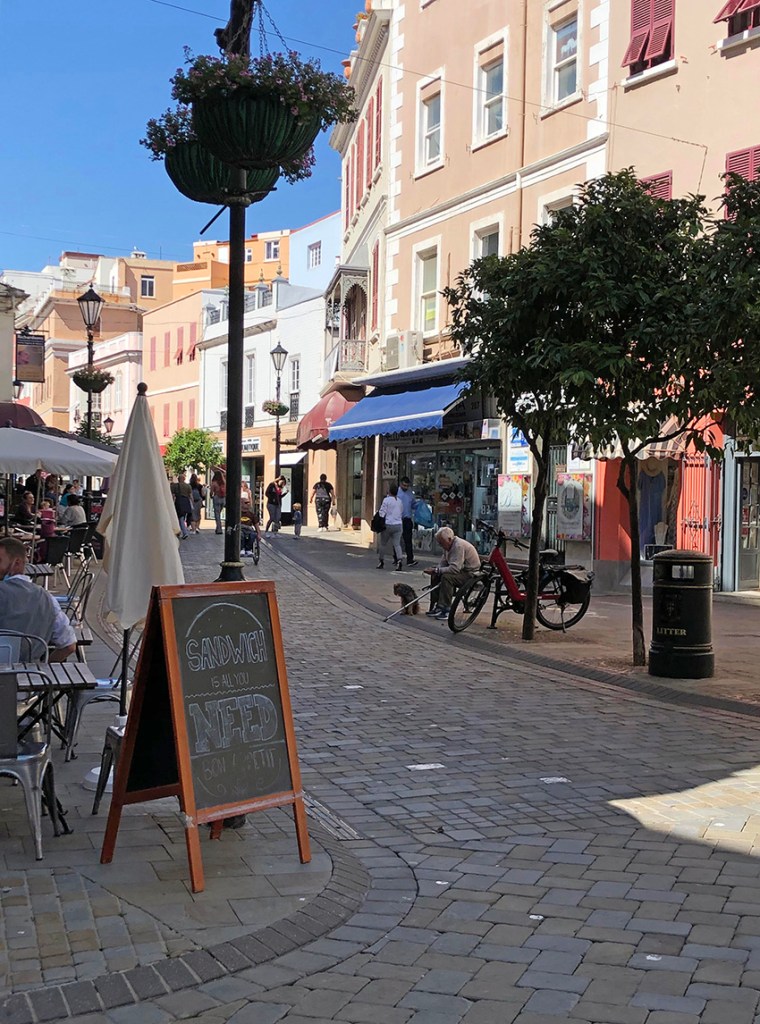
Looking south from Rosia Bay, across the Straits toward Jebel Musa (the “other” Pillar of Hercules) and the Moroccan Coast. An anglers and swimmers idyll, a mere fifteen-minute walk from the old town… Looking north-west from Rosia Bay toward the southern Cadiz province coast. My intrepid wife Dido can just be made out taking a choppy swim to the right of the photo. The waters here, where the Mediterranean meets the Atlantic, are very cold this early in the year, and the only other person in the water was a retired Royal Navy diver, and he was in a wet suit – the wimp! A decaying old mooring jetty between Rosia and Camp Bays, one of the few remaining monuments to the “old Gibraltar”…Concrete picnic tables at Camp Bay, looking remarkably like an Anthony Gormley sculpture (only better, for being accidental), with the busy Straits in the background…For those craving authentic Spanish beach cuisine, but too lazy to traipse across the border into neighbouring La Linea, Gibraltar is now blessed with a handful of genuine frieduras and chiringuitos, such as Cabana on Camp Bay. The only difference from La Linea, is that here your waitress or waiter is as likely to have a Scouse accent as an Andalusian lilt, but never fear! The fried boquerones (whitebait) and the grilled calamares are every bit as delicious as along the coast…Meanwhile, just a short stroll away in the old town, one is suddenly in a different world, that feels something like a cross between Hampstead (in London) and Valetta, with a touch of Toulouse, depending upon the light, the weather and the time of day.The one place it doesn’t feel anything like, despite being filled with Spanish workers and tourists, is southern Spain!
The old centre of Gibraltar has been blessed with fine English buildings since the Georgian period, but again, it’s only in the past two decades or so that both its government and its people have restored these architectural gems to their former glory. This house is an excellent example of what I mean, and with it’s Decimus Burton-style balconies and iron work, it has a fabulously classy colonial look…
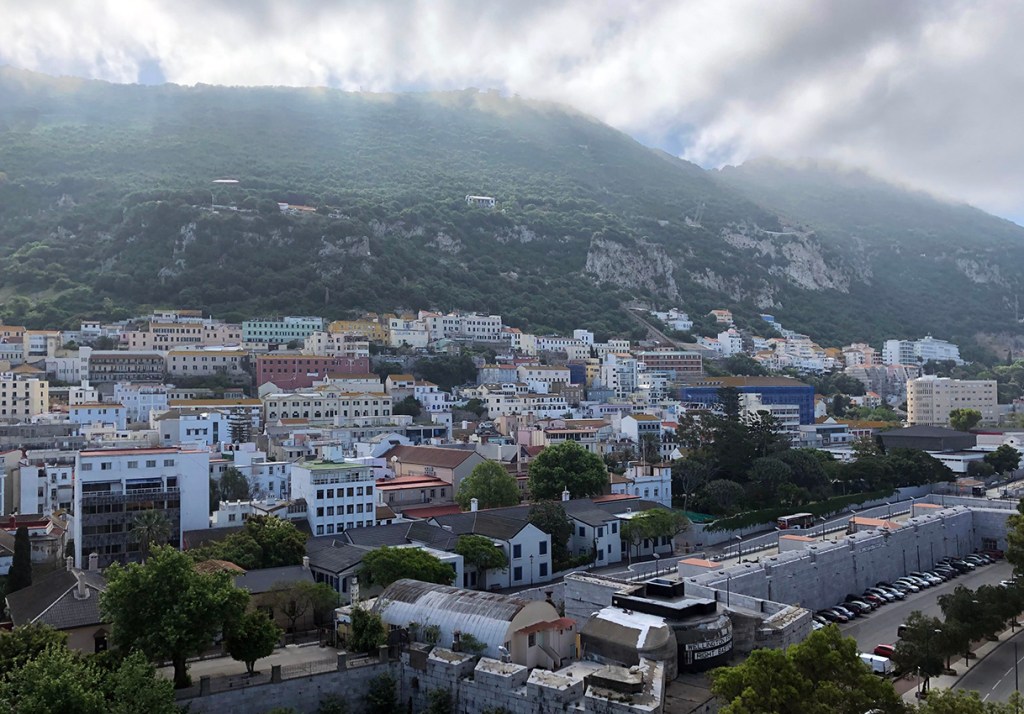
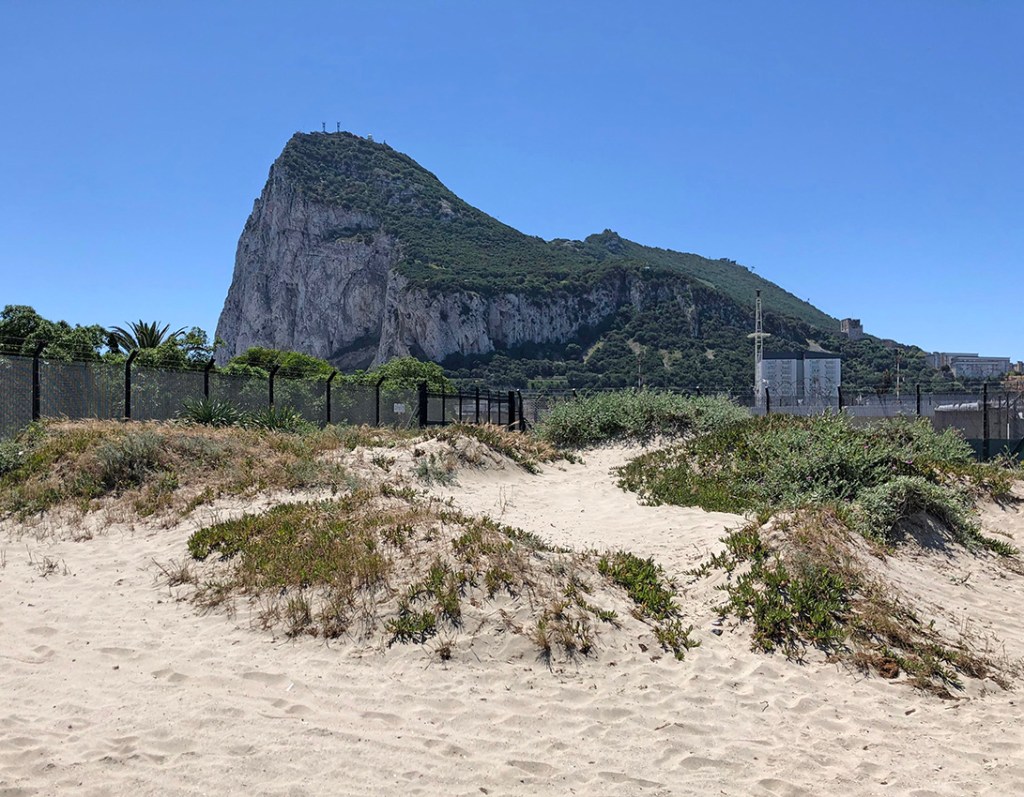
And I could not end this piece without a couple of views of Gibraltar’s most famous feature. This one, taken early on a chilly late Spring morning, with a high sea mist clinging on to the Rock like grasping fingers…And finally of course, a slightly unusual shot (from Western Beach) of what is arguably the most famous sphynx-like profile in the world (except of course for that of the Sphynx itself).
With all due apologies to Greta Thunberg and her righteous minions, the thing I’m missing most during these dystopian times is travel – in particular, travel by air. I find myself staring up at the eerily silent skies above our Spanish home, longing for the return of vapour trails scratched out by distant aeroplanes, like small gleaming arrowheads, hurtling toward myriad destinations. Raised in the 1960’s and 70’s, I am an unreformed creature of my era and my conditioning, brought up to regard jet travel as the ultimate expression of independence and the gateway to adventure. And deprived of it now I feel caged in and frustrated, to the point where I find myself craving the most mundane of things, like the regular noise of the jet engines approaching and leaving our nearby airport, and even the smell of aviation fuel at the airport itself.
One of my most vivid childhood memories, is from my second ever flight in July of 1967 to Tel Aviv, on arriving at Lod Airport (as it was then – since renamed Ben Gurion) late at night. There were no airbridges in those days at Lod, and I can never forget, as we walked down the stairs, onto the floodlit apron, being instantly engulfed in a blanket of humid, oven-hot air, laced with the scent of kerosene. These intense sensations – startlingly alien to a little boy from north London suburbia – had a deeply intoxicating effect that lives with me to this day.
However, attitudes and perceptions have greatly altered in recent years, and what I still look back on as a happy memory that shaped my future, would, in these apparently more enlightened times, be considered by some as a scarring and damaging episode, which condemned me to life as an environmental criminal.
Nevertheless, during the 80’s and 90’s, when my painting career was in full swing, flying opened up an almost infinite canvas for my colour-hungry brushes, as expressed below in eight examples from those exuberant and innocent times. And so I would hope, even the most virtuous of those reading this piece, would at least own that some good came out of what they might otherwise regard as merely evidence of my multiple re-offending…
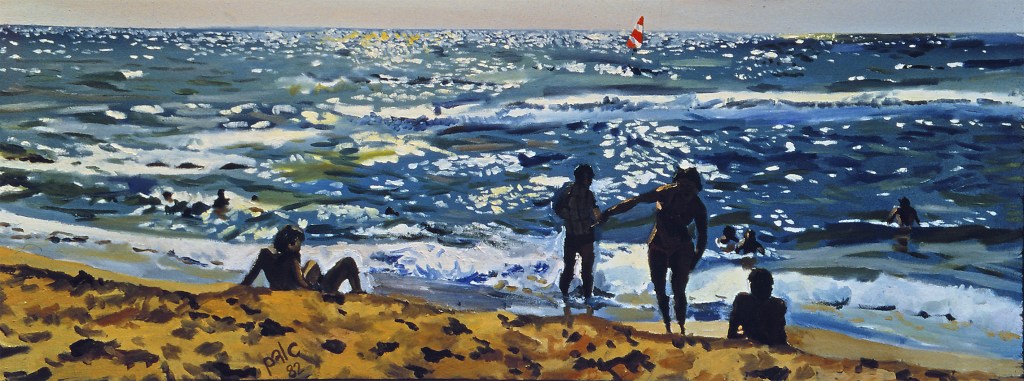
ACHZIV – 1982 – oil on canvas: Of all the dozens of beach paintings in Israel I made, this one, most successfully, captures the feel of the water and the intensity of the light and harshness of the colours, epitomised by the silhouetted figures against the sea.
BATHERS AT KINNERET – 1982 – oil on canvas: As mentioned before on these pages, the Sea of Galilee has proved a fertile source of inspiration for my art, over many years. This typical Shabbat scene, of three generations is hugely evocative for me. I’m particularly pleased with the way I captured the large bulk of the grandmother, deftly negotiating the stones, while carrying her grandchild with almost nonchalant aplomb.
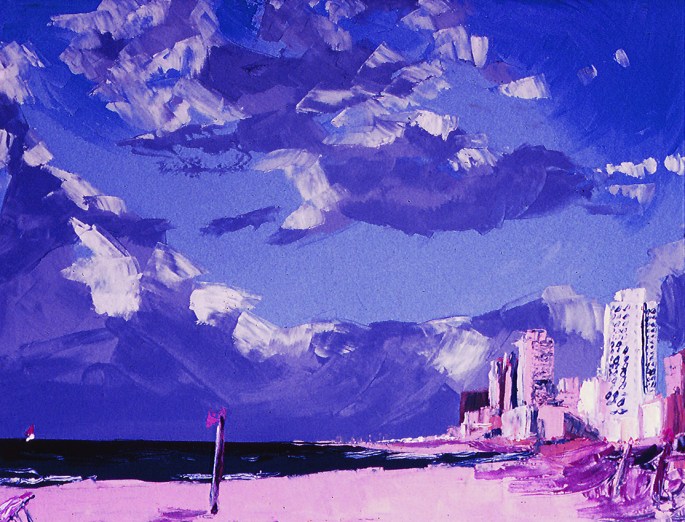
HOTELS, SAND, SEA AND SKY (Tel Aviv) – 1992 – oil (impasto) on canvas: Tel Aviv is an addiction for me. I crave to be there when away, and yet the place drives me half-nuts when I’m there; partly through sensory overload and partly through it’s 24/7 urban intensity – like New York City, on steroids. It’s of no surprise to those familiar with Israel’s second city, that National Geographic regularly lists it in its top 10 “beach cities” of the world. This is the closest I ever got to revealing its brutal-yet-beautiful physicality in paint. One can almost feel the hot summer breeze, and taste of salt in the turbulent air – and as for the light…
OUTSIDE THE ALCAZAR (Seville) – 1985 – oil on canvas: “I fell in love with Seville” is one of those traveller’s clichés, like “I love Paris” (which I do not), or “I love Rio” (which I need to visit again to be certain). But in my case, this is the truth, partly, perhaps because I also experienced romantic love in Seville; twice. Generally, I’m not one for painting anything through rose tinted spectacles, but in the case of Seville, it’s virtually impossible not to. Perhaps that’s why I’ve sold every single painting I ever made of the place. People just love a bit of rose, and bit of ochre, and touch of sienna, and certainly a great deal of violet…
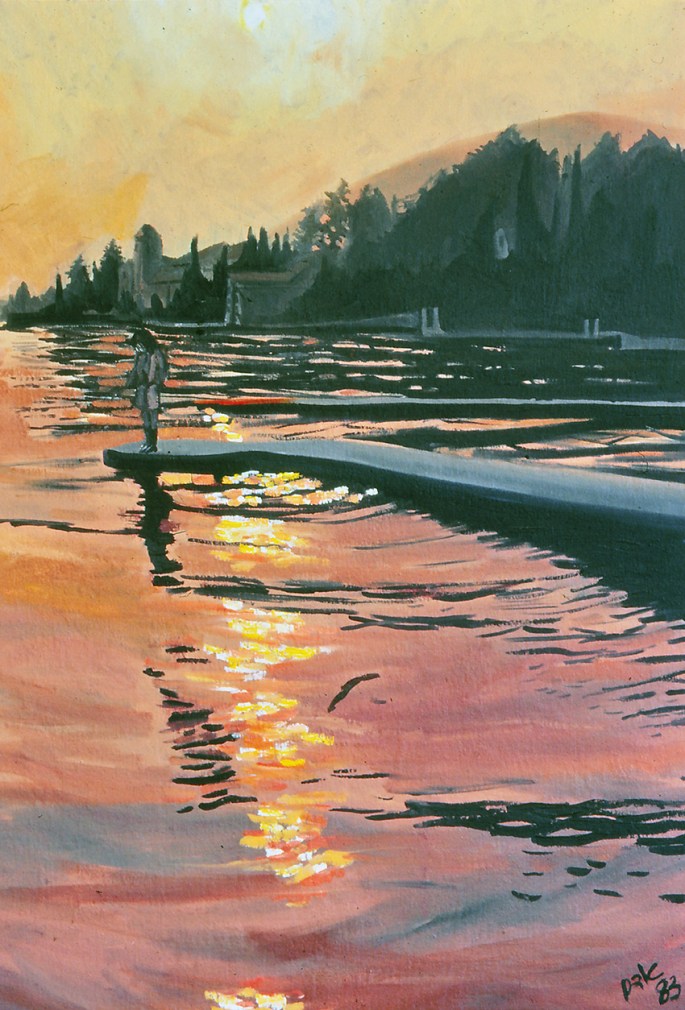
JOLANDA AT GARDA – 1983 – oil on canvas: If anywhere in the world can compete with Seville for romance, then the Italian lakes is that place. But, whereas the feel of Seville is defined by strong colours, bright light and deep shade, the Italian lakes are bathed in subtle, seasonally shifting tonalities. If Seville is all about the passion, than Lake Garda, seen here in mid-winter, is all mellow contemplation. Love takes many forms, after all.
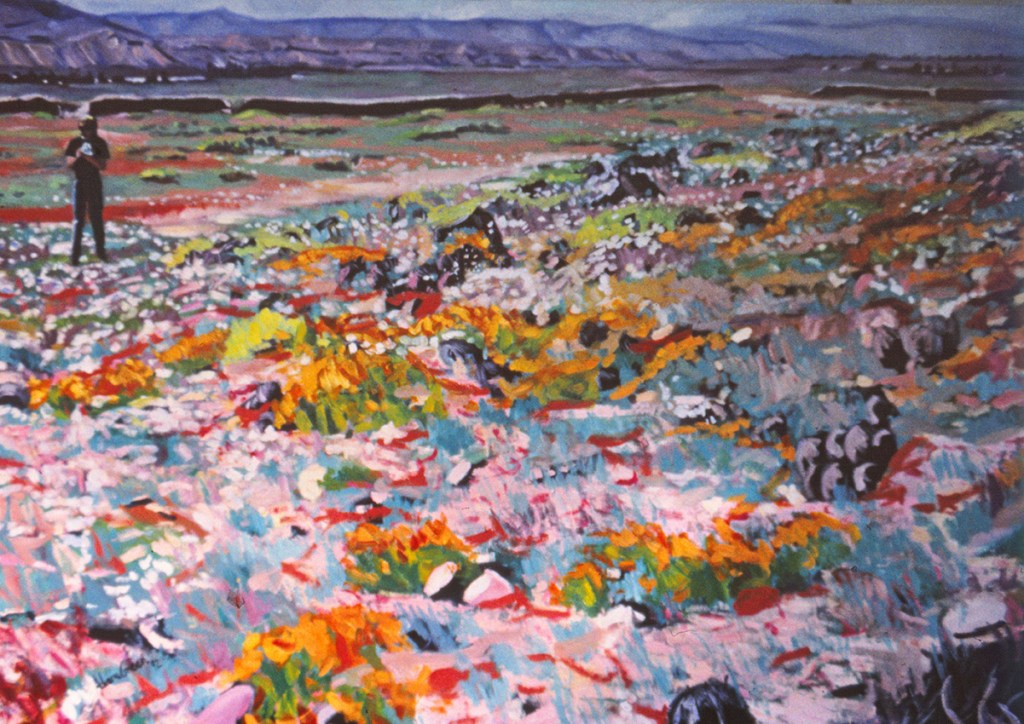
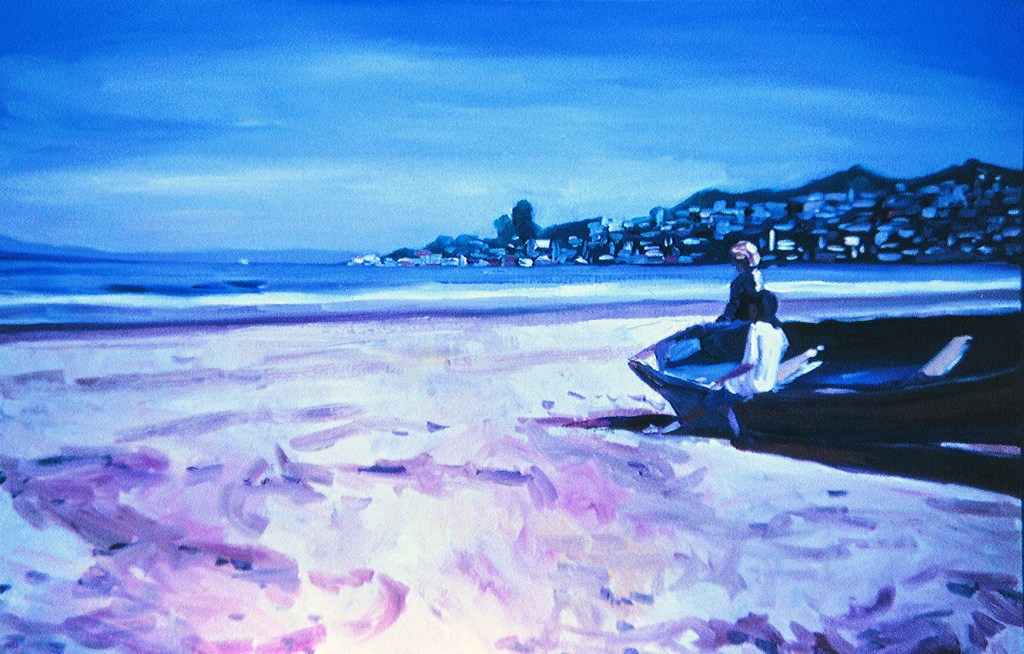
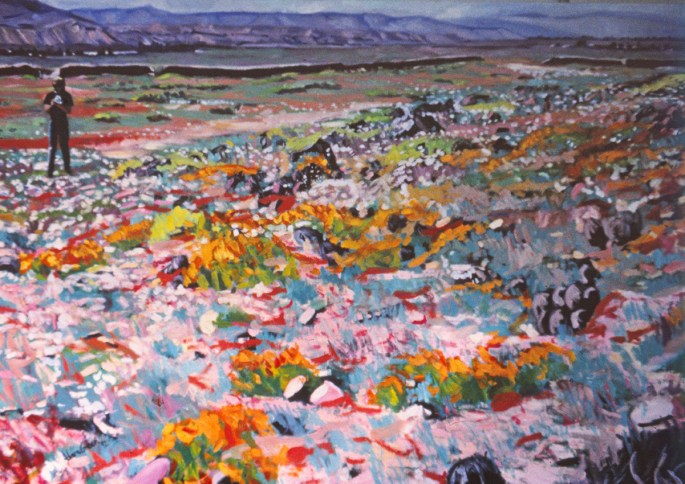
DIDO AT COQUIMBO (Chile) – 1992 – oil on canvas: Sadly, this photo is slightly out of focus, but the painting remains the one I was most pleased with from our time in Chile. The region of Coquimbo (in common with much of the southern Atacama Desert) had just experienced its heaviest rains for over 40 years, resulting in the greatest cactus flowering most Chileans had ever witnessed. I’ve rarely felt more privileged as a traveller, before or since, and together with the Sinai Corral Reef remains the most wonderous display of nature I have ever seen. DIDO AND LYNNE AT TONGOY –1992 – oil on canvas: Back in 1991, when we were there, Tongoywas somewhere between a sleepy fishing village, and an even sleepier seaside resort. It felt a bit like entering a scene from a Steinbeck novel, and I half expected to see the skeleton of a giant marlin lying on the pearly white sands. It was off season, and we (and the fishermen too of course) had the place to ourselves. A precious and serene memory.












































 ARKS, ADAM AND AXARQUIA