A PARADISE LOST, AND ANOTHER “REGAINED…”

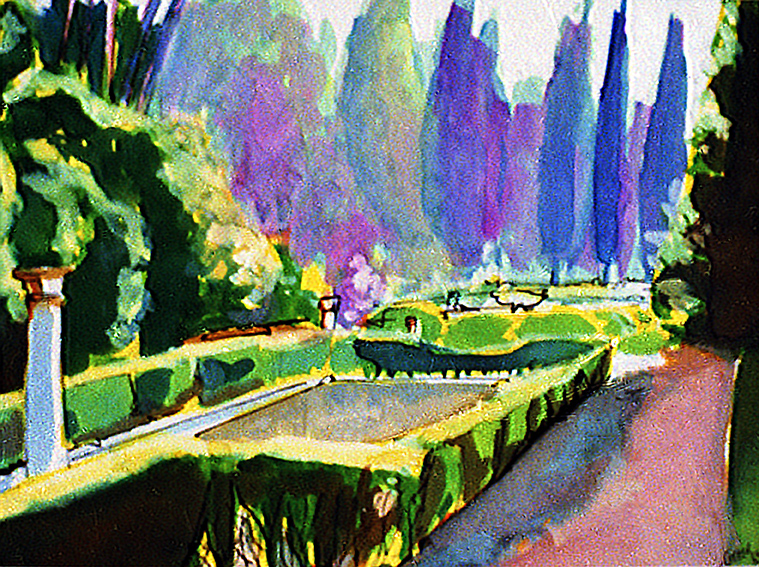
Seville Alcazar Garden Pond and Cypresses

One balmy September morning back in 1983, my then-girlfriend and I were incredibly fortunate to have the Generalife (the famous gardens of the Alhambra Palace in Grenada) all to ourselves. In the years since, I must have visited the Alhambra half-a-dozen times but never again been anything like so lucky. In fact, on each successive visit the palace complex was becoming increasingly crowded until the final visit, when the experience resembled more being in the London Tube at rush hour than a gentle amble around one of the most serene man-made outdoor spaces in the world.
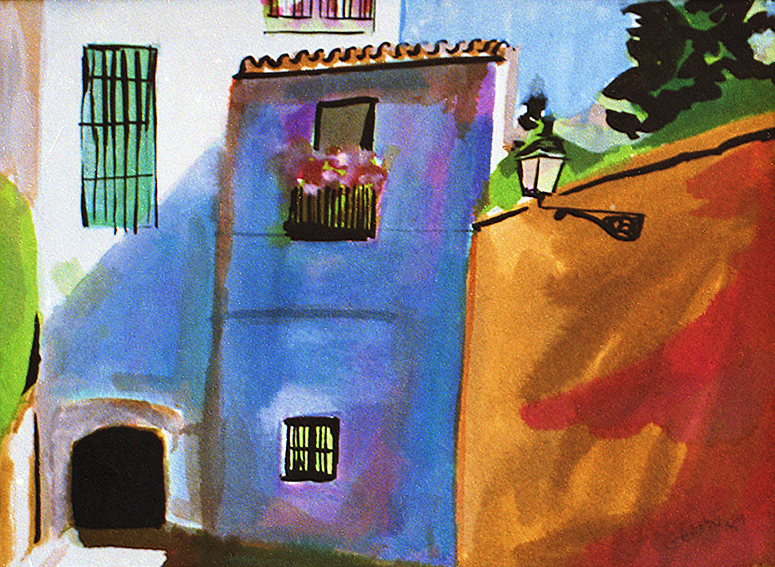
Seville Alcazar Exit

These days, people wanting to visit the Alhambra complex have to book a slot, similar to the system adopted by the authorities at Saint Peter’s in Rome, but all this really achieves is a regimented crush as opposed to a free-for-all melee.
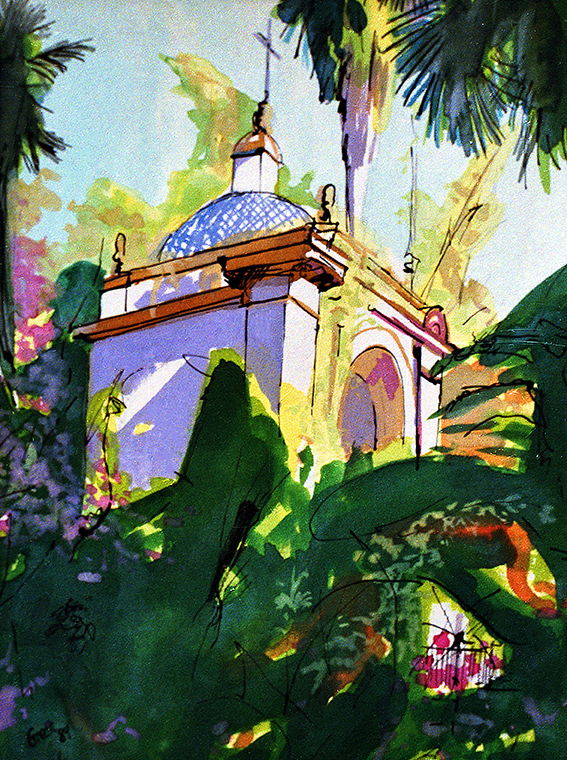
Seville Alcazar Garden Arched Folly

While I wouldn’t wish to deter those visiting Andalusia for the first time from seeing one of the architectural and horticultural wonders of the world there are, dotted about the state other beautiful Moorish influenced gardens which still offer the kind of serenity the Generalife was designed to inspire. My favourite of these is the garden of the old castle (or Alcazar) of Seville.
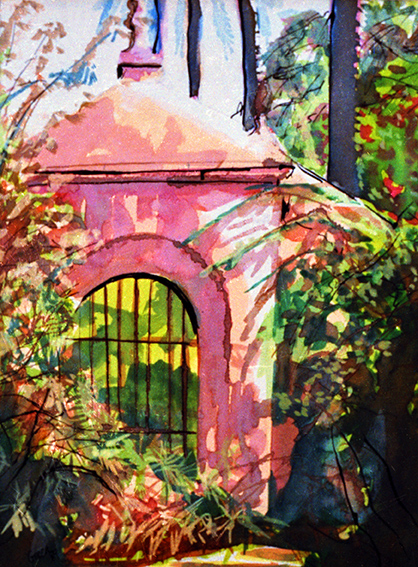
Seville Alcazar Garden Folly Arch

In stark contrast to the mathematical perfection and order of its famous Granada rival, the Alcazar garden in Seville has a relaxed, informal and even ramshackle quality which has a calming effect the moment one enters its precincts. Even in the height of summer, its mature old trees, elaborately arched follies and numerous ponds and fountains offer a tranquil and fragrant, shaded refuge from the extreme heat which afflicts the city. It’s a fabulous place for a spot of contemplation and meditation away from the concerns of everyday life and thus also a fantastic place to sketch and paint.
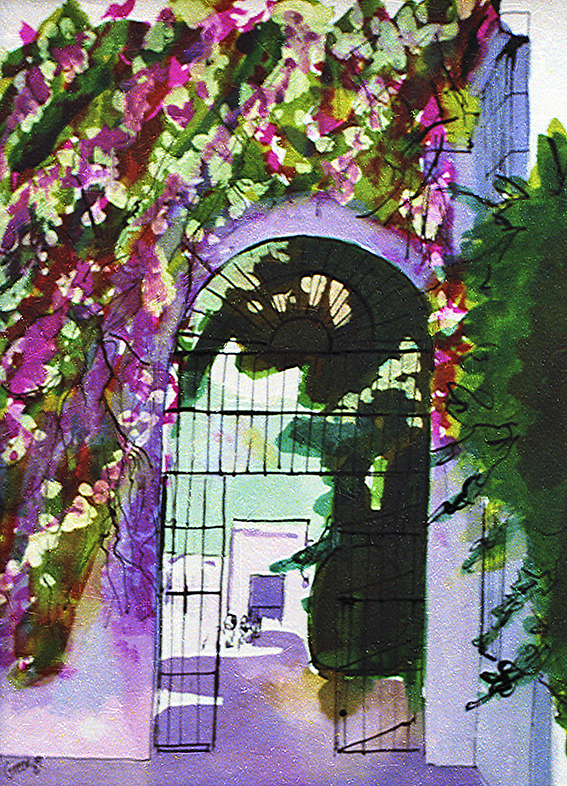
Seville Alcazar Garden Iron Gate

I made the pen and ink pictures presented here in the early 1990’s during my second visit to the gardens. I’ve often found that deeply coloured inks have an immediacy and fluidity perfect for capturing scenes of exotic nature, man-planted or wild, as I hope these images confirm. And I’m guessing they do, as they comprised the major part of a sell-out exhibition in London later that year.
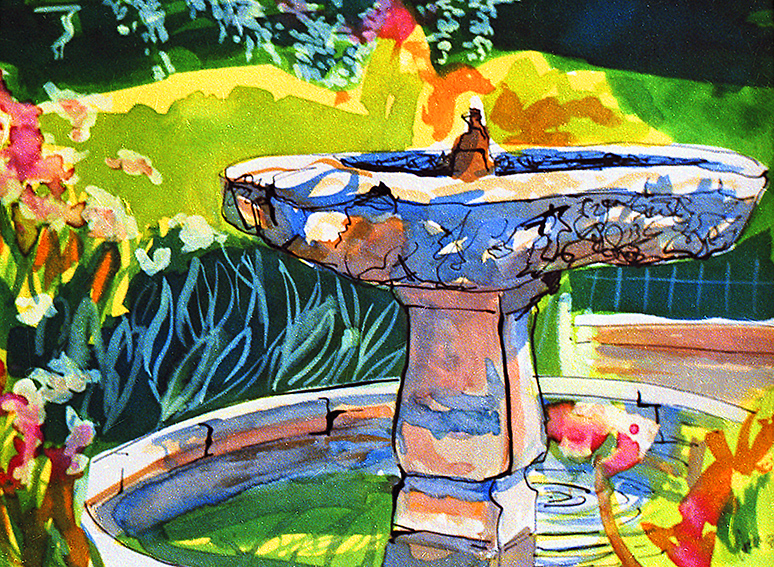
Seville Alcazar Garden Small Fountain

THE BAR MITZVAH GIFT THAT KEEPS ON GIVING (or how I discovered the great British outdoors and seriously good British food…)

In April of 1973 I became 13 and was subsequently bar mitzvahed (yes, it is a verb in the Anglo-Jewish vernacular) . The event itself was typical of most traditional bar mitzvah celebrations, and followed the orthodox coming-of-age for boys format in most respects. This included all the usual suspects vis-à-vis the presents I received – except for one wonderful surprise gift. Unbeknownst to me, my mum and uncle (her brother) had planned a five day visit to the Lake District especially arranged around two of my passions; of landscape photography, and far more importantly, an abnormally precocious love of gastronomy.

Since my first visit to France three years before I had developed an unusually sophisticated palette in a juvenile, so much so, that it formed almost as important a part of my early teenage years as more typical factors such as a parallel ever-growing fascination with members of the opposite sex.

Many reading this now, especially non-British readers might be surprised that my mum and my uncle didn’t take me back to France, or to Italy or Spain, or just about anywhere in the world beyond the British Isles – if not for the photography element of the trip, certainly for the cuisine component. And while it is undeniable that in that dark long-ago of 1973,  a full decade before the reawakening of fine British gastronomy, good British food was hard to find, there did exist a few pioneering outposts of fabulous British cooking.

Of all the pioneers manning these few gourmet mission stations none played a more heroic role in the resurrection of fine English fair than the formidable Francis Coulson at his famous Sharrow Bay Hotel on the shores of Lake Ullswater  in Cumbria, in north western England. Since 1948, ably assisted by his life-partner, Brian Sack, he reminded the British of the fact that their countryside and its surrounding waters comprised a national food larder as rich as any on the planet. Furthermore, he devoted his life to demonstrating  exactly how to make the best culinary use of that copious store cupboard.

When mum took me to Sharrow Bay in 1973, Coulson was in his pomp, both in regards to his international reputation and the output from his hotel kitchen, and thus I was one privileged bar mitzvah boy! Not that the my rabbi back in north London would have approved, but to this day, my first taste of a Cumberland sausage, in the heart of Cumbria, at our first breakfast remains one of the many abiding and formative food memories of those fantastic five days. Manx kippers, and fried duck eggs were other breakfast wonders but after days walking along the lake shore and up and down the local fells it was the suppers that really sent me into bouts of ecstasy. “I’ll never forget” is possibly the ultimate cliché, but I can’t think of any other way to phrase my first experience of British game in the form of Coulson’s famous roast grouse, and the intense redcurrant jelly accompaniment. Other gamey wonders included saddle of hare and the finest venison stew I was ever to taste – at least up till now, and as for the Herdwick lamb chops and the trout, fresh from the lake itself cooked to perfection. And then the steamed puddings – simply the lightest, most unctuous, most well-crafted puddings in the universe. And I could go on, and on.

But oh, I almost forgot! There was also the photography, and while sadly for you, I can’t share the experience of the Sharrow Bay’s phenomenal kitchen, I can at least reveal something of the stunning scenery in which it sits. I’ve rendered these ancient images (originally taken on my trusty old Canonet 28) in a watercolour style, which I believe faithfully captures the dramatic beauty and changeability of the Ullswater environment.

In the mean time, anyone reading this with a curiosity for traditional British food at its finest or the majestic wonder of Lake Ullswater and its surrounding countryside, could do a lot worse than saving up for a few days at the Sharrow Bay – the best Bar Mitvah gift or any gift for that matter, ever!

Israelis at large…1977-1991

One of the things I’ve really been enjoying here in Sweden is playing with all my new toys, including my aforementioned fabulous slide scanner. Its main purpose is to get my years of artwork digitally recorded and logged, but it’s also helping me rediscover thousands of my old general photos.

Between 1977 and 1991 I visited Israel about a dozen times and I never went there without at least half a dozen rolls of high quality slide film.∗ The pictures included here (presented in no particular order) cover most of those seventeen years and present a portrait of a diverse and multi-textured little nation.

∗Cameras used: Canonet 28 and Nikon FE / Film used: Kodak Ektachrome and Agfachrome.

DRY SUBLIME – gouaches of the Atacama

With only ten days to pick our olives and prune around a thousand vines, among many other farming chores here on our Andalusian finca, this post has few words and is all about the pictures. Suffice to say, I always felt the dry chalkiness of thickly applied gouache was a perfect medium for expressing the tonal aridity of the fabulous Atacama Desert. As ever, I hope all of you who pass this virtual way agree! Wishing all my visitors, readers and followers a 2018 as epic as the incredible Chilean desert itself…


MONOCHROME MEMORIES OF A COLOURFUL DAY IN THE PARK

My continuing trawl through thousands of old slide films for scanning is proving to be  not merely a trip down memory lane, but more a long voyage of haphazard, bitter-sweet (mostly sweet) rediscovery.

Because the films are all mixed up in no chronological or subject order , the experience of going through them is somewhat dreamlike in its lack of thematic anchorage. One moment I’m back in my childhood town of Edgware looking into the eyes of my first girl friend; the next, I’m hurtling down an Italian Alpine ski slope with the Martini ad music playing in my head before finding myself on a ferry in the middle of Puget Sound.  By the time I’ve completed a couple of hours scanning I feel emotionally jet-lagged. And so it was the other day when I came across one single complete black and white film of a lazy April bank holiday spent in Regent’s Park around 1983.

However, unlike so many of the mostly hazy memories evoked by this process, I found I recalled this particular day in almost every detail. For whatever reason that day is a vivid memory and being suddenly confronted by visual images of it was akin to being back there in the park. And, even more mysteriously, the fact the photos were monochrome merely crystallized my recollections .

For all of that, whether or not they are worthy of illustrating one of my posts, I am not so sure. However, if this does turn out to be simply an exercise in self-introspection, I do hope my that my regular readers and followers will indulge me this once. After all, at their core, these posts form an autobiography, and as such it would be incomplete without memories as colourful as this – albeit, in black and white…

POSTER ART AND MOVIE MUSIC…clever ephemera or fine art?

In 1992, at an exhibition of my poster-style paintings, someone remarked to me in a disparaging tone, ‘you know Adam, these sort of pictures are to fine art what film music is to classical music…’ She meant the observation as an insult, and at the time, although I basically agreed with the premise of her analogy, I felt duly insulted. But soon afterwards I realised that it was her intent and her tone that had upset me, not her premise.

The fact was, I had always been a huge admirer of film music and its composers, several of whom I believed then, and continue to believe today to be geniuses in their own right, every bit as accomplished in their own way as their “classical” contemporaries (after all, what will be more listened to in a hundred year’s time, Elmer Bernstein’s score to The Magnificent Seven, or Pierre Boulez’s “explosante-fixe”?). So, having my work compared to movie tunes was for me, in its purest sense, a unintended  complement.

Sure, it can be argued that poster artists are merely creating visual mood music to the given theme, but that is no bad thing, and if executed well, and with feeling, a great poster can be at least as impressive an image as any piece of “pure” art. Ultimately, as with the best film music, if the piece lives on in the memory and has the power to stir deep feelings then surely this means it is good and worthy art.

However, unlike my commissioned advertising work, my  non-commissioned posters were a bit like movie music without a movie. And some time after this particular exhibition an album of exactly that type of music called Eternal Echoes was released by that greatest of British film music composers, John Barry (Lion In Winter, Zulu, You Only Live Twice, Midnight Cowboy, Born Free and The Ipcress File to name just a few masterpieces). I was initially quite dubious, but then, after listening to the record, I realised that it worked in exactly the same way as my “free” posters, with bags of atmosphere, lyrical content and just enough emotion to stir the blood.

As things turned out this style of work became my most enduring, heavily influencing the pictures I am making today  (e.g. see my work now available here) and my love for movie music continues unabated.

Here are a selection of posters with architectural themes, another post, of more “human-centric” works will follow shortly…

DOWN BY THE SEASIDE – the visual drama of piers, jetties and lifeguard huts.

Stick a building – any building, on the edge of the land, where it meets the sea; on a sunny day, beneath a vast dome of blue sky, and something magical happens. Colours seem more intense; shadows seem darker; and tones seem more dynamic; making – often humble – utilitarian structures appear like architectural masterpieces.

During my many years of travel I’ve often been struck by the allure of these sun-kissed lumps of timber, steel and concrete. And without further ado, presented below are a small selection of those I was fortunate enough to be able to record in photograph.


MY ART CAREER 4 – SAINT MARTINS 1980: The Ein Kerem Triptych

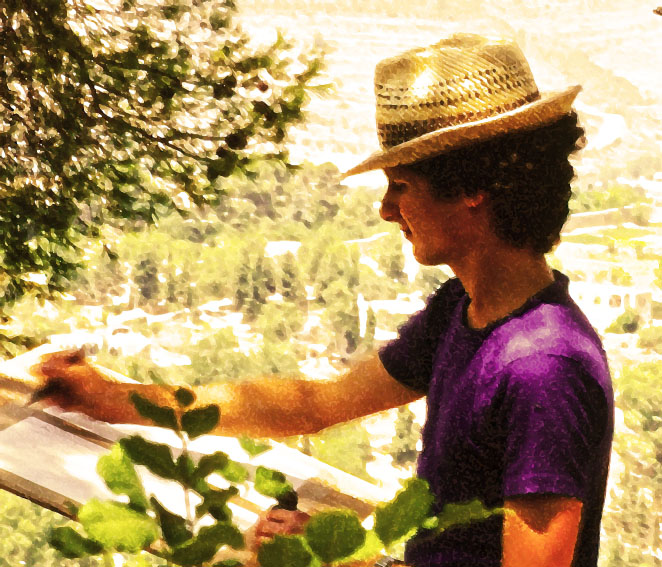
In the summer of 1979 I spent two weeks with a friend in his apartment on the south western outskirts of Jerusalem. My host shared a studio with me at art school (in London) and had been whetting my painterly appetite with descriptions of the scenery in the hills close by his apartment. Although I was already developing into a studio-based artist, the thought of walking out into the Jerusalem forest, portable easel on shoulder and painting box in hand seemed exotic and enticing. And so it proved to be.

Every day for around a week we rose at the crack of dawn and walked across ancient pine-wooded terraces to a shaded clearing perched dramatically above the picturesque village of Ein Kerem and sketched madly from morning to sunset.  The combination of the dappled light, the changing colours and tones as the sun traversed the sky, the constant humming of the cicada and the aroma of pine needles intoxicated our spirits.  And as we ate our rustic picnic lunches, washed down with wine and then dozed, we  dreamed we were reincarnations of Gauguin and Van Gogh.

Adam 1
A nineteen-year-old me, hard at work in the Jerusalem hills in August, 1979

I did all my sketching in pen and coloured ink. I found the intensity and the fluidity of the ink perfect for expressing the colours of the landscape and capturing the immediacy of the given moment. Then later, early the following year, back in my studio in London I found I could use the ink sketches to transfer that sense of moment onto canvas – thus capturing the moment and giving it both permanency and with expanded depth and breadth.

Presented here is one of the original ink sketches, and the culminating oil painting I made from them. I felt that the device of a triptych would give me the scope to represent not just the colours, and flow of the landscape, but also its altering mood across the course of a single day. This was my first attempt at a triptych and looking back at it now, although far from fully resolved,the sheer unadulterated joy of it does nevertheless bring a smile to my face. Whether or not Paul or Vincent would smile or smirk is another question altogether.


Unseasonal, Season’s Greetings

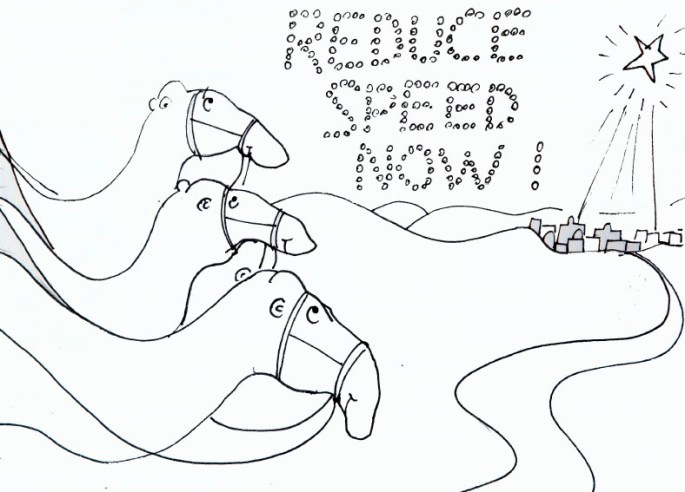
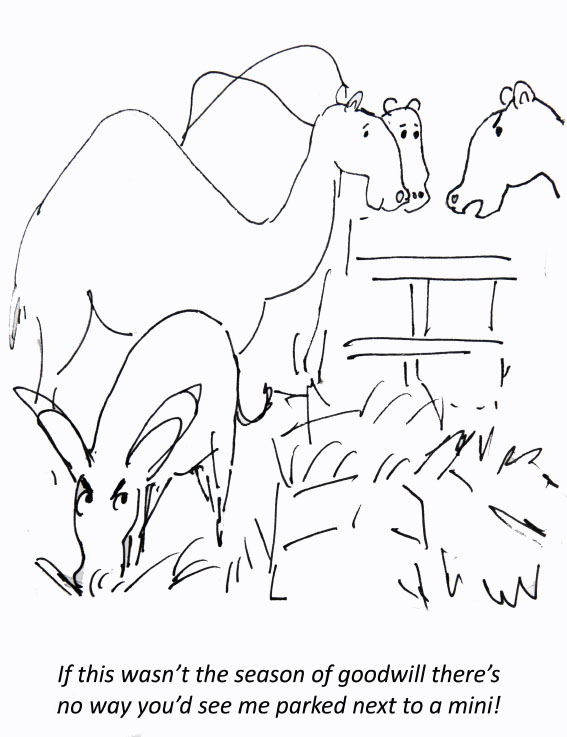
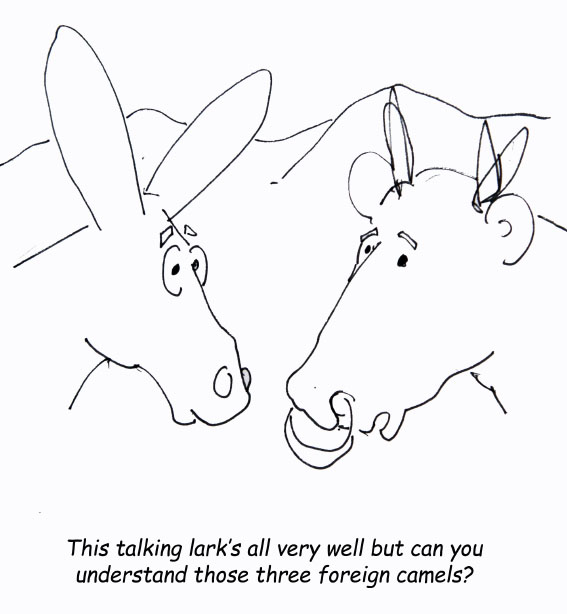
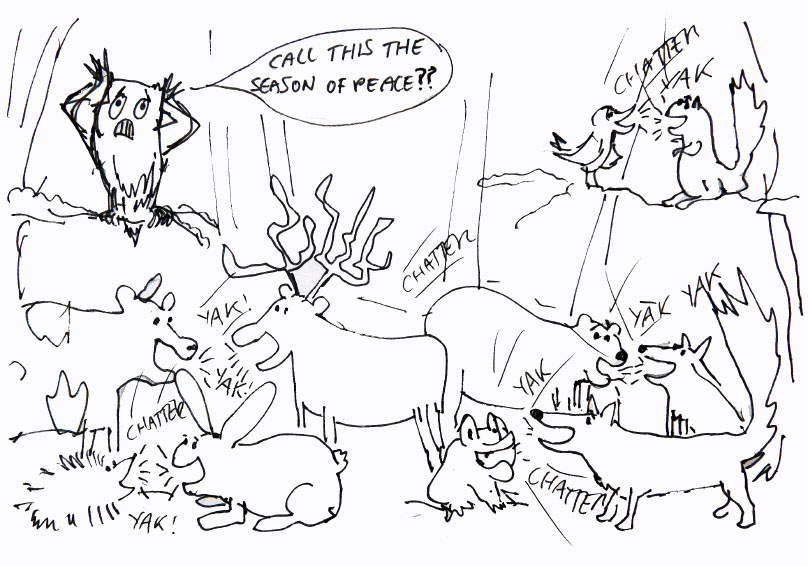
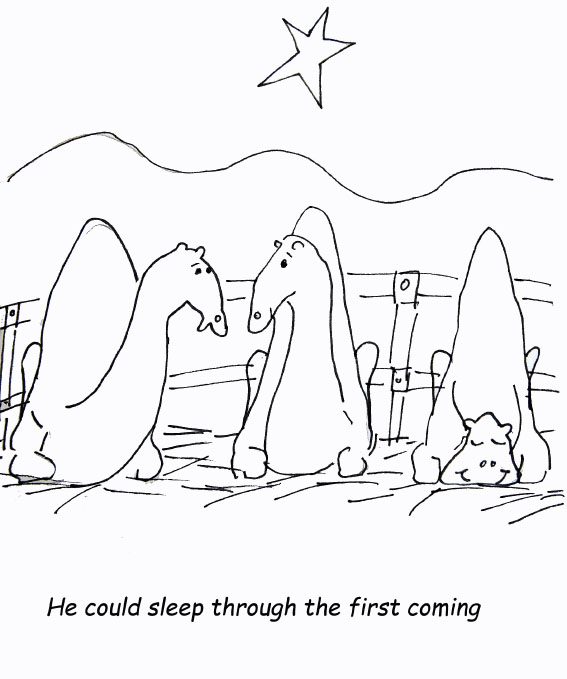
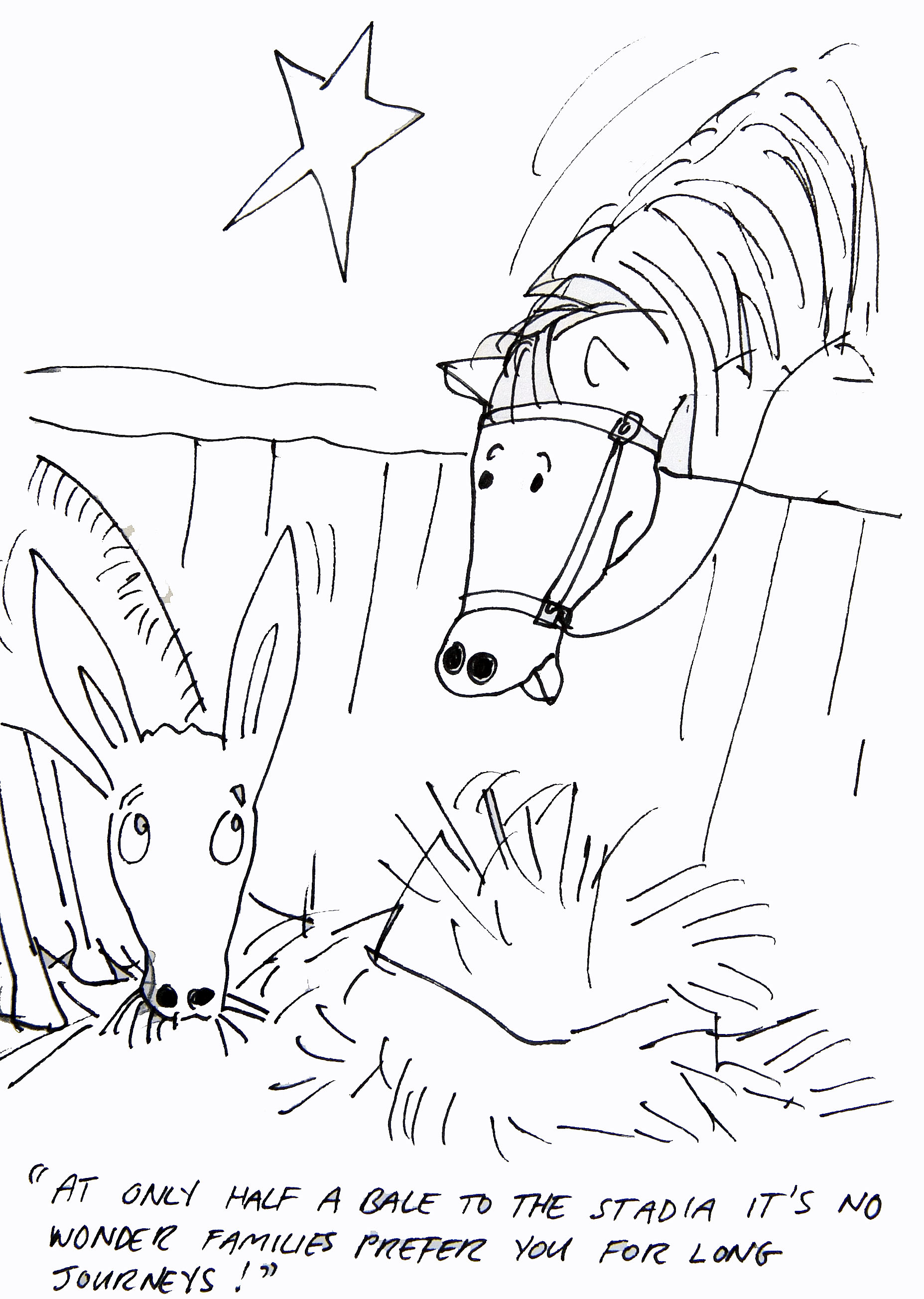
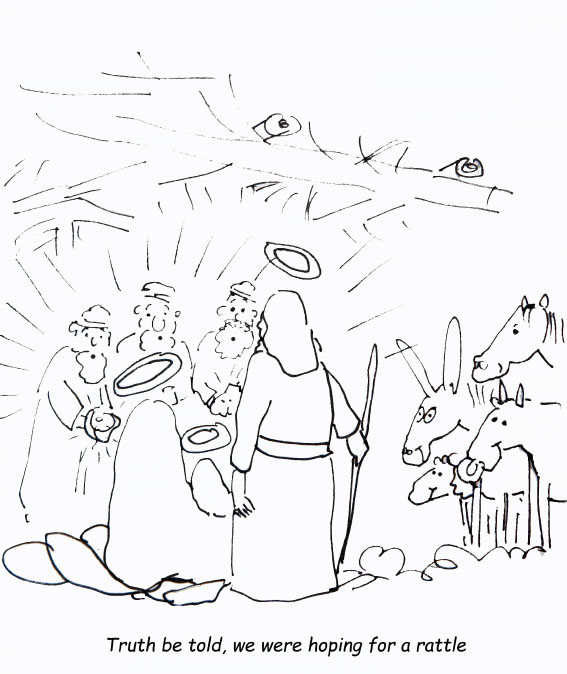
Followers of this blog might remember the posts I did last year featuring my old greetings cards designs, and how I highlighted the problems artists had (and I guess still have) ensuring that their designs are not stolen by card publishers . After being ripped off myself I resorted to sending in preliminary rough sketches only for consideration. Although this did not necessarily stop unscrupulous publishers stealing the concepts, or the jokes themselves, it did at least mean they had to come up with their own finished style. With my “polar” series, I was as upset with the fact the company stole the distinctive look of my designs – and then ran with them for decades, as I was by their theft of the individual jokes.

Anyway, with the Christmas card examples posted below at least, my new method worked this one time. The company in question signed a “special” contract with me before receiving finished colour plates for the images they chose. As things turned out, they went with most of them, except I think for two, which, as I recall, they informed me were  a “bit too irreverent for our customer base”. See if you can guess which two? A clue to one of them is that I went ahead and coloured it for myself anyhow…

(You can see my other two non-Christmas greetings card posts here and here…)

GILBOA, WHERE THE MIGHTY FELL – and a nation rose…

When I first saw the movie The 300 Spartans I was only seven-years-old but it made an impression on me that has endured for the following fifty years. The story of King Leonidas and his heroic stand at the Pass of Thermopylae lit a touch paper in my young spirit that shaped the course of all my future careers, and even perhaps the way my life has panned out.

Artist & Illustrator
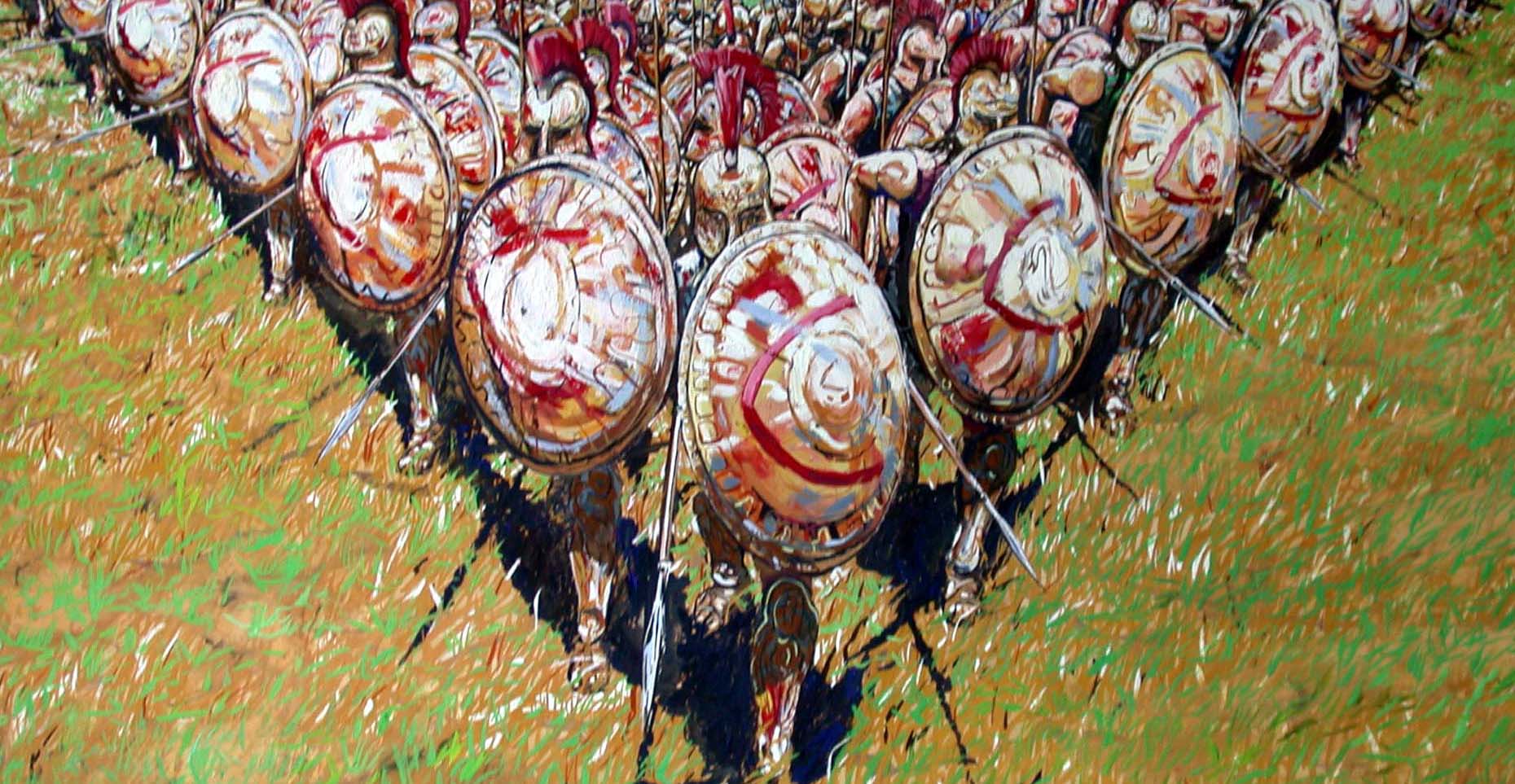
This is a detail from my painting “The Pausanias Wedge at Platea”  – I used it on my business card during my years as a commercial illustrator.

Most peoples and nations on Earth have their own such iconic tales of heroic defeat, which seem to lend themselves to idealistic notions of ultimate sacrifice for the sake of freedom. For instance, the (European) Americans have their Little Bighorn, the British, their Charge of the Light Brigade and the French, the last stand of the Old Guard at Waterloo.

The thing however, that distinguishes the action of the 300 at the Hot Gates back in 480 BC from all of the above, and gives it such universal and lasting allure to most peoples of the Earth (with the possible exception of Xerxes’ modern heirs) was its almost total contextual non-ambiguity.

The actions of Yankee Blue Coats against the Plains Indians, Cardigan’s “Cherry-Bums” in the valleys of the Crimea, and Napoleon’s “grognards” (grumblers) in a Belgian wheat field; for all their undoubted courage were primarily in the interests of conquest — the very thing that Leonidas was attempting to halt. Custer, Raglan and Napoleon — their widely varying military abilities notwithstanding — were all closer to Xerxes than to Leonidas in the context of their respective battle objectives. Thus, in many ways, the Spartan King offers us an historical rarity; a genuinely noble defeat in the purest of causes — defense of the homeland; more of a Wounded Knee than a Little Bighorn.

About two years after my young imagination had been fired by the story of Leonidas and the 300, I became familiar with an account of a similar military engagement in the even more ancient annals of my own people’s narrative. And so enthralled was I by the story of King Saul and his son Jonathan’s defeat at the hands of the Philistines on the slopes of Mount Gilboa I actually wrote a book about it some forty years later. (That book, among other things, led me to setting up this blog and so it’s probably high time I posted an article along these lines.)

And just as Leonidas’ death was a powerful inspiration for the following Golden Age of Greece, the defeat of Saul and Jonathan actually secured both the concept and the durability of Israelite, and then Jewish nationhood.

However, while Leonidas is lauded by the modern Greeks as their consummate national hero, for reasons too complex to go into here, the only monuments to Saul’s act of ultimate sacrifice at Gilboa are the exquisite seasonal wildflowers which annually defy the curse of David upon the mountain’s slopes (2 Samuel 1:21). My book was a vain attempt to rectify the situation; to raise the status of Saul within the national consciousness of modern Israel and Jewish people everywhere, so that instead of heading straight from Ben Gurion Airport to Jerusalem and the other “holy sites” ; they would instead make for Gilboa, where a nation was forged in the blood of its first, and most noble king. So noble in fact, his own usurper felt obliged to concede as much in his timeless lament (abridged here)…

Battleground
 “A gazelle lies slain on your heights, Israel.
    How the mighty have fallen!.. 

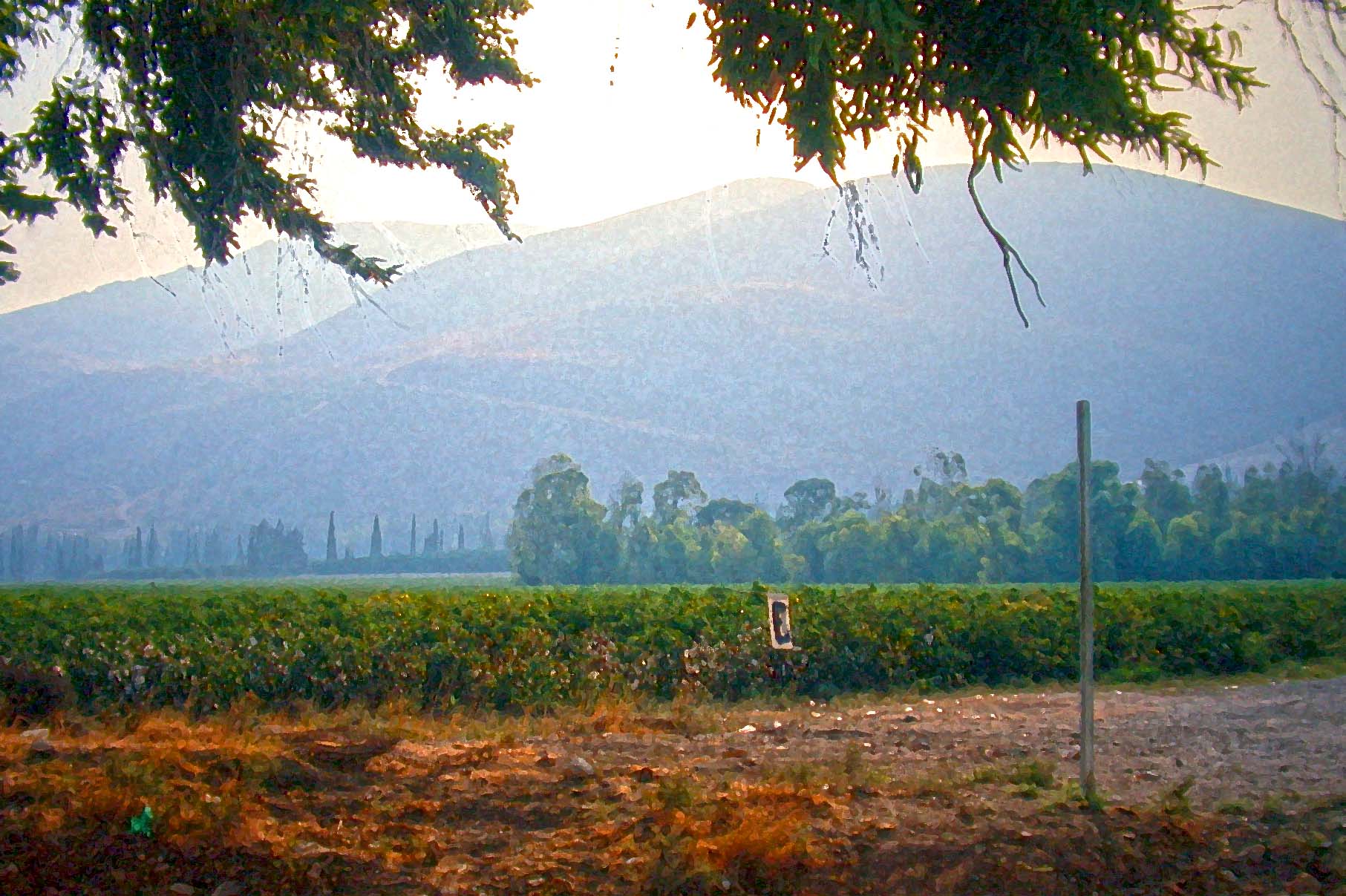
Gilboa Massif from the Jezreel Plain
“Mountains of Gilboa,
    may you have neither dew nor rain,
    may no showers fall on your terraced fields.
For there the shield of the mighty was despised,
    the shield of Saul—no longer anointed with oil…

Gilboa summit
“From the blood of the slain,
    from the flesh of the mighty,
the bow of Jonathan did not turn back,
    the sword of Saul did not return unsatisfied.
Saul and Jonathan—
    in life they were loved and admired,
    and in death they were not parted.
They were swifter than eagles,
    they were stronger than lions…

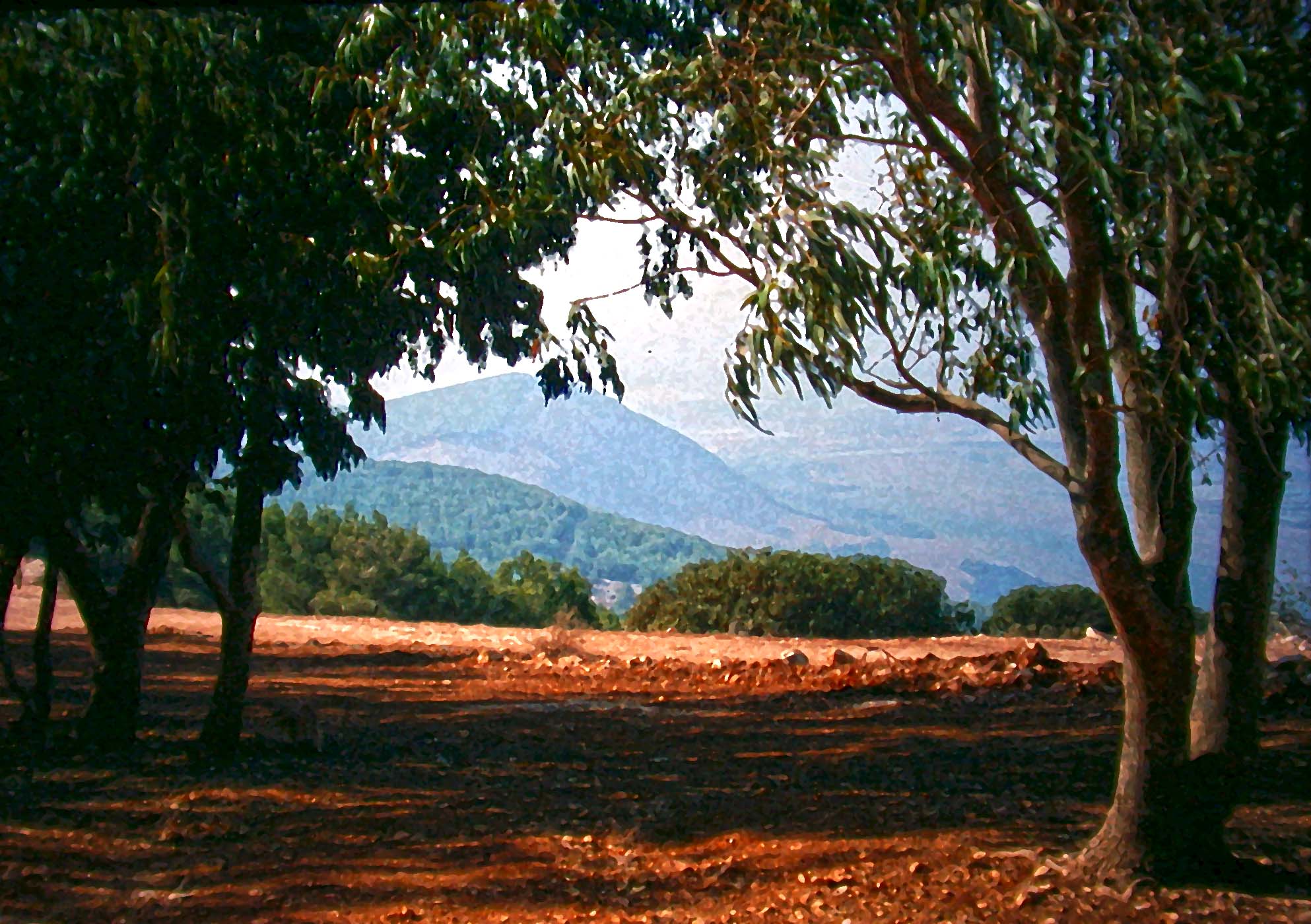
Gilboa trees
“Daughters of Israel,
    weep for Saul,
who clothed you in scarlet and finery,
    who adorned your garments with ornaments of gold…

On Gilboa
“…How the mighty have fallen!
    The weapons of war have perished!”